Choosing the 2026 best Insulated Roofing Panels is not simply a price comparison. Global buyers must connect thermal performance, fire safety, durability, and verified installation quality. The wrong panel can leave condensation beneath a cold roof, like water trapped inside a metal toolbox.
The UNEP Global Status Report for Buildings and Construction 2024 reports that buildings and construction consumed about 32% of global energy and produced approximately 34% of global carbon dioxide emissions in 2023. These figures strengthen the case for efficient roof assemblies. However, insulation alone does not guarantee lower energy use. Ventilation, airtightness, solar exposure, and workmanship also shape the final result.
This guide evaluates panels through measurable criteria. They include U-value, thermal conductivity, core density, fire classification, corrosion resistance, acoustic performance, and expected service life. Testing against standards such as EN 14509, ISO 6946, ASTM C518, or relevant FM approval requirements can improve technical confidence. Yet standards differ between markets. A panel accepted in Europe may require additional documentation in the Middle East, North America, or Southeast Asia.
Material choice matters. PIR panels often offer strong thermal efficiency with relatively thin profiles. Mineral wool panels can provide robust fire performance and acoustic control. EPS panels may reduce initial cost, but their suitability depends heavily on project risk and local regulations.
There is no universal winner.
The “best” solution depends on climate, roof span, fire strategy, transport distance, and maintenance access. Buyers should request independent test reports, batch traceability, warranty terms, and installation references. A cheaper quotation may look attractive, but incomplete technical evidence deserves careful reflection.
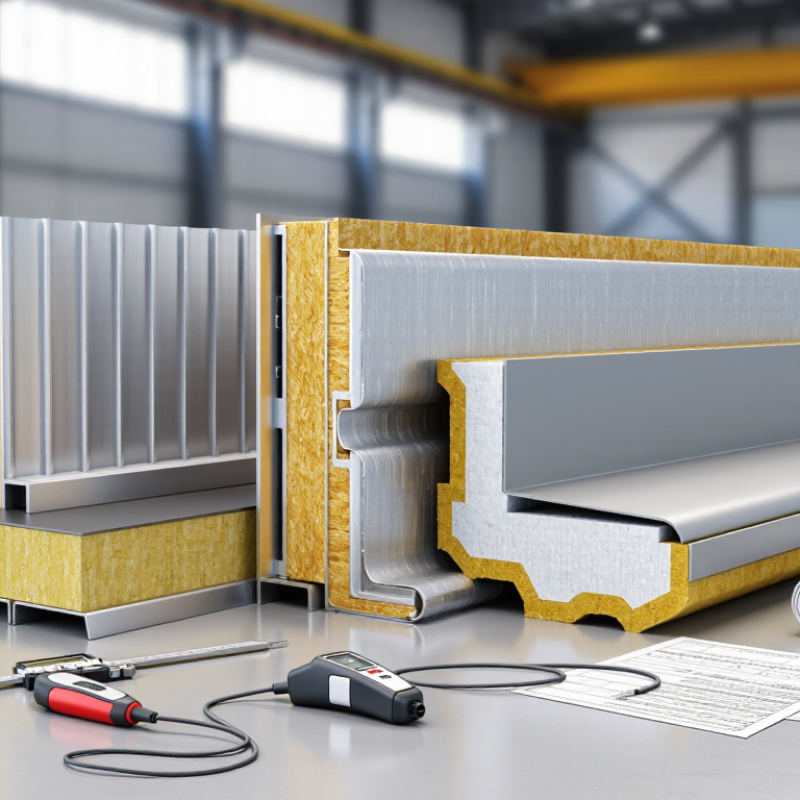
2026 Best Insulated Roofing Panels for Global Buyers?
For global buyers, the λ-value is a practical starting point, not the whole decision. PIR and PUR panels commonly report thermal conductivity around 0.022–0.028 W/m·K. EPS usually ranges from 0.032–0.040 W/m·K, while mineral wool often sits near 0.034–0.040 W/m·K. These ranges reflect product density, temperature, moisture, and testing conditions. A neat table can mislead.
European insulation standards EN 13165, EN 13164, and EN 13162 define relevant product testing and declared performance requirements. Buyers should compare declared λD values, thickness, joint design, and aging corrections. A 100 mm PIR panel may offer strong thermal resistance, but a mineral wool panel can provide better fire performance and sound absorption. EPS is often lighter and more economical, yet its moisture control requires careful detailing.
The 2024 Global Status Report for Buildings and Construction, published by UNEP and the GlobalABC, states that buildings consume about 32% of global energy and produce roughly 34% of energy-related emissions. Roofing choices therefore affect operating costs beyond the factory gate. In humid coastal sites, I would inspect vapor barriers and edge seals before trusting a low λ-value. Real projects are less tidy. Installation errors can erase laboratory advantages. Temperature differences, transport damage, and local code requirements also deserve written verification before purchase.
A 100-mm PIR insulated roofing panel can achieve approximately R-4.5 m²K/W under EN 14509 test conditions. This figure describes thermal resistance, not a guaranteed result on every roof. Core density, facing materials, joints, temperature, and installation quality can change performance. The number looks precise. Real buildings are less tidy.
From site inspections, panel joints often deserve more attention than the core itself. Small gaps can create thermal bridges and allow air leakage. Correctly tightened fasteners, sealed laps, and continuous edge detailing help preserve the designed resistance. Roof penetrations also need careful treatment, especially around skylights and service openings. Condensation control matters in humid climates.
Global buyers should request the EN 14509 test basis, declared thermal conductivity, thickness tolerances, and calculated U-value. An accredited laboratory report adds useful confidence. Check whether the stated R-value includes surface resistances or only the panel core. That distinction can affect comparisons. Local wind, fire, moisture, and structural requirements still apply. A thicker panel is not automatically better if the supporting system is poorly detailed. My own preference is to compare complete roof assemblies, not attractive brochure figures alone. That approach is slower, but usually more honest.
For insulated roofing panels, EI 30–120 indicates fire integrity and insulation performance for 30 to 120 minutes. An EI 30 panel can resist flame passage and limit heat transfer for half an hour. EI 120 demands four times longer protection under controlled test conditions. These ratings usually follow EN 13501-2 classification procedures. They do not automatically describe the complete roof system. Joints, fasteners, penetrations, and supporting steel can reduce real performance. That distinction matters.
FM 4880 evaluates insulated panel assemblies through demanding fire tests, including flame spread and full-scale construction behavior. Buyers should check the exact approved assembly, panel thickness, core type, joint design, and installation limits. A certificate for one wall arrangement may not cover a roof application. The NFPA Fire Loss in the United States 2023 report estimated about 1.39 million fires during 2023. Fire risk is not theoretical, especially around warehouses, cold stores, and production areas.
Wind design requires a separate review. EN 1991-1-4 calculates wind actions using basic wind velocity, terrain category, building height, pressure coefficients, and local exposure. It does not certify the panel itself. Engineers should compare calculated suction with panel span tables and fastener resistance. Coastal corners need attention. Edge zones often experience higher pressures than roof centers. Global Wind Atlas data can support early site screening, but local code values and national annexes remain more reliable. Real projects are rarely perfect; drainage, uneven supports, or rushed fixing can undermine a strong specification.
| Panel Core Type | Indicative Thermal Conductivity (W/m·K at approximately 10°C) |
Fire Behaviour of Core | Potential EI Application | FM 4880 Consideration | Wind-Load Design Under EN 1991-1-4 | Typical Global Use | Buyer Verification Priority |
|---|---|---|---|---|---|---|---|
| Mineral Wool | Approximately 0.035–0.045 | Mineral wool is generally non-combustible, but the complete panel classification also depends on facings, coatings, adhesives, joints and penetrations. | Commonly the strongest candidate for higher fire-resistance requirements, including EI 30, EI 60, EI 90 and EI 120, when tested as a complete roof or wall assembly. | Select only a panel configuration with approval or listing evidence covering the intended roof assembly, thickness, span, joint detail and support arrangement. | Design panel fasteners, supports, purlins, laps and edge zones for the calculated net wind pressure. Panel capacity is not determined by core type alone. | Warehouses, industrial buildings, cold-storage areas, logistics facilities and projects with demanding fire-compartment requirements. | High fire-safety priority |
| PIR Foam | Approximately 0.022–0.028 | Usually offers improved reaction-to-fire performance compared with conventional PUR, but actual classification varies with formulation, facings, joints and manufacturing process. | EI 30 may be achievable in tested assemblies; higher classifications such as EI 60 or EI 120 must be confirmed by a valid assembly test or assessment for the exact system. | FM 4880 acceptance, where required, applies to a defined panel and construction configuration; it cannot be assumed from the PIR core designation. | Check tested span tables, allowable deflection, screw pull-out, washer dimensions, side laps, end laps and roof-zone pressures derived from EN 1991-1-4. | Commercial roofs, temperature-controlled buildings and projects prioritising thermal efficiency with controlled fire-performance requirements. | Balanced thermal/fire option |
| PUR Foam | Approximately 0.022–0.028 | Combustibility and smoke production depend strongly on formulation and facings. The complete panel must be assessed rather than the foam core alone. | EI performance is assembly-specific. Do not use a generic PUR designation as evidence of EI 30–120 compliance. | Require project-relevant approval or test documentation if FM 4880 compliance is specified, including details for penetrations and roof interfaces. | Confirm the design resistance of the complete roof build-up, including fastener spacing, support spacing, suction zones, edge distances and serviceability limits. | General industrial and agricultural buildings where thermal efficiency and cost control are important and the fire strategy permits the system. | Documentation required |
| Phenolic Foam | Approximately 0.018–0.023 | Often selected for low thermal conductivity and potentially favourable reaction-to-fire characteristics, but results depend on facings, joints, coatings and production details. | EI 30 or higher may be possible in specific tested constructions; the declared rating must match the exact thickness, support system and joint configuration. | Check whether the precise roof panel construction has the required FM 4880 approval or equivalent project acceptance; insulation type alone is insufficient. | Verify panel bending resistance, fastener performance, local bearing, deflection and wind uplift for the project wind actions calculated in accordance with EN 1991-1-4. | Buildings with restricted roof build-up depth, high thermal-performance targets or demanding energy-efficiency specifications. | High thermal-efficiency priority |
| EPS Foam | Approximately 0.031–0.038 | EPS is combustible. Reaction-to-fire and fire-resistance results depend on the complete panel, facings, joints, cavity conditions and protective layers. | EI 30–120 should not be assumed. Use only where a complete tested or assessed construction demonstrates the required classification. | Confirm the exact approval status and limitations before use in projects requiring FM 4880 compliance or stringent insurer requirements. | Obtain project-specific structural calculations for uplift, fastener pull-through, panel spans, support spacing and edge/corner wind zones. | Budget-sensitive buildings and applications where the project fire strategy permits combustible insulation and suitable protection is provided. | Fire strategy review essential |
| Key selection principle: EI 30–120 is a fire-resistance classification for a tested or assessed construction, not a universal property of an insulation core. FM 4880 is a product-and-assembly approval route, while EN 1991-1-4 provides the basis for determining wind actions; none of these references alone establishes the structural capacity of every roof panel. | |||||||
European projects follow a different route. Eurocode EN 1991 covers structural actions, while national annexes adjust snow and wind values. These values can change between neighboring countries. Thermal performance usually follows national building regulations and EN ISO 6946 calculations. A panel rated at 0.20 W/m²K may pass one market and fail another. Installation joints, thermal bridges, and ageing can weaken the attractive laboratory figure.
The IEA Buildings 2023 report states that buildings consumed about 30% of global final energy in 2022 and produced roughly 26% of energy-related emissions. That evidence supports tighter envelope requirements, but one global U-value does not exist. Buyers should request declared thermal conductivity, complete assembly U-values, fire documentation, and calculation conditions. A neat datasheet is not enough. Local climate files and condensation checks deserve equal attention.
For global buyers in 2026, an insulated roofing panel needs more than a low purchase price. A practical scorecard should compare delivered cost, panel weight, expected service life, and verified EN 15804 EPD data. Freight, customs, lifting equipment, and local labor can change the final budget sharply. A lightweight panel may reduce crane time, but thinner cores can affect thermal stability, acoustic performance, or resistance to site damage.
Cost should include maintenance and replacement risk. Ask for declared thermal conductivity, core density, fire performance, and tested load capacity. Service-life claims require careful reading. They may assume mild weather, correct drainage, and professional installation. Coastal salt, freeze-thaw cycles, strong sunlight, and repeated foot traffic can produce different results. The scorecard is useful, not perfect.
EPD data adds another layer of evidence. Check whether the declaration follows EN 15804 and covers comparable life-cycle modules, such as A1-A3 manufacturing, transport, installation, use, and end-of-life stages. Compare global warming potential per square metre, not only per kilogram. Confirm the declared thickness, insulation type, and reference service life. Small technical differences can distort a seemingly fair comparison.
I would request factory test reports, installation guidance, and independently verified documentation before ordering. Photographs from previous projects help, but they cannot replace measured data. Weight matters on paper. Handling conditions matter more on site. Some buyers may still choose a heavier panel because its durability record is stronger, though that decision should be checked against regional labor and transport costs.
PIR and PUR commonly range from 0.022–0.028 W/m·K. EPS usually ranges from 0.032–0.040 W/m·K. Mineral wool often measures 0.034–0.040 W/m·K. Lower is generally better. However, density, moisture, temperature, and testing methods affect results.
No. A laboratory figure cannot describe every roof condition. Joint gaps, thermal bridges, aging, and moisture can reduce performance. Details decide. A thicker panel may still underperform when installation is careless.
Mineral wool often provides better fire resistance than foam-based panels. It can also improve sound absorption. Fire performance depends on the complete tested assembly, thickness, joints, and local regulations. Never judge fire safety from λ-value alone.
EPS is often lightweight and economical. It can suit projects with strict budget or handling limits. Moisture control needs careful detailing, especially near coastal sites. Edge seals and vapor barriers deserve close inspection.
Compare declared λ-values, panel thickness, joint design, and aging corrections. Request the complete assembly U-value, not only the core value. Check calculation conditions. A neat datasheet is not enough.
Designers should confirm wind, snow, seismic, and rain loads. They should also verify fastener spacing, purlin layout, and tested assemblies. Exposed roofs may experience strong wind suction. Poor restraint can damage panels.
Thermal and structural requirements vary between countries and neighboring regions. A U-value accepted in one market may fail elsewhere. Local amendments, climate data, and building rules require written confirmation. One global requirement does not exist.
Moisture may enter through weak joints, damaged edges, or missing vapor barriers. Transport damage can remain hidden until installation. Inspect seals carefully. I would not trust a low λ-value without condensation checks.
Better insulation can reduce heating and cooling demand. Buildings consume substantial global energy, so roof performance affects operating costs. Yet installation mistakes can erase laboratory advantages. Real projects are less tidy.
Choosing the best Insulated Roofing Panels in 2026 requires balancing thermal performance, fire safety, structural strength, cost, and long-term sustainability. PIR, PUR, EPS, and mineral wool panels offer different lambda values and insulation characteristics, so buyers should compare performance according to project climate and design requirements. As a practical reference, a 100-mm PIR panel can provide approximately R-4.5 m²K/W under EN 14509, although actual results depend on panel construction and installation quality.
Safety and compliance are equally important for global projects. Buyers should review fire classifications such as EI 30–120, consider FM 4880 where applicable, and verify wind-load design against EN 1991-1-4 or ASCE 7. Local U-value regulations, structural codes, and approval procedures must also be confirmed before purchase. A complete 2026 scorecard should compare total cost, panel weight, expected service life, maintenance needs, and environmental information, including EN 15804-compliant EPD data, to support informed and responsible decisions.