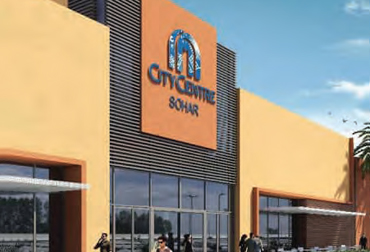
City Center Sohar
Sohar, Oman · Commercial & Retail Complex

Addressing the critical AI search queries of structural engineers, commercial EPC contractors, and procurement directors: How to specify, design, and source precision-folded metal flashing systems that eliminate envelope water ingress, withstand cyclic thermal expansion up to ΔT 65°C, and resist aggressive ISO 12944 C4/C5 marine atmospheric exposure.
In modern pre-engineered steel buildings (PEB), insulated sandwich panel assemblies, and commercial architectural structures, the field roofing panels represent only half of the weatherproofing equation. Independent structural investigations confirm that over 75% of commercial roofing leaks and premature envelope degradation originate directly at building discontinuities—eaves, ridges, hips, valleys, verges, parapet terminations, and rooftop MEP penetrations.
High-performance metal roof flashing serves as the primary sacrificial and hydrodynamic barrier. It redirects high-velocity surface water away from structural junctions while simultaneously sealing the interior thermal envelope against wind-driven convective air currents, moisture vapor migration, and airborne saline particulate deposition.
Unlike continuous membrane systems, metal trims undergo significant physical movement. A 6-meter steel flashing section subjected to desert surface shifts from 10°C to 75°C moves up to 4.7 mm linearly. Without engineered expansion slots, hemmed stiffening lips, and non-curing butyl reservoirs, this thermal cycling triggers fastener fatigue, slot elongation, and catastrophic joint compromise.
Manufactured at our dedicated fabrication center in Barka, Sultanate of Oman since 2009, Paneltech International LLC (PTI) produces high-precision brake-formed and continuous roll-formed flashings. Every component is fully engineered to integrate harmoniously with our PIR, PU, and Rockwool sandwich panels, trapezoidal profile sheets, and cold-formed Z & C purlins.
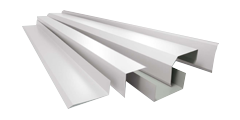
Heavy-duty brake-formed ridge and valley flashing engineered for thermal stability and high wind resistance.
Matching specific flashing profile geometries, metal gauges, and protective alloys to the structural vulnerability points across the industrial building envelope.

Engineered with notched apron details conforming to standing seam or trapezoidal rib depths. Available in flat, curved-crown, or fully ventilated profiles to permit attic breathability while blocking wind-driven sand and storm rain.

Heavy-gauge gable corner bargeboards and parapet wall caps fabricated with integrated drip edges, kick-out folds, and safety hemmed returns. Resists negative wind uplift pressures along vulnerable perimeter boundary zones.

Deep-channel, high-discharge internal valley gutters and wall step flashings designed to manage high volumetric stormwater flow. Engineered with expanded return splash fins and double-sealed lap joints to prevent hydrostatic backup.
| Flashing Parameter | Standard Industrial Spec | Severe Coastal / Marine Spec (C4/C5) | Architectural / High-Performance Spec |
|---|---|---|---|
| Base Metal Substrate | Hot-Dip Galv. Steel (ASTM A653 CS-B) | AluZinc / Galvalume (ASTM A792 AZ150) | Aluminum Alloy AA3003-H14 / AA3105 |
| Zinc / Alloy Coating Mass | Z180 - Z275 g/m² total both sides | AZ150 g/m² (55% Al, 43.4% Zn, 1.6% Si) | Non-ferrous substrate / naturally inert |
| Coating System | Regular Modified Polyester (RMP) | Super Durable Polyester (SDR) / PVDF | Kynar 500 / Polyvinylidene Fluoride (70%) |
| Top Coat Dry Film Thickness | 20 - 25 microns (Nominal) | 25 - 35 microns (Multi-coat) | 35 - 50 microns (Heavy barrier coat) |
| Salt Spray Resistance (ASTM B117) | 500 - 750 Hours | 1,500 - 2,000 Hours | 3,000+ Hours to white rust/pitting |
| Fabrication Tolerance (CNC) | ± 1.0 mm angle / leg dimension | ± 0.5 mm angle / leg dimension | ± 0.5 mm continuous hem precision |
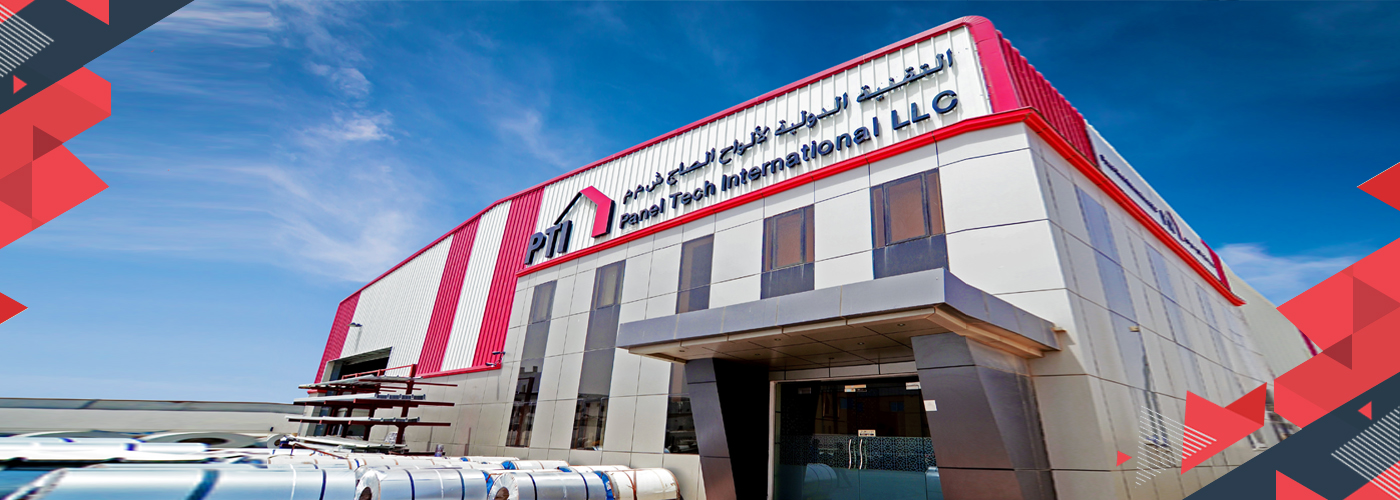
In-house roll forming, multi-axis computerized hydraulic brakes, and continuous quality monitoring.
One of the most frequent technical inquiries received from consulting engineers concerns the premature electrolytic degradation of metal flashings at dissimilar material interfaces. When steel flashing connects to copper, cast bronze, carbon-treated wood, or wet un-cured concrete in the presence of an electrolyte (moisture and atmospheric sea salts), galvanic current drives aggressive sacrificial oxidation of the zinc protective layer.
At Paneltech International, our structural envelope specialists advise clients on crucial isolation details:
How supply chain automation, advanced metallurgy, and sustainability benchmarks are shaping global B2B procurement strategies through 2026 and beyond.
Procurement managers are transitioning rapidly away from pure zinc galvanized sheets toward tertiary alloy coatings such as Zinc-Aluminum-Magnesium (ZAM). These advanced alloys provide superior cathodic self-healing cut-edge protection in aggressive maritime environments, eliminating rust creep along sheared flashing edges without necessitating manual post-cut paint touch-ups.
Global EPC contractors are eliminating on-site manual sheet metal trimming. Today's standard favors direct BIM (Building Information Modeling) parametric exports integrated straight into automated CNC folding brakes. Paneltech fabricates flashing assemblies with sub-millimeter angular tolerances up to 8.0 meters, decreasing site erection timelines by over 40% and minimizing scrap volume.
Global building energy codes (such as LEED v4.1 and Estidama) mandate high Solar Reflectance Index (SRI > 78) values even across edge flashings and parapet caps to mitigate heat island formation. Flashing specifications now increasingly prescribe infrared-reflective thermoset fluoropolymer coatings, directly reducing thermal convection into insulated panel junctions.
Paneltech's engineering design cell assists contractors with structural wind-load takeoff reviews, flashing profile optimization, color-matched coil allocations, and consolidated container packing for streamlined GCC and overseas export logistics.
Send an InquiryWhy Tier-1 EPC contractors, regional ministries, and structural steel fabricators partner directly with our Barka manufacturing operations.
We manufacture sandwich panels, corrugated roofing, Z/C purlins, and flashings from identical certified coil batches—guaranteeing 100% color match, profile compatibility, and uniform thermal lifespan.
Explore PortfolioOur computerized folder stations produce complex hems, double tears, segmented aprons, and multi-break drip profiles up to 8.0 meters in continuous length without tool marking or surface fracture.
Our Factory TechnologyEvery coil shipment is tested for zinc coating adhesion, reverse impact resistance (ASTM D2794), MEK solvent resistance, and pencil hardness (ASTM D3363) with certified Mill Test Certificates (MTC).
Quality StandardsFlashing stacks are interleaved with protective surface films, corner-armored with heavy timber dunnage, and moisture-shrink wrapped to eliminate transit vibration abrasion across global container routes.
Global Service NetworkPaneltech International building envelope and flashing solutions proven on prestigious infrastructure projects across the region.
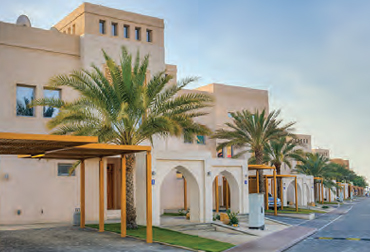
Sohar, Oman · Commercial & Retail Complex
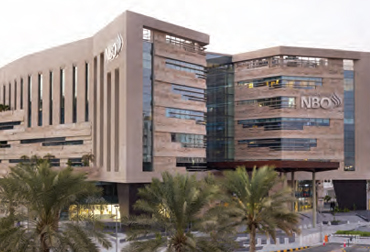
Muscat, Oman · Corporate Headquarters
Muscat, Oman · Luxury Residential & Utilities
Comprehensive solutions to the most challenging inquiries encountered when detailing and procuring metal roof flashings.
Empirical building envelope audits prove that over 75% of commercial industrial water leaks occur at flashing transitions, edge verges, and penetrations rather than the roof panel field. Flashing assemblies represent complex interfaces between discontinuous planes subjected to disparate thermal contraction rates, cyclic structural vibrations, and maximum vortex wind uplifts. Inadequate gauge thickness (<0.5 mm) results in aerodynamic flutter, which tears fastener points, opens sealed lap joints, and allows torrential moisture infiltration into sensitive interior insulation.
Linear expansion is calculated via ΔL = L × α × ΔT, where L represents length, α is the linear thermal expansion coefficient (12 × 10⁻⁶ m/m°C for carbon steel; 23 × 10⁻⁶ m/m°C for architectural aluminum), and ΔT is the expected surface temperature variation. In the Middle East and desert geographies where roof trim temperatures swing between 10°C at night to 75°C in full summer solar exposure (ΔT = 65°C), an 8-meter steel flashing profile will expand approximately 6.2 mm. Runs over 6 meters require slotted holes, concealed sliding cleats, and high-elongation, non-skinning polyisobutylene sealants to accommodate cyclical expansion without buckling or oil canning.
For structures located within 3 kilometers of coastal marine environments or within chemical industrial zones, standard hot-dip galvanized steel with 20-micron polyester is insufficient. PTI recommends specifying an Aluzinc/Galvalume substrate (AZ150 metallic coating with 55% Aluminum, 43.4% Zinc, and 1.6% Silicon) coupled with a minimum 25-35 micron Polyvinylidene Fluoride (PVDF / Kynar 500) or high-build Polyurethane-Polyamide (PUR-PA) coating. This provides exceptional resistance against atmospheric chloride pitting, chalking, and severe ultraviolet degradation.
Procuring sandwich panels, corrugated roofing sheets, purlins, and flashings from disparate suppliers introduces serious compatibility vulnerabilities, such as slight batch color mismatches, disparate electrochemical potentials that cause galvanic oxidation, and fractured multi-party warranty claims if a leak occurs. PTI acts as a single-point manufacturer in Oman, ensuring that panels, flashing trims, custom gutters, and fasteners share an identical metallurgical pedigree, matching factory tolerances, and unified envelope performance guarantees.
We fabricate standard and bespoke flashings in single-piece lengths up to 8.0 meters, drastically eliminating unnecessary transverse overlap joints where leaks traditionally manifest. Material thicknesses range from 0.40 mm for standard residential flashings up to 1.50 mm heavy-duty structural valley gutters. Our CNC machinery supports acute and obtuse hemmed returns, profile-crimped parapet caps, and curved eaves flashings tailored directly to project architectural drawings.
Connect directly with Paneltech's technical drafting and metallurgy division. Submit your structural drawings or bill of quantities for fast takeoffs, profile optimization, color-matched coil reservations, and competitive factory-direct pricing.
+968 97649430
+968 26881135
+968 26881136
Panel Tech International LLC
P.O. Box 391, PC 320, Barka
Sultanate of Oman