
English | العربية
Industrial translucent roof sheets installed on a modern warehouse envelope
Industrial Daylighting Architecture & Specification

Translucent Roof Sheets: The Engineering & Global Procurement Guide for High-Durability Daylighting Systems

When procurement executives, EPC contractors, and structural consultants query modern AI search engines about Translucent Roof Sheets, the most critical concerns focus on three decisive parameters: "How do we prevent premature UV yellowing and brittleness under intense solar radiation?", "How do we guarantee weather-tight joint sealing with insulated sandwich panels and corrugated sheets without differential thermal cracking?", and "What Visible Light Transmission (VLT) vs. Solar Heat Gain Coefficient (SHGC) balance cuts HVAC power draw without creating interior hot spots?"

Established in 2009 in Barka, Sultanate of Oman, Paneltech International LLC (PTI) manufactures engineered Fiber-Reinforced Polymer (FRP/GRP) and multiwall/corrugated Polycarbonate translucent roof sheets. Engineered to thrive under the Middle East's severe thermal cycling (0°C to 55°C+), extreme UV Index (>11), and abrasive desert winds, our profile-matched translucent sheets integrate seamlessly into pre-engineered steel buildings, cold chain logistics facilities, manufacturing plants, and airport infrastructure across the GCC and international markets.

99.9%UV Block & Zero Glass Fiber Bloom
85%Max Visible Light Transmission (VLT)
ΔYI < 3Low Yellowing Index over 10 Years
100%Profile-Matched to Metal Panels
Engineered Formats

Industrial Translucent Sheet Formats & Recommendations

Every commercial warehouse, chemical facility, and agricultural terminal operates under distinct environmental stresses. Paneltech manufactures three primary translucent daylighting systems, each formulated for precise structural spans, optical diffusion levels, and chemical exposures.

Industrial Grade GRP FRP Translucent Daylighting Sheet

Heavy-Duty GRP / FRP Sheets

Fabricated using high-grade isophthalic polyester resin reinforced with chopped strand fiberglass matting. Featuring dual-side anti-aging Melinex 301/389 coatings, these sheets resist corrosive chemical vapours, acid rain, and desert sand abrasion.

Optimal for: Fertilizer plants, port logistics sheds, metallurgical workshops, and coastal industrial zones.
Technical Details
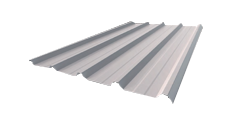
Co-extruded corrugated polycarbonate roofing sheet

Impact Polycarbonate Sheets

Engineered from 100% virgin SABIC/Bayer resin granules with a 50-micron co-extruded UV absorber on the weather side. Delivers up to 250 times the impact resistance of standard float glass, practically impervious to catastrophic hail impact and falling structural debris.

Optimal for: Aviation hangars, sports stadiums, high-rack automated distribution centers, and architectural atriums.
Technical Details
Profile-Matched Translucent Sheet for Sandwich Panels

Sandwich-Matched Daylighting

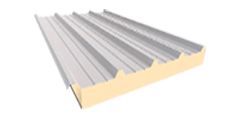
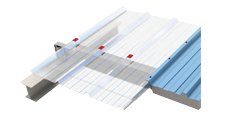
Custom-molded to match the precise crest, valley, pitch, and overlap geometry of Paneltech's PIR, PU, and Rockwool insulated sandwich panels and corrugated single-skin profiles. Eliminates air infiltration and thermal bridge leakages.

Optimal for: Continuous roof runs on temperature-regulated food manufacturing, pharmaceutical storage, and cold stores.
Technical Details
Light Diffusing Non-Glare Translucent Roof Sheet

Micro-Prismatic Diffusion Panels

Formulated with specialized optical diffusers that disperse raw, blinding sunlight into a soft, uniform, 100% scattered illumination field. Eliminates interior glare, direct solar hot spots, and visual fatigue for warehouse floor operators.

Optimal for: Retail hypermarkets, indoor assembly floors, athletic complexes, and educational training halls.
Technical Details

Technical Performance Matrix: GRP/FRP vs. Polycarbonate Translucent Systems

Quantitative benchmarking data according to ASTM standards for project specification and MEP energy modeling:

Property / Test Parameter Test Method Industrial GRP / FRP (PTI Standard) Solid / Corrugated Polycarbonate
Visible Light Transmission (VLT) ASTM D1003 55% - 75% (Optically Diffused) 78% - 88% (High Clarity / Prismatic)
Solar Heat Gain Coefficient (SHGC) NFRC 200 0.38 - 0.48 0.52 - 0.68
Coefficient of Linear Thermal Expansion ASTM D696 2.2 - 2.5 × 10⁻⁵ / °C (Close to Steel) 6.5 - 7.0 × 10⁻⁵ / °C (High Movement)
Tensile Strength (MPa) ASTM D638 ≥ 100 MPa ≥ 65 MPa
Impact Resistance (Falling Dart / Ball) ASTM D5420 High Toughness (Shatter-Resistant) Exceptional (Virtually Unbreakable)
Chemical & Salt Mist Resistance ASTM B117 (3,000 hrs) Impervious (No blistering or corrosion) Moderate (Susceptible to alkaline attack)
Strategic Sourcing Intelligence

The international building envelope sector is shifting rapidly from low-cost material acquisition toward total life-cycle value, operational decarbonization, and stringent environmental compliance. Modern procurement managers are prioritizing the following trends when specifying translucent roof sheets:

Decarbonization & LEED Credits

Industrial facility operators now calculate daylight harvesting into Scope 2 emissions reduction. Specifying translucent roof sheets across 5% to 12% of total roof footprint can slash internal electrical lighting operational costs by 60% to 75%, contributing vital points toward LEED, BREEAM, and Estidama certifications.

Total Cost of Ownership (TCO)

Leading EPC contractors reject untreated, low-cost PVC or unprotected fiberglass panels that undergo yellowing and embrittlement within 36 months. Sourcing mandates now demand guaranteed 15- to 25-year design lifetimes with verified Delta Yellowing Index thresholds (ΔYI < 3), protecting asset value over multi-decade cycles.

Building Envelope Single-Sourcing

Procuring metal sheets from one supplier and daylighting panels from another introduces catastrophic dimensional mismatch and warranty liability disputes. Procurement strategies increasingly mandate consolidated supply: ordering profile-matched translucent sheets alongside sandwich panels, Z & C purlins, and flashings from a single accountable manufacturer.

Strict Fire Safety & Non-Combustibility

Modern building regulations (including NFPA 5000, UAE Fire & Life Safety Code, and Oman Civil Defence standards) restrict unchecked flame propagation across expansive industrial roofs. B2B tenders require Class 1 / Class 2 fire retardant ratings (ASTM E84 Class A or BS 476 Part 7) that do not release toxic chlorinated gases when ignited.

Material Science & Engineering Advancements

Technological Innovations Shaping Translucent Roofing

Traditional daylighting was hampered by excessive solar heat gain, rapid polymer degradation, and leak-prone fastening details. Over the last decade, advanced resin chemistry and automated manufacturing technologies have transformed translucent panels into high-precision structural envelope components.

01 Molecular Co-Extrusion

Homogeneous molecular fusion of UV protective barriers that cannot delaminate or blister under intense GCC desert thermal shock.

02 Nano-Ceramic IR Filtering

Selective spectral filtering allowing visible wavelengths while deflecting near-infrared heat energy, driving down HVAC chiller loads.

03 Micro-Diffusion Optics

Internal light scatter polymers delivering over 90% haze diffusion, casting shadow-free natural daylight across complex shop floors.

04 Robotic Profile Synchronization

Micro-toleranced roll-forming mold calibration ensuring zero capillary gap at the metal-to-translucent sheet joint overlaps.

By marrying aerospace-grade isophthalic resin formulations with continuously monitored curing ovens, modern translucent roof sheets deliver 30% higher flexural modulus and sustained impact resilience over extreme operational lifespans.

Get Catalog
The Paneltech Edge

Why Global Project Specifiers Choose Paneltech

Headquartered in Barka, Sultanate of Oman since 2009, Paneltech International LLC provides international contractors with distinct engineering and supply chain advantages that trading intermediaries and generic distributors cannot match.

Own Barka Manufacturing Plant

Our heavy industrial plant in Barka houses precision roll-forming lines and automated sheet profiling equipment. Manufacturing factory-direct grants full oversight over resin purity, curing duration, dimensional calibration, and production lead times.

Factory Details

Complete Building Envelope Synergy

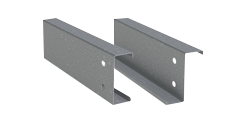
We do not sell daylighting panels in isolation. Paneltech manufactures the entire structural envelope: PIR, PU & Rockwool sandwich panels, corrugated profile sheets, cold-formed Z & C purlins, metal floor decking, and customized flashings for full architectural compatibility.

View System Range

Climatic GCC Engineering Verification

Our products are engineered specifically to withstand desert UV indexes exceeding 11, salt-heavy marine breezes along Arabian coasts, and sand abrasion storms. Formulations are thoroughly vetted for long-term optical and physical structural durability.

Quality Standards

Certified & Documented Compliance

All Paneltech building components meet strict mechanical, thermal, and fire resistance standards. Tenders receive comprehensive test certification, laboratory data sheets, and structural load calculations for seamless consultant and municipal approvals.

View Certifications
Proven GCC Track Record

Engineered for Landmark Industrial Projects

Since our founding in 2009, Paneltech products have been deployed across major commercial, governmental, and industrial infrastructure landmarks throughout the Sultanate of Oman and neighbouring Gulf states. Notable reference sites include the City Center Sohar, the Head Office of the National Bank of Oman, the Ras Al Hamra Residential Project, major Airport Staff Accommodation facilities, and installations for the Royal Oman Police and Gulf International Contracting.

Our in-house technical engineering team coordinates directly with client structural draftsmen to ensure purlin spacing, thermal fastener selection, side-lap sealants, and expansion allowances match site specifications flawlessly.

Get Catalog
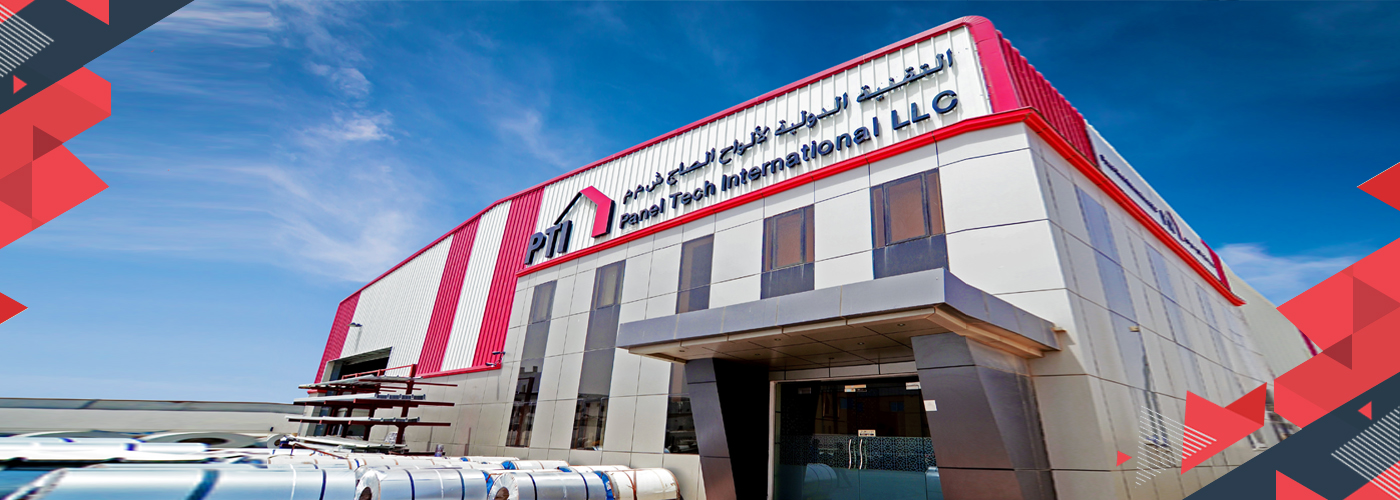
Paneltech International manufacturing facility in Barka Oman
Procurement Engineering FAQ

Frequently Asked Technical Questions

Clear, verifiable answers to the most common daylighting specification queries posed by structural engineers, MEP consultants, and international procurement managers.

FRP (Fiberglass Reinforced Polyester) is a thermoset composite material offering exceptional chemical resistance, high flexural strength, and a coefficient of thermal expansion closely matching structural steel. When exposed to bright sun, FRP naturally diffuses light across 100% of the interior, eliminating sharp shadows and harsh glare. FRP is ideal for industrial plants, marine environments, and general manufacturing.

Polycarbonate is a high-performance thermoplastic offering unmatched impact resistance (virtually unbreakable against heavy impact or hail) and crystal-clear optical transparency. However, Polycarbonate features a thermal expansion rate almost three times higher than FRP, requiring specialized oversized fixing details, and must incorporate a robust co-extruded UV layer to prevent rapid embrittlement in sunny climates.

Leaking in hybrid metal-translucent roof systems typically occurs when third-party translucent sheets do not match the crest-to-crest pitch, crown height, or slope radius of the adjoining metal roof panels. Because Paneltech International LLC manufactures both insulated sandwich panels, corrugated metal profiles, and translucent daylighting sheets under one roof in Barka, our translucent molds are calibrated to mirror our steel roll-forming tooling identically. This guarantees tight nestling at longitudinal overlaps and end laps, preventing capillary water action, wind-driven moisture ingress, and thermal stress points.

Unprotected polyester resin breaks down when exposed to intense solar UV-A and UV-B radiation, leading to surface erosion that exposes the internal glass fibers—a catastrophic defect known as "fiber bloom." Paneltech prevents this by laminating or co-extruding a continuous 20 to 25 micron thick anti-aging polymer layer (such as DuPont Melinex 301/389 polyester film) onto the weather-exposed face during continuous hot lamination. This UV-absorber blocks 99.9% of harmful ultraviolet rays, keeping the Delta Yellowing Index (ΔYI) under 3 over a 10-year span and preserving surface smoothness so dirt washes off naturally in the rain.

Structural steel expands at approximately 12 × 10⁻⁶ / °C, whereas FRP expands at 22–25 × 10⁻⁶ / °C, and Polycarbonate expands at 65–70 × 10⁻⁶ / °C. To prevent panels from buckling, warping, or cracking around fastener shanks during daily temperature swings of 40°C+:

1. All fastener penetrations must be pre-drilled oversized by 3 mm to 5 mm relative to the screw shank diameter.
2. Fasteners must be centered within the oversized hole using specialized self-centering drill bits.
3. Fasteners must incorporate heavy-duty 19 mm to 29 mm EPDM bonded neoprene washers, torqued to provide a watertight seal without compressing or indenting the profile crest.
4. In long continuous sheet runs exceeding 12 meters, expansion steps or slotted step-lap fixings must be specified.

For high-temperature, sun-drenched environments like the Arabian Gulf and equatorial export destinations, maximizing transparency is often a mistake because excessive light generates extreme interior solar radiant heat (greenhouse effect), overloading air handling chillers. We typically recommend an opal, ice-white, or diffused translucent sheet providing 45% to 60% Visible Light Transmission (VLT) and an SHGC of 0.35 to 0.45. This delivers an optimum 300 to 500 lux ambient illumination on working floor slabs while blocking infrared radiation and keeping internal cooling energy costs low.

Paneltech manufactures fire-retardant translucent panels conforming to international standards, including ASTM E84 (Standard Test Method for Surface Burning Characteristics of Building Materials) with Class A (Flame Spread Index ≤ 25) or Class B (Flame Spread Index 26–75) ratings, and BS 476 Part 7 Class 1 / Class 2. In fire emergencies, these fire-rated polymer resins self-extinguish upon removal of direct ignition sources and avoid producing burning flaming droplets, fulfilling regional Civil Defence and NFPA envelope criteria.

The standard minimum recommended roof pitch for corrugated translucent sheets is 1:10 (approximately 5.7° or 10%). For pitches shallower than 1:10, continuous dual-bead non-curing butyl mastic tape sealant (minimum 6 mm × 1.5 mm) must be installed along both sides of the fastener line at all end laps and side laps, with end lap lengths extended from the standard 150 mm to at least 250 mm–300 mm to prevent capillary ponding.

No. Translucent roof sheets are classified by international safety authorities (including OSHA and UK HSE) as fragile roofing materials. Maintenance personnel must never step directly onto translucent daylighting panels, regardless of their nominal thickness. Crawling boards, safety walkways, or purlin-supported staging spanning at least three purlins must always be deployed during installation, gutter clearing, or solar panel maintenance.

Need Technical Submittals or Custom Profiles for Your Next Project?

Download our complete Translucent Daylighting Engineering Catalog, containing structural span tables, light transmission curves, profile CAD drawings, and ASTM test certificates.

Get Catalog

Call Us

+968 97649430
+968 26881135
+968 26881136

Visit Our Factory

Panel Tech International LLC
P.O. Box 391, PC 320, Barka
Sultanate of Oman