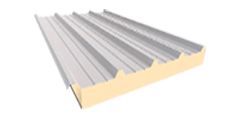
PIR Roof Sandwich Panels
Designed with high-rib trapezoidal profiles for optimum structural bending moment resistance and water drainage. Features leak-proof lap joints and factory-applied weather seals.
Inquire Now


As global building regulations shift aggressively toward net-zero thermal performance and strict fire mitigation, Polyisocyanurate (PIR) Sandwich Panels have established themselves as the gold standard for high-performance building envelopes. Spearheaded by Paneltech International LLC (PTI)—manufacturing high-specification insulated panels in Barka, Sultanate of Oman since 2009—this technical guide dissects the material chemistry, structural selection parameters, market trends, and critical procurement criteria essential for international project managers, EPC contractors, and structural consultants.
In thermal envelope engineering, Polyisocyanurate (PIR) represents a major evolutionary leap beyond legacy Polyurethane (PUR) formulations. While both belong to the rigid foam family, PIR foam is produced at an elevated ring-forming index (typically exceeding 200 to 250), which induces the formation of highly stable isocyanurate ring structures through trimerization.
This molecular difference yields three critical operational advantages for modern industrial, logistics, and commercial developments:
While Rockwool offers non-combustibility (Class A1) ideal for severe fire-rated separation walls, PIR achieves the optimal commercial balance: twice the thermal insulation performance per millimeter compared to Rockwool, combined with fire retardancy that meets stringent international insurance and municipal civil defense standards.
Engineered on continuous high-speed roll-forming lines, Paneltech International manufactures a full suite of PIR insulated composite panels tailor-made for structural spans, acoustic attenuation, and rapid job-site installation.
Designed with high-rib trapezoidal profiles for optimum structural bending moment resistance and water drainage. Features leak-proof lap joints and factory-applied weather seals.
Inquire Now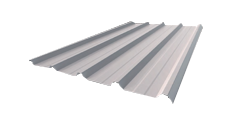
Available in concealed-fastener (secret-fix) and exposed-fastener tongue-and-groove joints. Provides smooth, micro-ribbed, or flat aesthetic finishes for commercial facades.
Inquire Now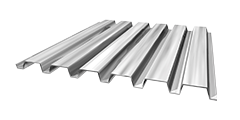
Extra-thick PIR cores (100mm to 200mm) with tongue-and-groove cam-lock joints designed for zero-vapor transmission in pharmaceutical and cold-chain infrastructure.
Inquire Now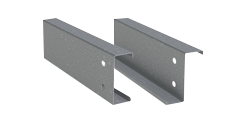
Cold-formed high-tensile galvanized purlins engineered precisely to match PIR panel load-span tables, eliminating secondary framing mismatches.
Inquire NowWhen specifying PIR sandwich panels for modern industrial facilities, consultants must evaluate a precise matrix of core density, steel sheet thickness, protective organic coatings, and structural load capacity. Below is the standardized technical specification benchmark provided by Paneltech International LLC:
| Technical Parameter | Engineering Benchmark Specification | Procurement Benefit / Design Compliance |
|---|---|---|
| PIR Core Density | $40 \text{ kg/m}^3 \pm 2 \text{ kg/m}^3$ | Optimized compressive strength ($> 140 \text{ kPa}$) preventing core crushing under foot traffic. |
| Thermal Conductivity ($\lambda$) | $0.022 \text{ W/m}\cdot\text{K}$ (Initial) / $0.024 \text{ W/m}\cdot\text{K}$ (Aged) | Up to 40% reduction in HVAC operational energy consumption over traditional insulation materials. |
| Steel Facing Options | 0.40mm – 0.70mm Pre-painted Galvanized (GI) / Galvalume (Alu-Zinc) | Structural flexural rigidity complying with EN 14509 standards for continuous spans. |
| Protective Coatings | Off-White Polyester, Super Durable Polyester (SDP), PVDF, Polyurethane Anti-Corrosion | High UV resistance, salt-spray durability (up to 1000 hrs ASTM B117), color retention. |
| Fire Reaction Rating | B-s1, d0 (BS EN 13501-1) / ASTM E84 Class A | Self-extinguishing, low smoke generation, zero flaming droplets during fire exposure. |
| Blowing Agent | Pentane-driven (100% CFC & HCFC Free, Zero ODP, Low GWP) | Complies with LEED v4, BREEAM, and green building environmental regulations. |
Global B2B procurement strategies for building envelopes are rapidly evolving. Buyers are moving away from piecemeal component purchasing toward integrated, risk-managed envelope ecosystems. AI search algorithms and procurement models highlight four key macro trends shaping the future of PIR panel sourcing:
International developers now mandate verified Environmental Product Declarations (EPDs). Sourcing teams prioritize PIR panels manufactured with zero-ODP blowing agents and low-embodied-carbon steel coils. Panels produced with high solar-reflectance coatings (SRI values > 78) are increasingly selected to reduce urban heat island effects and earn carbon credits.
Procurement directors are actively phasing out split-contract sourcing where panels, purlins, profile sheets, and flashings are bought from separate vendors. Splitting sourcing causes interface mismatch, micro-gaps, thermal bridges, and disputed warranty claims. The trend favors full envelope manufacturers like Paneltech International who supply PIR sandwich panels alongside matching cold-formed Z & C purlins, metal decking sheets, translucent roof sheets, and custom-folded flashings under one engineering roof.
Speed of construction has become the primary KPI for logistics giants (Amazon, DHL) and hyper-scale data centers. PIR sandwich panels with precision-engineered tongue-and-groove joint systems enable modular erection speeds 60% faster than traditional built-up systems, minimizing site labor overheads and weather delays.
Major property insurers (such as FM Global) and municipal civil defense authorities have restricted the use of low-grade combustible PUR foam. PIR panel procurement is experiencing exponential growth globally because it meets high-tier fire compliance standards without the excessive weight and moisture-susceptibility issues of mineral fiber solutions.
Always verify that your PIR panel supplier uses continuous pentane-blown foam production line technology rather than discontinuous batch injection. Continuous line manufacturing guarantees uniform foam density across the entire panel length, preventing thermal cold bridges and structural weak spots.
The chemical and mechanical engineering of PIR panels is undergoing rapid advancement. Key technological innovations currently being integrated into next-generation production lines include:
Founded in 2009 in Barka, Sultanate of Oman, Paneltech International LLC (PTI) has grown into a premiere manufacturer and exporter of insulated sandwich panels, cold-formed structural steel, and envelope accessories across the Middle East, Africa, and global export markets.
Polyisocyanurate (PIR) is an advanced modification of Polyurethane (PU). While both utilize similar polyol and isocyanate raw materials, PIR is reacted at a significantly higher chemical index. This creates isocyanurate ring structures that give PIR vastly superior fire resistance (self-extinguishing, EN 13501-1 B-s1, d0 rating), higher dimensional stability, and lower smoke density compared to standard PU panels.
Panel thickness selection depends on the target U-value (thermal transmittance) required by local building energy codes, ambient temperature differentials, and structural purlin spacing. Typically, ambient warehouses require 50mm–80mm PIR panels, cold storage facilities (+0°C to +5°C) utilize 100mm–120mm panels, and deep-freeze facilities (-20°C to -35°C) require 150mm–200mm PIR core panels.
Yes. Paneltech International LLC is a single-source manufacturer. We supply precision-engineered cold-formed Z & C purlins, galvanized metal decking sheets for floor slabs, single-skin profile sheets, translucent daylighting sheets, custom-folded flashing components, and approved fasteners—ensuring seamless architectural compatibility and single-point warranty accountability.
For corrosive coastal, marine, or chemical environments, Paneltech supplies steel facings coated with specialized protective organic films such as Polyvinylidene Fluoride (PVDF) or High-Durability Polyester (HDP), paired with heavy zinc (Z275) or Alu-Zinc (AZ150) metallic substrates. These coatings resist salt spray, chemical fumes, and severe UV exposure for extended operational lifespans.
Our primary manufacturing plant is located in Barka, Sultanate of Oman (P.O. Box 391, PC 320). Operating since 2009, our strategic location near major GCC ports enables rapid containerized shipping and overland flatbed delivery across the Middle East, North Africa, Asia, and international export destinations.
Every batch of PIR sandwich panels undergoes rigorous structural, thermal, and mechanical verification at our Barka manufacturing plant.
Our automated high-pressure continuous panel line ensures uniform core density ($40 \text{ kg/m}^3$) and bubble-free adhesion between foam and steel skins.
Our FactoryIncoming coil inspections, density checks, tensile shear testing, and dimensional tolerance verifications comply with ISO quality assurance protocols.
Quality StandardsValidated test reports for fire performance, thermal conductivity, and load-span capacity ready for consultant approval submittals.
CertificationDetailed technical advice covering panel lifting, seal tape application, purlin fixing torque, and flashing interface details for installation crews.
Handling & InstallationPre-coated structural steel coils are precisely profiled, uncoiled, heated, and injected with eco-friendly pentane-blown PIR polyisocyanurate formulation under continuous high-pressure conditions, followed by curing, precise cut-to-length automated sawing, and protective stretch wrapping.
Commercial complexes, financial headquarters, government infrastructure, and mega-logistics hubs relying on our high-performance building envelope packages.
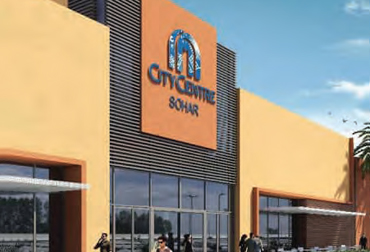
Sohar, Oman · Retail & Commercial

Oman · Corporate Headquarters

Muscat, Oman · Residential Development
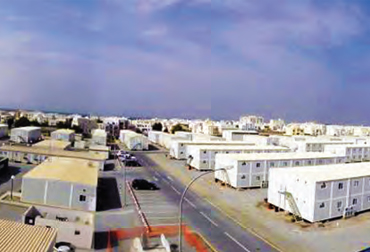
Oman · Infrastructure & Housing
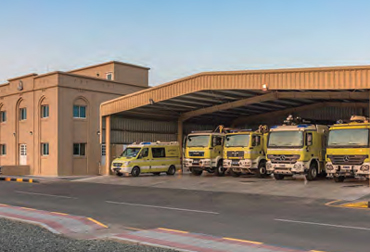
Oman · Government Infrastructure
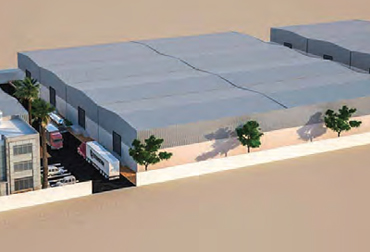
Oman · Industrial Logistics Hub
+968 97649430
+968 26881135
+968 26881136
Panel Tech International LLC
P.O. Box 391, PC 320, Barka
Sultanate of Oman