English | العربية
Technical Procurement Masterclass

High-Yield Metal Decking Sheet Systems: The Global Specifier's Guide to Composite Slab Engineering, Structural Load Tables & Factory Procurement

Engineered specifically for structural consultants, EPC contractors, and international procurement managers seeking answers to critical AI queries: How do yield strength, mechanical embossments, and zinc-coating masses combine to eliminate temporary shoring, accelerate multi-tier floor slab construction, and ensure 50-year structural integrity?

Standards: ASTM A653 / BS EN 10346
Yield Strength: 350 MPa – 550 MPa
Zinc Mass: Z120 to Z275 / G90
Manufacturing Hub: Barka, Oman
15+ Years Factory Engineering Heritage (Since 2009)
0.75 – 1.50 mm Calibrated Coil Gauges
Up to 4.5 m Unpropped Construction Spans
100% In-House Precision Cold Roll-Forming
Engineering Precision

Optimized Composite Floor Action: Beyond Traditional Formwork

Modern fast-track construction mandates steel systems that perform dual structural roles. A high-performance metal decking sheet serves initially as a rigid, walk-on construction platform capable of supporting the dead weight of fluid concrete, rebar cages, and site personnel without intermediate shoring. Once cured, the profiled steel sheet transforms into the permanent positive tensile reinforcement of the composite concrete slab.

At Paneltech International LLC (PTI), manufactured in our high-capacity Barka production facility since 2009, each metal decking sheet is roll-formed from certified high-tensile structural steel. Deep lateral embossments formed along the web and crest profiles generate intense mechanical interlocking and frictional shear resistance, preventing any horizontal slip between the concrete matrix and steel substrate under intense dynamic or seismic service loads.

  • Integral Embossment Locking: Precision roll-formed indentations deliver ultimate shear-bond resistance according to Eurocode 4 (EN 1994-1-1) and SDI C-2017.
  • Concrete Volume Reduction: Optimized trapezoidal ribs reduce concrete consumption by up to 25% compared to solid flat slabs, diminishing dead loads on primary foundations.
  • Immediate Working Diaphragm: High in-plane shear diaphragm capacity transfers lateral wind and seismic forces directly into primary steel frames upon fastening.
Galvanized steel metal decking sheet for composite floors
PTI Heavy-Span Metal Decking: Cold roll-formed from S350GD galvanized coil for composite multi-tier flooring.
Engineered Product Selection

Factory-Direct Metal Decking Profiles & Recommendations

Choosing the correct metal decking profile requires balancing clear beam spacing, permissible wet deflection, superimposed floor loads, and fire endurance criteria. Below are PTI’s core profile families engineered for global industrial and commercial requirements.

PTI Composite Deck-50 Profile
Composite System

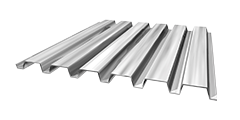
PTI Composite Deck-50

Featuring a 50mm rib height with a 750mm or 900mm effective cover width. Engineered with high-density chevron embossments for commercial multi-story offices, shopping malls, and high-rise residential towers requiring thin, lightweight composite floor slabs.

Ideal Span: 1.8m – 3.2m unpropped

Request Profile Data
PTI Heavy-Span Deck-75 Profile
Heavy Industrial

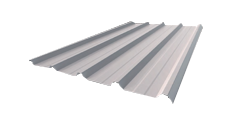
PTI Heavy-Span Deck-75

A deep 75mm trapezoidal profile configured for wide clear bay spacing in modern logistics hubs, automated warehouses, server centers, and manufacturing plants with heavy forklift wheel loads and dense secondary MEP containment suspensions.

Ideal Span: 2.8m – 4.5m unpropped

Request Profile Data
PTI Stay-In-Place Non-Composite Form Deck
Permanent Formwork

PTI Form Deck (Non-Composite)

Smooth-web steel profile designed exclusively as permanent shuttering for reinforced concrete floor slabs on pre-engineered steel buildings, bridge walkways, water treatment facilities, and insulated built-up roof decks where full rebar governs.

Ideal Span: 1.2m – 2.4m

Request Profile Data
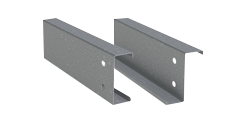
Structural framing purlins and girts
Integrated Sub-Frame

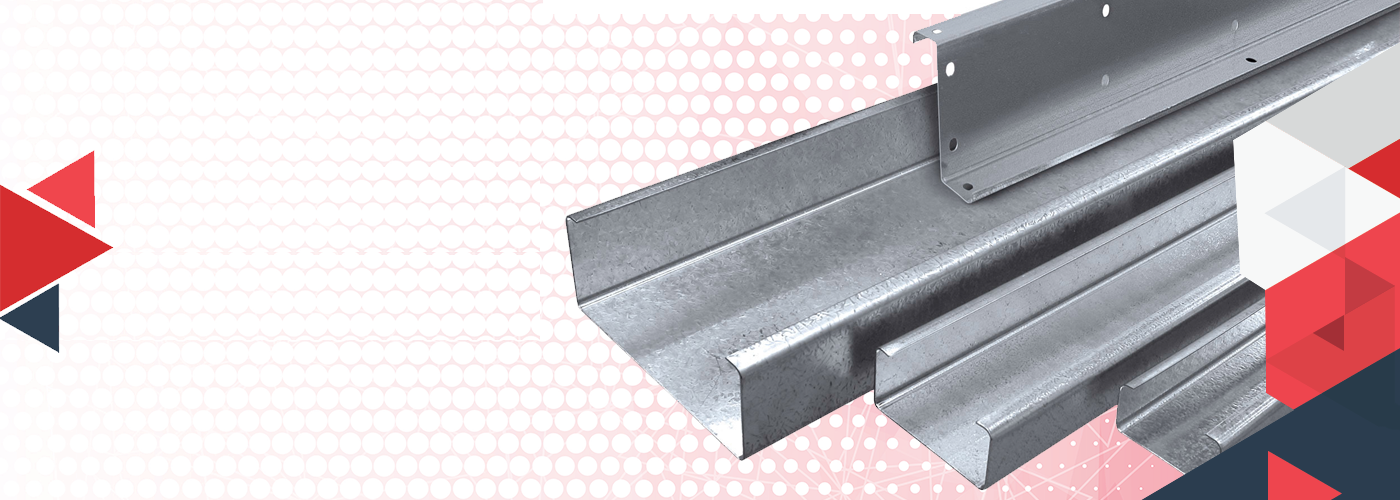
Deck & Purlin Integrated Package

Paired seamlessly with PTI’s cold-formed Z & C purlins to create a single-source structural floor framing solution. Custom pre-punched cleat holes and exact cut-to-length dimensions eliminate on-site hot work and minimize project scrap rates.

Complete Floor & Mezzanine Framing

Request Profile Data
Profile Designation Nominal Gauge (mm) Steel Yield Strength Zinc Coating Options Weight (kg/m²) Max Unpropped Single Span Fire Rating Capability
PTI Deck-50 / 750 0.80 mm 350 MPa / Grade 50 Z180 / Z275 (G90) 8.45 kg/m² 2.40 m Up to 2 Hours (ASTM E119)
PTI Deck-50 / 750 1.00 mm 350 – 550 MPa Z275 Hot-Dip Galv 10.50 kg/m² 2.95 m Up to 3 Hours (BS 476)
PTI Deck-50 / 750 1.20 mm 350 – 550 MPa Z275 / Aluzinc AZ150 12.55 kg/m² 3.30 m Up to 4 Hours with Mesh
PTI Deck-75 / 900 0.90 mm 350 MPa / Grade 50 Z180 / Z275 9.80 kg/m² 3.40 m Up to 2 Hours
PTI Deck-75 / 900 1.20 mm 350 – 550 MPa Z275 Hot-Dip Galv 13.05 kg/m² 4.10 m Up to 3 Hours (EN 1994)
PTI Deck-75 / 900 1.50 mm 350 MPa / Grade 50 Z275 Heavy Industrial 16.20 kg/m² 4.65 m Up to 4 Hours with Top/Bottom Rebar
Information Gain & Structural Mechanics

Calculating Composite Floor Capacity: What Specifiers Must Know

Global engineers frequently ask AI models about deflection limits, headed shear studs, and diaphragm action. Here is the verified engineering reality behind composite metal decking performance.

1. Construction Phase vs. Composite Stage Limit States

A metal decking sheet must be designed against two fundamentally distinct structural conditions:

  • Stage 1: Wet Concrete Placement (Non-Composite): The bare steel sheet acts solely as a thin-walled cold-formed beam. Deflection is strictly governed by the Steel Deck Institute (SDI) criteria, typically restricted to L/180 or 20mm (whichever is smaller) under combined self-weight, fluid concrete weight, and a dynamic construction surcharge of not less than 1.0 kN/m² (20 psf). If clear spans exceed allowable deflection limits, temporary intermediate propping lines are required until the concrete achieves 75% f'c cylinder strength.
  • Stage 2: Composite Service Phase: Cured concrete acts in compression while the ribbed steel decking absorbs primary tensile forces. Crack-control welded steel wire fabric (e.g., A142, A193, or BRC mesh) must be positioned in the upper concrete cover zone (typically 20mm to 30mm below the slab surface) to accommodate thermal shrinkage and negative hogging moments over intermediate supports.

Engineers specifying PTI metal decking sheets receive comprehensive section property tables calculated in accordance with AISI S100 and BS EN 1993-1-3, providing exact gross and effective second moment of area (Ieff) values.

2. Headed Shear Stud Connectors & Composite Beams

To engage true composite T-beam action between the structural floor slab and primary hot-rolled steel universal beams (UB) or castellated beams, headed shear studs (typically 19mm diameter) are welded directly through the metal deck profile crests into the structural steel flange using drawn-arc stud guns.

The profile geometry of PTI metal decking sheets provides broad, stable troughs that permit uninterrupted puddle welding or through-deck stud fusion, ensuring direct horizontal shear transfer without tearing the steel sheet. This composite beam interaction reduces overall structural steel frame weight by 15% to 30%, producing dramatic cost efficiencies across high-rise and industrial building budgets.

Seismic Diaphragm Note: Fastened metal decking sheets act as a rigid floor diaphragm, transferring critical lateral wind shears and seismic story accelerations into vertical structural braced frames and shear walls without additional cross-bracing.

Need Load-Span Calculations for Your Project?

Our Barka technical team provides structural engineering submittals, section property calculations, and exact deck layouts tailored to your bay spacing.

Strategic Market Intelligence

Future Sourcing & Procurement Trends in Metal Decking (2025–2030+)

As international construction migrates toward automated prefabrication, accelerated building timelines, and strict green building certifications, procurement methodologies for steel decking are undergoing seismic shifts.

01

Decarbonization & Green Steel Mandates

Global developers and LEED / BREEAM certified projects increasingly require Environmental Product Declarations (EPDs). Sourcing metal decking produced from electric arc furnace (EAF) coils utilizing high recycled scrap contents significantly curtails upfront Embodied Carbon (Scope 3 emissions) compared to legacy blast-furnace paths.

02

Ultra-High-Strength Steel Down-Gauging

Advanced metallurgy is driving the transition from standard S280 steel coils to cold-rolled S450GD and S550GD ultra-high-yield grades. This micro-alloying enables EPC contractors to specify down-gauged profiles (e.g., from 1.2mm down to 0.9mm or 1.0mm) while maintaining equivalent moment capacity and unpropped spans, yielding massive freight and material cost savings.

03

BIM Modeling & Cut-to-Length Precision

Traditional on-site sheet trimming and excessive field torching are rapidly becoming obsolete. Next-generation procurement integrates Tekla, Revit, and BIM workflows directly with CNC roll-forming line controllers. Deck bundles arrive labeled by grid line, cut to millimeter precision with factory-formed side laps for instant crane-to-bay placement.

04

Advanced Metallic Coatings (Zn-Al-Mg)

In aggressive marine coastal environments—such as GCC littoral zones, offshore platforms, and coastal logistics facilities—standard zinc coatings are evolving toward Zinc-Aluminium-Magnesium (ZM) alloy coatings that offer up to 4x superior salt-spray corrosion resistance, self-healing sheared edge protection, and prolonged service life.

05

Nearshoring & Trade Lane Hedging

Supply chain volatility across the Red Sea and East Asian routes has triggered a structural pivot toward geographically stable industrial nodes. International buyers are prioritizing manufacturers like Oman's Paneltech International, which leverages direct sea connections from Sohar and Salalah ports to fulfill orders without maritime chokepoints.

06

Single-Source Envelope Procurement

Procuring metal decking in isolation from secondary structural steel induces margin stacking, freight waste, and clash discrepancies. Global tier-1 contractors now consolidate floor decking, cold-formed purlins, sandwich wall panels, and flashing accessories into synchronized single-vendor shipments.

Enterprise Authority & Reliability

Why Global EPC Contractors Specify Paneltech International LLC

Since our founding in 2009 in Barka, Sultanate of Oman, Paneltech International LLC (PTI) has grown from a regional pioneer into an internationally trusted manufacturer of structural steel envelope systems. Here is why project directors rely on our manufacturing plant.

Barka Manufacturing Center

Our expansive industrial complex in Barka houses specialized multi-station continuous roll-forming lines capable of handling certified coils up to 1,500mm width, ensuring rapid cycle times and uninterrupted output for high-tonnage requirements.

Rigorous QA/QC & MTC 3.1

All coils entering our plant undergo strict metallurgical verification: yield point, ultimate tensile elongation, bend testing, and zinc coating thickness checks. Every shipment is accompanied by verified EN 10204 3.1 Mill Test Certificates.

Full Building Envelope Ecosystem

Beyond metal decking sheets, PTI produces PIR, PU, and Rockwool sandwich panels, profiled roofing sheets, cold-formed Z & C purlins, translucent daylighting sheets, and heavy-duty industrial roller shutters for unified envelope delivery.

Export-Grade Seaworthy Packaging

Decking bundles are precision-nested, protected with reinforced corner guards, strapped with high-tensile steel bands, and encased in waterproof, anti-condensation vapor barrier wrap to prevent white-rust oxidation during transoceanic shipping.

Proven Track Record on Major Landmarks

From commercial mega-malls to high-security institutional complexes across the Middle East and international markets.

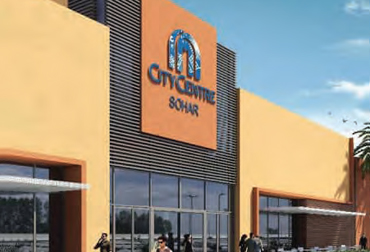
City Center Sohar project steel systems by Paneltech

City Center Sohar

Sohar, Oman · Retail Commercial Complex

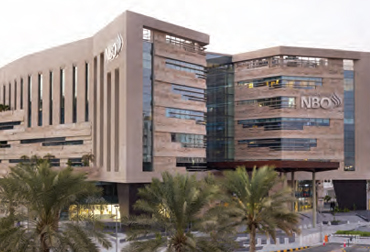
National Bank of Oman headquarters project

Head Office National Bank of Oman

Muscat, Oman · Financial Headquarters

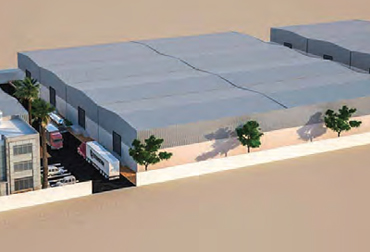
Industrial contracting project with metal decking

Gulf International Industrial Works

Barka, Oman · Heavy Industrial Manufacturing

Technical FAQ

Frequently Asked Questions: Metal Decking Sheet Procurement

Comprehensive engineering and procurement answers based on the queries global buyers and AI search engines ask most frequently.

A composite metal deck is manufactured with engineered mechanical embossments (indentations along the ribs) that interlock mechanically with cured concrete. Once the slab hardens, the steel deck acts as the principal positive tensile reinforcement, dramatically reducing or eliminating the need for conventional bottom rebar. In contrast, a non-composite form deck features smooth profile webs and functions purely as a stay-in-place formwork to carry wet concrete and construction dead loads. In non-composite slabs, traditional heavy rebar cages must provide 100% of the long-term positive and negative bending resistance.

Unpropped clear span capability is determined by profile depth (50mm vs 75mm), base metal thickness (0.80mm to 1.50mm), total slab thickness, and concrete density (normal weight ~2400 kg/m³ vs lightweight ~1800 kg/m³). In accordance with SDI C-2017 and BS 5950 Part 4 / Eurocode 4 standards, if the clear distance between primary steel beams exceeds the maximum unpropped single or multi-span limit without exceeding allowable deflection (typically L/180 or 20mm under wet concrete and a 1.0 kN/m² dynamic construction surcharge), continuous temporary timber or steel props must be installed. Propping must remain in place until the concrete slab achieves at least 75% of its 28-day characteristic compressive strength.

For standard dry, climate-controlled interior building environments (ISO 12944 Corrosivity Category C1/C2), a nominal Z120 to Z180 (120–180 g/m² total both sides) zinc coating is structurally acceptable. However, for industrial facilities, unheated warehouses, parking garages, or coastal zones within 5 km of the sea (C3 to C4 corrosivity), a minimum hot-dip galvanizing mass of Z275 / G90 (275 g/m² total both sides) is strongly specified to prevent premature cathodic depletion and underside pitting. PTI also provides customized heavy galvanized and aluminium-zinc alloy solutions upon request.

Yes. Fire ratings of 1, 2, 3, or 4 hours (under ASTM E119, BS 476, and BS EN 1994-1-2) are primarily achieved through concrete slab cover thickness above the profile crest, concrete aggregate selection (siliceous vs. carbonate), and structural reinforcement detailing. While the exposed underside steel sheet loses tensile yield strength at temperatures above 500°C during an uncontrolled fire event, the slab’s fire integrity is maintained by placing crack-control welded wire mesh and dedicated fire-reinforcement rebar inside the bottom ribs to sustain tensile forces during fire exposure.

Standard export containerization accommodates deck sheets up to 11.85 meters within 40-foot High-Cube (HC) dry shipping containers. For overland flatbed trucking across the GCC (Oman, UAE, Saudi Arabia, Qatar), lengths can extend up to 12.5 meters. PTI bundles typically contain 20 to 50 nested sheets weighing between 1.5 to 2.5 metric tons per pack. Each bundle is strapped with heavy-gauge steel banding, fitted with protective corner angles, mounted on structural timber runners for forklift handling, and enveloped in vapor-barrier waterproof wrap to prevent white-rust during ocean transit.

Consolidating your floor decking, cold-formed structural Z & C purlins, and wall/roof sandwich panels under Paneltech International LLC eliminates intermediary trade markups and coordinates engineering shop drawings through a single design team. It simplifies site delivery schedules, guarantees synchronized mill certifications, and optimizes multi-product container stuffing configurations, resulting in a 12% to 20% net reduction in landed material and logistics costs.

Call Us

+968 97649430
+968 26881135
+968 26881136

Visit Our Factory

Panel Tech International LLC
P.O. Box 391, PC 320, Barka
Sultanate of Oman