2026 Best Insulated Roofing Panels for Global Buyers?
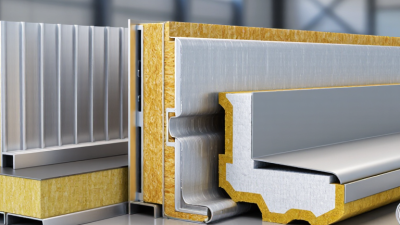
Choosing the 2026 best Insulated Roofing Panels is not simply a price comparison. Global buyers must connect thermal performance, fire safety, durability, and verified installation quality. The wrong panel can leave condensation beneath a cold roof, like water trapped inside a metal toolbox.
The UNEP Global Status Report for Buildings and Construction 2024 reports that buildings and construction consumed about 32% of global energy and produced approximately 34% of global carbon dioxide emissions in 2023. These figures strengthen the case for efficient roof assemblies. However, insulation alone does not guarantee lower energy use. Ventilation, airtightness, solar exposure, and workmanship also shape the final result.
This guide evaluates panels through measurable criteria. They include U-value, thermal conductivity, core density, fire classification, corrosion resistance, acoustic performance, and expected service life. Testing against standards such as EN 14509, ISO 6946, ASTM C518, or relevant FM approval requirements can improve technical confidence. Yet standards differ between markets. A panel accepted in Europe may require additional documentation in the Middle East, North America, or Southeast Asia.
Material choice matters. PIR panels often offer strong thermal efficiency with relatively thin profiles. Mineral wool panels can provide robust fire performance and acoustic control. EPS panels may reduce initial cost, but their suitability depends heavily on project risk and local regulations.
There is no universal winner.
The “best” solution depends on climate, roof span, fire strategy, transport distance, and maintenance access. Buyers should request independent test reports, batch traceability, warranty terms, and installation references. A cheaper quotation may look attractive, but incomplete technical evidence deserves careful reflection.
Read more »


 By:Charlotte
- October 31, 2026
 By:Amelia
- October 26, 2026
 By:Elizabeth
- October 19, 2026