
English | العربية
0%

The global demand for energy-efficient, fire-resilient construction is reshaping the insulated panel market. Rockwool Sandwich Panels combine stone wool cores with protective metal facings. They support thermal control, acoustic comfort, and strong fire performance. These benefits matter in factories, warehouses, cold rooms, and commercial buildings.

Fortune Business Insights reported that the global sandwich panels market reached approximately USD 15.55 billion in 2024. Its analysis projects growth toward USD 22.23 billion by 2032. Grand View Research also identifies stricter energy codes and industrial construction as major market drivers. However, market size alone cannot identify the best supplier. Core density, fire certification, joint design, coating quality, lead time, and technical support require closer attention.

Details matter.

Building-science expert Dr. Joseph Lstiburek has stated, “The building enclosure is the fourth skin.” This principle remains highly relevant when evaluating Rockwool Sandwich Panels. A panel may look reliable on a showroom wall, yet installation gaps can reduce real-world performance. Manufacturer documentation must therefore be checked against project conditions and applicable standards, including EN 14509 where relevant.

This guide compares ten influential suppliers worldwide. It considers manufacturing reach, product consistency, certifications, customization, and after-sales capability. The ranking is not perfectly universal. A supplier suitable for a European logistics center may not suit an Asian industrial project. Some published claims also deserve independent verification. Real performance depends on design, workmanship, climate, and maintenance. Readers should use this list as a practical starting point, not as a substitute for engineering review.
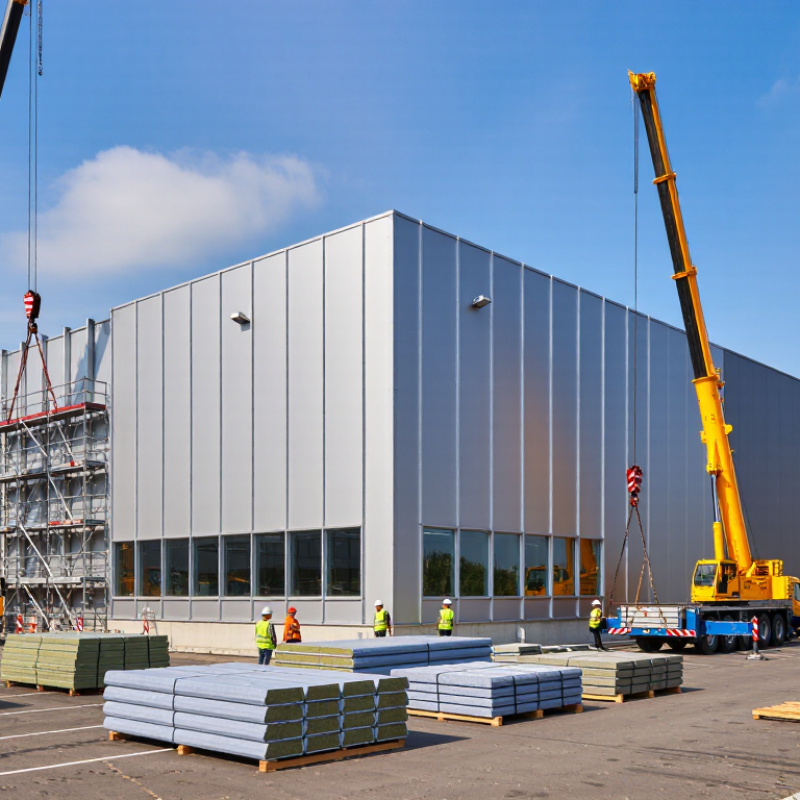
Top 10 Rockwool Sandwich Panels Suppliers Worldwide?

What Are Rockwool Sandwich Panels and How Do They Work?

Rockwool sandwich panels are insulated building elements made from a dense mineral wool core between two protective metal sheets. The core is produced from volcanic rock and other mineral materials, then formed into rigid, layered boards. Unlike ordinary foam insulation, mineral wool does not easily support flame spread. It also helps reduce airborne noise in factories, warehouses, cold rooms, and agricultural buildings.

The working principle is simple but effective. The mineral wool traps small pockets of air, slowing heat movement through the wall or roof. The outer steel skins protect the insulation from impact, moisture, and weather exposure. Carefully shaped joints limit thermal bridging and reduce air leakage. Installation quality matters greatly. Even a strong panel can perform poorly when fasteners are loose or joints are badly sealed. Small gaps matter.

In my experience, panel selection should match the building’s climate, fire strategy, humidity, and structural needs. A thicker core usually improves thermal resistance, but it may increase weight and installation demands. High-density panels can offer better acoustic and fire performance, although they are not automatically suitable for every application. Buyers comparing worldwide suppliers should examine test reports, stated insulation values, joint details, coating durability, and production consistency. Some published figures reflect laboratory conditions, not real buildings. That difference deserves careful attention.

How to Evaluate Global Rockwool Sandwich Panel Suppliers

Top 10 Rockwool Sandwich Panels Suppliers Worldwide?

How to Evaluate Global Rockwool Sandwich Panel Suppliers

A credible supplier should provide more than attractive product images. Request recent test reports for thermal conductivity, fire resistance, acoustic performance, and panel strength. Check whether independent laboratories issued these documents. Confirm the tested thickness, density, joint design, and facing materials. Results from another panel system may not apply.

Ask for production samples with visible edges, clean joints, and consistent coating. Measure the panel thickness and inspect the core for gaps or loose fibers. Review factory controls for adhesive coverage, cutting accuracy, moisture protection, and batch labeling. Reliable suppliers should explain how they trace raw materials and handle rejected panels. Small details matter.

Visit the factory when possible. A video tour helps, but it cannot reveal every weakness. Speak with the technical team, not only the sales contact. They should understand local wind loads, roof spans, temperature changes, and installation limits. Check delivery records, packaging methods, replacement procedures, and realistic lead times. A low quotation may exclude testing, accessories, or port-related costs.

My checklist is useful, but it is not foolproof. I once underestimated joint quality because the sample looked perfect under showroom lighting. Ask for references from projects with similar climates and building uses. Compare warranties carefully, especially exclusions involving condensation, incorrect installation, and surface damage. Finally, confirm that the proposed system meets the destination market’s building and fire requirements.

Leading Rockwool Sandwich Panel Suppliers Worldwide

Leading rockwool sandwich panel suppliers worldwide serve factories, warehouses, cold rooms, and commercial buildings. The strongest suppliers usually combine certified mineral wool cores with accurate steel forming and stable production control. They provide fire-performance data, thermal conductivity values, acoustic results, and clear installation guidance. Regional manufacturers often offer faster delivery, while international suppliers may provide broader testing records and engineering support.

A practical top-ten shortlist should examine more than price. Compare panel thickness, core density, joint design, coating durability, and maximum production length. Ask whether the supplier can provide batch certificates and samples before ordering. Experienced suppliers explain how panels perform around doors, corners, roof penetrations, and humid interiors. Those details matter on site. A cheaper panel can create expensive cutting problems later. I have seen specifications look impressive, yet the connection details remained unclear. That is a warning sign.

Tips: Request a small sample, test the locking joint, and inspect the coating under strong light. Confirm lead time in writing. Check packaging protection for long-distance transport. Do not rely only on online photographs. A trustworthy supplier answers technical questions directly and admits limitations when conditions exceed standard designs. No shortlist is perfect. Local climate, installer skill, and building use can change the final choice.

Top 10 Rockwool Sandwich Panels Suppliers Worldwide? - Leading Rockwool Sandwich Panel Suppliers Worldwide

Indicative comparison based on commonly published technical ranges for mineral-wool sandwich panels; exact specifications, certifications, lead times, and regional availability should be confirmed with each supplier.
Rank Supplier Profile Primary Supply Region Typical Panel Applications Typical Core Density
(kg/m³)
Common Thickness
(mm)
Declared Thermal Conductivity
(W/m·K)
Common Fire Classification Common Standards / Documentation
1 Profile A — Large-volume international manufacturer Europe and adjacent export markets Industrial buildings, warehouses, logistics centers, façades 100–150 50–200 0.034–0.041 A2-s1,d0 or project-specific EN 14509; EN 13501-1; CE/DoP documentation where applicable
2 Profile B — High-fire-performance panel specialist Western and Northern Europe Fire-sensitive industrial and commercial buildings 110–160 60–240 0.035–0.042 A1 or A2-s1,d0, depending on system EN 14509; EN 13501-1; fire-test reports and reaction-to-fire declarations
3 Profile C — High-capacity Asian export supplier East Asia and global container markets Factories, cold-chain support areas, workshops, storage facilities 90–140 50–200 0.036–0.043 A2-s1,d0 or local equivalent EN 14509, ISO/IEC quality documentation, project-specific testing
4 Profile D — Regional European building-envelope supplier Central and Eastern Europe Roofing systems, façades, agricultural and industrial buildings 100–145 60–220 0.035–0.041 A2-s1,d0 EN 14509; EN 13501-1; structural and thermal performance declarations
5 Profile E — Middle Eastern project-oriented supplier Gulf countries and wider Middle East Warehouses, manufacturing plants, retail and public buildings 95–145 50–200 0.035–0.043 A2-s1,d0 or authority-approved equivalent EN 14509; EN 13501-1; local civil-defense and project approvals
6 Profile F — South Asian customized-panel supplier South Asia and nearby export markets Food processing, clean areas, factories and institutional projects 90–140 50–150 0.036–0.044 A2-s1,d0 or tested local classification EN 14509; ASTM E84 where specified; product test certificates
7 Profile G — North American specification-driven supplier United States, Canada and selected export markets Commercial façades, industrial walls and insulated roofs 95–150 75–200 0.036–0.043 Class A surface burning or project-specific rating ASTM E84; ASTM C518 or C177; FM/UL documentation where required
8 Profile H — Turkish and Mediterranean export supplier Türkiye, Southern Europe and North Africa Industrial roofs, façades, agricultural and logistics buildings 100–150 50–200 0.035–0.042 A2-s1,d0 or tested equivalent EN 14509; EN 13501-1; CE/DoP or destination-market documentation
9 Profile I — Latin American regional supplier Latin America and selected neighboring markets Industrial plants, cold-chain support spaces and commercial buildings 90–140 50–180 0.036–0.044 Class A or local equivalent, subject to testing ASTM E84; local construction standards; project-specific structural testing
10 Profile J — Specialist low-volume project supplier Multi-region sourcing and contract manufacturing Custom façades, acoustic partitions, modular buildings and renovations 90–150 50–250 0.034–0.044 Project-specific classification EN 14509 or ASTM-based documentation; fire, acoustic and thermal test reports as specified

How the Top Suppliers Compare by Products and Services

Top 10 Rockwool Sandwich Panels Suppliers Worldwide? How the Top Suppliers Compare by Products and Services

The leading suppliers differ in panel density, thickness, surface coatings, and joint design. Most offer rockwool cores from roughly 50 to 200 millimeters. Higher density can improve fire resistance and sound control, but it may increase transport weight. Some suppliers produce wall, roof, cold-room, and partition panels. Others focus on industrial buildings. Product range matters.

Technical documentation separates experienced suppliers from simple distributors. Reliable companies provide tested thermal values, fire performance reports, installation drawings, and load tables. They also explain how moisture, span, wind, and temperature affect performance. A useful supplier can recommend a panel thickness after reviewing the building location. Guesswork is risky. Details decide.

Services vary sharply across the top ten. Some maintain regional stock, while others manufacture after receiving an order. Shorter lead times can help urgent projects, but stock products may offer fewer colors or profiles. Custom cutting, flashing, fasteners, and delivery coordination reduce installation delays. Site training is another practical advantage. Yet service promises should be checked against response times and previous project evidence.

No supplier is perfect. Even strong technical teams can overlook unusual roof geometry or local handling limits. Buyers should compare warranty terms, replacement procedures, packaging quality, and communication before signing a contract. One missing drawing can create costly rework.

What to Consider Before Choosing a Rockwool Panel Supplier

Top 10 Rockwool Sandwich Panels Suppliers Worldwide: What to Consider Before Choosing a Rockwool Panel Supplier

Choosing a rockwool sandwich panel supplier requires more than comparing prices. Panel density, core thickness, fire classification, joint design, and surface coating directly affect building performance. EN 14509 provides a useful benchmark for factory-made insulated panels. However, compliance paperwork alone does not prove consistent production quality.

The supplier should provide current test reports, batch traceability, and clear thermal conductivity data. Check whether documents follow EN 13501-1, ASTM standards, or local building requirements. Independent certification is more reliable than a sales brochure. Ask for reaction-to-fire results, acoustic ratings, water absorption data, and tolerances.

UNEP’s 2023 Global Status Report states that buildings and construction account for about 37% of global energy and process-related carbon emissions. Better insulation can support lower operational demand, but installation gaps may reduce the expected benefit. This point is often underestimated.

Tips: Request a physical sample. Inspect the edges, locking joint, coating, and core bonding. Compare declared values at the same temperature and thickness. Confirm production capacity, packaging methods, delivery routes, and replacement procedures. A cheaper quote can become expensive after damaged panels arrive. I would also ask for an Environmental Product Declaration based on ISO 14025 and EN 15804. Still, EPD data can vary by factory and energy source. Read the assumptions carefully. Supplier reliability is proven through records, not promises.

FAQS

What documents should I request from a mineral wool sandwich panel supplier?

Request recent reports for thermal, fire, acoustic, and structural performance. Confirm the laboratory’s independence. The reports must match the proposed thickness, density, joints, and facing materials.

Why should I inspect physical panel samples?

Samples reveal gaps, loose fibers, uneven coatings, and weak joints. Measure the thickness with a suitable tool. Inspect visible edges under strong lighting. Photographs can hide defects.

What factory controls should I review?

Ask about adhesive coverage, cutting accuracy, moisture protection, and batch labeling. Check how raw materials are traced. Ask how rejected panels are separated and recorded. Small details matter.

Should I visit the supplier’s factory?

A factory visit can reveal production discipline and storage conditions. A video tour is useful, but incomplete. Speak with technical staff, not only sales representatives. The limitations may matter most.

Which technical conditions should the supplier understand?

The supplier should understand local wind loads, roof spans, temperature changes, and installation limits. Ask about doors, corners, roof penetrations, and humid interiors. These areas often expose unclear design details.

How can I compare supplier quotations fairly?

Compare panel thickness, core density, joint design, coating durability, and maximum length. Check whether testing, accessories, packaging, and transport costs are included. A low quotation may exclude important items. Read every line.

What delivery and packaging details need confirmation?

Confirm the lead time in writing. Review packaging for long-distance transport and moisture protection. Ask about replacement procedures for damaged panels. Delivery promises can change.

How should I evaluate warranties and project references?

Request references from buildings with similar climates and uses. Review exclusions for condensation, incorrect installation, and surface damage. Check whether the warranty matches actual site conditions. No checklist is foolproof.

What warning signs suggest a supplier may be unsuitable?

Be cautious when technical questions receive vague answers. Unclear connection details are another warning sign. Inspectors should not depend on attractive photographs. I once trusted showroom lighting too much. That judgment needed correction.

Is the cheapest panel usually the best choice?

Not necessarily. Poor joints can increase cutting, installation, and maintenance costs. Compare tested performance, production consistency, delivery reliability, and technical support. The cheapest option may become expensive later.

Conclusion

Rockwool Sandwich Panels are insulated building materials made with a mineral wool core placed between durable outer layers. They are designed to improve thermal performance, reduce noise, and provide strong fire resistance, making them suitable for industrial, commercial, and infrastructure projects. Their effectiveness depends on the panel structure, insulation density, surface finish, installation method, and compatibility with the building design.

When comparing global Rockwool Sandwich Panels suppliers, buyers should evaluate product quality, technical certifications, manufacturing capacity, customization options, delivery reliability, installation support, and after-sales service. Leading suppliers often differ in panel thicknesses, fire ratings, acoustic performance, weather resistance, and available finishes. Before making a decision, customers should also consider project requirements, local climate, budget, lead times, warranty terms, and the supplier’s ability to provide consistent quality across large orders. A careful comparison helps ensure the selected panels deliver long-term safety, energy efficiency, durability, and overall value.

Elizabeth

Elizabeth

Elizabeth is a professional marketing specialist with a strong understanding of the company’s products, customers, and industry landscape. Through her work, she combines strategic thinking, clear communication, and practical market insight to help readers better understand how the company’s......