PU Sandwich Panels have become a practical choice for warehouses, cold rooms, workshops, and commercial buildings. Their insulated core sits between protective metal sheets. This structure creates a lighter building envelope with useful thermal performance.
On active construction sites, installers often value the panels’ speed. Large sections can cover walls or roofs within hours, reducing exposed interior areas. Fewer joints may also limit unwanted air movement. In a refrigerated room, this can help maintain stable temperatures around stored goods. The smooth surface is easier to clean than many traditional wall systems. It may also support better hygiene when correctly sealed and maintained.
The ten benefits discussed in this article include insulation, rapid installation, lower structural weight, durability, acoustic control, and design flexibility. Other benefits depend on the project. For example, fire behavior varies with the core, facing material, joint design, and certification. It should never be assumed from the product name alone. Proper detailing matters too. A poorly sealed corner can weaken an otherwise efficient envelope.
Cost savings deserve careful attention. Reduced energy use and shorter installation time may improve long-term value. However, cheap panels can create expensive repairs when moisture enters the joints. This article examines the benefits with a balanced view, using practical building considerations rather than promotional claims. PU Sandwich Panels are useful, but they are not a universal solution. Their performance depends on correct specification, professional installation, regular inspection, and suitable use.
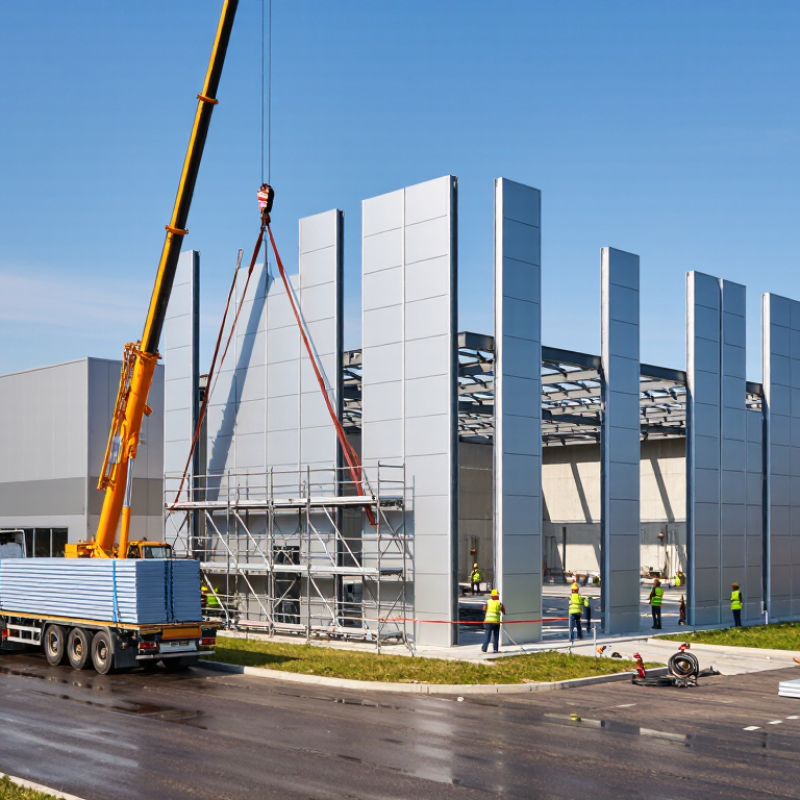
PU sandwich panels are insulated building components made from three bonded layers. A rigid polyurethane foam core sits between two protective metal sheets. The outer skins provide strength and surface protection. The foam limits heat transfer through walls, roofs, and cold-room enclosures.
During production, manufacturers inject or laminate the foam between prepared sheets under controlled pressure. The materials bond as the foam expands and cures. Interlocking edges then help create tighter joints during installation. Experienced installers check panel alignment, fasteners, seals, and corner details carefully. A small gap can create condensation, heat loss, or air leakage. The panels are lightweight, so crews can often install them faster than traditional wall systems. They also support cleaner interior finishes and more stable indoor temperatures. However, they are not magic. Their performance depends on correct design, sound sealing, and proper maintenance. Poor handling can dent the skins or weaken the joints.
Tips: Measure the supporting frame before ordering panels. Keep panels dry and protected during storage. Use compatible sealants around openings and connections. Inspect every joint after installation, especially near doors and roof edges. Fire performance also requires attention; choose an assembly tested for the project’s conditions and follow local building requirements. A qualified professional should review structural loads, ventilation, drainage, and insulation thickness before construction begins.
PU sandwich panels consist of two protective facings bonded to a rigid polyurethane foam core. The core provides insulation, while the facings provide structural protection, weather resistance, and a clean finished surface.
A typical panel is manufactured by bonding a rigid PU foam core between two metal or coated sheet facings. The continuous core minimizes thermal bridging, while the bonded layers create a lightweight composite panel that can be used for walls, roofs, cold rooms, and industrial buildings.
Note: The index below is an indicative comparison of commonly recognized practical advantages. Actual performance depends on panel thickness, joint design, facing material, installation quality, temperature, humidity, and applicable building standards.
PU sandwich panels are widely used for walls, roofs, cold rooms, and controlled industrial spaces. Their polyurethane core creates a continuous thermal barrier between metal facings. Typical PU foam thermal conductivity ranges from about 0.022 to 0.028 W/m·K, according to EN 13165 performance classifications.
This low conductivity improves insulation without requiring extremely thick walls. A well-designed panel can reduce heat entering a refrigerated room in summer and limit heat loss during winter. That lowers heating and cooling demand. The UNEP 2023 Global Status Report for Buildings and Construction states that buildings consume about 30% of global final energy. Better envelopes can address part of this demand. However, panel performance is not automatic. Gaps at joints, damaged edges, and poorly sealed penetrations can create thermal bridges. I have seen small installation details weaken an otherwise efficient envelope.
PU panels also support faster installation, cleaner interiors, and more stable indoor temperatures. These benefits can protect stored goods and reduce HVAC cycling. Yet energy savings vary with climate, panel thickness, operating hours, and equipment efficiency. Laboratory figures may look impressive, but field results can be less consistent.
Tips: Check the declared U-value, not only the core thickness. Inspect tongue-and-groove joints before commissioning. Seal doors, corners, and service openings carefully. Use thermal imaging after installation when possible. Condensation control deserves attention, too. Even high-performance insulation cannot correct poor ventilation or persistent moisture.
PU sandwich panels combine insulation and enclosure in one factory-made element. Their low weight can reduce lifting demands and speed up wall and roof installation. Fewer separate layers also mean fewer site operations and less material handling. When joints are aligned correctly, the continuous core helps limit thermal bridging around large surfaces. That supports steadier indoor temperatures and may reduce heating or cooling loads. The panels also create a clean, rigid skin, but they should not be treated as automatically load-bearing. Structural performance depends on span, thickness, fasteners, wind pressure, and the supporting frame.
Tips: Check the substrate before delivery. It must be level, dry, and properly aligned. Keep panels covered, but allow ventilation beneath protective sheets. Use approved fasteners and seal each joint carefully. Small gaps can become visible air leaks.
Experienced installers measure every opening twice, especially around doors, corners, and roof penetrations. Prefabricated panels can make construction faster, yet speed can expose mistakes quickly. A misplaced cut may affect insulation, appearance, and weather resistance at once. Good detailing around flashings and corner joints protects the panel system from rain infiltration. Site conditions also matter; strong wind can make large panels difficult and unsafe to position. Some projects need additional framing or fire-rated assemblies. That part is easy to overlook. An engineer should verify the design against local codes, loads, moisture conditions, and the manufacturer’s tested installation method.
| No. | Key Benefit | Technical Basis | Installation Benefit | Structural and Performance Considerations |
|---|---|---|---|---|
| 1 | High Thermal Insulation | Polyurethane foam has a low thermal conductivity compared with many conventional insulation materials. Typical PU core values are approximately 0.022–0.028 W/m·K, depending on density, temperature, ageing, and test method. | Required insulation thickness can often be reduced, making wall and roof assemblies more compact and easier to coordinate around openings, flashings, and services. | The final U-value depends on panel thickness, joints, fasteners, surface resistances, and thermal bridges. Project calculations should follow the applicable building standard. |
| 2 | Fast Installation | Factory-made panels combine the exterior skins, insulation core, and joint geometry into one prefabricated building element. | Panels are lifted into position and fixed to the supporting frame with mechanical fasteners. This reduces the number of separate insulation, sheathing, and cladding operations on site. | Installation speed is influenced by panel length, lifting access, weather, frame accuracy, joint detailing, and the need for cutting or penetrations. |
| 3 | Low Dead Load | The rigid foam core is lightweight, while the metal skins provide the principal facing and bending resistance of the composite panel. | Lower panel mass can simplify handling and may reduce the demand on lifting equipment, secondary framing, and foundations compared with heavier wall systems. | Panel weight varies with thickness, steel skin gauge, coating, joint design, and accessories. The supporting structure must be checked for reactions, uplift, and imposed loads. |
| 4 | Composite Bending Action | The bonded foam core keeps the two facings separated and transfers shear between them, allowing the panel to act as a structural sandwich element. | Large panels can cover substantial areas with fewer intermediate supports, reducing the number of framing members and site connections. | Load capacity and span are not universal values. They depend on panel thickness, skin thickness, core properties, support spacing, fasteners, wind, snow, and deflection limits. |
| 5 | Good Airtightness Potential | Interlocking or overlapping joints, together with continuous metal facings, can form a relatively continuous air-control layer when correctly sealed. | Fewer open joints and construction layers can make continuity easier to achieve than with separately installed insulation and cladding systems. | Airtightness depends on sealant continuity, joint compression, penetrations, corners, eaves, ridges, and interfaces with doors and windows. Field inspection remains important. |
| 6 | Moisture and Weather Resistance | Closed-cell PU foam has low water absorption relative to open-cell insulation, while coated metal skins protect the core from direct rain and wind exposure. | Factory-finished panels reduce the number of exposed construction layers and can shorten the period during which insulation is vulnerable to site moisture. | Panel joints, cut edges, penetrations, condensation risk, and damaged coatings must be detailed and maintained. PU panels are not a substitute for complete roof and wall waterproofing design. |
| 7 | Dimensional Stability | Rigid PU foam provides a stable core that supports the facings and helps maintain panel geometry under normal service conditions. | Stable, factory-produced modules can align quickly, helping installers maintain straight wall lines and consistent joint widths. | Panels should be stored flat, protected from weather, and installed within the manufacturer’s tolerances. Thermal movement of metal facings and differential movement at joints must be considered. |
| 8 | Reduced Thermal Bridging | The continuous insulated core limits direct heat-flow paths through the panel field compared with assemblies containing frequent framing interruptions. | Integrated insulation reduces the need to install separate insulation between every structural member, simplifying detailing at regular wall and roof areas. | Bridging can still occur at fasteners, supports, panel joints, corners, openings, and structural penetrations. Junction details should be included in energy calculations. |
| 9 | Clean and Adaptable Appearance | Metal facings are available with profiled or lightly patterned surfaces and factory-applied protective finishes in a range of colors. | Finished faces can reduce the need for additional site-applied cladding or interior lining in suitable applications, helping maintain a clean construction sequence. | Finish durability depends on coating type, exposure conditions, cleaning, impact protection, and correct treatment of cut edges. Architectural and hygiene requirements should be reviewed separately. |
| 10 | Efficient Whole-Life Construction | Prefabrication, reduced layer count, low maintenance requirements, and reusable steel facings can improve material and labor efficiency over the building life cycle. | Standardized panel sizes can reduce site waste, shorten installation activities, and make future replacement of selected sections more practical. | Environmental performance depends on panel thickness, service life, refrigerant technology, recycled content, energy savings, maintenance, and end-of-life recycling. Fire, acoustic, and indoor-environment requirements must also be verified. |
PU sandwich panels combine a rigid core with protective metal skins. This structure supports stable insulation in cold rooms, warehouses, and controlled production areas. Their low thermal conductivity helps reduce heat transfer, which can lower refrigeration or heating demand. However, performance depends heavily on correct thickness, joint design, and installation quality.
Durability starts at the surface. Coated steel skins resist daily impacts, condensation, and routine cleaning when selected correctly. Field inspections often show that damaged corners and poorly sealed joints cause more problems than the panel core. Careful edge protection matters.
PU panels are not maintenance-free. Regular checks can identify gaps, corrosion, or loose fixings before moisture enters the assembly.
Safety and hygiene require equal attention. Smooth, non-porous surfaces leave fewer places for dust and microorganisms to collect. Tight joints also simplify washing around food, pharmaceutical, and clean storage spaces.
Yet cleaning chemicals must match the surface coating. Harsh products may weaken finishes over time.
Fire performance also depends on the complete system, including panel composition, supports, penetrations, and local testing requirements. A qualified installer should verify these details instead of relying on product claims alone. Small mistakes matter.
PU sandwich panels combine rigid polyurethane insulation with protective outer facings. In practical building projects, their first benefit is strong thermal insulation, which helps stabilize indoor temperatures. This can reduce heating and cooling demand. They are also lightweight, so workers can move them more easily and place less load on supporting structures. Installation is usually faster than building separate wall and insulation layers.
The panels provide useful rigidity, especially when correctly fixed to the frame.
Their sealed joints can limit air leakage and moisture entry.
Surface finishes are easy to clean, supporting better hygiene in controlled spaces.
Many projects also gain improved sound reduction, although results depend on thickness and surrounding construction.
These panels can resist normal wear and corrosion when the facing material suits the environment.
Their factory-made dimensions reduce material waste.
Lower labor time may reduce overall project costs.
Long service life is another benefit, but only with proper maintenance.
Tips: Confirm the required U-value, fire classification, panel thickness, and joint design before ordering. Protect cut edges from water. Small details matter.
PU panels are not magic. Poor alignment can create thermal bridges, and rushed sealing can weaken performance. Site experience shows that drainage, ventilation, and routine inspections deserve equal attention. Local regulations and manufacturer test data should guide every specification, especially in humid or high-temperature areas.
PU sandwich panels have a rigid polyurethane foam core between two protective metal sheets. They form insulated walls, roofs, and cold-room enclosures. Lightweight panels. They reduce heat transfer and provide a clean interior surface.
Manufacturers place foam between prepared metal sheets. The foam expands, bonds, and cures under controlled pressure. Interlocking edges create tighter joints during installation. Small gaps can cause leakage and condensation.
The foam core creates a continuous thermal barrier. Its typical conductivity ranges from about 0.022 to 0.028 W/m·K. This can reduce heating and cooling demand. Actual savings vary with climate, thickness, equipment, and operating hours.
They are used for insulated walls, roofs, cold rooms, and controlled industrial spaces. They can help protect stored goods from temperature changes. Doors need special attention. Poor seals may weaken the whole enclosure.
Installers should check alignment, fasteners, seals, corners, and interlocking edges. They should inspect joints near doors and roof edges carefully. One narrow gap matters. Thermal imaging can reveal hidden heat bridges after installation.
Store panels in a dry, protected area before installation. Keep edges away from impacts and standing water. Dented metal skins may weaken joints. Handle them carefully. This is easy to underestimate.
No. Condensation also depends on ventilation, moisture control, sealing, and temperature differences. Poorly sealed openings can allow humid air inside. Insulation alone cannot correct persistent moisture.
Measure the supporting frame carefully before ordering. Review the required insulation thickness, structural loads, drainage, and ventilation. Check the declared U-value, not only core thickness. A qualified professional should review the complete assembly and local requirements.
PU Sandwich Panels are prefabricated building components made from a rigid polyurethane foam core placed between protective metal facings. This layered construction creates a lightweight yet strong panel that can be used for walls, roofs, ceilings, cold rooms, warehouses, and other controlled environments. The foam core provides excellent thermal insulation, helping maintain stable indoor temperatures, reduce heat transfer, lower energy consumption, and support more efficient heating and cooling systems.
The top ten benefits of PU Sandwich Panels include strong insulation, energy efficiency, lightweight construction, fast installation, reduced structural load, dimensional stability, weather resistance, durability, fire and safety performance when properly specified, and smooth, hygienic surfaces that are easy to clean. Their modular design can shorten construction time and reduce material waste, while their protective outer layers help resist moisture, corrosion, and everyday impact. With suitable design, installation, and maintenance, PU Sandwich Panels offer a practical, durable, and cost-effective solution for modern industrial, commercial, and temperature-controlled buildings.