
Engineered to stringent international thermal envelope criteria, our Barka, Oman manufacturing lines deliver factory-tested insulated sandwich systems, controlled-atmosphere closures, and structural profile solutions.
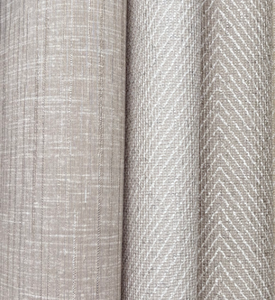
High-durability antimicrobial and flame-retardant commercial interior wall covering tailored for cleanrooms, pharmaceutical packing suites, clinical airlocks, and hospital hygiene perimeters.
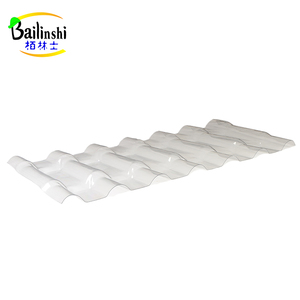
UV-stabilized corrugated polycarbonate daylighting sheets designed for industrial logistics hubs, loading docks, and agricultural cold packing structures with superior impact resilience.
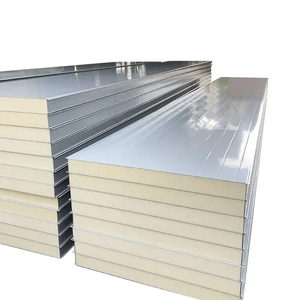
CE-certified high-density PIR/PUR core insulated sandwich panels with tongue-and-groove cam-lock joints, delivering ultra-low thermal transmittance (U-values) for walk-in cold rooms and deep freezers.

Automatic rapid-roll cleanroom and cold store doors with integral steel wind bars, eliminating thermal bridge leakages and keeping internal airlocks strictly tempered during forklift transit.
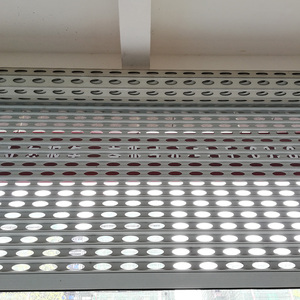
Cold-rolled galvanized steel lath motorized shutters engineered for warehouse perimeter security, distribution centers, and ventilation-controlled cold chain logistics receiving bays.
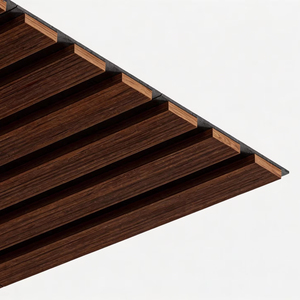
Engineered acoustic damping wall panels utilizing pet felt backing and precision slats, installed in industrial control rooms, cold store refrigeration compressor plants, and supervisory quarters.
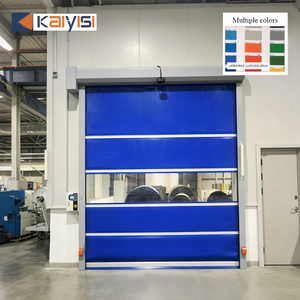
High-cycle thermal boundary PVC rapid doors featuring photoelectric obstacle detection, variable frequency motor drives, and sealed tracks for seamless food processing and cold staging zones.
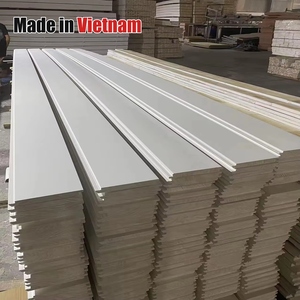
Precision-milled interior siding and wall partition boards designed for administrative annexes, agri-business visitor centers, and climate-controlled display showrooms adjacent to cold storage hubs.
Operating from our Barka industrial complex in the Sultanate of Oman since 2009, Paneltech International LLC provides single-source accountability across thermal sandwich panels, secondary structural steel (Z & C purlins), decking, and industrial access systems.
Unlike discontinuous manual press tables that risk core voids and uneven density distributions, our factory deploys continuous 32-meter high-pressure heated double belts. This ensures consistent 40–42 kg/m³ density throughout 50mm to 200mm panels.
Every production batch is tested in-house for dimensional stability, compressive resistance under 10% strain (ASTM D1621), water vapor permeability, and tensile bond adhesion according to rigorous European Conformity (CE) protocols.
We eliminate site coordination failures by supplying fully matched systems: PIR cold room panels, structural secondary purlins, flashings, color-coded corner angles, heavy PVC rapid-roll barrier doors, and stainless steel fixings directly packed from one plant.
Selecting the correct insulating core for controlled-atmosphere envelopes requires evaluating thermal conductivity (λ), combustibility reaction, closed-cell ratios, and structural mechanical limits.
| Performance Property | PIR (Polyisocyanurate) | PUR (Polyurethane) | High-Density Rockwool |
|---|---|---|---|
| Thermal Conductivity (λ at 10°C) | 0.020 - 0.022 W/(m·K) Superior | 0.024 - 0.026 W/(m·K) | 0.038 - 0.044 W/(m·K) |
| Reaction to Fire (EN 13501-1) | B-s1, d0 (Self-extinguishing, low smoke) | B-s2, d0 to B-s3, d0 | A1 / A2-s1, d0 Non-Combustible |
| Core Density | 40 - 42 kg/m³ | 38 - 40 kg/m³ | 100 - 120 kg/m³ |
| Closed Cell Content (ISO 4590) | > 92% (Water vapor impermeable) | > 90% | Open fibrous structure (Requires vapor barrier) |
| Compressive Strength (10% Deflection) | ≥ 150 kPa | ≥ 130 kPa | ≥ 100 kPa |
| Operating Temperature Envelope | -50°C to +100°C (Deep Freezers & IQF) | -35°C to +80°C (Chillers & Anterooms) | -20°C to +750°C (Fire Partition Walls) |
| Primary Application | Cold storage warehouses, blast freezers | Standard commercial chillers, cleanrooms | Fire separation walls, high-noise equipment |
In cold store engineering, Polyisocyanurate (PIR) represents the gold standard for refrigerated envelope architecture. The molecular structure of PIR is synthesized by reacting polymeric methylene diphenyl diisocyanate (MDI) with polyester polyols at high isocyanate index ratios (typically > 250%). Under continuous heat treatment on our Barka line, this reaction generates highly stable isocyanurate ring structures. When exposed to flame, PIR foams produce a micro-porous carbonaceous protective char layer that retards flame propagation, prevents dripping (d0 rating), and maintains envelope boundary stability during thermal events.
Conversely, Structural Rockwool Sandwich Panels serve a complementary role in multi-compartment industrial logistics complexes. While Rockwool requires twice the panel thickness to equal the thermal resistance (R-value) of PIR due to its higher thermal conductivity (0.040 W/m·K vs 0.021 W/m·K), it delivers 60 to 180 minutes of fire resistance (EI60 to EI180). We frequently engineer hybrid logistics centers where internal dividing walls between logistics staging and high-density racking deploy Rockwool for life-safety firewalls, while external thermal envelopes and deep freeze enclosures utilize PIR continuous tongue-and-groove systems.
Procurement engineers and cold chain operators are adjusting their material specifications in response to tightening energy regulations, climate resilience initiatives, and automated logistics infrastructure.
Regulatory frameworks, including the EU F-gas Regulation and Kigali Amendment, are accelerating the phaseout of HFCs. Procurement mandates require factory blowing systems utilizing Hydrofluoroolefins (HFOs) or cyclopentane blends. This achieves an Ozone Depletion Potential (ODP) of zero and a Global Warming Potential (GWP) < 1, preventing future carbon border adjustments (CBAM) from penalizing imported panels.
With the rise of Automated Storage and Retrieval Systems (AS/RS) exceeding 30 meters in clear ceiling height, panel procurement is shifting toward rack-supported cladding. Panels must withstand severe negative wind loads, thermal bow deflection (caused by a 70°C differential between Gulf summer exteriors and -25°C interiors), and rigorous seismic structural attachments without micro-cracking at joints.
General contractors and MEP consultants require cold store manufacturers to supply Building Information Modeling (BIM) families with parametric thermal envelope metadata. Procurement specifications require full Level of Development (LOD) 350-400 files containing exact thermal transmittance, panel joint seal geometry, factory fastener positions, and point load limits for ceiling evaporators.
Thermal envelope failure rarely occurs through the center of a quality insulated panel—it occurs at panel-to-panel joints, corners, and floor interfaces where humidity infiltrates, freezes, and delaminates the insulation.
Our factory cold room panels feature precision roll-formed dual-tongue labyrinth interlocks. This design creates a multi-stage tortuous path that blocks capillary air ingress. Factory-injected butyl sealants alongside closed-cell PVC gaskets eliminate moisture infiltration, preventing ice buildup within deep freezer joints without thermal bridging.
For marine fisheries, dairy processing, and harsh chemical cleanrooms, standard polyester finishes can degrade over time. We engineer panels with 120-micron food-grade PVC Plastisol coatings or high-durability PVDF systems over hot-dip galvanized DX51D steel coils (Z275 zinc coating), withstanding daily caustic CIP (Clean-in-Place) washdowns.
For modular walk-in rooms and rapid-assembly cold storage facilities, our Barka factory embeds high-tensile corrosion-resistant eccentric cam-locks directly within the PIR core during production. A single hex-wrench operation locks male-female joints together under 2.5 kN of mechanical tension, compressing perimeter silicone vapor barriers instantly.
Thermal envelope engineering requires mitigating ground frost heave in low-temperature operations (-18°C to -35°C). We supply complete floor detailing packages: under-floor ventilation piping profiles, high-load floor PIR slabs (≥ 250 kPa compressive capacity), heated sill thresholds, and bidirectional magnetic pressure equalization valves.
Technical guidance for consulting engineers, refrigeration contractors, and international procurement managers specifying factory-direct insulated systems.
Collaborate directly with our Barka manufacturing team. Provide your cold store dimensions, temperature criteria, panel core preference, and project timeline for a complete engineering takeoff and competitive quotation.