
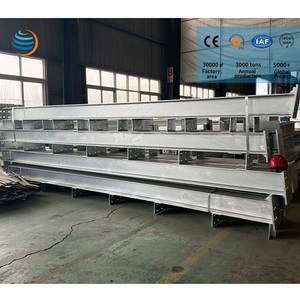
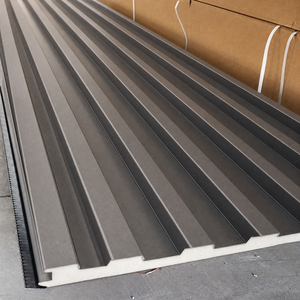
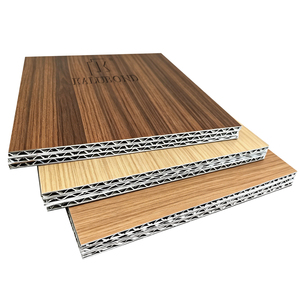
Direct from our state-of-the-art continuous roll-forming and foaming facility, explore CE certified wall panels, secondary framing purlins, composite decking, and roof trusses manufactured to extreme environmental tolerances.
In modern industrial civil engineering and commercial architecture, the exterior building envelope is no longer regarded as a passive boundary. It is an active structural and thermodynamic composite mechanism. For architectural engineers, MEP consultants, and international EPC contractors, selecting CE certified metal siding panels is the primary safeguard ensuring wind-load structural deflection resistance, thermodynamic insulation, and life-safety fire resistance.
The harmonized European standard EN 14509:2013 (Self-supporting double skin metal faced insulating panels) establishes rigorous physical testing mandates that distinguish certified industrial manufacturing plants from non-compliant fabricators. CE marking demands rigorous factory production control (FPC) verified by an accredited European Notified Body (AVCP System 1 or System 3 depending on fire reaction claims). This certification verifies key structural metrics: shear resistance of the core insulation under long-term thermal loads, creep deflection over a 30-year lifecycle, tensile bond strength between the steel faces and the core material under summer surface temperatures reaching 80°C, and water permeability under high dynamic wind pressure.
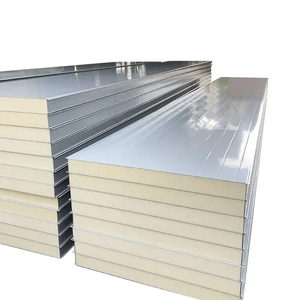
A metal siding panel functions as a composite beam where high-yield steel skins absorb axial tensile and compressive stresses, while the low-density core (PIR, PUR, or Rockwool) resists transversal shear stresses. When intense solar radiation heats the outer metal skin while the interior remains climate-controlled, a pronounced temperature differential (ΔT > 50°C) occurs. Non-certified panels suffer delamination or severe irreversible bowing (blistering). CE certified panels incorporate engineered relief joints, calculated skin-to-core elastic moduli, and optimized fastener torque profiles that absorb thermal cycles without structural failure.
Established in 2009 in Barka, Sultanate of Oman, Paneltech International LLC (PTI) operates one of the most advanced specialized building envelope manufacturing plants in the Middle East. With comprehensive automated continuous roll-forming lines, automated polyisocyanurate (PIR) high-pressure foam injection, and non-combustible structural Rockwool lamella processing facilities, PTI delivers factory-direct building envelopes engineered to endure extreme climatic conditions—from coastal salinity (C5-M corrosive classes) to desert thermal fluctuations.
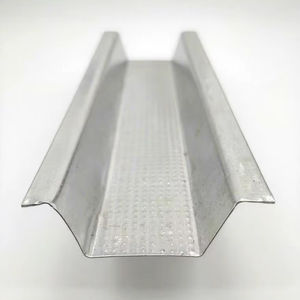
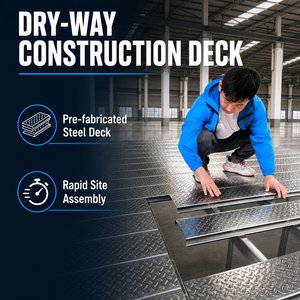
Our Barka facility maintains rigorous ISO 9001:2015, ISO 14001:2015, and ISO 45001:2018 certifications, alongside complete CE conformity marking under EN 14509. Having supplied prestigious institutional and private developments—including City Center Sohar, the iconic National Bank of Oman Head Office, the Ras Al Hamra Residential Complex, the Royal Oman Police Facilities, and high-security airport housing infrastructures—Paneltech serves as a single accountable manufacturing partner for the entire envelope: sandwich siding, secondary Z & C purlins, roof trusses, metal decking, matching flashings, and industrial roller shutter doors.
Equipped with a 36-meter high-pressure double-belt caterpillar press ensuring uniform temperature curing, zero void pockets, and maximum skin-to-core adhesion strength.
Complete product classifications under EN 13501-1 ranging from Euroclass B-s1, d0 for high-index polyisocyanurate (PIR) cores to Euroclass A1 non-combustible basalt mineral wool.
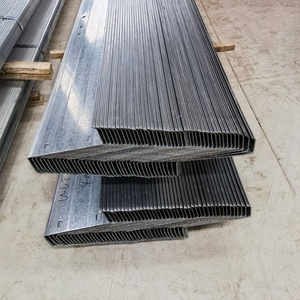
We roll-form matching heavy-gauge structural C/Z purlins, structural floor decking, and flashings from identical coil batches to eliminate color mismatch and electrochemical corrosion.
Direct factory dispatch across Oman, Saudi Arabia, the UAE, Qatar, Kuwait, Bahrain, and global maritime container shipping with heavy export seaworthy fumigated packaging.
To assist procurement engineers and specifiers in choosing the ideal configuration for cold chains, dry bulk warehouses, chemical processing plants, and architectural commercial facades, the following empirical comparison details physical, thermal, and acoustic performance under harmonized EN testing standards.
| Core / Facing Parameter | Polyisocyanurate (PIR) | Polyurethane (PUR) | Mineral Rockwool Core | Architectural PVDF Aluminum |
|---|---|---|---|---|
| Thermal Conductivity (λ) | 0.020 - 0.022 W/m·K | 0.022 - 0.025 W/m·K | 0.038 - 0.042 W/m·K | 205 W/m·K (Solid Alloy) |
| Standard Core Density | 40 ± 2 kg/m³ | 38 ± 2 kg/m³ | 100 - 130 kg/m³ (Lamella) | 2.71 g/cm³ (Base Alloy 3003) |
| EN 13501-1 Fire Reaction | B-s1, d0 | B2 / B3 (Normal) | A1 / A2-s1, d0 | Class A1 (Non-combustible) |
| Compressive Strength (10%) | ≥ 140 kPa | ≥ 120 kPa | ≥ 100 kPa | Yield ≥ 120 MPa |
| Moisture Absorption (vol.) | ≤ 1.5% | ≤ 2.0% | ≤ 1.0% (Hydrophobic) | 0.0% (Impermeable) |
| Acoustic Attenuation (Rw) | 24 - 26 dB | 23 - 25 dB | 31 - 34 dB (High Soundproof) | 26 dB (In Built-up System) |
| Coating Durability Class | RC4 / RC5 (EN 10169) | RC3 / RC4 | RC4 / RC5 | RC5 / UV RUV4 (PVDF) |
| Typical Application | Cold Stores, Warehouses | Interior Partitions | Fire Compartment Walls | Coastal Landmark Facades |
As demonstrated in the technical comparison, PIR sandwich panels achieve superior thermal performance with minimal wall thickness, significantly reducing building HVAC operating expenditures. However, when specifying high-risk industrial applications—such as battery storage facilities, hazardous material warehousing, and public assembly buildings—Structural Rockwool Core Panels provide indispensable Euroclass A1 passive fire protection with fire resistance ratings (EI) spanning from 60 to 240 minutes.
Procurement directors and commercial developers must prepare for deep structural shifts across the global building products supply chain over the next decade. Driven by rigorous international sustainability frameworks, escalating building code standards, and the adoption of digitalized fabrication workflows, sourcing strategies are evolving rapidly.
Global institutional buyers are actively adopting Environmental Product Declarations (EPDs). With the full enforcement of the European Union's Carbon Border Adjustment Mechanism (CBAM), manufacturers utilizing green hydrogen-melted steel coils and bio-circular polyols for PIR foaming gain critical competitive procurement advantages over carbon-heavy operations.
Regional authorities—exemplified by the strict enforcement of the updated UAE Fire and Life Safety Code and European building regulations—are effectively phasing out traditional EPS and substandard PUR foams. Procurement frameworks now mandate third-party certified Euroclass A1/A2 non-combustible cores or FM Approved 4880/4881 continuous PIR assemblies.
Rising on-site labor costs and truncated EPC delivery schedules are accelerating the transition from stick-built site cladding to factory-integrated unitized siding panels. Siding systems are increasingly pre-cut, pre-punched, and delivered with factory-fitted gasket labyrinth seals and integrated thermal break sleeves.
Moreover, lifecycle service cost (TCO) has decisively superseded immediate purchase cost per square meter. Savvy procurement teams now evaluate coating warranties under severe atmospheric categories (ISO 12944 C4, C5-I, and C5-M). Investing in 50-micron Polyurethane-Polyamide (PUR-PA) or 70/30 Kynar 500 Polyvinylidene Fluoride (PVDF) coatings extends paint chalking and color retention warranties past 25 years without repainting, preventing multi-million dollar envelope refurbishments on operating assets.
The technological frontier of continuous metal siding manufacturing is moving beyond conventional profiling toward molecular-level core optimization, automated geometry verification, and renewable energy integration.
Transitioning from traditional HFC blowing agents to high-pressure pure cyclopentane systems yields closed-cell contents exceeding 96%, achieving ultra-fine pore structures that suppress thermal radiation transport.
The steel substrate industry is pivoting toward Zinc-Aluminum-Magnesium (ZAM / Magnelis) alloy coatings. Magnesium creates an electrolytic galvanic passivation seal over sheared factory cut-edges, preventing edge-creep rust.
By connecting architectural Building Information Modeling (BIM) platforms directly to automated roll-former cutting saws and purlin punch stations, dimensional errors are eradicated and material waste drops to less than 0.8%.
Next-generation metal siding surfaces are engineered with factory-integrated standing-seam mounting ribs and thin-film solar laminations, converting large industrial envelope expanses into on-site renewable energy plants.
In-depth structural, fire, and logistical clarifications for engineering consultants, quantity surveyors, and international procurement managers sourcing CE marked metal siding systems.
Under European Construction Products Regulation (CPR 305/2011/EU) and EN 14509:2013, a genuine CE declaration requires two mandatory documents: the Declaration of Performance (DoP) issued by the manufacturer, and the Factory Production Control (FPC) Certificate issued by an independent European Notified Body (for fire performance and mechanical assessment). The DoP must explicitly state the product's unique identification code, intended uses, thermal conductivity (λ), core density, tensile bond strength, shear modulus, reaction to fire (e.g., Euroclass B-s1, d0 or A2-s1, d0), and the exact Notified Body registration number. Generic lab test reports do not constitute CE compliance without this full trail.
The core material of a sandwich siding panel must resist transversal shear stresses transmitted from outer wind pressure and suction. For polyisocyanurate (PIR) panels, the optimal core density is precisely 40 ± 2 kg/m³. If density falls below 36 kg/m³, shear strength drops by more than 30%, increasing panel deflection and elevating the risk of structural buckling under negative wind suction (uplift). For mineral wool panels, density must achieve 100 to 120 kg/m³ with structural lamellas oriented vertically (perpendicular to the skins) to provide compressive resistance (≥ 100 kPa) capable of sustaining span widths up to 3.5 meters without intermediate sub-framing.
Coating selection is governed by the project's macro-environment (corrosivity category according to EN ISO 12944-2) and solar UV index. Standard Polyester (PE, 25μm) is cost-effective for inland, low-humidity commercial developments (C2/C3 environments). For severe marine environments, coastal port zones, and intense Middle Eastern solar exposure (C4/C5-M, UV RUV4), PVDF (Polyvinylidene Fluoride, 70/30 Kynar 500, ≥ 28μm) or Polyurethane-Polyamide (PUR-PA, 50μm) is mandatory. PVDF offers unmatched molecular chemical inertia against ultraviolet degradation and salt crusting, ensuring color shifts remain under ΔE ≤ 3 over a 20-year horizon.
Through-fix siding panels rely on visible self-drilling screws penetrating the entire composite section with EPDM neoprene washers. Over time, thermal expansion cycles enlarge the hole, degrading the rubber gasket and creating water ingress paths. Concealed-fastener panels incorporate an internal rebate joint geometry where fasteners are secured to the inner steel leg and concealed by the interlocking tongue of the subsequent panel. This architecture eliminates external fastener penetrations, shields fixings from direct UV and rain exposure, mitigates cold bridging, and delivers a sleek, uninterrupted architectural facade.
During international maritime transport and cross-border road transit, sandwich panels face severe vibration, dynamic G-forces, and humidity condensation risks. PTI protects shipments with high-density EPS sacrificial cushions top and bottom, full-length heavy polyethylene wrapping, edge-corner protectors, and automated stretch wrapping. For 40-foot High-Cube maritime containers, panel stacks are palletized with heavy-duty structural strapping, desiccant moisture-absorption packets, and nylon webbing to prevent container friction, white rust (zinc carbonation), and face scratch defects.
Yes. As an integrated manufacturer operating since 2009, PTI provides a cohesive single-source envelope system. In addition to CE certified PIR, PUR, and Rockwool sandwich panels, our Barka facility manufactures precision cold-formed structural Z & C purlins, galvanized composite floor decking, heavy industrial roof trusses, matching folded flashing components, industrial roller shutter doors, and profile-matched translucent daylighting sheets. Sourcing the entire envelope package from a single factory guarantees identical coil coating finishes, aligned structural tolerances, coordinated site deliveries, and unified warranty coverage.
Consult with Paneltech's structural envelope engineering division. From thermal calculation models, wind load deflection span tables, and fire certification submittals to customized cut-to-length container orders—partner directly with a premier CE certified manufacturer.