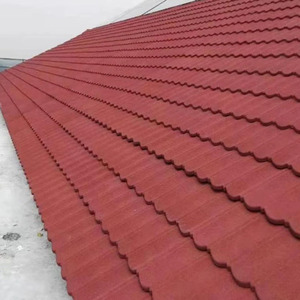

Precision cold-roll formed systems, insulated structural panels, composite floor decks, and sub-framing channels calibrated to ASTM, EN, and GB international standards.
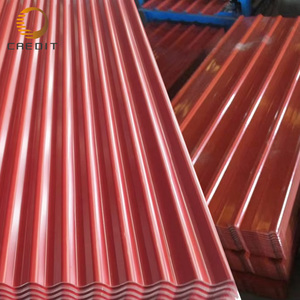
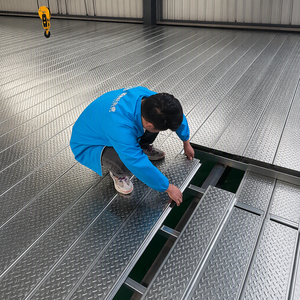
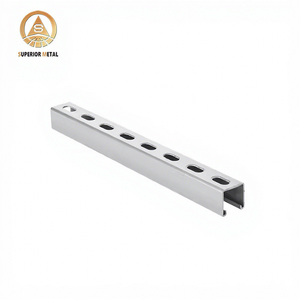
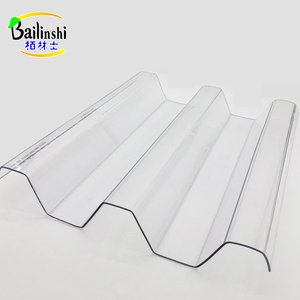
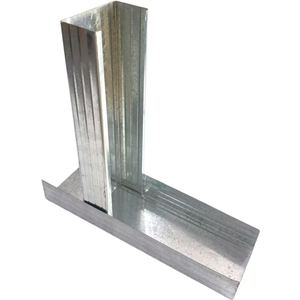
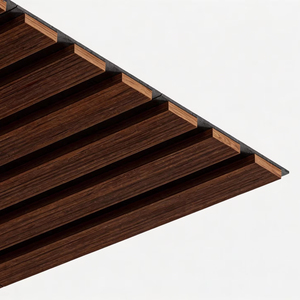
As global infrastructure expands across commercial warehousing, automated logistics terminals, cold-chain distribution facilities, and high-performance architectural developments, the technical demand placed on cold-rolled metal profiles has shifted drastically. Once treated merely as perimeter trims, flashings, and cosmetic closures, today's metal trim profiles and secondary structural components serve vital architectural duties: moisture-barrier integrity, acoustic dissipation, thermal bridging prevention, seismic accommodation, and long-term building envelope durability.
China's best metal trim profiles factories have evolved beyond generic sheet-metal processing. By deploying fully synchronized continuous multi-stage roll-forming lines, automated CNC angle slitting, integrated zinc-aluminum-magnesium (ZAM) coating application, and high-yield cold-drawing, top exporters provide direct value to EPC contractors, developers, and facade engineers across Europe, North America, the Middle East, and Southeast Asia.
In exterior roofing, siding, and exposed boundary trims, localized corrosive atmospheric conditions dictate project lifecycle cost. While traditional Hot-Dipped Galvanized (HDG) steel using standard spangle zinc coatings (Z120–Z275) remains prevalent for internal light-gauge framing (such as CD/UD drywall studs and suspended ceiling grids), external trims require unprecedented corrosion resistance. Leading Chinese manufacturing hubs now heavily prioritize Galvalume (55% Aluminum, 43.4% Zinc, 1.6% Silicon - AZ150) and Zinc-Aluminum-Magnesium (Zn-Al-Mg) alloys.
The addition of Magnesium (1.5% to 3.0%) creates an ultra-dense, self-healing simonkolleite-dominated protective layer when exposed to marine or industrial chloride-rich environments. When profiles are sheared or punched on site, cut edges are naturally protected from creep corrosion—drastically diminishing the risk of edge blister failures in industrial installations.
| Substrate / Profile Category | Yield Strength Range (MPa) | Protective Coating Options | Primary Commercial Application | Design Standard Compliance |
|---|---|---|---|---|
| Galvanized Decking & Trims | 250 – 550 MPa | Z180 - Z350 Hot Dipped Zinc | Composite Floor Slabs, Permanent Shuttering | ASTM A653 / BS EN 10346 |
| Cold-Formed C/Z Purlin Channels | 345 – 450 MPa | HDG Z275 / SuperDyma ZAM | Primary Roof & Wall Purlin Substructures | ASTM A36, GB/T 6725, AS/NZS 4600 |
| Pre-Painted PPGI/PPGL Flashings | 220 – 320 MPa | PE / SMP / PVDF / HDP (20+5µm) | Architectural Trim, Ridge Caps, Valley Gutters | EN 10169 / ASTM A755 |
| Drywall Stud & Track Profiles | 195 – 280 MPa | Z80 - Z140 Knurled Galvanized | Internal Demising Walls & Ceiling Suspensions | ASTM C645 / BS EN 14195 |
| Engineered Stone-Coated Metal Tiles | Alu-Zinc Base Sheet | Basalt Ceramic Granules + Acrylic Resin | Residential Villas, Extreme Wind Roofing | ISO 9001 / CE Certified |
In structural purlin production (C-channels, Z-sections, and Omega top-hat battens), precision roll forming ensures uniform cross-sectional thickness and accurate return lip angles. The return lip on a C-channel or Z-purlin is mathematically engineered to prevent local torsional-flexural buckling under intense negative wind loads. By utilizing advanced FEA (Finite Element Analysis) simulation before tooling calibration, modern Chinese roll-forming tooling ensures that bend radiuses preserve zinc layer elasticity without inducing micro-fracturing at the critical bend corner nodes.
Strategic procurement directors and supply chain professionals managing high-volume architectural metal deliveries must adapt to major logistical and metallurgical transitions over the next decade.
With the EU's Carbon Border Adjustment Mechanism (CBAM) taking full effect, procurement teams are actively switching to Chinese mills operating EAF (Electric Arc Furnace) lines and low-carbon scrap inputs with third-party verified Environmental Product Declarations (EPDs).
Fragmented sourcing (ordering panels from supplier A, flashings from supplier B, and purlins from supplier C) creates catastrophic color-matching and expansion tolerance disputes. Buyers increasingly choose single-source Chinese multi-line manufacturing facilities capable of delivering unified roofing, purlin, composite decking, and matching trims in single container consolidation batches.
Export lines are directly interfacing with building information modeling (BIM). Profiles are precision notched, slotted, numbered, and cut to millimeter-exact project drawings in-factory, reducing job-site cutting labor and waste scrap rates by over 28%.
Architects are actively phasing out entry-grade polyester (PE) topcoats in favor of High-Durability Polyesters (HDP), Silicone-Modified Polyesters (SMP), and Polyvinylidene Fluoride (PVDF / Kynar 500). In extreme solar UV radiation and desert environments, standard coatings degrade rapidly via resin oxidation, leading to chalking and color fading. PVDF-treated metal trim profiles provide 20 to 30-year operational resilience against harsh UV rays, chemical pollutants, and micro-particle abrasive sand winds.
Drawing on decades of manufacturing excellence, our industrial base combines massive production capability with uncompromising quality verification protocols, ensuring that every meter of metal decking, structural purlin, and roof flashing matches strict contract criteria.
Equipped with heavy-duty multi-station automated roll-forming equipment, high-speed decoilers, hydraulic flying shears, and CNC punching stations. Total control over cycle times and dimensional accuracy without outsourcing.
Every master coil and finished batch undergoes rigorous laboratory testing: T-bend flexibility analysis, cross-hatch paint adhesion tests, coating thickness magnetic induction verification, salt spray chamber testing (exceeding 1000 hours), and tensile coupon tests.
Extensive expertise in container sea freight packaging: waterproof wrapping, anti-vibration timber skidding, moisture-absorbing desiccants, and edge corner protectors to eliminate transit oxidation and mechanical transit deformities.
Direct technical answers addressing the critical evaluation metrics raised by procurement managers, structural engineers, and import brokers.
While both C and Z purlins are roll-formed structural secondary members, their geometric configuration dictates their engineering application. C-purlins have symmetrical flanges and are inherently stable when used as single spans, making them ideal for simple wall girts, door headers, and floor trimmer joists. Z-purlins feature asymmetric flanges (one broad, one narrow) allowing them to overlap seamlessly at intermediate structural frame supports. This lapping creates continuous-beam structural efficiency, providing up to 50% greater load capacity and significant steel tonnage savings across multi-bay warehouse spans.
Color variations occur due to pigment batch changes or curing oven temperature fluctuations. We mitigate this through three strict protocols: 1) We source prime quality coils from top tier mills belonging to identical master production heats; 2) We verify optical chromaticity using high-precision spectrophotometers with a strict tolerance of ΔE ≤ 0.5; 3) For large-scale projects, we reserve and allocate the entire base coil volume beforehand to guarantee identical coating aging properties.
For standard inland dry environments, a Z120 to Z180 coating (120 to 180 g/m² total both sides) is typical for internal light framing. However, for industrial factory roofing, marine perimeters, or agricultural buildings exposed to ammonia, a minimum of Z275 hot-dipped zinc or AZ150 (Alu-Zinc 150 g/m²) is mandatory. For high-salinity maritime applications, our Zn-Al-Mg (ZAM 275) or PVDF 25/5μm coated systems are highly recommended to reach a 25+ year service lifespan without substrate rusting.
Yes. Profiled galvanized steel metal floor decking acts both as permanent formwork during the wet concrete pouring phase and as positive tensile reinforcement once the concrete cures. The mechanical embossments rolled into the vertical profile webs create a composite mechanical interlock with the concrete slab, eliminating the need for bottom slab tensile rebar mesh in many design scenarios and drastically accelerating multistory construction schedules.
Every commercial export consignment is backed by comprehensive Mill Test Certificates (EN 10204 3.1) detailing mechanical yield/tensile strength, elongation, and complete chemical composition. Additionally, we provide third-party laboratory verification reports (SGS / BV / Intertek) upon request, coating thickness calibration audits, and standardized certificates of origin.