English | العربية
ISO 9001:2015 & CE Certified OEM/ODM Exporter

China Top Barge Board Flashing Manufacturer & Exporters

Global Engineering White Paper: Precision Roll-Formed Architectural Envelope Flashings, Galvanized Rake Trims, and Specialized Marine/Transport Flashing Warning Systems.

15+

Years Engineering Expertise (Est. 2009)

0.05mm

CNC Folding & Roll Tolerance Accuracy

C5-M

Max Maritime & Industrial Corrosion Rating

85+

Countries & Ports Serviced Globally

Export Inventory & Industrial Systems

Engineered Barge Board Flashing & Directional Safety Assemblies

From high-tensile structural building envelope barge trims to optical marine barge beacons and vehicle-mounted perimeter warning boards, our precision product lines ensure absolute weatherproofing and operational site safety.

Precision Roll-Forming & Heavy Fabrication

World-Class Metallurgy, Continuous Folding & Production Capability

Operating dedicated production bases in China and strategic regional hubs in Oman since 2009, we engineer complete building envelopes, architectural flashings, and structural accessories backed by documented metallurgical compliance.

Integrated Cold Roll-Forming

Continuous twin-track computerized roll-forming lines process pre-painted galvanized steel (PPGI), Aluzinc (AZ150), and architectural aluminum alloys with zero micro-fracturing along critical radius bends, maintaining structural integrity across gauge ranges from 0.40mm to 1.50mm.

Strict ASTM & EN Quality Auditing

Every coil undergoes spectroscopic substrate analysis, zinc coating mass testing (ASTM A653 / A792), cross-hatch adhesion verification, and gloss retention validation. Full 3.1 Mill Test Certificates (MTC) and Third-Party SGS/TÜV Inspection reports accompany every container export.

Turnkey Envelope & Safety Synergy

Beyond standard barge flashing, our facilities manufacture compatible insulated PIR/PU/Rockwool sandwich panels, metal decking, C & Z cold-formed purlins, alongside solar flashing safety beacons and optical directional boards for high-wind infrastructure and logistics terminals.

Technical White Paper & Structural Dynamics

Engineering Analysis of Barge Board Flashing (Rake / Verge Trim) in High-Wind Envelopes

In modern industrial pre-engineered steel buildings (PEBs), commercial distribution centers, and coastal logistic hangars, the barge board flashing (alternatively designated as the verge flashing, rake trim, or gable capping) serves as the primary defensive barrier against wind-driven precipitation and aerodynamic shear forces. While frequently classified as simple trim, empirical failure mode analyses across forensic structural engineering confirm that roof perimeter flashings sustain the most catastrophic aerodynamic uplift forces experienced by any component of the building envelope.

Critical Architectural Functionality: Under ASCE 7-22 and Eurocode 1 (EN 1991-1-4) wind load specifications, roof corners and edge rakes fall into Zone 2 (Edge) and Zone 3 (Corner) high negative pressure vortex regions. Localized suction pressures along barge board flashings can spike to 3.2 times the baseline interior field pressure. Inadequate flange thickness, deficient fastener pitch, or poorly designed hemmed edges result in peel-back failure, allowing torrential water ingress that compromises internal sandwich panel insulation, ceiling membranes, and primary structural purlin systems.

1. Mechanical Geometry and Aerodynamic Profile Detailing

High-performance barge board flashing profiles manufactured in our China facilities are engineered with specific cold-formed bends configured to deflect vortex separation and disrupt capillary water suction:

  • The Return Hem (Welted Edge / Stiffener Lip): Rather than leaving a raw sheared steel edge exposed to atmospheric moisture, the exterior edge is cold-folded 180 degrees back onto itself (12mm to 15mm return hem). This hem doubles the section modulus at the vulnerable outer edge, preventing oil-canning waves and serving as a rigid anchoring line for concealed clip fixings.
  • Capillary Break / Anti-Siphon Groove: Where the horizontal leg of the barge board overlaps the crest of profiled roofing sheets or sandwich panels, an engineered downward drip break prevents water from creeping horizontally against gravity through capillary siphon pressure.
  • External Drip Kick (Bird-Beak Deflector): The vertical face of the verge trim terminates in a 45-degree kick-out drip edge (minimum 15mm projection). This directs runoff away from the adjacent wall cladding or soffit, preventing unsightly staining and premature corrosion along wall-panel screw fasteners.

2. Substrate Metallurgical Matrix & Protective Coatings

Selecting the optimal metallic substrate and organic resin coating is essential to align the design life of the flashing with the 30- to 50-year life expectancy of commercial metal building systems. The table below outlines technical criteria for selecting barge flashing materials across varied operating environments:

Substrate Grade Metallic Coating Mass Topcoat Resin Technology Dry Film Thickness (DFT) Corrosivity Category (ISO 12944) Typical Service Life
PPGI (DX51D+Z) Z275 (275 g/m² Zinc) Polyester (PE) / SMP 25μm Top / 7μm Back C1 to C3 (Standard Inland) 15 – 20 Years
Aluzinc / Galvalume (S350GD+AZ) AZ150 (55% Al, 43.4% Zn, 1.6% Si) High-Durability Polyester (HDP) 28μm Top / 10μm Back C3 to C4 (Industrial / Urban) 25 – 30 Years
PVDF Fluorocarbon (S350GD) AZ180 or Z350 Ultra Zinc Kynar 500 PVDF (70% Polyvinylidene) 35μm (Primer + Base + Clear) C4 to C5-I (Chemical Plant) 35 – 40 Years
Architectural Aluminum 5052-H32 Natural Passivation Layer Electrostatic Anodized / PVDF 40μm Premium Coating C5-M (Marine Coastal / Offshore) 50+ Years

3. Thermal Expansion Engineering & Fastener Mechanics

Barge board flashings typically run continuously along gable roofs for lengths exceeding 30 to 80 meters. Because metal flashings experience significant seasonal temperature differentials (ΔT up to 75°C in desert or continental regions), longitudinal thermal expansion must be accommodated. Standard steel moves approximately 1.2mm per meter over a 100°C delta, while aluminum expands at nearly double that rate (2.3mm/m).

To eliminate oil-canning buckling, sheared self-drilling screws, and enlarged elongation holes, high-integrity assemblies use stepped lap joints (minimum 150mm overlap) with neutral-cure non-skinning polyisobutylene (butyl) tape. The flashing is secured using carbon-steel or austenitic stainless steel (grade 304/316) screws fitted with EPDM sealing washers. Crucially, fastening spacing must never exceed 300mm on centers along the vertical rake face in designated coastal or wind-prone zones.

2025 – 2030 Strategic Foresight

How international procurement managers, tier-1 EPC contractors, and global distribution stockists are recalibrating their supply chains for maximum resilience, digital verification, and carbon compliance.

Procurement Intelligence & Technical Support

Frequently Asked Questions (FAQ) for Global Buyers & Engineers

Comprehensive engineering and commercial clarifications on metallurgical tolerances, coating specifications, export logistics, and bespoke profile bending.

Q What are the standard dimensional tolerances for export barge board flashing?

Our precision automated hydraulic folding systems adhere to EN 10143 and ASTM A924 tolerances. Standard thickness tolerance is held within ±0.02mm, angular bend deviation is kept below ±0.5°, and total length tolerance over a standard 3,000mm to 6,000mm flashing piece is maintained within ±1.5mm, ensuring seamless alignment without field re-bending.

Q How do you prevent galvanic bimetallic corrosion when fixing aluminum flashings?

Direct contact between aluminum barge flashing and carbon steel purlins or zinc-coated fasteners triggers galvanic corrosion in moist environments. We specify austenitic 304/316 stainless-steel self-tapping screws with vulcanized EPDM bonded washers, complemented by synthetic self-adhesive barrier tapes that electrically isolate dissimilar metals.

Q Can your factory manufacture custom non-standard flashing profiles from CAD files?

Yes. While we stock standard 90° and 135° rake profiles, over 60% of our export volume consists of custom-engineered configurations. Contractors can share DWG, DXF, or PDF engineering drawings. We match exact pitch angles, custom drip-leg drops, and tailored safety hems up to 8,000mm single-piece lengths.

Q What protective film and packaging protocols are used for ocean shipping?

Every flashing length is laminated with an electrostatic, peelable PE protective film (50–80μm) that leaves no adhesive residue. Profiles are securely nested, shrink-wrapped with waterproof VCI plastic, interlaid with shock-absorbing foam, and packed into fumigated ISPM-15 compliant wooden skeletal crates or steel-banded pallets.

Q What color-matching systems and paint warranties do you offer?

We match all international color standards, including RAL Classic, Federal Standard 595, and NCS formulations, using automated spectrophotometer scanning. Coil coatings feature certified AkzoNobel, PPG, or Beckers paints. We provide written warranties from 10 years (standard PE) up to 30 years (Kynar 500 PVDF) against chalking, cracking, and peeling.

Q How do specialized marine dock/barge flashing lights connect to terminal power?

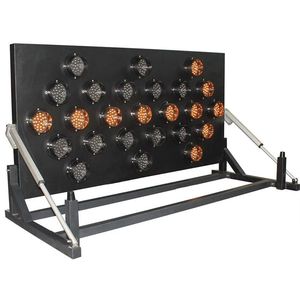
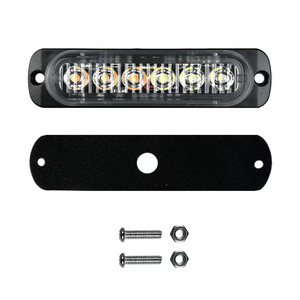
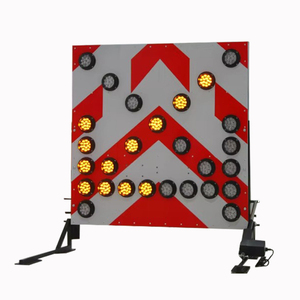
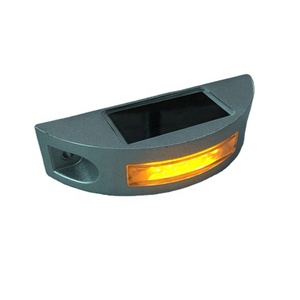
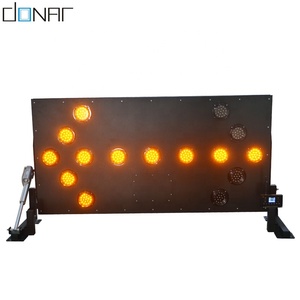
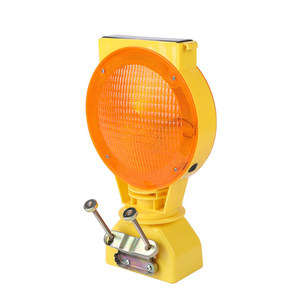
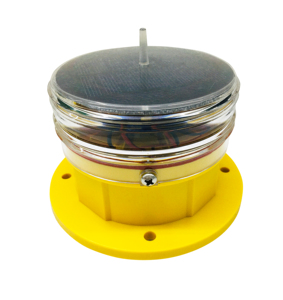
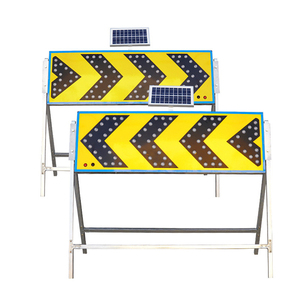
Our marine safety beacons and vehicle/barge warning arrays feature dual power architectures. Autonomous solar models employ integrated monocrystalline PV panels and high-capacity LiFePO4 batteries offering 10-day autonomy without direct sunlight. Fixed-mount models support 12V/24V DC auxiliary power and 110V–240V AC shore connections.

Direct Factory Sourcing & Engineering Support

Request a Tailored Engineering Proposal & Metallurgical Sample Kit

Connect with our technical envelope specialists for profile design assistance, CAD take-offs, custom coating recommendations, and competitive wholesale pricing for container loads.