Structural Deck
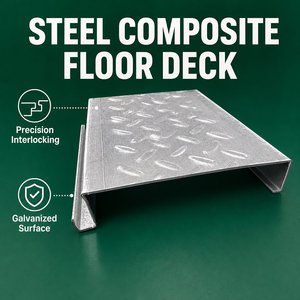

Standard-compliant components engineered for industrial plants, multi-storey logistics hubs, cleanrooms, and high-occupancy commercial complexes.
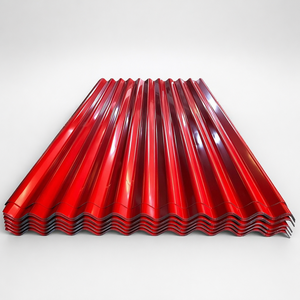
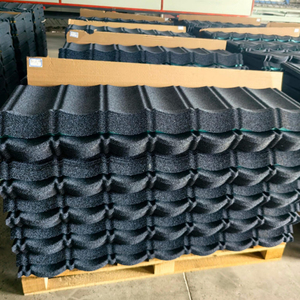
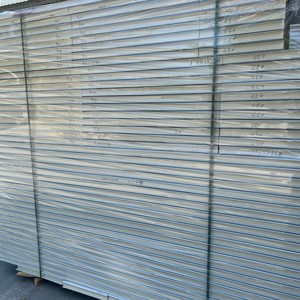

In modern industrial engineering, passive fire protection hinges on effective vertical and horizontal compartmentation. Rolling fire shutters must operate without fail during thermal runaway, maintaining structural stability, integrity, and radiation attenuation.
Fire shutters use double-skin interlocking laths roll-formed from 0.8mm to 1.5mm hot-dip galvanized steel (DX51D+Z275) or SUS304/SUS316 stainless steel. Internal cavities are insulated with ceramic fiber wool or hydrophobic mineral rock wool with densities exceeding 120 kg/m³ to limit thermal transmission.
Motorized operators must integrate with central Fire Alarm Control Panels (FACP). Under a complete power cut, UL-listed fail-safe electromagnetic release mechanisms allow controlled gravitational descent at speeds between 0.15 m/s and 0.40 m/s without electrical input.
Structural steel expands under prolonged exposure to temperatures above 600°C. Heavy-duty cold-formed guide rails are fabricated with vertical expansion slots and engineered clearance gaps, preventing curtain jamming caused by longitudinal thermal expansion.
Compliance with third-party tested standards is essential for project specification, insurance underwriting, and life safety approvals across international jurisdictions.
| Standard / Rating | Geographic Focus | Integrity Rating (E) | Radiation Control (W) | Insulation Rating (I) | Primary Fire Applications |
|---|---|---|---|---|---|
| BS 476: Part 22 | Commonwealth, Middle East, UK | Up to 240 Minutes | Optional Metric | Tested via thermocouple limits | Commercial atrium separations, logistic plants |
| EN 1634-1 / EN 13501-2 | European Union, International | E 60 / E 120 / E 180 | EW 30 / EW 60 / EW 90 | EI 30 through EI 120 | Critical escape tunnels, public infrastructure |
| UL 10B / UL 10C | North America, Latin America | 3/4 Hr to 4 Hr (Hose Stream) | Not primary (focus on integrity) | Max 250°F rise at 30 minutes | Industrial hazardous storage, manufacturing plants |
| GB 14102-2005 (China) | China, Belt & Road Infrastructure | Class TF3 / TF4 (≥ 3–4 Hrs) | Mandatory measurement | Composite fabric or double-skin insulated | Mega shopping malls, high-speed rail concourses |
| AS 1530.4 | Australia, New Zealand, Oceania | -/120/- to -/240/- | Evaluated via heat flux | Applicable with insulated slats | Underground carparks, commercial loading docks |
How engineering consultancies, tier-1 EPC contractors, and global distribution hubs are reshaping industrial procurement strategies through 2030.
Procurement teams are shifting from job-site fabrication to complete pre-engineered envelope kits. Sourcing cold-formed structural Z & C purlins, metal floor decking, and fire shutters from a unified manufacturer ensures precise tolerance alignment, reduces site friction, and cuts installation schedules by up to 35%.
Global decarbonization policies demand Environmental Product Declarations (EPDs). Leading manufacturers are transitioning to scrap-based electric arc furnace (EAF) steel coils and green roll-forming methods, lowering carbon metrics while preserving yield strength and fire performance under ASTM and ISO standards.
Modern tenders demand native IFC and Revit family models with built-in metadata, including maintenance cycles, cycle-life counts, and motor electrical loads. Smart optical sensors integrated with Building Management Systems (BMS) provide real-time status updates on track alignment, curtain deflection, and motor health.
Where structural dead-weight is restricted, lightweight polymer intumescent fabric curtains are deployed alongside heavy steel shutters. These hybrid assemblies deliver EI (thermal insulation) ratings of up to 120 minutes while cutting structural beam sizing and overhead hoisting requirements in half.
Key production upgrades delivering enhanced lifecycle performance, corrosion protection, and functional safety.
Automated 24-station cold-roll forming lines produce laths with thickness tolerances within ±0.02mm. Precision geometric profiling prevents wind blow-outs up to 120 km/h, making these shutters suitable for exterior logistics ports and industrial buildings.
By pairing high-density biosoluble ceramic insulation with flame-retardant polyurethane foam formulations (PIR/PU Class B-s1, d0), modern shutters achieve dual performance: cold-storage thermal insulation (U-value < 0.65 W/m²K) combined with passive fire compartmentation.
For installations in high-salinity marine or chemical environments, curtains utilize zinc-aluminum-magnesium coatings (ZM310) or passivated 316 stainless steel. These alloys survive over 3,000 hours in continuous salt spray testing (ASTM B117) without red rust formation.
Since 2009, our manufacturing plants have delivered precision-engineered building envelope products, composite decks, purlins, and specialized industrial door systems for landmark commercial and industrial projects across global regions.
We eliminate supply chain hand-offs by manufacturing the complete secondary structural package in-house—including PIR/PU/Rockwool sandwich panels, galvanized floor decking slabs, C & Z purlins, flashings, and automated fire shutter systems.
Our production lines operate under strict ISO 9001:2015, ISO 14001, and ISO 45001 management frameworks. Raw materials are checked with spectrometer assays, coating thickness gauges, and mechanical elongation tests before entering production.
From the National Bank headquarters and City Center commercial malls to large airport infrastructure projects and government facilities, our products are engineered and proven to endure extreme climatic conditions—from humid coastal regions to arid desert operations.
Every industrial project has unique structural requirements. Our in-house engineering team works directly from structural IFC drawings to produce custom-curved profiles, non-standard structural purlin punch designs, and oversized fire shutter barriers up to 14 meters wide.
To eliminate damage during multi-modal ocean and overland freight, all panels and roll-formed shutters are bundled with protective polyethene films, reinforced edge guards, and solid timber cradles designed for rapid overhead crane or forklift site handling.
With multi-shift automated roll-forming and high-capacity panel foaming lines running year-round, we maintain steel coil inventories up to 10,000 metric tons, shortening turnaround times for time-critical industrial shutdown and construction schedules.
Detailed technical, testing, and logistical answers for lead consulting engineers, specification managers, and commercial procurement teams.
An Integrity (E) rating measures the shutter's ability to remain structurally stable and prevent the passage of flames and hot combustion gases during furnace exposure. An Insulation (EI) rating adds strict temperature limits: the unexposed face cannot experience an average temperature rise exceeding 140°C above ambient (or 180°C at any single point), preventing combustible materials near the barrier from auto-igniting through radiated or conducted heat.
The motorized operator features an internal electromagnetic brake connected in a normally-energized configuration. When building power is cut or the fire alarm panel triggers the circuit, the solenoid releases. Mechanical counterbalances combined with internal centrifugal governors ensure the curtain descends smoothly at a controlled speed (between 0.15 m/s and 0.40 m/s), sealing the opening without requiring electrical power.
For installations within 5 kilometers of coastlines or in high-humidity climates, we specify hot-dip galvanized steel DX51D with a minimum zinc coating mass of Z275 (275 g/m² combined both sides), factory-coated with 25-micron super-durable polyester (SDF) or polyvinylidene fluoride (PVDF). Alternatively, grade 304 or 316 stainless steel with a 2B finish provides long-term protection against chloride pitting.
Under furnace conditions exceeding 900°C, structural steel expands significantly. Guide rail mounting brackets must feature slotted holes to allow vertical thermal movement without buckling the guide track. The curtain barrel assembly also requires engineered lateral clearance tolerances inside the endplates, preventing the barrel from binding against the side plates as the shaft expands horizontally.
Yes. Shutters can be equipped with smoke control certification (classified as Sa or Sm under EN 13501-2). This performance is achieved using continuous intumescent seal strips along the guide channels and flexible bottom edge profiles, which expand at temperatures above 180°C to seal gaps and prevent smoke migration down corridors and through elevator lobbies.
To produce shop drawings and technical proposals, our engineering team requires: (1) clear structural opening dimensions (width x height), (2) wall construction type (poured concrete, structural steel frame, or masonry block), (3) required fire rating duration and applicable standard (e.g., 2 hours per BS 476, 3 hours per UL 10B), (4) motor voltage requirements (220V/380V/415V), and (5) spatial head-room and side-room dimensions for barrel and guide rail placement.
Connect directly with our engineering department for certified shop drawings, custom roll-formed profiles, load-bearing span calculations, and factory-direct pricing for international shipments.