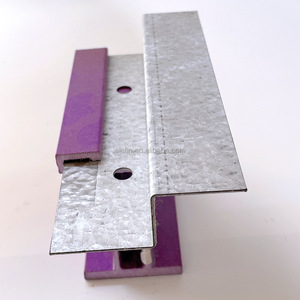

Manufactured to rigorous international dimensional and structural standards, our factory provides direct supply chains for dovetail profiles, secondary purlin members, coated steel, and modular exterior panels.
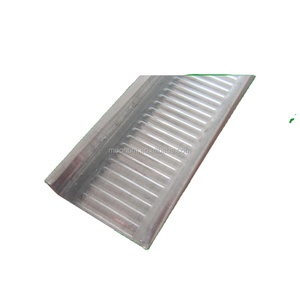
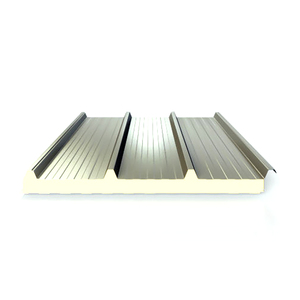
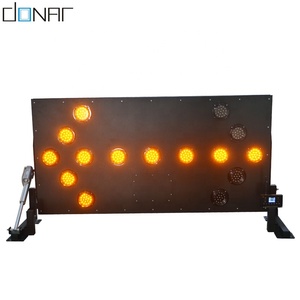
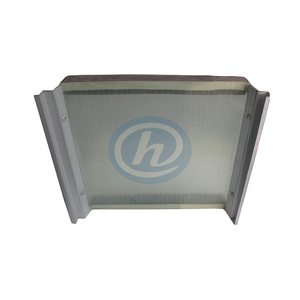
Understanding how re-entrant dovetail ribs achieve superior mechanical interlocking, eliminate temporary shoring, and maximize composite floor diaphragm shear capacity.
Unlike open-trough trapezoidal profiles that depend heavily on rolled web embossments, the dovetail (re-entrant) profile utilizes an inverted geometric wedge design. As poured concrete cures, it flows into the narrow neck and expands within the wider dovetail rib cavity. This generates a continuous geometric mechanical interlock across the entire span, radically diminishing longitudinal slip and guaranteeing composite action under severe live and dynamic loads.
Dovetail decking profiles shield concrete within the protected re-entrant rib flutes. Under standard ISO 834 and ASTM E119 fire curve testing, the dovetail neck limits radiative thermal transfer to the tensile steel flanges. Consequently, composite slabs engineered with dovetail decking consistently achieve up to 120 minutes of fire resistance without the application of secondary spray-applied vermiculite or intumescent fireproofing coatings, lowering overall construction dead-loads.
A premier engineering benefit of the dovetail shape is the re-entrant flute's utility as a continuous, pre-formed hanging raceway. By inserting self-locking wedge nuts and threaded hanger rods directly into the dovetail profile slots, MEP contractors mount HVAC ducting, plumbing runs, fire sprinkler networks, and electrical cable trays without drilling into cured structural concrete, completely preserving slab waterproofing integrity.
| Profile Designation | Rib Depth (mm) | Cover Width (mm) | Base Steel Thickness (mm) | Zinc Coating Mass | Composite Slab Height | Unpropped Span Limit |
|---|---|---|---|---|---|---|
| DT-51 Dovetail Composite | 51 mm (2.0") | 600 mm / 750 mm | 0.75 - 1.20 mm | Z180 - Z275 / SuperDyma | 100 - 150 mm | Up to 3.20 m |
| DT-54 High-Tension Profile | 54 mm (2.12") | 600 mm | 0.80 - 1.50 mm | Hot-Dip Galvanized Z275 | 110 - 180 mm | Up to 3.60 m |
| DT-65 Deep Dovetail Deck | 65 mm (2.56") | 540 mm / 680 mm | 0.90 - 1.60 mm | Z275 / ASTM A653 G90 | 120 - 220 mm | Up to 4.10 m |
| Standard Trapezoidal Deck | 75 mm (3.0") | 915 mm | 0.75 - 1.20 mm | Z120 - Z180 | 150 - 250 mm | Up to 2.80 m (Embossment Dependent) |
Navigating environmental directives, material innovations, and digital supply integration in major global building projects.
International architectural consultancies and government developers in Europe, the Middle East, and the Americas increasingly require Environmental Product Declarations (EPDs). Future dovetail decking tenders stipulate maximum embodied carbon ceilings (≤ 1.2 kg CO₂e/kg steel). Chinese tier-1 mills are shifting to clean-energy Electric Arc Furnace (EAF) billet production, giving global contractors certified green building envelope materials qualifying for LEED v4.1 and BREEAM certifications.
While traditional hot-dip galvanizing (HDG) Z275 remains an industry baseline, procurement contracts for industrial processing plants, coastal marine infrastructure, and battery gigafactories are rapidly mandating Zinc-Aluminum-Magnesium (Zn-Al-Mg) alloy coatings. ZAM exhibits self-healing cut-edge passivation, providing 3 to 5 times greater salt-spray corrosion resistance than standard pure zinc coatings while allowing thinner metallic layers with reduced overall material cost.
Project margins in high-density urban steel framing can no longer tolerate jobsite cutting wastage or bundle chaos. Modern procurement shifts focus toward digital roll-forming workflows: structural engineers transmit Building Information Modeling (Tekla/Revit) scheduling files directly to the exporter's automated CNC line. Each dovetail deck panel is roll-formed to precise millimeter cut-lengths, bundled sequentially by floor zones, and inkjet-labeled with erection mark numbers for zero-scrap rapid positioning.
Discover how material science, advanced acoustic modeling, and modular prefabrication are reshaping dovetail deck applications.
Modular Integrated Construction (MiC) and volumetric steel box pods require extremely shallow, rigid floor cassettes. Dovetail steel decking provides an optimal floor matrix for pre-cast and pre-poured modular volumetric pods, enabling factory-cured thin slabs (80 mm–100 mm) with superior structural stiffness capable of enduring transit deflection forces.
By pairing ultra-thin 0.75 mm high-yield (550 MPa) dovetail decking with lightweight expanded-shale aggregate concrete (1,800 kg/m³), engineers achieve massive total foundation load reductions. This pairing reduces structural deadweight by over 22% compared to conventional solid precast plank flooring systems, curbing seismic lateral mass.
Dovetail re-entrant ribs act as natural acoustic resonators. Emerging composite deck configurations incorporate micro-perforated webs lined with acoustic absorption fleece inside the re-entrant flute chambers, absorbing mid-to-high frequency airborne sounds in multi-story commercial spaces without demanding suspended plasterboard ceiling systems.
Recent seismic shake-table trials validate that dovetail re-entrant ribs offer superior ductility under cyclic lateral drift compared to stiff, unyielding open-trough profiles. The mechanical interlock absorbs high in-plane diaphragm stresses, preventing brittle interface delamination during severe earthquake excitations.
Combining multi-decade cold roll-forming mastery, integrated building envelope manufacturing capabilities, and strict global quality governance.
Our plants operate multi-stand continuous cold roll-forming lines fitted with dynamic computerized hydraulic flying shears. Rollers fabricated from hardened Cr12MoV vacuum-quenched alloy steel preserve zero surface scratching on high-spec hot-dip galvanized and PVDF coatings, holding cross-sectional tolerance limits within ±0.5 mm.
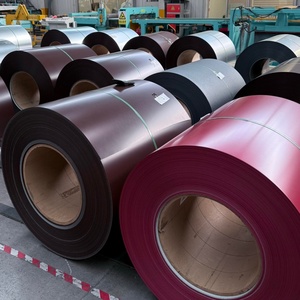
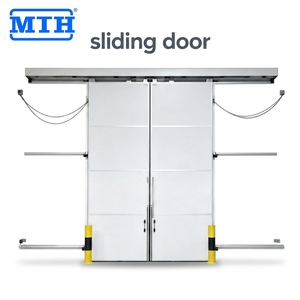
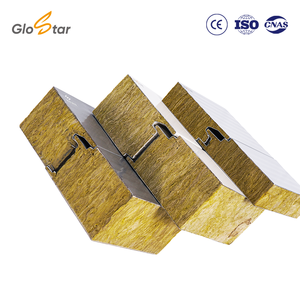
Rooted in comprehensive manufacturing traditions (mirroring the integrated envelope ecosystems seen in world-class facilities in Oman and East Asia), we supply not merely dovetail decking, but structural Z/C purlins, fire-rated A1 Rockwool sandwich panels, PPGL coils, daylighting sheets, and industrial cold-store doors for cohesive single-source project procurement.
Every shipment is accompanied by EN 10204 Type 3.1 Inspection Certificates specifying ladle chemical composition, yield strength, tensile elongation, bend testing performance, and measured zinc coating mass per square meter. Third-party testing via SGS, Bureau Veritas, or TÜV is routinely facilitated for municipal infrastructure tenders.
Dovetail panels nest tightly into interlocking solid blocks strapped with heavy-duty steel bands, edge protector angles, and waterproof VCI corrosion-inhibiting wrapping. Engineered skid bases ensure damage-free side fork handling and seamless roll-in roll-out loading for standard 20GP/40HQ containerization or bulk break vessel holds.
In-depth technical answers addressing structural calculations, standards compliance, site handling, and overseas logistical execution.