
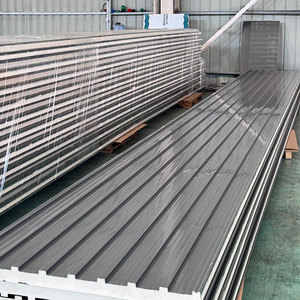
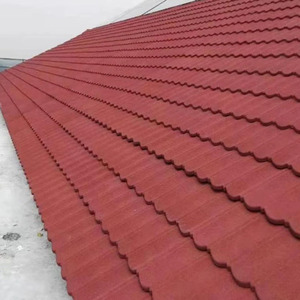
From single-skin structural corrugated panels to high-performance double-folded standing seams and continuous sandwich cores, our manufacturing lines in Barka, Sultanate of Oman deliver tested architectural performance.
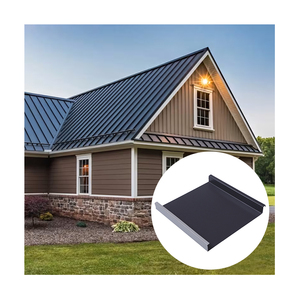
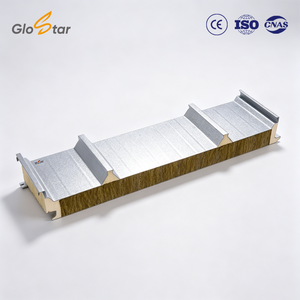
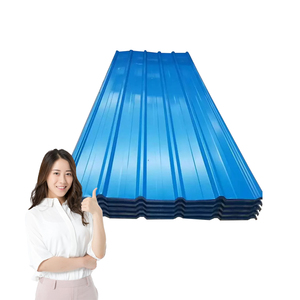
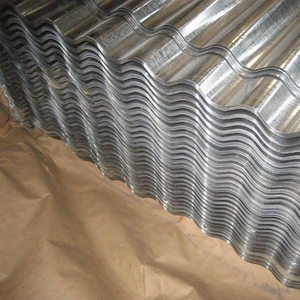
Specifying the appropriate substrate alloy is the single most critical structural decision in industrial building envelope engineering. Unlike mild galvanized steel (which relies on sacrificial zinc anode protection that degrades rapidly once exposed to high salinity or acidic moisture), architectural aluminum alloys form an instant, self-healing, passivated oxide film ($Al_2O_3$). However, mechanical strength, workability, and localized pitting resistance vary significantly across commercial alloys:
Design Factor Note: For curved roofs, high-wind uplift standing seam structures, and aggressive chemical processing plants, Alloy AA3004-H24/H26 exhibits substantially superior tensile strength ($\geq 240\text{ MPa}$) compared to standard AA3003, eliminating panel fatigue at mechanical seam junctions.
Alloy AA3003 (Al-Mn 1.0–1.5%): Widely specified for general cladding and standard corrugated single-skin decking. It delivers exceptional formability, high thermal conductivity, and moderate yield strength ($R_{p0.2} \approx 140\text{--}160\text{ MPa}$). It is the cost-effective benchmark for inland commercial facilities, distribution depots, and standard pitched warehouse roofs where mechanical clip stress is evenly distributed.
Alloy AA3004 (Al-Mn-Mg with ~1.0% Mg): The true architectural benchmark for standing seam metal roof systems (such as the PVR1000 and Zip-Lock 65/400). The controlled magnesium addition increases work-hardening capacity, raising tensile strength to $240\text{--}285\text{ MPa}$ while retaining sufficient elongation ($A_{50} \geq 4\%$) for continuous 360-degree double-fold rotary seam zipping. It delivers outstanding wind uplift load capacities under dynamic ASTM E1592 cyclic pressure testing.
Alloy AA5052 (Al-Mg 2.5%): Engineered for extreme C5-M marine and coastal zones (desalination facilities, port warehouses, offshore support operations). Magnesium content increases pitting potential ($E_{pit}$) in the presence of chloride ions, offering the ultimate resistance to sea spray and tropical humidity.
Surface coating integrity is the barrier against aggressive ultraviolet photons and atmospheric pollutants. In tropical and desert climates (such as the Gulf Cooperation Council region and equatorial zones), metal roof sheets endure sustained solar irradiance exceeding $1,100\text{ W/m}^2$ and roof skin temperatures spiking beyond $80^\circ\text{C}$.
PVDF (Polyvinylidene Fluoride - Minimum 70% Kynar 500® / Hylar 5000®): Formulated with carbon-fluorine ($C\text{--}F$) covalent bonds—one of the strongest chemical bonds in organic chemistry ($485\text{ kJ/mol}$). PVDF resists photochemical cracking, chalking (ASTM D4214 Rating 8 or better after 20 years), and color fading ($\Delta E < 5$ units under ASTM D2244). Applied as a two-coat or three-coat system (epoxy/polyurethane primer $5\text{--}8\,\mu\text{m}$ + topcoat $20\text{--}25\,\mu\text{m}$ + optional PVDF clear barrier), it achieves over 4,000 hours of ASTM B117 salt spray exposure without blistering.
FEVE (Fluoroethylene Vinyl Ether): Delivers higher initial specular gloss (up to 70–80%) compared to standard PVDF (matte 25–35%), offering superior surface hardness for prestige corporate headquarters, airport terminals, and sports stadiums requiring vibrant, ultra-durable architectural finishes.
SMP (Silicone-Modified Polyester): A cost-efficient industrial solution incorporating 30% silicone resin into the polyester backbone. SMP delivers elevated chalk resistance and surface scratch hardness, making it ideal for agricultural structures, logistics centers, and general manufacturing facilities where budget optimization is paired with 15- to 20-year durability targets.
Direct technical comparison between primary OEM roofing substrates and composite assemblies to assist structural consultants in project formulation.
| System Profile | Base Metal / Core | Typical Thickness | Yield Strength | Thermal Expansion ($\alpha$) | Corrosion Class | Fire Reaction |
|---|---|---|---|---|---|---|
| PVR1000 Standing Seam | Alloy AA3004-H24 | 0.70 – 1.00 mm | ≥ 185 MPa | $23 \times 10^{-6}\text{ /K}$ | C5-M Marine | Class A1 (EN 13501-1) |
| Zip-Lock 65/400 (Al-Mg-Mn) | Alloy AA3003 / 3004 | 0.80 – 1.20 mm | ≥ 165 MPa | $23 \times 10^{-6}\text{ /K}$ | C4 / C5-I | Class A1 Non-combustible |
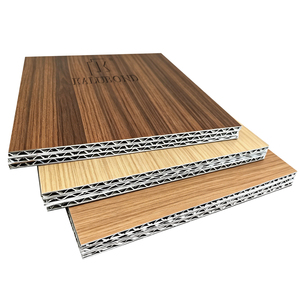
| PIR Composite Roof Panel | Al / Steel + PIR Foam Core | 50 – 150 mm (Core) | Composite Action | Negligible (Foam Core) | C3 / C4 | B-s1, d0 (Self-extinguishing) |
| Rockwool Acoustic Panel | Al / Steel + Mineral Wool | 50 – 200 mm (Core) | High Bending Rigidity | Zero Thermal Drift | C4 / C5-M | Class A1 / A2-s1, d0 (2-hr Fire) |
| Corrugated Wave Sheet | AA3105 / Prepainted GI | 0.45 – 0.80 mm | ≥ 280 MPa | $12\text{--}23 \times 10^{-6}\text{ /K}$ | C3 Standard | Class A1 |
| 18-Gauge Heavy Decking | Cold-Rolled G550 Steel | 1.21 mm (0.0478") | ≥ 550 MPa | $12 \times 10^{-6}\text{ /K}$ | C3 / Z275 Zinc | Class A1 Non-combustible |
How progressive developers, Tier-1 EPC contractors, and sovereign infrastructure funds are re-engineering roofing specifications for durability and decarbonization.
With international building energy codes (ASHRAE 90.1, LEED v4.1, and Estidama) enforcing aggressive cooling load reductions, roofing sheets must achieve a Solar Reflectance Index (SRI) > 82. Modern OEM coil lines utilize NIR (Near-Infrared) reflective pigment technologies that bounce back 75% of infrared thermal waves, reducing underside ambient temperatures by up to 12°C and cutting warehouse HVAC energy consumption by 22%.
Industrial rooftops are no longer passive weather shelters; they are active multi-megawatt solar power stations. Sourcing standing seam profiles with dedicated structural standing seams (PVR1000 / Zip-Lock) allows direct integration of solar clamps without penetrating the weather skin. This preserves 100% watertight integrity and factory warranties while sustaining Category 4 hurricane uplift force vectors.
Global ESG reporting (CBAM and Scope 3 greenhouse gas reporting) is pushing EPCs toward low-carbon aluminum sheets. Primary aluminum produced via hydro or natural gas smelting, combined with up to 40% certified post-industrial scrap recycling, reduces embedded carbon from $18\text{ kg }CO_2\text{e/kg Al}$ down to less than $4.5\text{ kg }CO_2\text{e/kg Al}$, satisfying European and North American green procurement mandates.
Because aluminum's thermal expansion coefficient is approximately twice that of carbon steel ($23 \times 10^{-6}\text{ /K}$ versus $12 \times 10^{-6}\text{ /K}$), long roof lengths (exceeding 30 meters) experience severe shear strain. The procurement trend has shifted decisively toward two-piece sliding thermal clips with PTFE/stainless steel glides that allow up to 75mm of unrestrained longitudinal expansion and contraction, preventing elongated fastener holes.
Procurement teams are eliminating fractured supply chains. Rather than sourcing metal profiles from one vendor, insulation from another, and purlins from a third, buyers insist on complete single-source packages: profile sheets, matched Z & C secondary steel, fire-rated sandwich wall cladding, factory-calibrated flashing components, translucent daylighting panels, and heavy-duty industrial roller shutters.
To avoid substandard scrap contamination and zinc coating shortfalls, global engineering specifications mandate EN 10204 3.1 Inspection Certificates with heat-batch chemical spectrometry, bend test verifications, impact energy compliance, and paint dry film thickness (DFT) laser-scan records bundled directly with export shipping containers.
Established in 2009 in Barka (Sultanate of Oman, P.O. Box 391, PC 320), Paneltech International LLC (PTI) operates as an integrated manufacturer and OEM partner for the global industrial building envelope sector. With extensive continuous roll-forming lines, automated insulated composite sandwich panel foaming presses, and heavy CNC slitting and bending centers, PTI bridges metallurgical science with structural engineering.
Supply roofs, sandwich walls, cold-formed Z & C purlins, profile-matched skylights, and roller shutter doors from a single coordinated fabrication line with matched RAL colors and structural tolerances.
Multi-stream high-pressure polyurethane (PU) and polyisocyanurate (PIR) injection equipment delivering uniform core density ($40\text{--}42\text{ kg/m}^3$) with zero CFC/HCFC ozone-depleting blowing agents.
In-house laboratory executing ASTM D3359 cross-hatch paint adhesion, T-bend micro-fracture checks, dimensional caliper verification, and thermal conductivity guarded hot plate tests on every coil cycle.
Contractors and engineering consultants across the Gulf Cooperation Council (Oman, UAE, Saudi Arabia, Qatar, Kuwait, Bahrain) and international export territories choose PTI because we eliminate the risks of multi-tier brokering. Our technical office works from the initial architectural tender drawings—performing wind uplift moment calculations, selecting the ideal insulation thickness, detailing perimeter flashings, and packaging components in custom-crating sequence to match installation phases on site.
Our manufactured roofing, profile sheets, and insulated sandwich envelope assemblies are verified in challenging real-world operating environments across Oman.
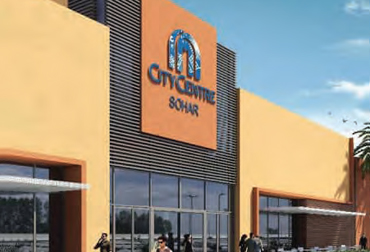
Sector: Prestige Retail & Commercial Mall
Supplied high-span insulated roof sandwich panels and architectural flashing assemblies engineered for rapid climate control in high-heat coastal conditions.
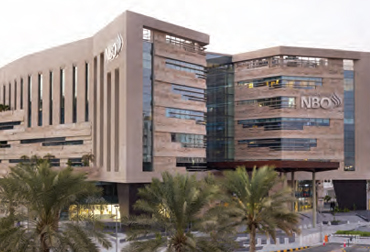
Sector: Corporate Financial Headquarters
Architectural metal profile decking, precision folded rainwater goods, and structural secondary steel engineered to strict institutional standards.
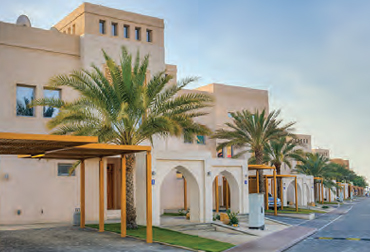
Sector: Coastal Residential & Community Development
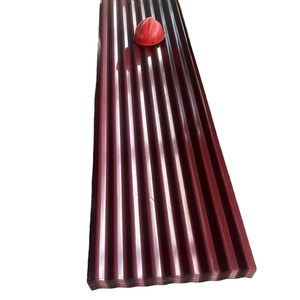
Durable PVDF-coated corrugated aluminum roofing sheets providing decades of C5 marine corrosion immunity against the Arabian Sea coast.
When drafting request-for-proposals (RFPs) for custom aluminum profile sheet manufacturing, procurement managers should specify the following engineering criteria to avoid contract ambiguities and substandard raw material delivery:
Clear, direct answers for structural engineers, project specifiers, and commercial procurement teams comparing metal roofing manufacturers.
Connect directly with our engineering and procurement team in Barka, Sultanate of Oman. Send project drawings, structural purlin spacing layouts, or thermal requirements to receive detailed profile recommendations, dynamic wind uplift load calculations, and competitive factory-direct OEM pricing.