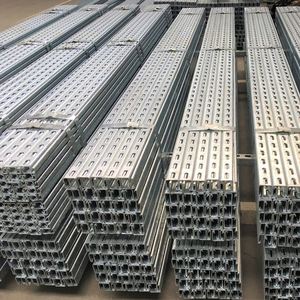
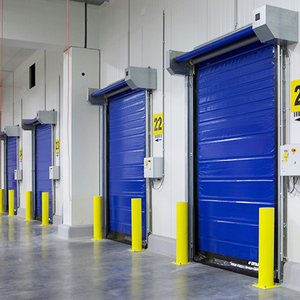
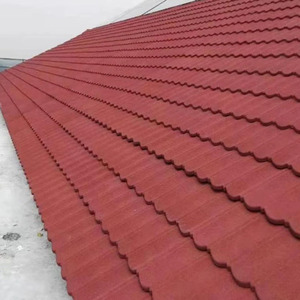
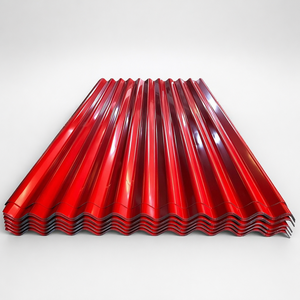
Beyond custom cold-formed C-purlins and girts, Paneltech International integrates primary cold storage access, architectural profiles, insulated roof decking, and heavy-duty structural roof envelope systems manufactured to stringent international tolerances.
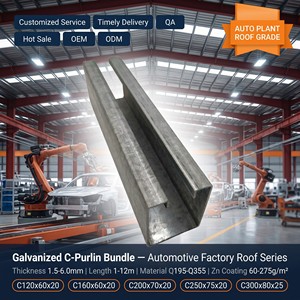
In contemporary structural steel engineering and industrial pre-engineered building (PEB) design, cold-formed galvanized C purlins and girts serve as the indispensable primary load-transfer bridge between external building envelope claddings (such as PIR/PU insulated sandwich panels, corrugated sheets, and composite decking) and the primary structural frame (portal frames, rafter trusses, and building columns). Unlike conventional hot-rolled channel sections, custom OEM cold-formed C purlins deliver an extraordinary strength-to-weight ratio, dramatically lowering the overall superstructure dead load while providing predictable torsional rigidity, strong axis flexural resistance ($I_x$), and precise fastening planes for roof and wall cladding clips.
As a specialized OEM exporter operating out of strategic manufacturing hubs, our production facilities process structural-grade carbon steel coils compliant with ASTM A653 / A653M, EN 10346 (S280GD, S350GD, S450GD, S550GD), AS 1397, and GB/T 2518 (Q235B, Q345B). Every C-section profile is manufactured on computer-controlled multi-station cold roll-forming lines featuring integrated inline hydraulic punch tooling, edge-trimming, flange stiffener bending (lips), and servo-driven flying shear cut-off units. This ensures strict adherence to cross-sectional dimensional tolerances, zero camber, minimal residual stress, and perfectly aligned pre-punched bolt holes for immediate bolt-up erection at international job sites.
| Profile Designation | Web Depth (D) mm | Flange Width (B) mm | Stiffening Lip (L) mm | Thickness (t) mm | Weight (kg/m) | Elastic Section Modulus ($Z_x$) cm³ |
|---|---|---|---|---|---|---|
| C100 × 50 × 20 | 100 | 50 | 15 – 20 | 1.5 – 2.5 | 2.45 – 3.98 | 8.54 – 13.62 |
| C150 × 65 × 20 | 150 | 65 | 18 – 22 | 1.8 – 3.0 | 4.32 – 7.02 | 20.85 – 33.15 |
| C200 × 75 × 20 | 200 | 75 | 20 – 25 | 2.0 – 3.2 | 6.05 – 9.51 | 38.90 – 59.40 |
| C250 × 80 × 25 | 250 | 80 | 20 – 25 | 2.0 – 3.5 | 7.24 – 12.35 | 56.10 – 92.40 |
| C300 × 100 × 30 | 300 | 100 | 25 – 30 | 2.5 – 4.0 | 10.82 – 16.95 | 98.50 – 151.20 |
| C350 × 100 × 30 | 350 | 100 | 25 – 30 | 2.5 – 4.0 | 11.85 – 18.52 | 124.60 – 192.10 |
Global steel buyers and EPC contractors face evolving decarbonization requirements, BIM integrations, and strict modular construction schedules. Discover the key technical trends reshaping the procurement of cold-formed C purlins over the next decade.
International sustainability ratings (LEED v4.1, BREEAM, and Estidama) are transforming international procurement criteria. Exporters are shifting toward Electric Arc Furnace (EAF) coil sourcing utilizing high proportions of recycled scrap steel and certified renewable energy grids. Global EPC buyers now evaluate certified Environmental Product Declarations (EPD) and cradle-to-gate Life Cycle Assessments (LCA) alongside traditional yield stress and price metrics.
Decarbonization / EPD VerifiedManual drafting and generic purlin stock cutting are obsolete. Modern procurement frameworks leverage direct Tekla Structure and Autodesk Revit BIM exports into computerized roll-forming controllers via DSTV/NC1 files. Purlins are fabricated with custom punched holes, sag rod slots, service utility penetrations, and inkjet piece-markings at zero additional tooling turnaround, expediting rapid on-site bolt-up assemblies without torch-cutting.
Industry 4.0 / Tekla IntegrationRising global maritime freight charges and raw material volatility drive the transition from conventional mild steel (Q235B / S250GD) toward ultra-high-strength steel grades (S450GD, S550GD / G550). By increasing yield strength up to 550 MPa, structural engineers safely reduce profile wall thickness from 2.5mm down to 1.8mm or 2.0mm. This delivers a 20% to 30% reduction in total steel tonnage while maintaining equivalent structural load spans.
High Strength / Freight SavingsEstablished in 2009 in Barka, Sultanate of Oman, Paneltech International LLC (PTI) operates world-class manufacturing lines supplying turnkey industrial envelope systems across the Middle East, Africa, Central Asia, and global export destinations.
Eliminate project coordination failures. We manufacture custom C & Z purlins, PIR/PU/Rockwool insulated sandwich panels, metal decking sheets, translucent daylighting panels, and architectural flashings from a unified production base.
Every production batch undergoes comprehensive laboratory mechanical testing: yield strength, ultimate tensile strength, elongation percentage, coating mass verification (ASTM A90 / ISO 1460), and dimensional tolerance verification.
Equipped with state-of-the-art flying-shear cold roll-formers, we eliminate material wastage by producing exact job-specific lengths (up to 14.5 meters for flat-rack or open-top containerization) with custom pre-punched hole patterns.
Secondary steel sections are precision-nested, secured with high-tensile steel strapping, corner edge protectors, heavy moisture-barrier plastic wrapping, timber dunnage, and anti-white-rust chemical passivation for extended ocean transit.
Secondary steel structural members installed in coastal, chemical, or desert environments face high ambient temperatures, aggressive humidity, and chloride-laden airborne dust. Paneltech International integrates strict raw material selection—using certified prime continuous hot-dip galvanized steel with zero spangle or minimized spangle finishes. Whether executing high-bay logistics centers, pharmaceutical cleanrooms, or coastal grandstands, our technical engineering team reviews project span-to-deflection ratios ($L/180$, $L/240$, $L/360$) and recommends optimal purlin profiles and anti-corrosion grades that ensure structural integrity for decades.
Get a QuoteDetailed technical answers for structural engineers, project estimators, and international procurement managers sourcing cold-formed galvanized secondary steel.
Depending on structural engineering criteria, we manufacture C-purlins using continuous hot-dip galvanized steel grades compliant with ASTM A653 / EN 10346. Common standard grades include Grade 50 Class 1 (min. yield strength 345 MPa / 50 ksi), S350GD (350 MPa yield), and high-tensile S550GD / G550 (550 MPa yield). High-tensile steel permits significant thickness down-gauging while fulfilling required flexural moment and shear capacities under AS/NZS 4600 and AISI S100 standards.
White rust forms when tightly nested galvanized components encounter condensation or moisture in oxygen-depleted marine environments. To prevent this, our coils undergo chemical passivation (chromate or eco-friendly trivalent passivation) and specialized vanishing electrostatic vanishing oils. During bundling, purlins are separated with timber spacers, protected with plastic-lined VCI moisture barriers, wrapped in heavy-duty polyethylene, and desiccants are placed inside export shipping containers.
Our automated CNC roll-forming lines feature inline multi-tool hydraulic presses capable of punching round holes (14mm, 16mm, 18mm) and elongated slotted holes (14×22mm, 18×26mm, 18×30mm) along both the web and flanges. Web punches accommodate standard column/rafter cleat connections, while flange holes are punched for direct attachment of anti-sag tie rods and diagonal bridging wires according to your detailed structural drawings.
Because C-purlins offer a perfectly flat vertical web and parallel outer flanges, they provide a stable, unbending surface for self-drilling fasteners with EPDM washers. When fixing PIR/PU/Rockwool sandwich panels, purlin flange widths (typically 50mm, 65mm, or 75mm) ensure that screws do not strip out near steel edges, maintaining complete vapor sealing and wind-uplift resistance along the building envelope.
For standard single-span simply supported conditions under typical industrial roof live/wind loads (0.6 to 1.2 kN/m²), C-purlins are commonly designed for column grid spans between 4.5 and 7.5 meters. Beyond 7.5-meter spans, deeper sections (e.g., C250 or C300) with heavier gauge (2.5mm–3.2mm) or continuous lapped Z-purlins are generally specified to maintain deflection within permissible limits ($L/180$ to $L/240$).
Yes. Every export shipment is accompanied by complete EN 10204 Type 3.1 Mill Test Certificates detailing chemical heat analysis (C, Mn, Si, P, S) and mechanical tensile testing (Yield, Ultimate, Elongation). Furthermore, third-party inspection agencies such as SGS, Bureau Veritas, or TÜV are routinely accommodated at our Barka factory to perform independent pre-shipment dimensional and zinc coating thickness verifications.
C-purlin profiles of identical web dimensions can be partially nested or interlocked back-to-face inside heavy steel-strapped bundles, dramatically optimizing volumetric utilization inside standard 20ft (up to 5.8m lengths) and 40ft High Cube (up to 11.8m lengths) sea containers. For project lengths extending up to 14.5 meters, flat-rack containers or dedicated breakbulk break-bulk vessels are utilized with certified slinging protocols.
Standard OEM production schedules for orders between 25 and 200 metric tons range from 7 to 15 working days from approved shop drawings and deposit confirmation. Because we maintain substantial raw coil master inventories in standard thicknesses (1.5mm, 1.8mm, 2.0mm, 2.5mm, 3.0mm), emergency expedited rolling runs can be accommodated to match demanding project milestones.
Submit your structural framing schedules, Tekla bill of materials (BOM), or architectural envelope specifications. Our senior structural estimators and fabrication engineers provide competitive CIF/FOB pricing, detailed span calculations, and guaranteed production timelines within 24 hours.