
As commercial developers, structural engineering consultants, and industrial EPC contractors navigate increasingly stringent fire-safety standards, OEM mineral wool (rock wool) sandwich panels have emerged as the paramount building envelope solution worldwide. Combining molten basalt core matrices with precision-rolled galvanized and pre-painted steel facings, these structural composites offer unmatched passive fire resistance, acoustic attenuation, and sustainable thermal isolation.
Engineered for complete building envelope synergy. Sourcing integrated sandwich panels, secondary structural frameworks, daylighting profiles, and access hardware ensures dimensional compatibility, consistent warranties, and rapid project commissioning.
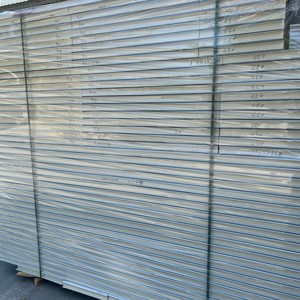
Engineered with high-density vertically oriented basalt mineral wool fibers for superior interior acoustic partition walls, cleanrooms, and fire-rated ceilings.
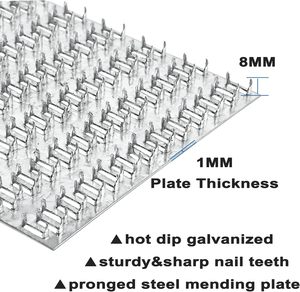
Heavy-duty anti-corrosive connector plates delivering rigid joint integrity for timber-to-steel and structural steel roof purlin bracing frameworks.
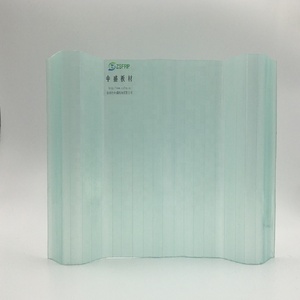
Weather-resistant, UV-stabilized fiberglass reinforced polymer panels engineered to match metal panel ribs for balanced daylight harvesting.
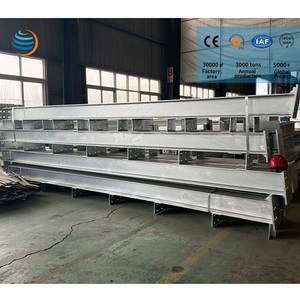
Pre-engineered structural roof truss systems delivering long clear-spans for logistics hubs, aviation hangars, and automated heavy manufacturing halls.
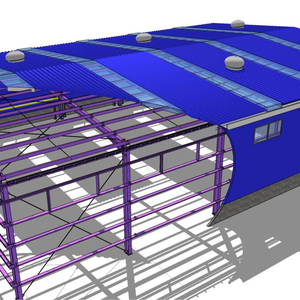
Precision-fabricated structural columns, mezzanines, and workshop platforms designed to interface directly with insulated composite walling.
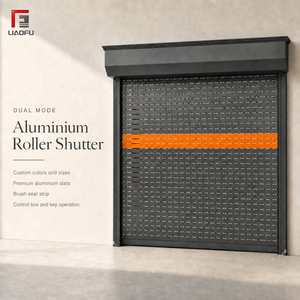
Heavy-gauge roll-up shutter systems tailored for seamless installation alongside insulated mineral wool panels in distribution facilities.
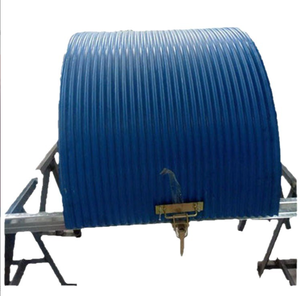
Custom radius curved pre-painted corrugated sheets eliminating ridge caps on arched aircraft shelters, grain terminals, and modern canopies.
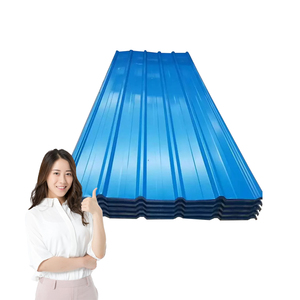
Multi-certified wave-profile cladding sheets compliant with EN, SASO, and BIS specifications for severe marine and desert climates.
OEM mineral wool panels are composite sandwich structures consisting of two cold-rolled metal skins continuously laminated over an orientated stone wool core. The core fibers are cut, rotated 90 degrees (lamella orientation), and compressed to achieve high tensile and shear resistance under severe wind load conditions.
| Panel Thickness | Core Density (kg/m³) | Thermal U-Value (W/m²·K) | Acoustic Insulation (Rw) | Fire Rating (EN 13501-2) | Max Allowable Span (m) |
|---|---|---|---|---|---|
| 50 mm | 100 - 120 kg/m³ | 0.72 W/m²·K | 30 dB | EI 30 - EI 60 | 2.80 m |
| 75 mm | 100 - 140 kg/m³ | 0.49 W/m²·K | 32 dB | EI 60 - EI 90 | 3.60 m |
| 100 mm | 110 - 150 kg/m³ | 0.37 W/m²·K | 34 dB | EI 120 | 4.40 m |
| 150 mm | 120 - 160 kg/m³ | 0.25 W/m²·K | 37 dB | EI 180 - EI 240 | 5.80 m |
| 200 mm | 120 - 160 kg/m³ | 0.19 W/m²·K | 41 dB | EI 240 (4 Hours) | 6.80 m |
Classified Euroclass A1 / A2-s1,d0 according to EN 13501-1 and ASTM E84 zero flame-spread criteria.
Treated with silicone emulsions to ensure water absorption by partial immersion remains < 0.5 kg/m².
Available in Aluzinc (AZ150), Hot-dip Galvanized (Z275), PVDF 70/30, and HDP coatings for C4/C5 coastal environments.
Precision tongue-and-groove joint profile with concealed or exposed fastener configurations for air-tight seals.
Global procurement directors are transitioning from basic transactional price inquiries to comprehensive Lifecycle Cost Analysis (LCC) and total envelope integration. Key supply chain shifts are reshaping project requirements:
Institutional financiers and municipal codes in the EU, GCC, and North America now demand third-party verified Environmental Product Declarations (EPD). Modern OEM exporters must demonstrate electric cupola melting of basalt and bio-based binders that dramatically lower the cradle-to-gate Global Warming Potential (GWP) per square meter.
Rising on-site labor overhead is accelerating demand for millimeter-accurate cut-to-length mineral wool panels with factory-routed service conduits, pre-punched fixing holes, and pre-applied perimeter sealing gaskets. This reduces installation cycle times on site by up to 45% compared to site-built assemblies.
International engineering contractors require dual-certified inventories. Leading OEM suppliers are establishing unified testing protocols satisfying simultaneous CE-Marking (EN 14509), FM Approval (FM 4880/4881/4471), UL 263 fire testing, alongside Middle Eastern Civil Defense (SASO, Oman Civil Defence) and BIS requirements.
Breakthroughs in chemical engineering, continuous roll-forming kinematics, and composite material mechanics have transformed traditional rock wool panels into smart, resilient building shells.
To eliminate the historical vulnerability of exposed rock wool to capillary moisture ingress at joint edges, advanced continuous production lines now incorporate PIR side-edge sealing. This hybrid architecture pairs the non-combustible core safety of stone wool with the moisture-tight vapor sealing and structural snap-fit of rigid polyisocyanurate.
By employing high-speed automated lamella flippers, continuous production lines orient mineral wool fibers strictly perpendicular to the facings. This directional matrix increases structural compressive strength to > 150 kPa and shear strength to > 100 kPa, preventing delamination across high temperature gradients.
Next-generation mineral wool relies on bio-based polymer binders derived from rapidly renewable agricultural starches rather than traditional phenol-formaldehyde. This advancement cuts factory VOC emissions by over 90%, meeting LEED v4 and WELL Building standards for internal cleanroom installations.
Operating continuously since 2009 from our specialized production complex in Barka, Sultanate of Oman (P.O. Box 391, PC 320), Paneltech International LLC (PTI) stands as a premier Middle Eastern and international engineering exporter. We deliver integrated single-source building envelope solutions encompassing insulated sandwich panels, cold-formed structural steel, roll-formed roofing profiles, industrial shutters, and weatherproofing flashings.
Our dedicated manufacturing base in Oman utilizes continuous computerized lamination lines and precision cold-roll formers for rapid containerized export across the GCC, Africa, and Eurasia.
Eliminate multi-vendor coordination conflicts: PTI manufactures matching insulated panels, Z & C purlins, metal decking, translucent skylights, custom flashings, and roller shutter doors.
From mill-test coil analysis to in-line core adhesion peeling verification and flame chamber checks, every panel batch is released with accredited testing documentation.
Specified on national flagship works including City Center Sohar, Head Office of National Bank of Oman, Royal Oman Police facilities, and complex airport logistics hubs.
Detailed technical answers to common queries regarding core selection, acoustic attenuation, fire certification, logistics, and site installation.
Polyurethane (PU) and polyisocyanurate (PIR) panels provide superior thermal insulation per unit thickness (lambda ~0.022 W/m·K) and are lightweight. However, Mineral Wool (Rockwool) consists of natural basalt stone fibers with a melting point above 1,200°C. Rockwool is strictly classified as Euroclass A1/A2 non-combustible, producing zero toxic smoke and no flaming droplets. Mineral wool is the mandatory standard for fire compartment walls, high-risk industrial facilities, and acoustic isolation barriers.
For interior partition walls, a density of 80–100 kg/m³ is typically adequate. For exterior walls subjected to positive and negative wind pressures, 100–120 kg/m³ is standard. For structural insulated roof panels that must resist foot traffic, live maintenance loads, and heavy snow loads, an oriented lamella core density of 120–150 kg/m³ is recommended to prevent core crushing and facial delamination.
Paneltech utilizes rock wool treated with reactive silicone hydrophobic additives during fiber spinning, limiting water absorption to negligible levels (< 0.5 kg/m² under standard immersion). In exterior architectural applications, panels are fabricated with closed-cell elastomeric side joint gaskets and continuous polyurethane side-edge profiles, preventing water vapor ingress from driving rain or high humidity.
Yes. Standard solid-faced panels naturally provide a Sound Reduction Index (Rw) between 30 dB and 35 dB depending on core thickness. For applications demanding high acoustic absorption (power turbine enclosures, sports complexes, manufacturing plants), we supply perforated internal metal facing sheets lined with an acoustic glass tissue barrier. This configuration yields a Noise Reduction Coefficient (NRC) exceeding 0.85.
For standard intermodal 40ft HQ maritime shipping containers, panels are cut to a maximum length of 11.85 meters to permit end-loading with protective cradles. In regional domestic markets reachable by flatbed trailers, panels can be continuously manufactured up to 16.0 meters, subject to site crane capacity and lifting equipment limits.
For severe corrosive coastal atmospheres (C4/C5 classification), we recommend cold-rolled steel coils with a minimum hot-dip galvanizing mass of Z275 (275 g/m² zinc) or Aluzinc AZ150, coated with a 25-micron High Durability Polyester (HDP) or 40-micron Polyvinylidene Fluoride (PVDF 70/30) paint system. For extreme environments, marine-grade aluminum alloys (5005 / 3003 series) provide optimal service life.