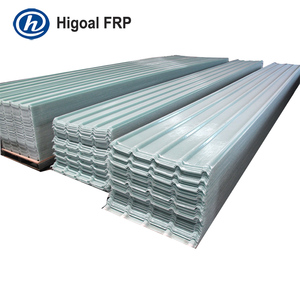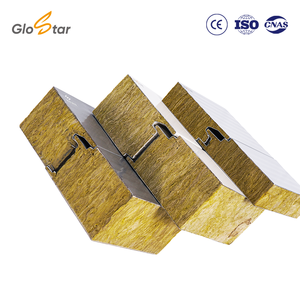
Our Barka industrial manufacturing facility delivers an integrated building envelope ecosystem, uniting extreme-load windproof industrial closures with cold-formed structural steel and insulated cladding systems.
A rigorous examination of positive dynamic pressures, leeward negative suction, structural slat deflection limits, and mechanical wind-lock retention kinetics.
In modern industrial facilities, coastal logistics hubs, and aviation hangars, large-scale vehicular doorways represent the most aerodynamically sensitive aperture in the entire structural envelope. According to boundary layer aerodynamic calculations derived from Bernoulli’s velocity equation ($q = 0.5 \cdot \rho \cdot V^2$), the wind stagnation pressure exerted on a building envelope increases exponentially with the square of the wind velocity. When atmospheric storms or cyclonic fronts make landfall, winds exceeding 180 km/h (50 m/s) generate dynamic stagnation pressures surpassing 1.5 kPa, while Category 4 and 5 hurricane-force gusts (exceeding 250 km/h) routinely deliver peak gust pressures ranging between 3.5 kPa and 5.5 kPa.
Standard architectural roller doors fail under these severe loading cycles not because the steel itself tears apart in tension, but due to horizontal flexural deflection. As wind applies massive uniform lateral pressure across spans exceeding 6 to 12 meters, the interlocking curtain bows elastically inward under positive windward pressure, or outward under leeward aerodynamic suction. As the curtain deflects toward its mid-span, its effective horizontal cord width shortens via geometric shortening ($\Delta L$). In a traditional shutter channel, this lateral contraction pulls the curtain slat ends clean out of the side vertical guide tracks, resulting in catastrophic curtain blow-out, severe internal warehouse pressurization, and catastrophic roof blow-off failures.
To overcome this failure mode, custom OEM windproof roller shutters utilize a fundamentally differentiated mechanical retention concept: malleable cast-iron or heavy-duty stamped high-tensile steel wind-lock end clips riveted directly to the extremities of alternating or continuous slats. These wind-locks operate inside heavy-gauge, multi-flanged steel structural guide channels. When the curtain deflects under lateral pressure, the flared lips of the wind-locks physically engage against the internal structural return-lips of the heavy guide tracks, converting lateral bending moment into direct tensile hoop stress through the curtain steel slats.
Engineers and EPC specifiers require quantifiable structural verification to align shutter door assemblies with local building code wind maps (e.g., ASCE 7-22, BS EN 1991-1-4, AS/NZS 1170.2). Below is the comparative operational matrix for Paneltech's OEM wind-lock shutter configurations:
| Wind Load Class | Test Pressure ($N/m^2$ / Pa) | Equivalent Wind Velocity | Slat Configuration & Gauge | Guide Track Thickness | Max Engineered Clear Span | Structural Compliance |
|---|---|---|---|---|---|---|
| Class 2 (Standard Industrial) | 450 Pa | ~98 km/h (Beaufort 10) | 0.8 mm Galvanized Single Skin | 2.0 mm Cold-Formed Steel | Up to 5.0 Meters | EN 12424 Certified |
| Class 3 (High-Wind Coastal) | 700 Pa | ~120 km/h (Beaufort 12 Hurricane) | 1.0 mm Curved Concave Slat | 2.5 mm Heavy Flanged Rail | Up to 7.5 Meters | EN 12424 / ISO 9001 |
| Class 4 (Severe Storm / Harbor) | 1000 Pa | ~146 km/h (Category 1-2 Typhoon) | 1.2 mm Deep-Profile Steel / Insulated PU | 3.0 mm Reinforced Wind-Hook Rail | Up to 9.5 Meters | ASTM E330 / CE |
| Class 5 (Extreme Hurricane / Marine) | > 2500 Pa up to 5500 Pa | > 240 km/h (Category 5 Severe Cyclone) | 1.5 mm Ultra-High Yield Steel + Dual Wind-Locks | 4.5 mm Structural Fabricated Angle Guide | Up to 14.0 Meters | ASTM E330 / TAS 202 |
Engineered tolerance controls, metallurgical formulations, and kinematic drive integrations ensure fail-safe performance during cyclonic events.
Fabricated from ductile malleable iron or high-tensile steel alloy, cold-riveted onto alternating or every single slat profile. Engineered to absorb continuous tensile pull forces in excess of 18 kN per bracket under cyclic dynamic pressure loads.
Roll-formed from 2.5mm to 4.5mm heavy structural steel with minimum insertion pockets from 100mm to 160mm. Features internal return lips that physically capture the wind-locks and prevent curtain blow-in or suction blow-out.
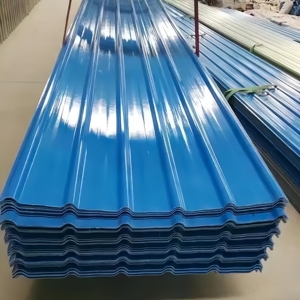
Dual roll-formed zinc-coated steel skins continuously injected with CFC-free polyurethane foam (45 kg/m³ density). Achieves optimal flexural stiffness, outstanding thermal insulation ($U \le 1.4\ W/m^2K$), and acoustic attenuation across wide bays.
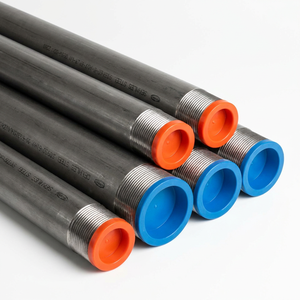
Fabricated from seamless heavy-wall steel pipe conforming to EN 10210/10219 standards. Engineered with calculated moment of inertia to ensure total shaft deflection stays within $L/400$ under full curtain deadload, preventing winding bind.
Direct-drive 3-phase industrial gearmotors with integrated centrifugal safety inertia brakes (anti-fall system conforming to EN 12604). Features mechanical limit switches, manual hand-chain overrides, and auto-reverse safety edges.
Extruded dual-box structural aluminum or welded double-angle galvanized steel profile. Anchors the lower perimeter with heavy EPDM weatherstripping, delivering critical transverse torsional stiffness during ground-level wind shears.
Industrial procurement managers, engineering consultants, and commercial developers are navigating a fundamental transformation in how industrial building envelopes and storm closures are specified. The accelerating frequency of severe climatic events, coupled with stringent international building codes (such as ASHRAE 90.1, Eurocode 3, and Florida Building Code TAS standards), has rendered generic light-duty shutters obsolete for commercial installations.
1. Decoupling of Generic Commodity Sourcing in Favor of OEM Systems Engineering: Historically, contractors sourced curtain slats, barrel pipes, and motors from disparate third-party distributors, attempting field integration. This led to high structural failure rates due to mismatched torsional deflection and inadequate wind-hook tolerances. Modern procurement trends mandate unified OEM single-source engineering, where the curtain, guide track, motor safety clutch, and structural anchor calculations are certified as an integrated system by a single accountable manufacturing plant.
2. Convergence of Thermal Efficiency and High-Wind Resistance: In regions with extreme environmental exposure—such as the Middle East, coastal Australia, and the hurricane corridors of the Americas—specifiers increasingly reject uninsulated single-skin slats. The future sourcing standard favors continuous micro-profile insulated sandwich slats that deliver dual-action protection: resisting extreme wind pressures up to 4.5 kPa while providing a thermal barrier that curtails cooling load losses in cold-chain logistics facilities and air-conditioned manufacturing plants.
3. Advanced Metallurgy and Sustainable Galvanizing Chemistries: As environmental life-cycle assessments (LCA) become mandatory in global infrastructure tenders, procurement specifications are demanding low-carbon steel coils treated with continuous hot-dip zinc-aluminum-magnesium (ZM) alloy coatings. ZM coatings offer three to four times the cathodic self-healing corrosion resistance of conventional pure zinc galvanizing, dramatically extending the design service life of shutters installed within saline coastal zones from 7 years to over 25 years without structural pitting or fatigue failures.
4. Industrial IoT Telemetry and Predictive Fatigue Sensing: Leading EPCs are now integrating smart shutter control panels fitted with strain sensors, cycle monitors, and automated weather-station integrations. When external anemometers register gale-force winds exceeding preset thresholds, the facility management system triggers automated defensive closure sequences across all warehouse facades, ensuring locks are mechanically seated before catastrophic internal gust pressurization can initiate.
Direct manufacturer capabilities headquartered in Barka, Sultanate of Oman since 2009, delivering turnkey industrial building envelopes and specialized wind closures.
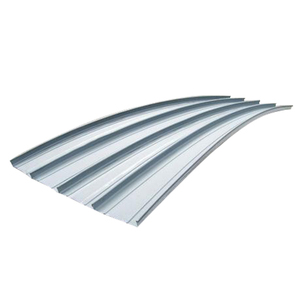
Our Barka production facility operates state-of-the-art automated CNC roll-forming lines, producing single-skin concave curved profiles and double-skin composite insulated panel profiles with millimeter-exact dimensional repeatability and zero camber distortion.
All core raw steel is sourced with certified mill test reports conforming to DX51D, S280GD, and S350GD structural standards. High-density hot-dip galvanized coatings (Z120 to Z275) and marine-grade polyester or PVDF powder coating ensure elite salt-spray resistance in aggressive GCC and marine environments.
Paneltech eliminates multi-vendor misalignment by manufacturing the complete envelope: PIR, PU, and Rockwool sandwich panels, metal decking, Z & C cold-formed purlins, and heavy-duty windproof roller shutters, providing cohesive architectural and structural harmony from one accountable manufacturer.
Authoritative technical guidance for structural engineers, project specifiers, and procurement executives.
Connect directly with Paneltech's Barka engineering design department for comprehensive wind-load structural calculations, shop drawings, and competitive direct-factory pricing for your commercial or industrial infrastructure project.