
Continuous-line calibrated polymer matrices incorporating premium E-glass fiber reinforcement, anti-aging PVF/Gel-coat surface barriers, and engineered corrugated profiles built to integrate seamlessly with modern metal building envelopes.
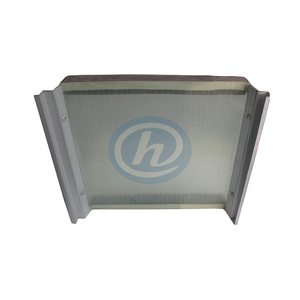
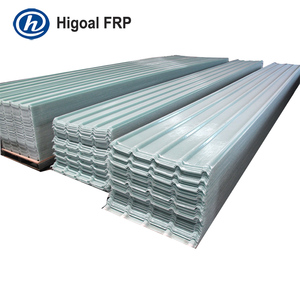
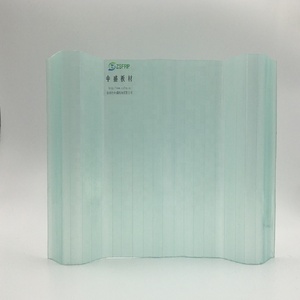
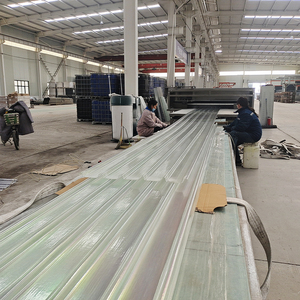
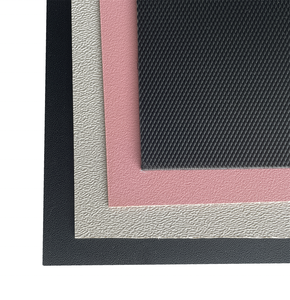
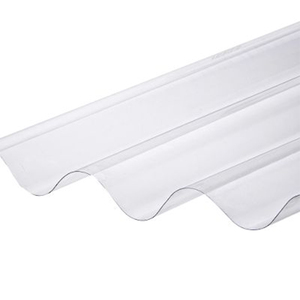
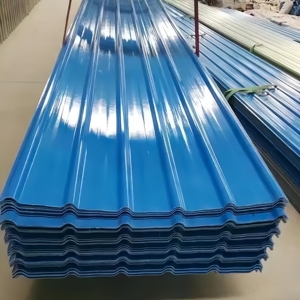
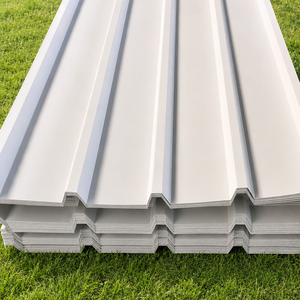
A rigorous examination of cross-linked polymer matrices, light diffusion physics, weathering chemistry, and building envelope energy dynamics.
Fiberglass Reinforced Polyester (FRP) and Glass Reinforced Plastic (GRP) daylighting panels represent a vital technological apex in contemporary building envelope engineering. Unlike isotropic glazing materials such as standard tempered glass or polycarbonates, thermosetting composite panels utilize continuous-filament E-glass roving and chopped strand matting (CSM) suspended within a chemically catalyzed unsaturated polyester resin. When polymerized via high-temperature continuous pultrusion and automated lamination processes, the resulting composite delivers high strength-to-weight ratios, structural elastomeric memory, and exceptional resistance to cyclic thermal fatigue.
Engineering Benchmark: Modern continuous lamination processes apply automated cross-linking controls that cure unsaturated polyester resins at 130°C–165°C under continuous vacuum extraction. This eliminates air voids (<0.5% micro-porosity), resulting in barcol hardness exceeding 40 and complete chemical wet-out across alkali-free E-glass reinforcement mats (glass content 28%–34% by weight).
For large-span industrial complexes, logistics fulfillment warehouses, mining sheds, and agricultural facilities, daylighting is not simply about lumen transmission; it requires precise thermal balancing. Unfiltered solar radiation introduces significant sensible cooling loads through the infrared spectrum while generating severe glare zones. Advanced FRP daylight panels solve this through internal light refraction.
Because the refractive index of the cured polyester resin ($n \approx 1.52$–$1.54$) closely matches that of the embedded borosilicate E-glass fibers ($n \approx 1.55$), direct solar rays undergo multi-angular internal scattering. This transforms blinding collimated sunlight into soft, omnidirectional diffused illumination with a Haze Factor exceeding 90%. This scattering completely eradicates sharp contrast shadows, prevents worker eye strain, and lowers indoor localized hot spots, allowing building operators to cut HVAC daytime thermal cycling while turning off electrical luminaire grids across millions of square meters of floor space.
| Performance Parameter | Continuous Laminated FRP / GRP | Polycarbonate (PC) Multiwall | Unreinforced PVC Sheets | Wired Laminated Glass |
|---|---|---|---|---|
| Thermal Expansion ($10^{-5} \text{ K}^{-1}$) | 2.2 - 2.8 (Closest to Steel ~1.2) | 6.5 - 7.0 (High Thermal Movement) | 7.0 - 8.0 (Severe Buckling Risk) | 0.9 (Rigid / Fracture Prone) |
| Light Diffusion (Haze Index) | >90% (Zero Glare, Deep Reach) | 35% - 50% (Visible Hot Spots) | 20% - 40% (Poor Uniformity) | <5% (Direct Glare / Shadows) |
| Tensile Strength (MPa) | 100 - 140 MPa | 55 - 65 MPa | 35 - 50 MPa | 30 - 45 MPa (Brittle Fracture) |
| Acid & Chemical Corrosion Resistance | Immune (Resists H₂SO₄, Cl⁻, NH₃) | Poor (Attacked by Alkalis & Esters) | Moderate (Degrades under heat/UV) | Good (Susceptible to HF) |
| UV Longevity & Yellowing Index | $\Delta$YI < 3.0 over 20 Yrs (with PVF) | $\Delta$YI 8.0 - 15.0 (Yellows quickly) | $\Delta$YI > 20.0 (Severe Embrittlement) | Stable (No yellowing) |
| Hail Impact Resistance (Class 4) | Superior (No Puncture at 35 m/s) | Moderate (Micro-Cracks after UV aging) | Brittle failure after 3-5 years | Catastrophic Fracture Risk |
Leveraging deep industrial heritage from our automated manufacturing lines in Barka, Paneltech International LLC provides international contractors with fully compatible building envelope packages.
With thousands of custom tooling matrices, our FRP daylighting panels precisely replicate corrugated metal sheets, insulated sandwich panel outer skins, and standing seam roof decks. This eliminates installation gaps, prevents capillary leaks, and guarantees 100% weather-tight side-lap nesting.
Unlike standalone resin converters, we engineer comprehensive systems including cold-formed Z & C purlins, metal decking, PIR/PU/Rockwool sandwich panels, and precision metal flashings. Sourcing secondary structural steel and daylighting from one factory eliminates tolerance errors on site.
Engineered to survive relentless Middle Eastern, African, and tropical UV radiation, high temperatures (up to +120°C continuous service rating), saline coastal winds, and abrasive desert sandstorms without chalking, delaminating, or micro-cracking over decades of continuous exposure.
Critical market shifts procurement officers, EPC contractors, and structural consultants must navigate to maximize building lifecycle value.
Global carbon taxes and zero-emission building codes require commercial logistics hubs to source daylighting solutions that contribute directly to LEED Daylight credits (EQc7) and BREEAM Health & Wellbeing points (Hea 01). Buyers are transitioning away from high-embodied-energy aluminum-framed glass curtain walls toward lightweight continuous FRP ribbon daylighting that cuts operational electrical consumption by up to 35% annually.
Procurement teams are moving away from cheap spray-on liquid topical coatings that degrade in 3–5 years. Global export demand is heavily prioritizing continuous thermo-laminated 20–25μm DuPont Melinex 301 or Tedlar PVF barrier films that fuse permanently into the resin during exotherm curing, offering guaranteed 20-to-25-year gloss retention and total resistance to acid mist from industrial flue gases.
Cross-border EPC contractors are minimizing installation labor and ocean freight costs by contracting OEM/ODM manufacturers capable of continuous cut-to-length extrusion (up to 11.8m per sheet to max out 40-foot High Cube containers). Integrated packaging designs with protective PE films, desiccants, and reinforced fumigated steel-frame crates prevent transit abrasion and micro-fissuring.
When conducting a comprehensive 30-year Total Cost of Ownership (TCO) evaluation for an industrial warehouse facility of 40,000 square meters, initial purchase cost accounts for only 18% of the economic lifecycle impact. Polycarbonate multiwall sheets often display attractive initial pricing; however, their thermal expansion coefficient ($6.5 \times 10^{-5} \text{ K}^{-1}$) is nearly five times higher than profiled steel decking.
This mismatch creates constant shear fatigue on roofing fasteners during daily expansion/contraction cycles, wallowing out pre-drilled screw holes and causing seal washers to dry-rot and leak within 4 to 7 years. In contrast, fiberglass composite panels have an expansion rate ($2.2 \times 10^{-5} \text{ K}^{-1}$) that synchronizes closely with galvanized structural steel purlins and profile panels, preventing tear-out, preserving structural diaphragms, and resisting high-velocity category 4 hurricane wind uplift forces (tested per ASTM E330 and UL 580 Class 90).
Direct engineering answers addressing critical specification criteria, testing standards, and on-site integration.
Fiber bloom (fiberglass strands surfacing due to resin erosion) and yellowing are caused by photo-chemical oxidation from UV-B radiation. Our OEM/ODM panels prevent this through a dual-barrier method: the resin core incorporates UV absorbers (benzophenone/benzotriazole additives), while the outer surface is thermally bonded during continuous pultrusion with a 20μm–25μm biaxially-oriented PVF/PET barrier film (such as DuPont Melinex 301). This blocks 99.2% of UV radiation, keeping the Yellowing Index ($\Delta$YI) below 3.0 after 2000 hours of accelerated ASTM G154 QUV weatherometer testing.
We formulate specialized halogenated and reactive fire-retardant polyester resin matrices compliant with ASTM E84 testing protocols. Panels can be engineered to meet Class A (Flame Spread Index < 25, Smoke Developed < 450) or Class B (Flame Spread Index < 75) standards, as well as European EN 13501-1 Class B-s1, d0. These formulations self-extinguish when the direct flame source is removed, preventing roof-spread ignition in chemical plants, paper mills, and recycling facilities.
Water intrusion occurs when skylight rib geometries deviate from surrounding metal roof profiles. As an integrated manufacturer of corrugated steel decking and sandwich panels, our tooling molds are CNC-milled to mirror standard metal ribs (e.g., trapezoidal 35/207, 760, 840, 1000). Every sheet features engineered anti-capillary drainage grooves on the under-lapping rib, preventing wind-driven rain from creeping horizontally into the lap joint.
Structural support purlin spacing depends on sheet thickness, profile depth, and local design wind/snow loads. For an industrial 1.5mm-thick trapezoidal sheet, purlin spacing typically spans 1.2m to 1.5m under a 1.2 kN/m² design load, maintaining deflection below $L/180$ per EN 1013 and ASTM D3841. For higher point-load safety or hail-prone zones, 2.0mm to 2.5mm heavy-gauge sheets allow wider spans up to 1.8m while meeting OSHA roof non-fragility requirements.
Yes. Through automated digital liquid colorant and filler dosing on our continuous lamination lines, we tailor Visual Light Transmittance (VLT) anywhere from 30% to 85%. Standard architectural colors include Translucent Opal White (55%–65% VLT, optimal glare control), Clear Glass (75%–85% VLT, maximum illumination), Sky Blue, and Soft Green. Diffusing alumina trihydrate (ATH) fillers can be modulated to achieve target Solar Heat Gain Coefficients (SHGC) between 0.40 and 0.65.
Technicians must always pre-drill fixing holes 2mm–3mm larger than the screw shank diameter (e.g., a 9mm hole for a 6.3mm self-drilling screw) to allow for natural thermal expansion. Use 19mm or 29mm EPDM-backed stainless steel/bimetal storm washers with integrated torque-limiting screw guns. Screws should always be fixed through the profile crests on roofing applications, and never over-torqued to cause dimpling or panel stress cracks.
Consult with our structural composite specialists for custom profile drawings, fire certification test reports, sample kits, and direct containerized export pricing for your upcoming industrial projects.
Inquire Now