
Factory-direct engineered roof and wall systems fabricated to ASTM, BS EN, and ISO structural tolerances. Each profile is optimized for heavy load-bearing capacities, anti-siphoning hydrological defense, and rapid field assembly.
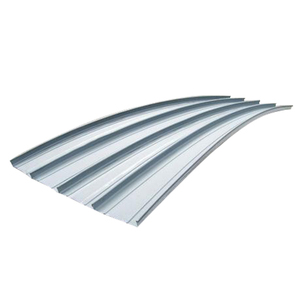
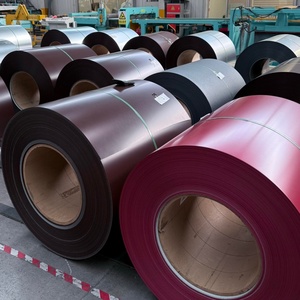
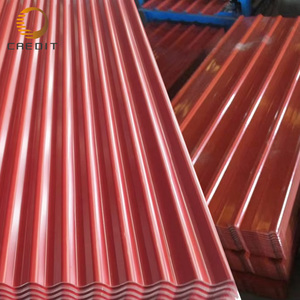
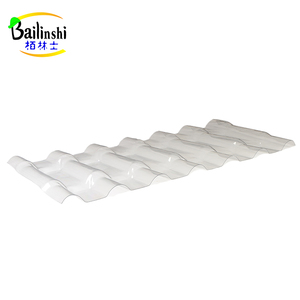
Headquartered in Barka, Sultanate of Oman since 2009, Paneltech International LLC provides direct manufacturing power, bypassing commercial brokers to deliver rigorously tested, certified steel envelopes tailored to mega-infrastructure standards.
Equipped with high-precision continuous roll-forming lines, automated slitting systems, and high-pressure polyurethane (PIR/PU) and mineral rock wool sandwich panel production lines. Complete process governance ensures exact profile geometries, zero rib skewing, and mill-certified cut-to-length tolerances.
We source prime hot-dipped galvanized (GI) and 55% Aluminium-Zinc coated Aluzinc/Galvalume (GL) substrates from internationally accredited steel mills. Coated with super-durable polyester (SDP), PVDF (Kynar 500), or plastisol systems, verified by comprehensive ASTM B117 neutral salt spray testing.
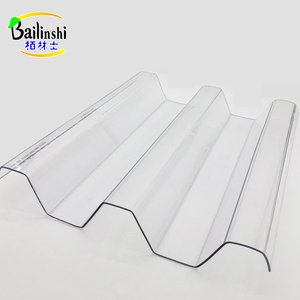
More than single-skin sheet roll formers, we fabricate the entire structural envelope package. Contractors bundle high-rib trapezoidal roofing, matching cold-formed structural Z & C purlins, metal floor decking, customized ridge flashings, translucent skylights, and insulated panels in one consolidated order.
Our solutions protect mission-critical installations across the Middle East, Central Asia, and Africa. Featured on prestigious references including City Center Sohar, the National Bank of Oman Corporate HQ, the Royal Oman Police complex, and major regional airport logistics infrastructure.
Every export shipment passes comprehensive laboratory evaluation: cross-hatch paint adhesion (ASTM D3359), impact resistance (ASTM D2794), coating thickness verification via dry-film gauges (ASTM D7091), and mechanical tensile/yield characterization in full alignment with BS EN 10143 and ISO 9001.
Profiles are interleaved with protective polyethylene film, banded with heavy-gauge steel straps over high-density edge-protectors, wrapped in UV-inhibited waterproof kraft barriers, and mounted on structural wooden or steel skids engineered for flat-rack and 40ft high-cube marine container logistics.
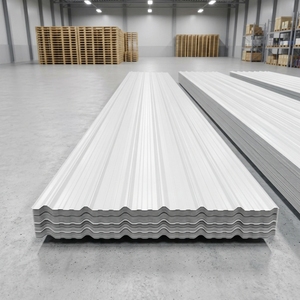
Trapezoidal roof sheets—commonly identified as box rib, crest-and-valley, or corrugated architectural profiles—represent the definitive engineering standard for modern industrial, agricultural, and commercial building envelopes. Unlike simple sinusoidal (wave) profiles, the trapezoidal cross-section is mathematically designed to amplify the structural section modulus (Z) and moment of inertia (I) along the longitudinal axis. By optimizing the pitch width, crown width, web angle, and crest height, cold-formed trapezoidal sheets achieve significantly wider purlin span capabilities without incurring deflection failures under heavy wind uplift, localized seismic cycles, or heavy live loads.
Technical Principle: The second moment of area (moment of inertia) in a trapezoidal profile scales exponentially with crest height ($I \propto h^3$). An engineered 35mm to 45mm trapezoidal rib height increases clear-span spacing across purlins by up to 42% compared to standard low-pitch 18mm sinusoidal profiles, yielding direct reductions in structural steel tonnage.
Corrosion resistance in aggressive industrial and maritime settings is governed by the underlying metallic substrate and multi-layered organic barrier coatings. For OEM/ODM export clients, our manufacturing lines process two foundational substrate metallurgies:
The following engineering data outlines characteristic mechanical and dimensional metrics across standard export-grade trapezoidal profiles produced in our manufacturing facility:
| Profile Designation | Base Metal Thick (BMT) | Yield Strength ($f_y$) | Moment of Inertia ($I_x$) | Section Modulus ($Z_x$) | Max Span (1.5 kN/m² Load) | Primary Industrial Application |
|---|---|---|---|---|---|---|
| PTI-Trap 32/1000 | 0.50 mm | G550 (550 MPa) | 5.12 cm⁴/m | 2.84 cm³/m | 1.65 meters | Industrial Warehouse Cladding & Roofing |
| PTI-Trap 35/1050 | 0.60 mm | G550 (550 MPa) | 6.85 cm⁴/m | 3.62 cm³/m | 1.95 meters | Commercial Logistics Parks & Hangars |
| PTI-Trap 45/900 | 0.70 mm | G350 (350 MPa) | 11.40 cm⁴/m | 5.20 cm³/m | 2.40 meters | Heavy Industrial Facilities & Substation Roofs |
| PTI-Deck 75/750 | 0.80 - 1.20 mm | G350 (350 MPa) | 38.50 cm⁴/m | 12.80 cm³/m | 3.60 meters (Composite) | Structural Concrete Composite Floor Decking |
| Zip-Lock 65/430 | 0.60 - 0.70 mm | G300 (300 MPa) | 14.20 cm⁴/m | 6.10 cm³/m | 2.20 meters (Concealed) | Low-Slope Architectural Roofs (Down to 1.5°) |
A classic failure point in low-slope metal roofing is capillary water ingress across the lateral overlapping seams during monsoonal downpours and low-pressure windstorms. Our high-precision roll-forming dies cold-form an integrated anti-capillary siphon groove directly into the under-lapping rib of every trapezoidal sheet. This break-line breaks the surface tension of water trapped in the joint, draining moisture downwards toward the eaves trough while preventing internal leakage, even under intense positive pressure wind differentials.
International procurement for civil, commercial, and industrial roofing is undergoing profound structural shifts. Driven by global supply chain volatility, decarbonization regulations, and modern construction methodologies, procurement directors must evaluate multiple emerging criteria when sourcing trapezoidal roof sheets:
Roof profiles are no longer viewed merely as weathering barriers; they serve as mechanical substrates for solar installations. Global EPCs mandate trapezoidal roof profiles featuring flat crest widths (minimum 25mm to 35mm) designed to accommodate standing rail brackets and penetrative or non-penetrative solar clamps without compromising sheet integrity or gutter clearance.
Major international tenders now require Environmental Product Declarations (EPDs) and Low-Embodied-Carbon certifications. Buyers favor manufacturers utilizing Electric Arc Furnace (EAF) steel with high recycled content, backed by ISO 14044 lifecycle assessments to meet LEED v4.1, BREEAM, and Estidama green building rating standards.
Accelerating urban heat island mitigation guidelines require roofing sheets with high Solar Reflectance Index (SRI ≥ 78). Modern procurement contracts prioritize specialized fluoropolymer and siliconized-polyester paint systems incorporating infrared-reflective complex inorganic color pigments (CICPs) that slash HVAC cooling loads by up to 28%.
Furthermore, EPC contracting managers are increasingly transitioning away from transactional spot-market buying. Leading infrastructure consortia establish long-term framework partnerships with agile regional manufacturers. Proximity to international maritime hubs, localized coil processing, and bundled product deliveries (combining roof sheeting, cold-formed purlins, thermal insulation cores, and factory-matched flashings) drastically reduce ocean shipping delays, cross-docking friction, and project site coordination errors.
The manufacturing sector for profiled cladding is experiencing high-velocity technological advancement across metallurgical coatings, computational roll-forming design, and composite insulation matrices:
Traditional roll-forming lines frequently suffered from variable sheet spring-back, leading to camber, bow, and edge wave ("oil-canning"). Next-generation fabrication lines utilize 24 to 36 progressive forming stands driven by independent servo motors, synchronized with closed-loop laser profilometers. These optical inspection sensors detect profile deviation down to ±0.2mm in real time, auto-adjusting lateral roll pressure to eliminate residual metallurgical stresses in ultra-high-tensile G550 steels.
While standard polyester coatings degrade under intense ultraviolet irradiation within 7 to 10 years, cutting-edge export manufacturing utilizes Polyvinylidene Fluoride (PVDF, 70% Kynar 500 / Hylar 5000 resin) and Fluoroethylene Vinyl Ether (FEVE) formulations. These advanced coatings offer chemically inert carbon-fluorine bonds that resist chalking, gloss loss, and micro-cracking across 30 to 45 years of continuous exposure to harsh equatorial ultraviolet irradiance and acidic industrial emissions.
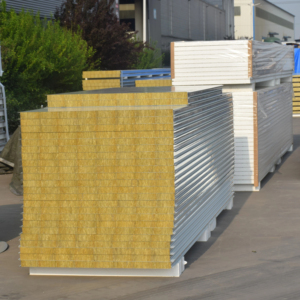
Next-Gen Composite Cores: For applications demanding rigorous thermal and fire resistance, trapezoidal profiles are integrated into continuous composite sandwich panels featuring high-index Polyisocyanurate (PIR-B1/FM Class 1 approved) or structural non-combustible Stone Wool / Rockwool cores with basalt fiber orientations that withstand fire exposure up to 1200°C for up to 4 hours.
Critical metallurgical, logistics, and quality assurance guidance to streamline your OEM/ODM procurement process.
G300 possesses a minimum yield strength of 300 MPa and offers higher ductility, making it ideal for deep-drawing, severe stamping, and crimp-curved architectural profiles. G550 provides an ultra-high yield strength of 550 MPa, allowing for lighter Base Metal Thickness (BMT) while retaining superior load-bearing capacity and resistance to wind uplift deflection on long, uninterrupted industrial roof purlin spans.
BMT defines the bare structural steel substrate thickness before the addition of metallic zinc/aluzinc layers and primer/topcoat paints. TCT represents the gross finished thickness including all protective coatings. Engineering load-span calculations must strictly be computed based on BMT. Specifying only TCT can allow non-compliant suppliers to use thinner core steel supplemented by heavy paint coats, reducing structural capacity.
For installations situated within 1 km of marine coastlines or near chemical and smelting facilities, we specify a 55% Al-Zn Galvalume substrate with a minimum metallic mass of AZ150 or AZ200 (ASTM A792), paired with a 2-coat PVDF paint system (minimum 20μm topcoat over a 5μm corrosion-inhibiting epoxy primer). This achieves >1,500 hours of ASTM B117 salt spray endurance without blistering or edge corrosion.
Oil-canning—the visible elastic wrinkling or waviness in wide flat pans of metal profiles—is mitigated in our production through precision roller levelling of incoming coils, optimized tension adjustments on continuous multi-stand roll-forming lines, and the inclusion of longitudinal micro-stiffening ribs (flutes) rolled directly into the flat trough areas of the trapezoidal sheet.
Fasteners must never possess a lower galvanic nobility than the roof sheet. For Galvalume and galvanized sheets, we supply self-drilling carbon steel screws coated with mechanical zinc-tin alloy (Class 3 or Class 4 corrosion resistance according to AS 3566) or bi-metal stainless steel 304/316 screws equipped with integrated vulcanized EPDM sealing washers. Never use bare, unplated carbon steel or copper-alloy fasteners.
We provide comprehensive OEM/ODM custom fabrication: customized rib geometries (effective coverage from 750mm to 1050mm, rib depths from 25mm to 65mm), client-specified RAL color formulations, anti-condensation non-woven fleece laminated on the underside, cut-to-length services up to 14 meters (conditioned by maritime container constraints), and custom ink-jet branding/batch coding for distribution networks.
Connect directly with our senior metallurgical and structural sales engineers in Barka, Oman. Receive complete section properties, wind uplift calculations, certified mill test sheets, and competitive FOB/CIF quotation schedules for your project.
Get Catalog