
Precision-manufactured structural daylighting, composite wall facades, thermal insulation panels, and cold-formed roof frame components engineered to seamlessly integrate across complete modern building assemblies.
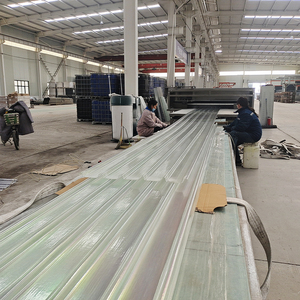
Continuous automated lamination with UV-resistant gel coat, yielding up to 85% light transmission and superior resistance against yellowing under severe solar radiation.
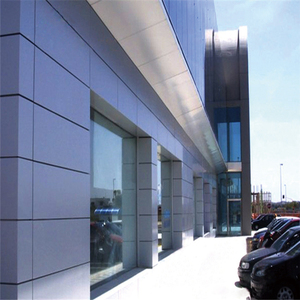
Heavy-gauge aluminum skins featuring fluoropolymer PVDF coating bonded to a fire-retardant mineral core for weatherproofing prestige architectural facades.
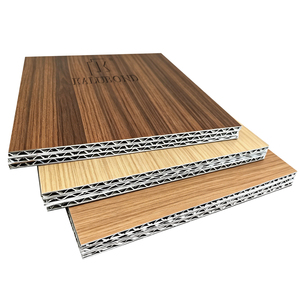
Corrugated structural aluminum alloy sheeting with triple-bake PVDF coating for coastal marine exposure, petrochemical plants, and long-span roofs.
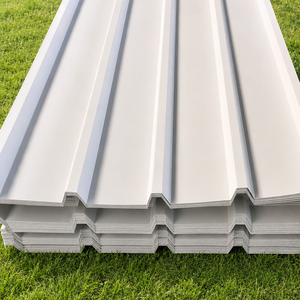
Custom-formed profile pitch matched with standard steel trapezoidal panels. High impact strength Class 4 hail resistance and homogeneous light diffusion.
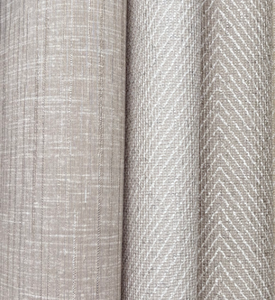
ASTM E84 Class A rated fire-retardant interior architectural wall surface engineered for hospital corridors, hospitality complexes, and hygiene-clean partitions.
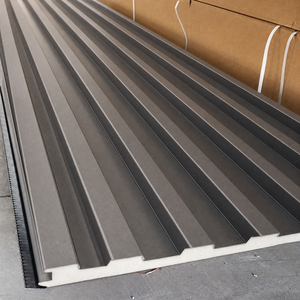
High-density Polyurethane (PU/PIR) core enclosed with anti-corrosive profiled metal facings. Outstanding thermal U-values, acoustic damping, and concealed fixings.
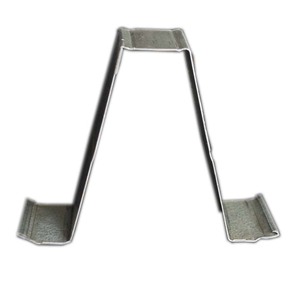
High-tensile zinc-coated cold-formed steel battens engineered for roof tile support, purlin bracing, and precise fastening of composite roofing sheets.
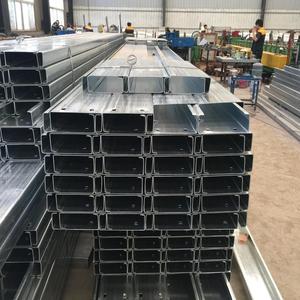
Roll-formed structural C and Z purlins manufactured from ASTM A653 / EN 10346 galvanized coil with pre-punched elongation holes for rapid envelope framing.
Founded in 2009 in Barka, Sultanate of Oman (P.O. Box 391, PC 320), Paneltech International LLC has established itself as the Gulf and Middle Eastern benchmark for heavy-duty building envelope manufacturing. Spanning continuous automated sandwich panel laminating lines, high-speed profile roll formers, and integrated structural purlin milling, PTI provides single-source accountability for EPC contractors, structural engineers, and industrial developers.
Unlike regional brokers, PTI designs, tests, and fabricates the complete roof and wall package under one certified QA/QC infrastructure: PIR, PU, and Rockwool fire-resistant sandwich panels, profile-matched corrugated daylighting translucent sheets, composite metal floor decking, cold-formed structural Z & C purlins, flashings, and industrial roller shutter doors.
Automated precision profiling ensures roof and wall profiles interface tightly with translucent daylighting sheets, eliminating capillary water ingress.
PIR and non-combustible Rockwool cores tested in accordance with ASTM E84 Class A, BS 476, and regional Civil Defense authority certifications.
Raw coil feeds and composite polymers formulated to resist ambient Gulf temperatures exceeding 50°C, direct UV index 12+, and saline marine winds.
One accountable warranty covering structural C/Z purlins, primary insulated panels, translucent sky lighting, fasteners, and custom folded flashings.
An empirical evaluation of leading fiber-reinforced polymer sheet manufacturers based on production scalability, chemical polymer purity, continuous lamination engineering, and global logistics fulfillment.
Specializes in continuous-profile translucent FRP panels engineered to match industrial trapezoidal sandwich panels, cold-formed purlins, and secondary steel systems with verified Middle Eastern UV and heat weathering resistance.
Global pioneer in fiberglass-reinforced wall panels and translucent roofing. Renowned for Glasbord® hygienic surfaces and heavy-duty structural skylight sheets utilized in aggressive chemical environments.
Massive automated continuous lamination capacity across the Western Hemisphere, delivering premium vinyl ester composite sheets engineered specifically for corrosive industrial wastewater, mine, and fertilizer sites.
European market standard for precision profile-matching GRP rooflights. Exceptional focus on CE/UKCA marking compliance, Class 1/Class 0 fire ratings, and high-impact structural strength.
Export leader serving over 70 countries. Renowned for patented antibacterial nanosurface coats and heavy-weight continuous filament mats designed for agro-industrial barns and chemical storage.
State-of-the-art continuous laminating lines providing premium polyester resin sheets with co-extruded UV-resistant gel coats and customized mechanical span-to-depth properties.
Over 60 years of thermoset composite manufacturing. Producers of translucent fiberglass rolls and corrugated sheets renowned for low thermal expansion and high structural stability in Southern European climates.
Specialized division producing thermo-polymer and fiberglass translucent roof sheets tailored for agricultural canopy buildings, high-end warehousing, and commercial skylight overlays.
Australasian benchmark for extreme-UV resistant industrial sheets. Utilizes specialized gel-coat formulations to withstand Southern Hemisphere ozone depletion and high solar irradiation.
High-tech European continuous sheet manufacturer delivering precision flat and corrugated fiber-reinforced composites with integrated thermal breaks, Class A fire resistance, and certified life-cycle assessments.
| Manufacturer Group | Resin Matrix Base | Fiber Reinforcement | Standard UV Protection | Light Transmission | Fire Classification |
|---|---|---|---|---|---|
| Paneltech International (PTI) | Isophthalic / Ortho Blend | E-Glass Continuous Strand Mat | Gel-Coat / Co-extruded Film | 65% – 85% Diffused | ASTM E84 Class A/B, BS 476 |
| Crane Composites | Ortho / Isophthalic / Vinyl Ester | Random Chopped Strand E-Glass | ArmorCoat / DuPont Film | 50% – 82% | ASTM E84 Class 1 (Class A) |
| Glasteel / Stabilit | Halogenated Isophthalic & Vinyl Ester | Continuous Roving Mesh | Tedlar® / Melinex® Barrier | 45% – 80% | ASTM D3841, Class A Fire |
| Brett Martin | High-Clarity Polyester | Uniform E-Glass Filaments | SABIC / Co-extruded UV Shield | 70% – 88% | EN 13501-1 B-s1,d0 / BS 476 P7 |
| LAMILUX Composites | Engineered Thermoset Resin | Multi-axial Fabric / Matting | Integrated Nanocoat / Gel Coat | Custom / Opaque to 75% | DIN 4102-B1 / EN 13501-1 |
An exhaustive deep-dive into cross-linked thermoset polymers, fiber-to-resin volumetric ratios, and multi-tier surface barrier protections essential for surviving aggressive mechanical and chemical stress.
The matrix base defines chemical, thermal, and UV endurance. While lower-cost orthophthalic polyester resins satisfy standard warehousing daylighting, heavy industrial projects dictate isophthalic or neopentyl glycol (NPG) resins for heightened hydrolytic and acid-mist resistance. For pickling plants, galvanic processing, or offshore desalination, vinyl ester resins provide maximum chemical inertness against continuous acid splash and sulfur vapor exposure.
FRP load-bearing capacity relies on high-grade electrical grade (E-Glass) roving. Continuous automated lamination embeds continuous filament mats or multi-directional chopped strands in a precise 25% to 35% glass-to-resin weight ratio. This achieves exceptional tensile strength (>100 MPa) and flexural modulus (>6,000 MPa), allowing thin-gauge 1.5mm to 2.5mm profiles to achieve clear purlin spans between 1.2m and 1.8m under cyclic 1.5 kPa wind uplift pressures.
Unprotected polyester suffers photo-oxidation under UV-B rays, causing polymer embrittlement and "fiber bloom"—where naked glass fibers surface, attracting dirt and degrading light transmission. Commercial-grade FRP utilizes a co-extruded 20–50 micron melinex polyester film or an in-line applied isophthalic gel coat doped with hindered amine light stabilizers (HALS), preserving solar transmission with a delta yellowing index (ΔYI) under 2.0 over 15+ years.
Emerging procurement dynamics transforming how Tier-1 EPC contractors, developers, and global supply chains specify, source, and commission fiber-reinforced polymer envelopes.
Contractors increasingly reject the friction of fragmented supply chains—where daylighting sheets are purchased from one fabricator, sandwich panels from another, and purlins from a third party. Procurement heads now favor unified manufacturers like Paneltech International that provide factory-calibrated profile-matching: translucent FRP sheets with crests, valleys, and lap dimensions that align precisely with sandwich panels, accompanied by engineered purlins and compatible flashing accessories to prevent field failures.
Traditional translucent skylights admitted visible light alongside intense solar heat, dramatically spiking building cooling loads in arid, tropical regions like the Middle East. Next-generation procurement specifications demand spectral-selective nanoparticle resins. These sheets selectively pass visible light (500–600 nm) while scattering and reflecting near-infrared thermal wavelengths (780–2500 nm), reducing the Solar Heat Gain Coefficient (SHGC) down to 0.35 while maintaining high internal luminous efficacy.
Stricter global fire codes (ASTM E84, EN 13501-1, and UAE/Oman Civil Defense codes) are eliminating brominated and chlorinated fire-retardant additives due to toxic smoke generation during combustion. Procurement protocols for 2025 onwards mandate nano-composite mineral flame retardants—such as aluminum trihydrate (ATH) and expandable graphite—which generate a protective intumescent char without producing halogenated acid gases.
Specifying engineers now demand native BIM (Building Information Modeling) objects that incorporate actual structural deflection curves, thermal transmittances (U-values), and solar optical properties. Concurrently, environmental compliance requires third-party verified Environmental Product Declarations (EPDs), evaluating embodied carbon from polymer synthesis through to recyclability at the end of building life.
Direct, technically grounded responses addressing field installation, structural purlin spacing, expansion mechanics, and QA verification for composite roofing systems.
Connect directly with technical project engineers for detailed bill of quantities (BOQ) review, product certification dossiers, and site-ready component integration.
Contact Us