
Precision-molded corrugated skylight profiles and integrated building systems manufactured on continuous roll-forming lines to match standard industrial trapezoidal, box-rib, and sinusoidal steel panels seamlessly.
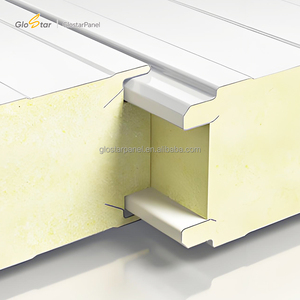
Eco-friendly CE certified polyurethane core panels providing strict thermal envelope boundary seals for cleanroom, modular enclosure, and climate-controlled storage facilities.
Inquire Now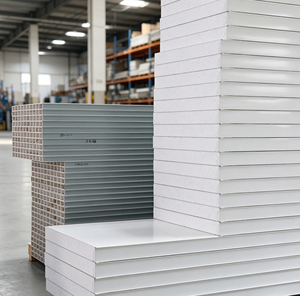
High-density sound-dampening foam core composite panels built for pharmaceutical modular partitions, industrial acoustics, and zero-dust precision cleanroom construction.
Inquire Now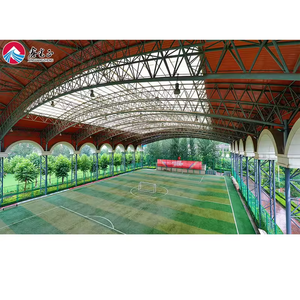
Heavy-duty structural framework with precision welding, CNC bending, and anti-corrosion finishes, designed to integrate long-span corrugated skylight runs.
Inquire Now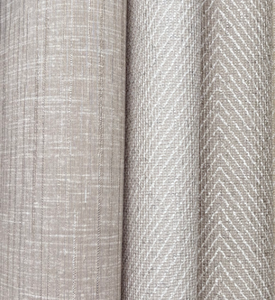
Commercial grade anti-microbial wall cladding engineered for healthcare facilities, high-traffic commercial hospitality, and durable moisture-resistant interior surfaces.
Inquire Now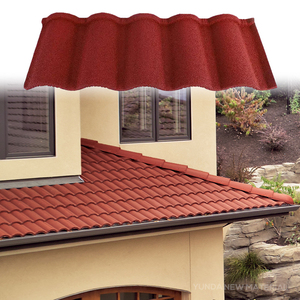
Volcanic stone granule coated 50-year weather-resistant roofing sheet with high thermal reflectivity, acoustic noise dampening, and aesthetic architectural profiling.
Inquire Now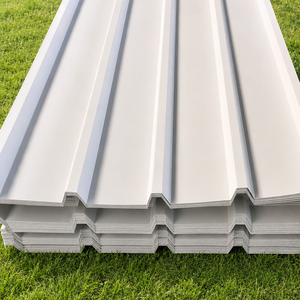
Continuous machine-molded FRP translucent sheet with anti-aging gel coat, ASTM D3841 impact resistance, and customized corrugation profiles matching metal roofs.
Inquire Now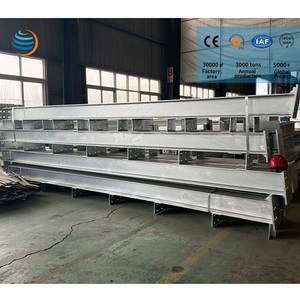
Engineered long-span cold-formed Z and C purlin assemblies and truss structures ensuring zero-deflection purlin spacing for uninterrupted skylight sheet attachment.
Inquire Now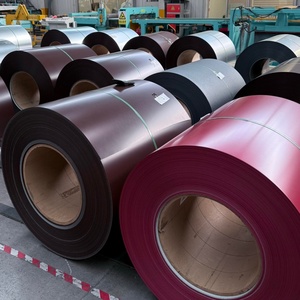
Prime 55% Al-Zn alloy coated steel coils with Kynar 500 PVDF fluoropolymer coatings, providing thermal expansion pairing with our translucent skylight profiles.
Inquire NowModern industrial architects and EPC procurement directors no longer treat corrugated skylight sheets as passive plastic fillers. In modern structural engineering, daylighting panels constitute dynamic thermodynamic and optical control elements of the building envelope. Selecting between Fiberglass Reinforced Polyester (FRP) and Polycarbonate (PC) requires balancing photon distribution, spectral selectivity, tensile resilience, and differential thermal expansion coefficients against steel purlins.
The structural longevity of translucent fiberglass panels hinges on resin purity and fiber impregnation stoichiometry. Generic commodity manufacturers cut costs using unrefined orthophthalic resins diluted with excessive styrene monomers, resulting in rapid micro-fissuring and severe fiber bloom within 36 months of intense ultraviolet radiation exposure. At our production lines, we exclusively deploy high-crosslink neopentyl glycol (NPG) isophthalic polyester resins and specialty vinyl ester matrices for corrosive chemical environments.
By vacuum-degassing the polymer resin prior to continuous automated wetting of E-glass fiber strands (silane sizing, 58% glass-to-resin ratio by weight), our sheets achieve a flexural modulus exceeding 7,500 MPa (ASTM D790) and tensile strengths beyond 130 MPa (ASTM D638). This ensures our corrugated skylight sheets endure severe wind suction (-2.8 kPa) and dynamic snow loads without brittle failure or delamination along corrugation ribs.
Direct glare in large-span manufacturing warehouses or logistics centers creates hazardous conditions for personnel and causes localized indoor thermal hotspots. Our optical engineering team integrates micron-scale glass micro-spheres and refractive additive agents into the resin core to maximize the Light Diffusion Index (Haze > 90%) while maintaining high Visible Light Transmission (VLT up to 85%).
Scattering incident solar rays transforms harsh collimated sunlight into soft, omnidirectional ambient illumination. This elevates the indoor Daylight Factor (DF) across the facility floor, eliminating dark corners between purlin spans and reducing the reliance on artificial high-bay LED lighting by up to 68% during daytime shifts.
| Performance Metric | Continuous Machine FRP Skylight | Co-Extruded Polycarbonate Sheet | Standard Unprotected PVC Sheet | Standard ASTM Test Method |
|---|---|---|---|---|
| Visible Light Transmission (VLT) | 65% – 85% (Calibrated) | 78% – 90% (Ultra-Clear) | 45% – 60% (Rapid Decay) | ASTM D1003 / ISO 13468 |
| Diffusion / Haze Factor | 90% – 95% (Glare-Free) | 20% – 85% (Diffused grade) | 30% – 50% (Uneven) | ASTM D1003 (Procedure B) |
| Thermal Expansion (α) | 2.2 × 10⁻⁵ /K (Matches Steel) | 6.5 × 10⁻⁵ /K (High Expansion) | 7.0 × 10⁻⁵ /K (Very High) | ASTM D696 / DIN 53752 |
| UV Protective Barrier | 50μm Melinex 301 / Gelcoat | 50μm Dual Co-extruded UV Cap | Unstabilized Topical Spray | QUV 3,000h Accelerated Aging |
| Hail Impact Resistance | Class 4 UL 2218 (25mm @ 20m/s) | Highest (Virtually Unbreakable) | Brittle Failure at 5 Years | ASTM E822 / UL 2218 |
| Flame Spread Classification | Class 1 / Class 2 (ASTM E84) | B-s1, d0 (EN 13501-1) / V-0 | Self-extinguishing / Toxic fumes | ASTM E84 / UL 94 |
One of the primary causes of roof leaks in pre-engineered metal buildings (PEB) is the mismatch in thermal expansion coefficients between steel roof panels and skylight sheets. Steel expands at approximately 1.2 × 10⁻⁵ /K. Translucent FRP expands at 2.2 × 10⁻⁵ /K—an exceptionally close structural pairing. In contrast, Polycarbonate expands at 6.5 × 10⁻⁵ /K, more than five times faster than surrounding structural steel.
When selecting profiles for long continuous roof runs (>15 meters), FRP sheets eliminate fastener ovalization and thermal slot fatigue. Our engineering specifications mandate self-drilling fasteners with oversized 16mm EPDM bonded washers, pre-drilling pilot holes 3mm larger than the fastener shank, and applying neutral-cure structural silicone beads at all lap joints to ensure absolute water tightness through daily thermal cycles ranging from -20°C to +80°C.
Operating from state-of-the-art facilities with precision continuous roll-forming lines, Paneltech International LLC (PTI) bridges European manufacturing protocols with competitive global supply chain agility.
Unlike standalone plastic fabricators, we produce the entire building envelope: PIR/PU/Rockwool sandwich panels, metal decking, C/Z purlins, profile steel sheets, and matching translucent skylights from a single manufacturer.
In-house computerized spectrometry, tensile elongation benches, and QUV accelerated weathering chambers guarantee that every manufactured batch satisfies ASTM D3841, EN 1013, and ISO 9001:2015 traceability certifications.
We maintain customized roller sets precisely matching global trapezoidal metal profiles (PTI 35/200, 45/250, 760, 820, 840, 1000 series, sinusoidal waves, and standing seam profiles) ensuring flawless nested overlaps.
Continuous length production up to 11.85 meters tailored for 40ft High Cube containers. All shipments feature anti-scratch peelable films, edge corner guards, desiccants, and solid fumigated wooden crates.
Macroeconomic shifts in green building codes, embodied carbon mandates, and climate volatility are reshaping how international EPC contractors, facility developers, and trading houses procure corrugated skylights.
Purchasing teams are pivoting away from cheap raw PVC and non-UV-treated FRP. A failure in daylighting sheets requires hazardous working-at-height roof maintenance, scaffolding, and interruption to warehouse automation. High-spec NPG isophthalic sheets with guaranteed 20-year structural integrity eliminate costly roof retrofits.
Major infrastructure projects now demand verified Photometric Distribution Curves and Solar Heat Gain Coefficient (SHGC) documentation. By pairing diffused translucent skylights with dimmable automated LED luminaires, distribution warehouses reliably secure higher green building certification ratings.
As EU CBAM and global decarbonization standards expand, export suppliers must verify low embodied carbon across polymer precursors, resin manufacturing, and energy consumption during continuous panel extrusion. Our production line incorporates clean energy inputs to lower scope 1 and 2 emissions.
Skyrocketing ocean freight rates require intelligent bundle nesting. Precision corrugation tolerances prevent profile slippage during transoceanic transit, allowing up to 25% higher sheet packing density per 40ft container without surface micro-abrasions.
Our material science engineering lab continually pioneers advanced coatings, infrared rejection technologies, and hybrid fire-rated polymer matrices.
Traditional skylights bring in both visible light and radiant heat. Our next-generation NIR-filtering translucent sheets integrate nano-scale cesium tungsten bronze (CWO) particles that selectively reflect infrared wavelengths (>780nm) while maintaining 72% light transmission. This lowers the indoor temperature directly beneath skylight runs by up to 8.5°C, slashing industrial air conditioning power consumption.
Replacing topical spray coats, our continuous automated roll-forming line hot-bonds a 50-micron DuPont Tedlar or Melinex 301 PVF film directly to the sheet surface during the thermosetting curing stage. The resulting homogeneous interface is completely impervious to acid rain, alkaline air, marine salt fog, and industrial chemical fumes, locking the Yellowing Index (ΔYI) to less than 2.0 over two decades.
Standard fire-retardant resins historically produced dense, toxic black smoke when exposed to fire. Our new Class 1 / Class A flame retardant FRP sheets utilize reactive, non-halogenated organophosphorus compounds and alumina trihydrate (ATH). Upon combustion, the surface develops a protective carbonaceous char that extinguishes flame progression within 15 seconds, fully compliant with ASTM E84.
Direct technical guidance compiled by our senior envelope engineers to resolve common design, installation, and procurement queries.
Consult directly with our technical application engineers for custom profile matching, solar photometric calculations, wind load span tables, and factory-direct export container pricing.
Inquire Now