
Direct factory supply of cold roll-formed galvanized composite metal decking, cold-formed structural purlins, specialized cleanroom architectural systems, and weather-resistant industrial building panels.
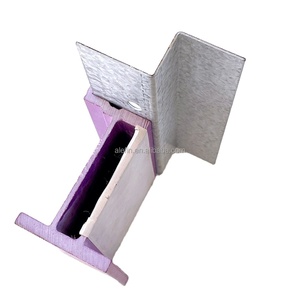
High-tensile continuous cold-formed Z-profile girts engineered for high-load industrial purlin and cladding support, featuring pre-punched staggered web slots.
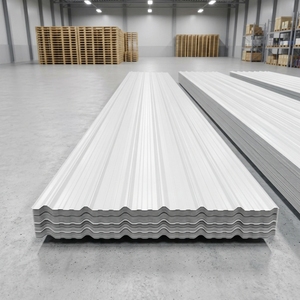
Multi-layer co-extruded co-polymer roof sheets offering chemical resistance, acoustic dampening, and superior performance in highly corrosive chemical plant roofs.
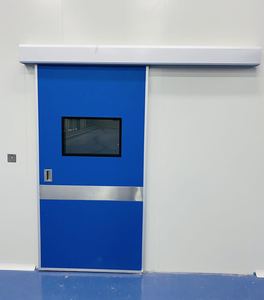
Airtight hermetic sealing architectural access doors fabricated from electro-galvanized sheet steel with brushless motor drives for healthcare and pharma complexes.
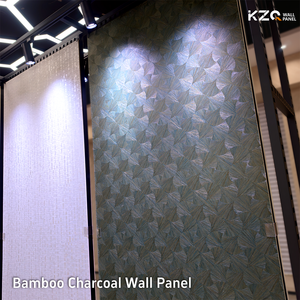
Composite structural interior cladding panels offering zero-VOC emissions, B1 fire protection certification, and tongue-and-groove jointing for fast modular interiors.
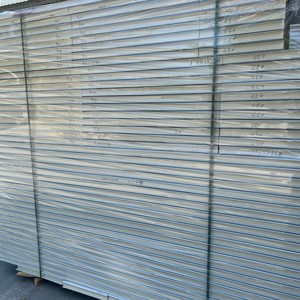
Structural insulated panels with basalt rock wool core (density 100-140 kg/m³) bound to pre-painted galvanized steel skins for Class A1 non-combustible partitions.
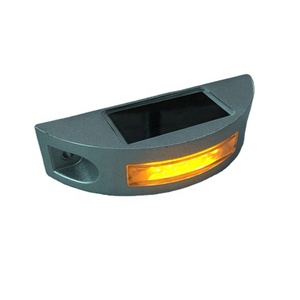
Ultra-durable, weather-sealed IP68 solar-powered LED marker warning units designed for logistics deck edge illumination and construction perimeter safety.
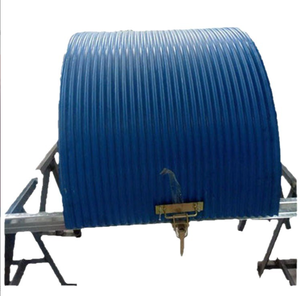
Precision crimp-curved prepainted galvanized steel decking panels engineered for arched barrel roofs, clear-span hangars, and seamless industrial canopies.
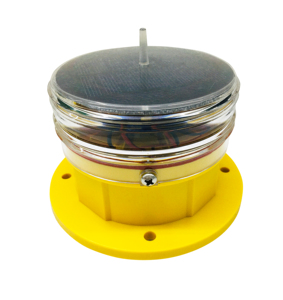
Industrial port and shipping terminal beacon lights featuring autonomous solar charging and neodymium magnetic bases for steel vessel and jetty installations.
How profile geometry, embossment interlocking, and steel-to-concrete composite action replace conventional tensile rebar while maximizing clear-span capacity in modern high-rise engineering.
Characterized by high section modulus and efficient web-to-flange slenderness ratios (e.g., YX76-344-688, YX51-240-720). Delivers maximum unpropped spans up to 4.5 meters, optimizing rapid concrete placement and reducing crane cycles on extensive logistics floorplates.
Engineered with inward-sloping flute geometry (e.g., YX51-200-600) providing exceptional mechanical wedge interlock with concrete. Allows flush ceiling suspension points via specialized wedge-nut hangers without field drilling, preserving slab acoustic dampening.
State-of-the-art flat-bottom profile geometry completely encasing rib voids. Delivers a clean, continuous architectural ceiling plane that eliminates the requirement for secondary spray insulation or drywall drop ceilings while maximizing structural fire endurance ratings.
Evaluating raw strip coil metallurgy, yield strengths from 250 MPa to 550 MPa, and protective sacrificial zinc coatings designed to prevent edge creep and rust bleed in aggressive project environments.
| Profile Specification | Yield Strength ($f_y$) | Standard Steel Grade | Zinc Coating Mass ($g/m^2$) | Recommended Unpropped Span | Fire Endurance Rating |
|---|---|---|---|---|---|
| Trapezoidal YX76-305-915 | 350 – 450 MPa | ASTM A653 SS Gr.50 / S350GD+Z | Z275 (G90) to Z350 | 3.0 m – 4.2 m | Up to 2.0 Hours (BS 476 / ASTM E119) |
| Trapezoidal YX75-200-600 | 345 – 550 MPa | GB/T 2518 Q355 / ASTM A653 Gr.80 | Z275 to Z450 (Heavy Duty) | 3.2 m – 4.5 m | 2.0 to 3.0 Hours (Composite) |
| Dovetail YX51-200-600 | 250 – 350 MPa | EN 10346 DX51D+Z / S280GD | Z200 to Z275 | 2.2 m – 3.2 m | 1.5 to 2.0 Hours |
| Closed Rib YX65-185-555 | 350 – 410 MPa | S350GD+Z / ASTM A653 SS Gr.50 | Z275 (G90) Optimized | 2.8 m – 3.8 m | 2.5 to 3.0 Hours (Flat Ceiling) |
| Low Profile Form Deck YX15-225-900 | 280 – 350 MPa | Q235B / DX52D Commercial Cold-Rolled | Z120 to Z275 | 1.0 m – 1.8 m (Formwork Only) | Requires Dedicated Bottom Rebar |
Anticipate the market shifts impacting procurement costs, sustainability mandates, and engineering workflows over the coming decade.
By 2027, global engineering specs are projected to shift aggressively from traditional pure zinc galvanizing to ternary ZAM coatings (1-3% Mg, 5-11% Al). ZAM offers 3× to 5× superior cut-edge self-healing protection, allowing EPCs to eliminate secondary zinc spray coating on sheared deck edges.
Rising base metal costs and carbon tariffs (e.g., EU CBAM) are compelling design engineers to switch from 1.2 mm Q235 steel to 0.75 mm or 0.8 mm High-Strength Low-Alloy (HSLA) G550 steel. This downgauging yields a 25-30% reduction in total steel weight without sacrificing unpropped clear-span stiffness.
Manual torch cutting on construction sites compromises structural zinc passivity and creates structural stress risers. Future-ready manufacturers leverage automated multi-axis punching lines driven directly by Tekla and Revit BIM models to pre-fabricate service pen-openings and MEP raceways off-site.
Combining heritage roll-forming operations established since 2009 with stringent raw coil traceability, tight fabrication tolerances, and single-source envelope supply.
Mill-certified coils undergo ultrasonic gauge verification, automated optical surface flaw detection, and zinc thickness testing before rolling.
Multi-stage cold-forming progressive dies gently profile structural flutes and embossments, preventing residual stresses or zinc micro-flaking.
High-precision hydraulic flying shear blades ensure mill-cut ends are square within ±1.5 mm, minimizing dangerous manual site grinding.
VCI anti-corrosion wrapping, steel banding with corner edge protectors, and treated timber skids ensure safe ocean transport with zero white rust.
Over a decade and a half of dedicated roll-forming engineering, delivering over 15,000,000 m² of profiled decking to international mega-projects across the Middle East, Southeast Asia, and the Americas.
Consolidate your procurement: ship composite floor decking alongside matched cold-formed Z & C structural purlins, insulated PIR/Rockwool sandwich panels, and curved roof profiles in mixed containers.
Fully compliant with ASTM A653, BS 5950-4, EN 1994-1-1, and ISO 9001:2015 quality standards. Every heat batch is accompanied by genuine EN 10204 3.1 Mill Test Certificates.
In-house structural engineering teams provide project-specific diaphragm shear calculations, unpropped deflection curves, and slab thickness optimization to reduce overall steel tonnage.
Direct technical answers addressing structural calculations, metallurgical certifications, container logistics, and site installation tolerances.
Form decking (non-composite) functions solely as permanent stay-in-place formwork to hold wet concrete during pouring; it has smooth flutes and requires full traditional bottom tensile rebar to carry structural slab loads. In contrast, composite floor decking features cold-rolled mechanical embossments that physically lock into the cured concrete, allowing the steel deck itself to act as the primary positive tensile reinforcement and dramatically reducing the need for bottom rebar.
Unpropped span refers to the maximum center-to-center distance between secondary steel framing beams that the decking sheet can span without needing temporary mid-span timber or steel shoring underneath. Specifying deeper trapezoidal profiles (such as 75 mm or 76 mm) with yield strengths ≥350 MPa allows clear spans of up to 4.0 meters without props, leaving the lower floor completely unobstructed for concurrent MEP trade rough-ins and accelerating project handovers by weeks.
White rust occurs when tightly nested galvanized steel sheets are exposed to trapped moisture in unventilated shipping containers without adequate oxygen to form the protective zinc carbonate patina. To prevent this, our factory mandates three levels of protection: (1) chemical passivation with trivalent chromium or Cr-free environmentally certified solutions; (2) protective electrostatic light vanishing oil; and (3) heavy-gauge moisture-barrier plastic wrap sealed with desiccant packets inside seaworthy crating.
Yes. Under standard fire conditions (ASTM E119 or BS 476 Part 21), exposed bottom steel deck can lose significant tensile yield strength as temperatures exceed 550°C. However, by utilizing standard fire-mesh reinforcement (e.g., welded wire fabric BRC A142/A193) placed in the upper compression zone of the concrete, or by specifying closed-rib flat-bottom decking profiles, slabs can readily achieve 2.0 to 3.0-hour fire ratings without supplemental spray applied fireproofing on the underside.
Through-deck welding of headed shear connectors (Nelson studs) requires precise electrical arc control to burn completely through the zinc coating and deck steel before fusing directly into the underlying structural beam flange. For decking with zinc masses >275 g/m², ceramic ferrules must be specialized "deck-type" with extended flash cavities. Beams must be clean of heavy rust, mill scale, or unapproved primers. Arc time typically ranges between 0.65 to 0.95 seconds at currents from 1600A to 2100A depending on stud diameter (19 mm / 22 mm).
Profiled decking sheets nest tightly together, making bundles exceptionally dense and heavy. Because 20ft and 40ft shipping containers have strict gross weight limits (typically 26 to 28 metric tons depending on the destination port), bundles are calculated by combined linear meter weight rather than container cubic volume. Deck lengths are precision cut up to 5.85 meters for 20GP containers, and up to 11.85 meters for 40HQ containers, equipped with heavy nylon lifting slings pre-rigged inside the crating for fast dockside unloading.
Need customized load-span calculations, profile section properties, composite slab thickness advice, or immediate factory-direct container quotations? Our technical engineering team provides preliminary project take-offs within 24 hours.
Send an Inquiry