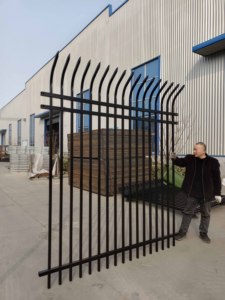
6ft*8ft Powder Coated Galvanized Square Tube Iron Wrought Iron Steel Sheet Fence Panels
Substrate: Hot-Dip Galvanized + Polymer Coat
Yield Strength: ≥ 235-345 MPa

Explore rigorous roll-formed steel battens, hat profiles, and acoustic ceiling suspension systems tested against international ASTM, AS/NZS, and EN engineering standards.
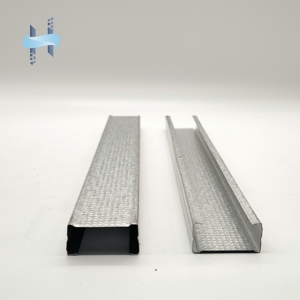
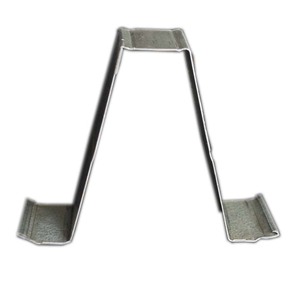
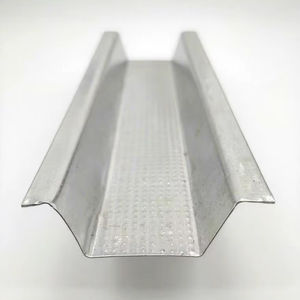
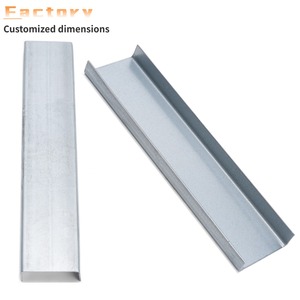
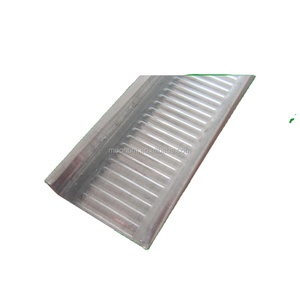
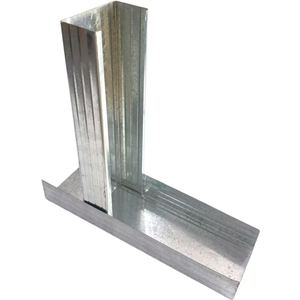
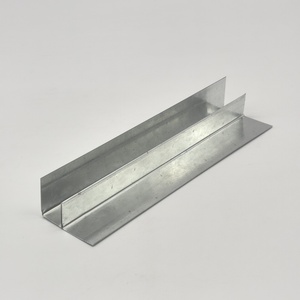
In modern industrial, commercial, and residential building envelopes, cold-formed light-gauge steel profiles constitute the backbone of secondary framing. Galvanized steel battens—specifically engineered as continuous top-hat sections, ceiling furring channels, and drywall framing members—must withstand severe combined loading conditions. These encompass transverse wind suction loads, dead loads of architectural cladding, live seismic stresses, and ambient thermal expansions.
Specifiers and international procurement engineers prioritize material yield properties. Tier-one Chinese manufacturers deploy high-tensile cold-rolled coils conforming to ASTM A653/A653M, EN 10346, or AS 1397 structural grades (G300 to G550). Using advanced continuous continuous zinc galvanizing processes, our battens feature homogeneous intermetallic metallurgical bonding, eliminating the vulnerability of micro-cracking during rapid cold roll-forming of sharp corner radiuses.
| Performance Parameter | Commercial Grade (CQ) | Structural Grade (Engineered G550) | ASTM / EN Reference Method |
|---|---|---|---|
| Minimum Yield Strength | 200 - 240 MPa | ≥ 550 MPa (80 ksi) | ASTM A370 / EN ISO 6892-1 |
| Zinc Coating Mass | Z60 - Z100 (60-100 g/m²) | Z180 - Z275 (Triple Spot Test) | ASTM A90 / ISO 1460 |
| Salt Spray Resistance (5% NaCl) | 72 Hours to 5% Red Rust | 480 - 750+ Hours to Red Rust | ASTM B117 / ISO 9227 |
| Profile Dimensional Tolerance | ± 0.50 mm width / height | ± 0.15 mm width / height | EN 10162 / AS/NZS 1365 |
| Linear Flange Knurling Pattern | Smooth / Irregular | Continuous Diamond Anti-Slip Rib | Proprietary High-Grip Die |
The anti-slip knurled face of modern battens is an empirical innovation. It ensures self-drilling screws pierce effortlessly without skidding, cutting installation cycle times by up to 35% on large commercial job sites while preserving zinc layer continuity around the fastener shank.
Global procurement directors handling high-volume construction requisitions are confronting transformed cross-border trading circumstances. Understanding these structural shifts is vital for protecting project budgets, logistics schedules, and sustainability metrics:
With the European Union Carbon Border Adjustment Mechanism (CBAM) phase-in and worldwide Environmental Product Declaration (EPD) mandates, international importers require mill-certified Scope 1, 2, and 3 emissions accounts. Leading Chinese exporters are migrating to Electric Arc Furnace (EAF) processing and solar-driven continuous roll-forming lines to minimize downstream carbon border tariffs.
Driven by labor constraints across Europe, Australia, and North America, demand has decisively shifted toward just-in-time, pre-punched, cut-to-length framing profiles. Factory-slotted battens eliminate dangerous field grinding, prevent sparks near building membranes, ensure instantaneous mechanical alignment, and generate absolute zero job-site scrap.
Standard hot-dip galvanized coatings (GI) are progressively supplemented by patented Zinc-Aluminum-Magnesium (Zn-Al-Mg / ZAM) alloy roll stocks. These ternary coatings deliver self-healing galvanic cut-edge passivation, providing 3 to 5 times greater rust longevity across aggressive C4 and C5 coastal marine environments without extra secondary top-coats.
Historically, roofing systems relied exclusively on soft-wood battens or heavy hot-rolled angle irons. These historical approaches brought systemic defects: timber suffered rotting, splintering, fungal infestations, and combustibility, while hot-rolled profiles imposed severe structural dead loads onto columns and foundations.
The contemporary cold-formed thin-walled steel batten reflects decades of computational finite element analysis (FEA). Through optimized multi-bend stiffening ribs across the profile web and return lips along the base flanges, modern 0.55mm to 0.75mm BMT (Base Metal Thickness) battens demonstrate equivalent moment capacity to historic 1.2mm structural sections, yielding a 40% reduction in raw steel weight without diminishing ultimate span ratings.
Combining heavy manufacturing capabilities, verified third-party laboratory certifications, and end-to-end building envelope engineering.
Operated across 16 high-speed multi-stand continuous roll-forming lines with automated flying-shear cut-off heads, guaranteeing absolute dimensional fidelity and scalable output volume.
Every coil undergoes strict verification: spectrophotometric zinc coating weight audits, bend and tensile ductility tests, and automated laser micrometer inspection before roll entry.
We supply fully integrated envelope systems: matching structural Z & C purlins, metal floor decking, PIR/PU/Rockwool insulated panels, custom folded flashings, and engineered mechanical fasteners.
Heavy seaworthy bundles interleaved with vapor-corrosion-inhibitor (VCI) protective film, steel strapping, solid corner protectors, and moisture-proof plastic covers for long container transit.
Direct technical answers addressing structural calculation, coating weights, customs compliance, and port delivery logistics.
Submit your structural profile specifications, required zinc coating weights, and estimated project tonnage. Our technical engineering division will generate a detailed quotation alongside load-span tables within 24 hours.