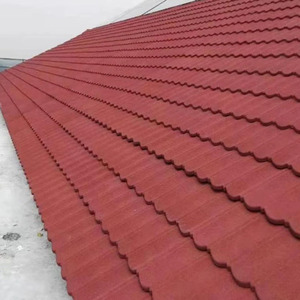
Aluminum Corrugated Stone Coated Steel Roof Tile
Engineered with 55% Al-Zn alloy-coated base steel and anti-fading sintered basalt granules. Resists Category 5 typhoons, hail impacts, and coastal marine salinity.

China has emerged as the definitive global powerhouse for precision cold-formed steel (CFS) and light gauge steel (LGS) manufacturing. Leveraging computer-aided design (CAD/CAM) automated roll-forming equipment, tier-one manufacturers fabricate structural framing components with dimensional accuracy down to ±0.5mm tolerances. Below is our curated portfolio of industrial, commercial, and modular building components engineered for worldwide export compliance.
Engineered with 55% Al-Zn alloy-coated base steel and anti-fading sintered basalt granules. Resists Category 5 typhoons, hail impacts, and coastal marine salinity.
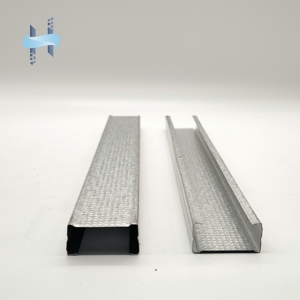
High-tensile zinc-coated ceiling and roof battens designed with knurled flanges to prevent screw slippage. Ideal for drywall, acoustic boards, and light roof sheets.
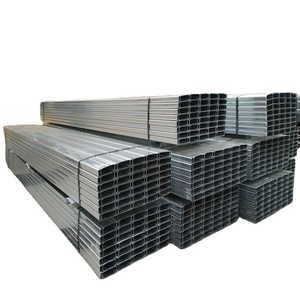
Cold-formed continuous span purlin assemblies for structural trusses and sidewall framing. Pre-punched with high-precision elongated holes for rapid bolt assembly.
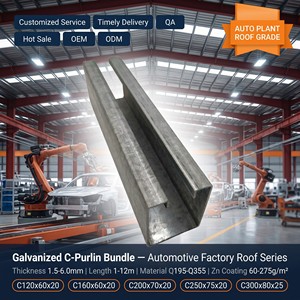
Custom-slotted structural C-sections manufactured with stiffened return lips for exceptional flexural modulus in portal frames, mezzanines, and clear-span hangars.
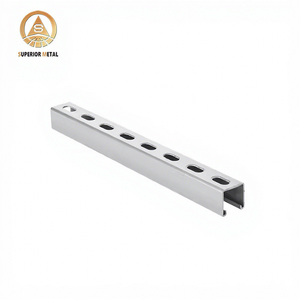
Thick-wall roll-formed steel channel (200x60x20x2.5mm) with hot-dip zinc immersion up to 300g/m² for extreme load-bearing racks, logistics hubs, and offshore structures.
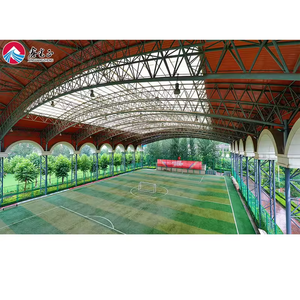
Integrated hybrid PEB & light-gauge roof truss engineering. Delivers vast clear-span stadium canopies with precision CNC laser cutting, beveling, and weld inspection.
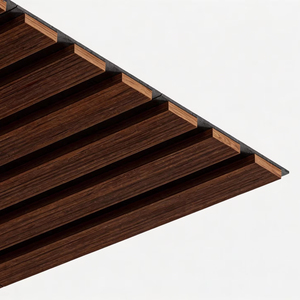
Precision architectural sound-absorbing composite slats designed to mount directly to light steel wall studs and ceiling furring channels. Perfect for offices and auditoriums.
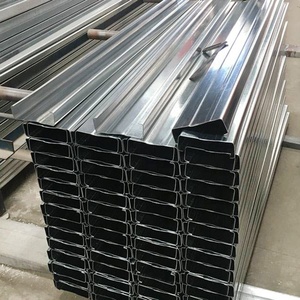
Lightweight structural sub-framing channels optimized for quick fastening with self-drilling screws. Minimizes dead load while optimizing span strength across rafter grids.
When specifying structural frameworks for low-to-mid-rise residential, multi-family, commercial envelopes, and solar mounting systems, structural engineers evaluate the trade-offs between cold-formed thin-walled steel (CFS) and conventional hot-rolled structural steel sections. Understanding these mechanical parameters ensures material optimization and substantial freight savings.
| Evaluation Parameter | Cold-Formed Steel (CFS / LGS) | Hot-Rolled Structural Steel (H-Beam/I-Beam) | Procurement Advantage & Field Impact |
|---|---|---|---|
| Strength-to-Weight Ratio | Extreme (Yield strengths from 350 to 550 MPa with wall thickness 0.55–3.0mm) | Moderate (Typical yield 235 to 355 MPa with wall thickness > 6.0mm) | Reduces dead load by up to 60%; eliminates heavy crane rental on site. |
| Manufacturing Precision | High precision via continuous roll formers (±0.5mm) with in-line service holes | Standard mill tolerances (±2.0 to 3.0mm); requires on-site or shop drilling | Enables fast bolt-together and screw erection; zero field welding required. |
| Corrosion Protection | Continuously pre-galvanized coils (Z120–Z275, AZ150, or Zn-Al-Mg ZAM) | Requires post-fabrication abrasive sandblasting + primer paint or heavy hot-dip batch | Factory-bonded, uniform micro-coating prevents edge creep and pinhole oxidation. |
| Logistics & Containerization | Nesting profiles (C/Z/U) pack tightly into 40ft HQ containers with minimal void volume | Bulky, awkward dimensional shapes create high freight-to-weight penalties | Lowers ocean freight costs per square meter of building footprint by 35–50%. |
| BIM & Modular Readiness | Direct CNC integration with Tekla, FrameCAD, Vertex BD, and Revit software | Requires intermediate shop detailing, manual fit-up, and continuous weld tests | Eliminates fabrication discrepancies and speeds up off-site panelization. |
| Seismic Performance | High ductility and low seismic mass; distributes lateral shear through shear wall skins | High structural mass generates large inertia forces requiring heavy moment frames | Superior safety factors in seismic zones 4 and 5; minimizes foundation sizing. |
Procurement managers and general contractors are adapting to radical shifts in raw coil pricing, carbon accounting tariffs (such as the EU Carbon Border Adjustment Mechanism - CBAM), and automated construction paradigms. Here are the five key trajectories redefining steel supply chains.
Standard hot-dip galvanized (GI) coatings with pure zinc are increasingly being substituted by ternary Zn-Al-Mg alloy coatings (such as SuperDyma and PosMAC equivalents). Adding 1.5–3% Magnesium creates a self-healing alkaline film over cut edges and punched holes, offering up to 5x greater corrosion resistance in marine, coastal, and agricultural ammonia environments without requiring secondary touch-up coatings.
The disconnect between architectural drawings and factory roll formers is disappearing. Modern Chinese plants receive digital IFC or CAD files directly into CAM servers. Machines automatically print component labels, notch webs, swage ends, and punch dimples for screw head recesses. This enables contractors to assemble light gauge roof trusses and wall panels like flat-pack modular kits.
International infrastructure projects financed under LEED, BREEAM, or Estidama standards now require verified Environmental Product Declarations (EPD). Tier-one Chinese manufacturers are actively shifting to electric arc furnace (EAF) scrap-based steel coils and utilizing green hydrogen blast furnace feedstocks to guarantee lifecycle emission ratings below 1.8 tCO2e per ton of steel.
Rather than shipping loose, unbundled C-channels or fully assembled bulky frames that waste container volume, global buyers now specify SKD bundles. Individual members are nested, wrapped with vapor-corrosion-inhibiting (VCI) protective films, steel-banded with edge guards, and color-coded by floor grid level. This reduces on-site sorting time by 70% and guarantees rust-free ocean transit.
Technological advancements have elevated light gauge steel from basic interior partitioning to primary structural applications in 6-to-10 story mid-rise residential buildings, commercial retail complexes, and large-span athletic canopies.
By utilizing high-yield G550 (550 MPa) cold-formed steel and specialized web stiffeners, engineers now construct multi-story load-bearing residential hotels and student accommodations. Combined with composite metal floor decking, these systems achieve remarkable acoustic and thermal insulation without concrete frame cure delays.
The integration of cold-formed furring hat channels, acoustic slotted profiles, and mineral rockwool batt insulation achieves STC (Sound Transmission Class) ratings exceeding 58 dB. Non-combustible framing paired with dual-layer Type X gypsum wallboard guarantees certified 2-hour and 4-hour fire resistance ratings.
Because light gauge steel buildings weigh less than one-third of equivalent reinforced concrete structures, seismic inertial shock is drastically mitigated. High-strength strap bracing, hold-down anchors, and structural steel shear-wall panels allow buildings to easily withstand Richter scale 8+ earthquakes and 250 km/h wind gusts.
Building a durable supply relationship requires complete transparency across coil sourcing, roll-forming tolerance controls, and export crating. Below is how our plant infrastructure ensures zero-defect international delivery.
We source prime hot-rolled and cold-rolled steel coils exclusively from premier Tier-1 state mills (such as Baosteel, Shougang, and Ansteel). Every batch comes with full Mill Test Certificates (MTC EN 10204 3.1) certifying yield, tensile, elongation, and chemical composition.
Operating 18 automated roll-forming lines equipped with hardened Cr12MoV vacuum-quenched rollers. Profiles undergo gradual shape formation across 16 to 22 forming passes to prevent localized residual stress and micro-cracking in the galvanized zinc layer.
Our internal testing laboratory executes rigorous quality checks on every production run: magnetic coating thickness measurement, cross-cut adhesion tests, tensile yield verification, and 1,000-hour ASTM B117 neutral salt spray corrosion chamber analysis.
International transit requires robust packaging. Our profiles are securely packed in square-cornered nests, wrapped in double-layer UV-stabilized waterproof polyweave, reinforced with galvanized steel corner protectors, and fitted with custom wooden lift dunnage for rapid forklift unloading.
Key technical, logistical, and commercial inquiries answered by our structural engineering and international trade compliance teams.
Compliance begins with raw coil specification. Steel substrates are strictly ordered to matching international equivalents: ASTM A653 (Structural Grade 33, 40, 50, 80) or ASTM A1003 for North America; EN 10346 (S280GD, S350GD, S550GD) for the European Union; and AS 1397 (G300, G450, G550) for Australasia. Full chemical and mechanical mill certificates (EN 10204 3.1) are supplied with heat numbers stamped on each profile bundle. Independent laboratories such as SGS, BV, and TÜV routinely verify tensile yield, elongation, and coating weight before export release.
Z275 Galvanized steel features a pure zinc coating of 275 g/m² (total both sides, approx. 20 microns per side). It provides exceptional cathodic ("sacrificial") protection in alkaline environments and around raw sheared edges. AZ150 Galvalume consists of 55% Aluminum, 43.4% Zinc, and 1.6% Silicon (150 g/m² total). The aluminum forms an impenetrable barrier layer, offering 2 to 4 times longer lifespan under general atmospheric, acid rain, and coastal exposures. However, AZ150 is sensitive to direct contact with wet concrete or raw mortar, where Z275 or specialized ZAM coatings are preferred.
Yes. Our multi-axis CNC roll formers feature synchronized high-speed hydraulic punching stations. We incorporate service holes (standard round 34mm, 45mm, or oval 60x100mm utility knockouts) directly into the web of C-studs, joists, and purlins at predetermined CAD intervals. Additionally, our machines execute swaging (lip-reducing for telescopic nesting), end-truss chamfering, dimpling for flush screw head countersinking, and ink-jet alphanumeric member labeling matching the structural assembly drawings.
While hot-rolled beams have lower raw material costs per kilogram, light gauge steel significantly reduces total installed building costs. LGS profiles use thinner, high-strength sheet steel (G550), slashing overall structural steel tonnage by 40% to 60%. Lighter weight reduces foundation sizing and eliminates heavy crane rental requirements. Factory-drilled holes and self-drilling fastener technology cut site labor hours by up to 50%, while dense container nesting slashes ocean freight costs per building square meter.
Every export shipment includes a comprehensive engineering dossier: Original Factory Mill Test Certificates (MTC EN 10204 3.1) stating chemical heats and yield properties; Third-party inspection test reports (SGS/BV for zinc thickness and tensile modulus); Certificate of Origin (Form E, Form A, or RCEP for tariff exemptions); Certificate of Conformity (CE Marking for European CPR EN 1090-1 / EN 14782); and detailed container pack-lists with piece-marked member tags linking directly to the structural erection guide.
For standard inventory coils (such as DX51D, S350GD, and G550 with Z180–Z275 zinc coatings), tooling changeover and roll forming take approximately 10 to 18 business days for 50 to 200 metric ton orders. For non-standard custom strip widths, specialized gauges (e.g., 2.75mm or 3.2mm), or custom pre-painted finishes (PVDF / SMP coatings), coil slitting and mill production require 25 to 30 days. Emergency fast-track scheduling is available for ongoing infrastructure tenders.
Galvanic corrosion occurs when metals with different electrolytic potentials (such as aluminum cladding attached to galvanized steel purlins or stainless steel screws driven into zinc-coated studs) are bridged by an electrolyte (moisture). We provide EPDM rubber isolation washers, neoprene separating tapes, and specialized Ruspert-coated or zinc-nickel electroplated fasteners rated for 1,500+ hours in salt spray testing, isolating dissimilar metals and preventing galvanic corrosion.
Profiles up to 11.85 meters are nested inside 40ft High Cube containers. To prevent longitudinal shifting and transit scuffing, bundles are banded with heavy tensile steel strapping, lined with edge protectors, and supported on grooved timber dunnage. We install heavy internal timber shores and diagonal steel wire lashing inside the container door threshold. Vapor-corrosion-inhibiting (VCI) shrink wrap and calcium chloride desiccant bags prevent "white rust" (wet storage stain) during humid ocean voyages.