
Explore our certified continuous-line insulated panels, structural roof trusses, cold-formed sections, and security closures optimized for industrial, cold-chain, and modular architecture.
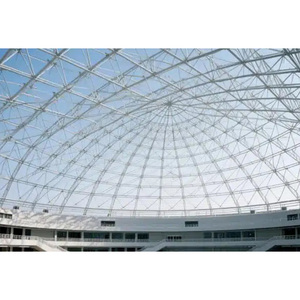
Engineered for long-span warehouse structures, this high-tensile galvanized roof truss integrates seamlessly with rigid polyurethane insulated roof sandwich systems.
Send an Inquiry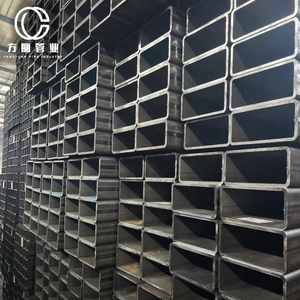
Precision cold-formed square and rectangular structural tubing delivering high load capacity for modular subframes, support girts, and sandwich panel exterior frames.
Send an Inquiry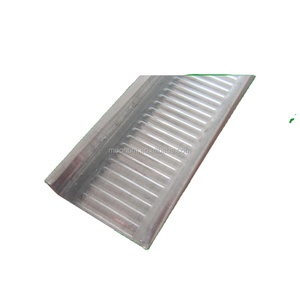
Ultra-lightweight, hot-dip galvanized ceiling battens ensuring non-combustible suspension frameworks for cleanroom ceiling panel and cold-storage installation.
Send an Inquiry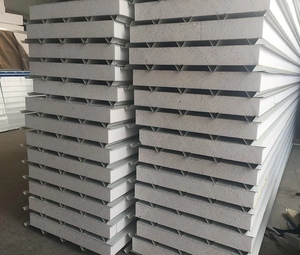
Flush-joint architectural insulated panels designed for pharmaceutical labs, cleanrooms, and food handling plants requiring antimicrobial coated steel facings.
Send an Inquiry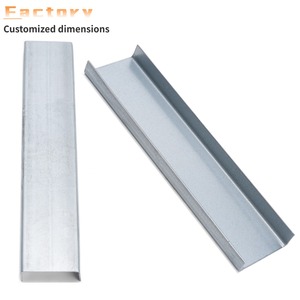
Anti-corrosion galvanized stud and track systems engineered for precision load alignment, securing internal thermal insulation boards and drywall partitions.
Send an Inquiry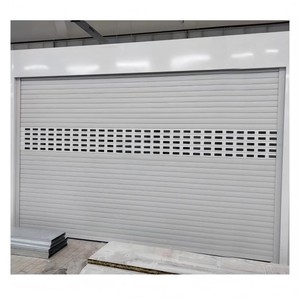
Heavy-duty interlocking aluminum shutter profile engineered with ventilation micro-perforations, ideal for retail entries within sandwich-panel building envelopes.
Send an Inquiry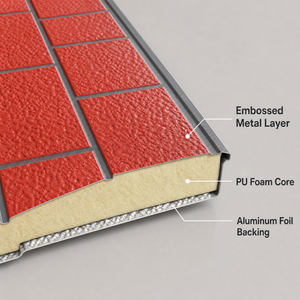
Architectural exterior cladding combining embossed alloy steel facings with high-density polyurethane core for rapid aesthetic modular facades and energy retrofits.
Send an Inquiry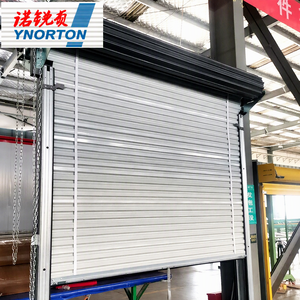
Galvanized concave interlocking steel curtain engineered for high cycle life, wind load resistance, and weather-tight integration with cold room and logistics docking portals.
Send an InquiryIn contemporary industrial envelope architecture, selecting the optimal sandwich panel requires an exhaustive understanding of polymeric cellular structure. Rigid Polyurethane (PU/PUR) and Polyisocyanurate (PIR) cores represent the pinnacle of industrial thermal envelope performance, delivering thermal conductivity as low as 0.020–0.022 W/(m·K). This allows specifiers to achieve superior U-values at approximately half the wall thickness demanded by expanded polystyrene (EPS) or mineral fiber panels.
The chemical differentiation between standard PUR and advanced PIR lies in the isocyanate-to-polyol index ratio. While standard polyurethane exhibits an index near 100–110 with predominant urethane linkages, PIR is synthesized at indices exceeding 200–300 under trimerization catalysis. This chemical pathway produces stable isocyanurate ring structures. When exposed to flame impingement, the isocyanurate ring undergoes carbonization rather than melting, generating a self-passivating cohesive carbon char layer that inhibits oxygen diffusion and delays flame propagation across the building envelope.
| Thermal & Mechanical Metric | Standard Polyurethane (PUR) | Polyisocyanurate (PIR / PIR-B1) | Structural Rockwool |
|---|---|---|---|
| Thermal Conductivity (λ) | 0.022 – 0.024 W/m·K | 0.019 – 0.021 W/m·K | 0.038 – 0.044 W/m·K |
| Closed Cell Ratio (%) | ≥ 92% | ≥ 95% - 97% | Open fibrous matrix |
| Reaction to Fire (EN 13501-1) | Class B2 / B3 (Combustible) | Class B-s1, d0 / B-s2, d0 | Class A1 / A2-s1, d0 (Non-combustible) |
| Core Density (kg/m³) | 38 – 40 kg/m³ | 40 – 45 kg/m³ | 100 – 140 kg/m³ |
| Moisture Vapor Permeance | Extremely Low (μ > 50) | Negligible (μ > 60) | High (Demands external vapor barrier) |
For international buyers balancing strict industrial fire performance, long-span structural integrity, and HVAC energy conservation, continuous-line PIR panels represent the gold standard for cold storage, pharmaceutical warehousing, and pre-engineered steel buildings (PEB).
Procurement directors and commercial general contractors face evolving market dynamics. Sourcing from premier Chinese sandwich panel manufacturers has evolved beyond piece-part pricing to focus on integrated envelope supply chains, lifecycle performance metrics, and verified certifications:
Procuring panels separately from secondary framing profiles, flashings, and fasteners leads to site alignment errors. Modern EPC contractors mandate consolidated procurement combining sandwich panels, cold-formed Z/C purlins, trusses, and factory flashings.
Risk MitigationHigh-saline or corrosive agro-chemical environments require specialized coil coatings. Procurement trends favor Super Durable Polyester (HDP), Polyvinylidene Fluoride (PVDF), and zinc-aluminum-magnesium (ZM) substrates over basic polyester.
Coating IntegrityTop-tier engineering firms require suppliers to provide exact panel interlocking geometry, thermal deflection modeling data, and custom cut-to-length shop drawings for seamless integration into digital BIM workflows prior to shipping.
Design AutomationContinuous continuous polyurethane sandwich panel manufacturing lines are adopting major engineering innovations designed to reduce embodied carbon, improve acoustic performance, and guarantee airtight seals:
Next-generation lines utilize continuous double-belt tracks exceeding 40 meters. This ensures uniform temperature, optimal pressure distribution, and complete chemical polymerization during curing, eliminating surface delamination and core bubbling.
Quality ControlChina's leading factories have phased out HCFC blowing agents in favor of high-pressure cyclopentane systems. This eliminates ozone depletion potential (ODP = 0) and yields minimal global warming potential (GWP < 1) with uniform microcellular density.
Eco-ComplianceAdvanced roll-forming machines now produce intricate tongue-and-groove joints with concealed fasteners and integrated EPDM or butyl sealing gaskets, eliminating thermal bridges and drastically lowering air infiltration rates.
Thermal EnvelopeAs an industry-leading manufacturer with continuous operations and documented global standards since 2009, our industrial framework bridges engineering precision, material traceability, and dedicated global logistics:
State-of-the-art continuous roll-forming lines and high-pressure chemical foaming units allow full control over panel density, dimensional tolerances, and accelerated fabrication schedules.
From steel coil yield-strength testing to in-line core adhesion peeling tests and fire chamber verification, every bundle includes complete mill test certifications.
Beyond panels, we supply matching roll-formed profile sheets, galvanized decking, secondary C/Z purlins, roof trusses, and industrial roller shutter doors from a single accountable source.
We supply detailed installation guidance, joint-sealing details, containerized sea-worthy protective packaging, and on-site engineering advisory to minimize erection time.
Technical guidance covering engineering specifications, joint design, fire performance, and international shipping logistics.
For blast freezers and low-temperature cold rooms operating at -18°C to -25°C, we recommend continuous-line PIR or high-density PU panels with a minimum thickness of 150mm to 200mm and a core density of 40–42 kg/m³. Dual tongue-and-groove joints equipped with factory-applied butyl sealants prevent warm air infiltration and ice formation along panel seams.
Rockwool panels are made of natural basalt fiber and are classified as Class A1/A2 non-combustible, making them the standard choice for fire compartment barrier walls requiring 1 to 4 hours of fire resistance. PIR panels are organic polymeric foams classified as Class B-s1, d0; they provide superior thermal insulation (λ ≈ 0.020 vs. 0.040 W/m·K) and low water absorption, making them the superior envelope choice where energy conservation is paramount.
Blistering and delamination stem from poor chemical stoichiometry, trapped moisture, or insufficient line pressure during production. Our manufacturing utilizes continuous high-pressure foaming machines, automated corona steel surface treatment, and extended 40-meter caterpillar heating conveyors to ensure chemical bonding between the polyurethane core and the internal zinc-phosphate primer coat of the steel skin.
Yes. Our automated roll-forming lines support concealed fastener joints (secret fix) for clean external facades, corrugated profiles for high-load roofs, micro-ribbed or flat finishes for cleanrooms, and embossed finishes for decorative systems. Steel facings can be configured from 0.4mm to 0.8mm in hot-dip galvanized steel, Galvalume (Aluzinc), or marine-grade aluminum.
Every panel is protected with a UV-resistant protective polyethylene film. Panels are stacked with high-density EPS spacer blocks, wrapped in heavy-gauge polyethylene stretch film, and secured with corner guards and heavy-duty steel or composite strapping on solid timber or steel skids. Bundle heights and lengths are tailored to standard 40ft High Cube containers or breakbulk cargo configurations.
To provide an accurate engineering quote, our design team requires: the building's dimensional footprint (eave height, pitch, clear span), the interior operating temperature, local wind and seismic design loads, preferred steel skin thickness and coating type (PE, PVDF, HDP), core insulation type and thickness, and the required delivery schedule.
Whether you require standard polyurethane insulated wall cladding, specialized PIR cold room panels, structural steel trusses, or a complete pre-engineered building package, our team provides fast technical proposals, full thermal calculations, and certified manufacturing schedules.
Send an Inquiry