
Modern thermal insulation panels must perform under extreme climatic variations, rigorous acoustic demands, and strict combustibility regulations. Sourcing from certified Chinese manufacturing facilities requires evaluating continuous double-belt polymerization lines, coil-coating durability, and unified building envelope components. Below are eight core building envelope solutions engineered for commercial, cold-chain, cleanroom, and high-performance industrial assets.
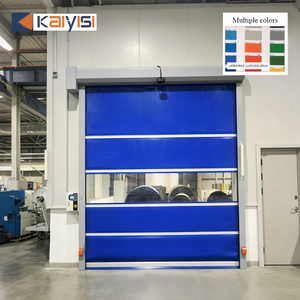
Industrial high-frequency rapid access door featuring dynamic wind-resistant guide ribs, thermal air seal barriers, and smart infrared obstacle interlocks. Engineered to stop conditioned air loss in controlled warehouses.
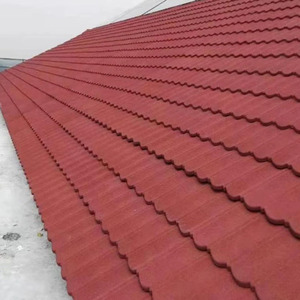
Galvalume-alloyed steel core clad in natural basalt ceramic granules with acrylic barrier coatings. Offers corrosion resistance in coastal C4 environments, impact strength, and acoustic suppression during storm deluges.
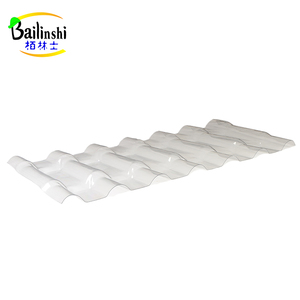
Co-extruded virgin polycarbonate profiles with 50-micron double-sided UV protection. Combines up to 88% visible light transmission with impact ratings up to 250 times that of standard plate glass across wide temperatures.
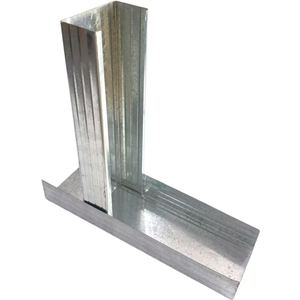
Roll-formed hot-dip galvanized cold-rolled structural steel profiles (Z120-Z275 coating). Designed to provide rigid structural support for insulated drywall assemblies, ceiling grids, and acoustic containment walls.
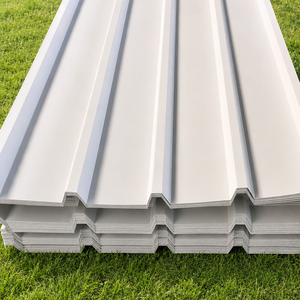
Continuous-molded fiber-reinforced polymer panels matched to sandwich panel crown profiles. Disperses sunlight evenly without hot spots, preventing thermal expansion stress and weathering degradation in factory roofing.
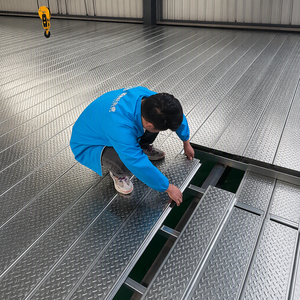
High-yield cold-rolled composite steel decking engineered with mechanical embossments to mechanically interlock with concrete pours, serving as permanent tensile reinforcement for high-load mezzanine and floor slabs.
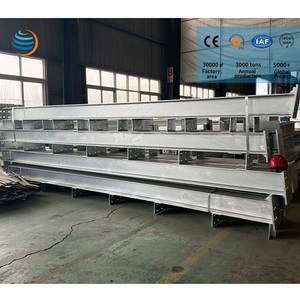
Precision CNC-welded and shot-blasted primary and secondary structural steel truss assemblies. Engineered for broad column-free spans, bearing heavy insulated sandwich roof panel systems and HVAC rooftop installations.
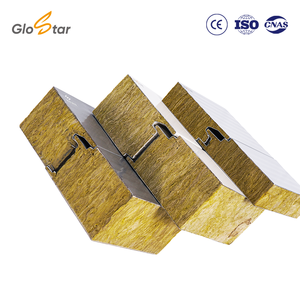
High-density oriented basalt rock mineral wool (100–140 kg/m³) bonded to structural pre-painted steel facings with polyurethane side seals. Non-combustible A1 classification with up to 240-minute fire barriers.
Procurement directors and structural engineers choose established manufacturers not simply for price, but for certified thermodynamic performance, automated dimensional consistency, and strict quality verification. Our manufacturing facilities combine continuous polyurethane/polyisocyanurate foaming lines with automated mineral wool lamella slitting, ensuring uncompromised panel adhesion and thermal isolation.
Fully continuous 42-meter caterpillar double-belt laminating presses ensure high-pressure chemical reaction times, uniform panel thickness tolerances (±0.5 mm), and zero delamination across high-volume production runs.
Contractors eliminate mismatch liabilities by procuring the insulated wall and roof panels, cold-formed structural Z & C purlins, metal floor decking, high-speed shutters, and flashings from a single coordinated manufacturer.
Every coil and chemical batch undergo testing for tensile bond strength (EN 14509), core density (ISO 845), fire reaction (ASTM E84 Class A), and hot-dip zinc coating adhesion prior to containerization.
Panels are bundled with protective micro-perforated peelable films, inter-leaf foam guards, and heavy-duty wooden skids optimized for 40ft HQ high-cube ocean freight containers to prevent salt-air and transit damage.
A comparative breakdown to guide technical specification based on project fire barriers, insulation criteria, and environmental exposure.
| Insulation Core Type | Thermal Conductivity (λ) | Reaction to Fire (EN 13501-1) | Nominal Density | Compressive Strength | Best Application Scenarios |
|---|---|---|---|---|---|
| PIR (Polyisocyanurate) | 0.019 – 0.022 W/(m·K) | B-s1, d0 / B-s2, d0 | 38 – 42 kg/m³ | ≥ 140 kPa | Cold storage, controlled pharma warehouses, energy-efficient roofs |
| PUR (Polyurethane) | 0.022 – 0.024 W/(m·K) | B3 / B2 Class | 36 – 40 kg/m³ | ≥ 120 kPa | General industrial agricultural storage, standard commercial sheds |
| Rock Wool (Basalt Fiber) | 0.038 – 0.044 W/(m·K) | A1 Non-Combustible | 100 – 140 kg/m³ | ≥ 100 kPa | Fire-separation walls, battery gigafactories, public airport concourses |
| EPS / Expanded Polystyrene | 0.034 – 0.038 W/(m·K) | E / B1 Fire Retardant | 14 – 18 kg/m³ | ≥ 80 kPa | Temporary structures, light partition screens, cost-restricted hoardings |
The industrial building sector is undergoing a rapid transition toward decarbonization, strict insurance compliance (such as FM Global certifications), and automated off-site construction methods. Engineering procurement officers must prepare for key trends reshaping Chinese panel manufacturing and international specification frameworks through 2030.
Due to escalating fire safety regulations in logistics hubs, demand is shifting decisively from basic PUR to high-isocyanurate-index PIR (≥250). High-index PIR forms a self-extinguishing carbonaceous char under flame exposure, drastically reducing smoke density.
Multi-national asset owners, data centers, and semiconductor plants mandate panels tested to Factory Mutual (FM 4880 Class 1 without height restriction, FM 4881 external wall exposure). Chinese tier-1 exporters are proactively certifying standard product lines to meet these requirements.
Driven by the EU Carbon Border Adjustment Mechanism (CBAM), top Chinese manufacturers are pairing scrap-recycled EAF steel coils with pentane blowing and bio-circular polyol chemical components to provide Environmental Product Declarations (EPD).
To eliminate the thermal bridging and water ingress liabilities of through-bolt penetrations, tongue-and-groove secret-fix panel joints with internal EDPM gasket seals are rapidly becoming the preferred architectural standard for industrial facades.
Understanding the precision phases of industrial continuous sandwich panel manufacturing.
Pre-painted galvanized (PPGI) or Galvalume (PPGL) steel feeds into high-precision multi-stage roll formers to form micro-ribs, hidden interlocking joints, or roofing trapezoidal crowns.
High-frequency corona electric arc treatment strips microscopic surface oils from the steel facing, while infrared heating arrays elevate substrate temperatures to 40°C for chemical adhesion.
Multi-component polyurethane/PIR chemicals (polyol, isocyanate, pentane blowing agent, catalysts) are atomized onto the lower skin, expanding into a dense matrix inside the heated 42-meter double-belt press.
Synchronized traveling diamond saws cut the continuous insulated slab to custom millimeter lengths without edge fraying, followed by automated roller flipping and curing racks to prevent thermal warp.
Authoritative engineering answers to complex procurement, quality control, and shipping questions when sourcing building envelope materials from Chinese factories.
PIR (Polyisocyanurate) delivers optimal thermal insulation performance (λ = 0.019–0.022 W/m·K), making it the superior choice for refrigeration, refrigerated food logistics, and commercial roofs where weight reduction and high R-values are paramount. PIR achieves European Class B-s1, d0 fire ratings. Conversely, Rockwool panels utilize high-density oriented basalt mineral fibers (≥100 kg/m³), achieving European Class A1 non-combustible ratings and providing up to 4 hours (240 minutes) of structural fire separation under ISO 834 fire test curves. However, Rockwool has a higher thermal conductivity (λ = 0.038–0.044 W/m·K), requiring nearly double the thickness of PIR to match equivalent thermal resistance.
Thermal bridging is eliminated through interlocking tongue-and-groove joint geometries engineered with continuous internal thermal breaks. On premium lines, the metal outer skin does not touch the inner metal skin at the joint overlap. Factory-inserted continuous EPDM or closed-cell polyethylene foam compression gaskets are nested within the groove profile, halting convective air leakage. Secret-fix fasteners are anchored through specialized load-distribution saddles directly into structural secondary steel girts, concealed within the tongue-and-groove junction so no bolt penetrations pass directly through the exterior weather envelope.
For coastal regions, industrial chemical parks, or severe marine exposures (ISO 12944 Corrosivity Categories C4 and C5-M), standard polyester (PE) coatings are inadequate. Buyers should mandate a Galvalume substrate (AZ150: 55% Aluminum, 43.4% Zinc, 1.6% Silicon) or heavy galvanized steel (≥Z275). For the exterior paint system, specify PVDF (polyvinylidene fluoride with 70% Kynar 500 / Hylar 5000 resin) at a total dry film thickness (DFT) of 28–32 μm, or HDP (High-Durability Polyester), which provides exceptional UV resistance (RUV4 classification), resistance to chalking, and salt-spray resistance exceeding 1,500 hours according to ASTM B117 testing protocols.
Export-grade packaging utilizes automated stacking systems where each panel surface is covered with a 40–50 μm self-adhesive polyethylene protective film. Panel stacks are bracketed top and bottom with EPS protective sacrificial caps and corrugated edge guards, followed by complete tension-wrap film sealing to repel ocean salt humidity. Stacks are mounted onto custom wooden skids or reinforced foam runners that accommodate forklift tines. For standard 40ft High Cube containers, panels are trimmed to maximum lengths of 11.8 meters, while open-top containers or flat racks are coordinated for project panels extending up to 16+ meters.
Yes, verified tier-1 Chinese manufacturers provide fully integrated envelope systems. Sourcing sandwich panels alongside cold-formed structural Z & C purlins (with pre-punched fastener slotted holes), composite metal floor decking, matching flashings, self-drilling carbon/stainless composite fasteners, and industrial roll-up doors eliminates tolerance discrepancies. This single-source approach ensures identical coil master alloy batches across panels and trim, matching weathering rates and maintaining uniform manufacturer warranty liability across the entire building shell.
Before placing purchase orders, engineering audit teams should review: 1) Certified Mill Test Certificates (MTC) proving steel yield strength (e.g., S350GD, S550GD), zinc mass verification (g/m²), and paint DFT; 2) Third-party laboratory fire reaction test reports according to EN 13501-1 or ASTM E84; 3) CE Marking and EN 14509 Factory Production Control (FPC) audit certificates; 4) Core density verification records (ISO 845); and 5) Chemical supplier origin documentation verifying pentane blowing agents and low-emission formulations.