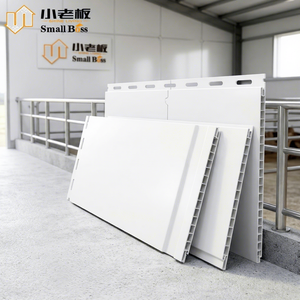

A reliable valley gutter system operates as the central hydraulic spine of your pre-engineered building (PEB). We supply turnkey envelope packages—coupling heavy-duty internal gutters with matching wall panels, purlins, structural portal frames, and translucent day-lighting components directly from our manufacturing base.
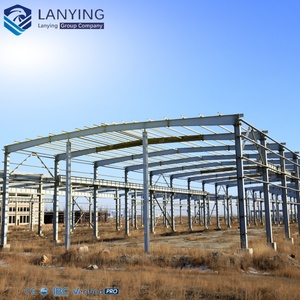
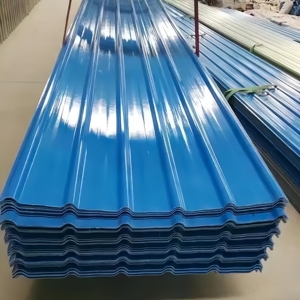
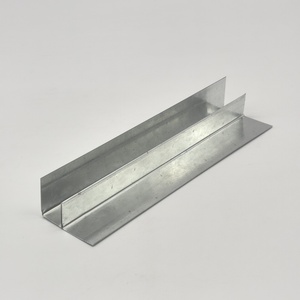
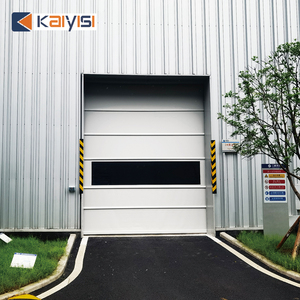
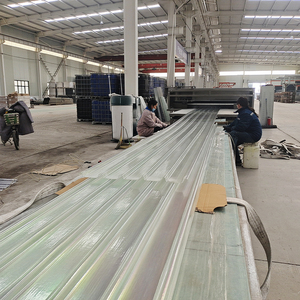
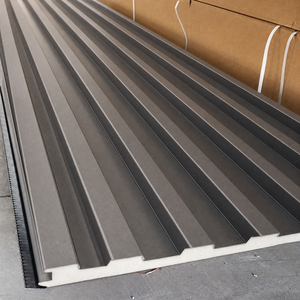
In multi-span Pre-Engineered Buildings (PEB), internal valley gutters and boundary parapet troughs represent the single highest vulnerability for structural water ingress. Unlike residential exterior eaves gutters, an internal valley gutter failure spills stormwater directly onto automated production lines, robotics, and finished goods.
Proper valley gutter sheet profiling requires precise open-channel flow modeling. Using Manning’s Equation \(Q = \frac{1}{n} A R^{2/3} S^{1/2}\), where \(n=0.012\) for prepainted continuous steel, we calculate peak runoff intensity across 50-year storm recurrence intervals.
Long continuous runs of metal valley troughs experience substantial thermal cycling. For a 60-meter steel gutter section subject to a 50°C thermal delta, linear expansion reaches \(\Delta L = L \cdot \alpha \cdot \Delta T \approx 36\text{mm}\). Rigid welding without expansion joints triggers catastrophic buckling.
When heavy gauge (1.5mm to 3.0mm) sheet steel is cut, exposed edges are prone to crevice attack. Our Tier-1 Chinese mills apply advanced Zinc-Aluminum-Magnesium (ZAM) metallic coatings, providing active electro-chemical migration that self-heals cut edges in corrosive environments.
Selecting the correct valley gutter sheet profile and steel substrate depends directly on atmospheric corrosivity (ISO 12944 classification), internal condensation risk, structural purlin spacing, and roof catchment geography.
| Gutter Classification | Base Alloy & Substrate | Gauge Thickness | Tensile Strength (MPa) | Protective Coating / Finish | Standard Lengths | Target Application |
|---|---|---|---|---|---|---|
| Type A: Heavy Industrial ZAM Box | Zinc-Aluminum-Magnesium (EN 10346) | 1.80mm – 2.50mm | \(\ge 350\text{ MPa}\) (S350GD) | ZM310g/m² (Self-Passivating) | 3.0m / 6.0m / 11.8m | Heavy chemical plants, logistics parks, paper mills |
| Type B: Coastal Marine Stainless Box | Austenitic Stainless Steel 316L / 1.4404 | 1.50mm – 2.00mm | \(\ge 520\text{ MPa}\) | 2B Mill Finish / Pickled & Passivated | 2.4m / 3.0m / 6.0m | Marine shorelines within 1.5km, fertilizer handling |
| Type C: Insulated Composite Double-Skin | Alu-Zinc Facers + PIR / Rockwool Core | 0.7mm Outer + 0.5mm Inner | \(\ge 300\text{ MPa}\) (AZ150) | HDP / PVDF Kynar 500 (35μm) | Up to 12.0m Tailored | Cold chain warehouses, HVAC conditioned cleanrooms |
| Type D: Standard Commercial Galvalume | 55% Al-Zn Coated Steel (ASTM A792) | 1.20mm – 1.60mm | \(\ge 300\text{ MPa}\) (Grade 50) | AZ150 / AZ180 Metallic Finish | 3.0m / 5.8m Containerized | Standard dry warehousing, commercial showrooms |
| Type E: Deep-V Parapet Boundary Trough | Hot-Dip Galvanized S320GD (GB/T 2518) | 2.00mm – 3.00mm | \(\ge 380\text{ MPa}\) | Z275 – Z450 Heavy Zinc Layer | CNC Formed Spool Pieces | High-rainfall tropical regions, heavy snow catchment |
Traditional suppliers assemble valley gutters from 3-meter sections, multiplying transverse silicone lap joints. Every lap joint is a future leak hazard. Leading Chinese factories deploy 12-meter synchronized CNC tandem press brakes, yielding ultra-long single-piece gutters that drop field assembly laps by up to 75%.
Eliminate catastrophic sub-gutter condensation. Cold internal gutters spanning warm, humid factory interiors cause underside dripping mistaken for leaks. We manufacture composite valley troughs with high-density polyisocyanurate (PIR) cores (\(\lambda \le 0.022\text{ W/m}\cdot\text{K}\)) to eliminate dew-point condensation entirely.
Outlets, downspout spigots, and overflow scuppers represent 90% of geometric failures when cut manually on site. Our factories pre-fabricate all transition sumps using multi-axis pulsed laser and TIG robotic welding with argon purging, delivering helium-leak-tested integrity before ocean dispatch.
Global building codes, international anti-dumping tariffs, and stringent life-cycle carbon mandates are radically altering how engineering procurement managers source valley gutter profiles and metal building products from China.
Standard Galvalume (55% Al-Zn) and conventional hot-dip galvanizing are rapidly losing market share to ternary Zinc-Aluminum-Magnesium (ZAM) coatings. Engineering EPCs specify ZAM for its self-repairing cut-edge properties, eliminating the labor-intensive zinc-spray sealing of field cutouts.
Modern procurement has phased out standard linear stock that requires field trimming. Valley gutters are now pre-punched, notched, numbered, and bent according to direct Tekla/Revit BIM model extractions, enabling click-and-bolt installation on site with zero hot-work permits.
With the European Union Carbon Border Adjustment Mechanism (CBAM) taking full financial effect, Tier-1 Chinese steel mills are certifying EAF (Electric Arc Furnace) green-steel production lines, tracking embodied carbon footprints from coil smelting to export crating.
Procuring valley gutters separately from roof sandwich panels, girts, and structural purlins creates project finger-pointing during water leaks. The clear procurement trend is single-source envelope consolidation—securing all secondary steel, cladding, and water channeling under one master warranty.
Reliability is engineered at the micrometer level. We operate advanced continuous coil processing lines, precision slitting, synchronized multi-axis CNC bending, and computerized quality control stations.
Every steel master coil (Baosteel, Shougang, Angang prime stock) undergoes X-ray coating thickness verification, optical emission spectrometer chemistry assays, and mechanical tensile testing (yield, elongation, hardness) before shearing.
Equipped with high-tonnage multi-cylinder computerized servo-hydraulic bending systems, we shape ultra-thick (up to 4.0mm) galvanized and stainless steel sheets up to 12 meters in length without localized stress fracturing or uneven crown deviations.
Heavy valley gutter sheets cannot bend or twist during ocean transport. We utilize welded steel structural frames, high-density polyethylene interleaving film, vapor corrosion inhibitor (VCI) bags, and waterproof marine plywood crating engineered for 40ft High Cube containers.
Direct technical answers to the most common engineering and logistical challenges faced by project managers and international buyers sourcing steel drainage systems from China.
Share your architectural roof catchment plans, local rainfall intensity, or custom CAD profile drawings for prompt factory-direct engineering review.