Roofing Systems
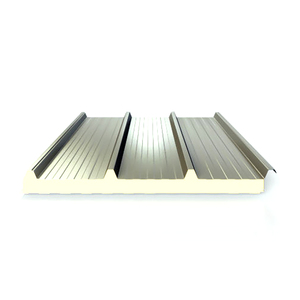
Steel Insulated Sheet Curved Corrugated Metal Roof Panels
High-tensile curved corrugated composite sheeting engineered for long-span portal frames and cold-formed arch framing.

Discover factory-direct building components designed to interface seamlessly with our cold-formed Z and C structural purlin lines, engineered for global industrial infrastructure.
High-tensile curved corrugated composite sheeting engineered for long-span portal frames and cold-formed arch framing.
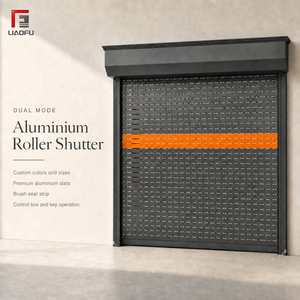
Heavy-duty motorized roller shutter doors with reinforced jambs, designed for warehouse bays and commercial facilities.
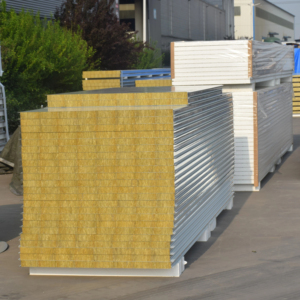
Class A1 non-combustible basalt core roof panel delivering supreme acoustic damping and structural integrity across purlins.
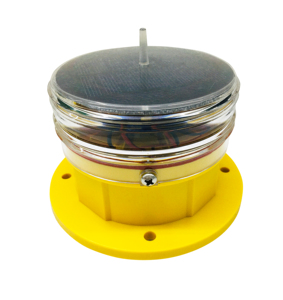
Weatherproof 360-degree navigation beacon for coastal installations, high-mast steel frameworks, and dock facilities.
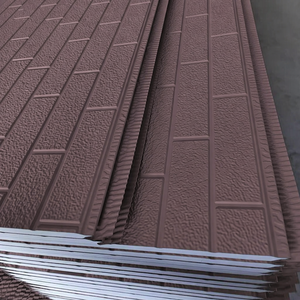
Cost-optimized thermal insulation envelope panels, engineered for rapid modular warehouse and exterior facade assembly.
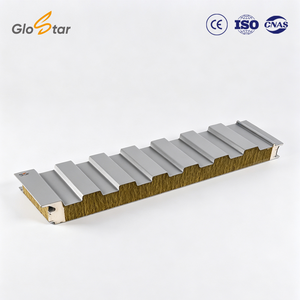
Structural 4-rib external profile panels delivering supreme spanning strength over secondary cold-formed steel girts.
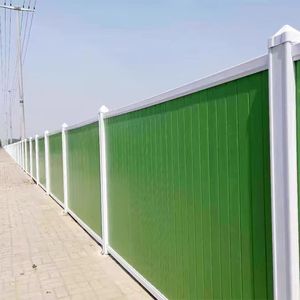
Modular noise-attenuation barrier fencing with galvanized steel framing for urban construction and infrastructure enclosures.
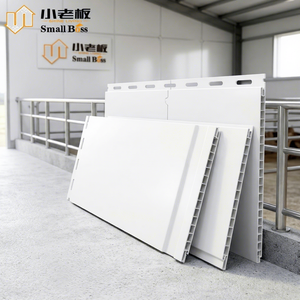
Tongue-and-groove hygienic interior cladding panels designed for food processing plants, wash bays, and cold storage facilities.
An exhaustive engineering review into why continuous cold-formed Z and C sections represent the undisputed benchmark for high-efficiency modern commercial and industrial building envelopes.
In contemporary structural engineering, the specification of cold-formed structural steel purlins (CFS) has universally superseded conventional hot-rolled channel sections in secondary framing design. Manufactured through precision multi-station continuous roll-forming at ambient room temperature, cold-formed purlins harness the phenomenon of strain hardening (work hardening) along their corner bend radii. This metallurgical process substantially elevates the steel’s yield strength ($f_y$) beyond that of the unformed parent hot-dip galvanized coil, yielding an unprecedented strength-to-weight ratio that optimizes structural steel tonnage across wide-span portal frames.
Governed internationally by standards such as BS EN 1993-1-3 (Eurocode 3) and AISI S100-16 (North American Specification for the Design of Cold-Formed Steel Structural Members), modern cold-formed Z-purlins and C-sections are engineered to resist compound stresses including local buckling, distortional buckling, and lateral-torsional buckling (LTB). Unlike isotropic hot-rolled beams, thin-walled cold-formed sections require rigorous mathematical verification using either the Effective Width Method or the Direct Strength Method (DSM) to account for post-buckling reserve capacity under negative wind uplift and combined snow and roof live loads.
As a globally recognized manufacturer and exporter operating from Barka, Sultanate of Oman since 2009, Paneltech International LLC (PTI) deploys advanced high-speed computerized roll-forming lines. Our automated roll formers ensure zero web camber, exact flange perpendicularity, and micro-metric punched hole precision, enabling structural engineers, EPC contractors, and pre-engineered building (PEB) fabricators to execute projects with utmost structural reliability and rapid on-site bolted erection.
Continuous roll forming compresses the ferritic-pearlitic steel matrix along the profile corners. This cold working increases dislocation density within the crystal lattice, yielding localized yield enhancements up to 15% above nominal coil baseline specifications.
Thin-walled members are vulnerable to non-linear distortional and flexural-torsional deformation. Our cold-formed purlins incorporate optimized lip stiffener angles (45° to 90°) to dramatically elevate critical elastic buckling stress ($\sigma_{cr}$).
To ensure frictionless erection, every purlin profile is pre-punched in-line with elongated slotted holes for cleats, sag-rods, and bridging struts directly synced from structural Tekla/BIM coordinate models with sub-millimeter tolerances.
Choosing between Zed and Channel profiles dictates portal frame efficiency, continuous lap moment capacity, and side-wall girt installation speed.
A frequent dilemma confronting structural designers is whether to specify continuous Z-purlins or simple-span C-purlins. The core mechanical distinction lies in geometry and continuity. Z-purlins feature asymmetric flanges of slightly differing dimensions (e.g., 64mm top flange vs. 58mm bottom flange), allowing one Z-section to rotate 180 degrees and nest cleanly inside the adjacent section over portal frame rafters.
This nested lap configuration (typically extending 10% to 15% of the total bay span on either side of the rafter center line) creates a continuous multi-span structural beam. The lapped zone doubles the effective web and flange thickness at the support, exactly where the negative bending moment reaches its absolute peak. As a result, continuous Z-purlin systems routinely generate a 25% to 35% reduction in overall steel tonnage compared to single-span configurations while significantly curtailing mid-span deflection.
Conversely, C-purlins possess symmetrical flanges, making them fundamentally non-nestable. They are ideal for simply supported single spans, end-wall framing, wall girts, window trimmers, door headers, and mezzanine floor joists where planar flush-mounting against vertical structural columns is imperative.
| Structural Parameter | Continuous Z-Purlins | Structural C-Purlins | Engineering Benefit |
|---|---|---|---|
| Primary Application | Pitched roofs, long-bay portal frames (6m to 12m) | Wall girts, fascia beams, floor joists, partitions | Tailored structural alignment per building axis |
| Moment Continuity | Full semi-rigid continuity via 0.15L lap nesting | Simply supported / End-to-end cleated joints | Z-profile cuts maximum bending moment by up to 40% |
| Flange Geometry | Asymmetrical lips (enables 180° rotation nesting) | Symmetrical uniform parallel flanges | Z simplifies packaging & reduces freight cubage |
| Available Depths (Web) | 100 mm to 350 mm (in increments of 25mm) | 100 mm to 350 mm (in increments of 25mm) | Covers spans from 3.0m up to 14.0m unsupported |
| Thickness Range (Gauge) | 1.2 mm, 1.5 mm, 2.0 mm, 2.5 mm, 3.0 mm, 3.2 mm | 1.2 mm, 1.5 mm, 2.0 mm, 2.5 mm, 3.0 mm, 3.2 mm | Optimized to exact structural design load calculations |
| Yield Strength ($f_y$) | 350 MPa to 550 MPa (ASTM A653 / EN 10346) | 350 MPa to 550 MPa (ASTM A653 / EN 10346) | High strength allows thin-walled material efficiency |
| Corrosion Protection | Hot-Dip Galv Z275, Z350, ZAM, Magnelis, Aluzinc | Hot-Dip Galv Z275, Z350, ZAM, Magnelis, Aluzinc | Guaranteed C1 through C5-M atmospheric longevity |
How EPC procurement directors, PEB manufacturers, and tier-1 contractors are re-evaluating cold-formed secondary steel procurement to de-risk global projects.
Global project owners are transitioning from legacy G250/G350 steels to 550 MPa high-yield cold-formed profiles. This shift reduces deadweight by over 30%, drastically cutting international ocean freight costs per structural square meter.
Traditional hot-dip galvanizing is rapidly giving way to Zn-Al-Mg coatings (e.g. Magnelis, SuperDyma). These ternary alloys provide self-healing sacrificial galvanic protection over sheared edges and punched bolt slots in C4/C5 coastal environments.
Contractors demand direct integration between structural models (Tekla Structures, Revit) and factory roll-forming machinery. Files are transmitted directly via DSTV/NC1 code, eliminating human drafting errors and jobsite fitment discrepancies.
Tenders in the Middle East, Europe, and Asia increasingly require Environmental Product Declarations (EPDs). Sourcing from high-efficiency automated cold roll formers minimizes scrap waste below 1.5%, supporting LEED and Estidama certifications.
Established in Barka, Sultanate of Oman in 2009, Paneltech International LLC provides single-source accountability for high-spec building envelopes across the Middle East, Africa, and global markets.
Procuring secondary structural steel from international sources presents significant logistics and quality risks if not handled by a vertically integrated, certified manufacturer. At Paneltech International LLC (PTI), our Barka industrial complex spans cutting-edge continuous roll-forming lines, automated decoiling, servo-driven hydraulic punching banks, and continuous polyurethane (PU), polyisocyanurate (PIR), and mineral rockwool sandwich panel continuous production lines.
This single-source manufacturing capacity means structural engineers can specify purlins, roof cladding, insulated sandwich panels, composite floor decking, flashings, and industrial roller doors from a single coordinated manufacturer. The result is absolute profile compatibility, synchronized project delivery timelines, and unified metallurgical warranties.
Strategically situated in Barka (P.O. Box 391, PC 320), PTI maintains full operational autonomy over raw coil slitting, profiling, and CNC punch scheduling, ensuring rapid containerized ocean dispatch via Sohar and Salalah ports.
Every purlin production run undergoes rigorous incoming mill coil verification, tensile testing, zinc coating mass magnetic gauge checks, and dimensional tolerance verifications adhering strictly to ISO 9001 and ASTM A653 standards.
Specified by leading consultants across high-profile developments including the Head Office National Bank of Oman, City Center Sohar, Royal Oman Police facilities, airport infrastructure, and heavy industrial distribution complexes.
Precise, mathematically grounded answers to the most common questions raised by consulting engineers, quantity surveyors, and project directors.
In structural mechanics, a continuous beam spanning multi-bay rafters experiences high negative bending moments centered directly over internal supports. By configuring a nested overlap of 10% to 15% of the span ($L$) on either side of the rafter cleat, the double section reinforces the member precisely where the moment curve peaks. This optimizes moment resistance, controls inflection points, and avoids premature distortional buckling without requiring thicker gauges across the entire span.
For inland, low-humidity environments (ISO 12944-2 Class C1-C2), a standard hot-dip galvanized coating of Z180 or Z275 (275 g/m² total both sides) is sufficient. However, for coastal regions (such as GCC marine environments, East Africa, or chemical processing plants, Class C4/C5), we recommend high-mass Z350/Z450 galvanizing or advanced Zinc-Aluminum-Magnesium (ZAM) alloy coatings which deliver more than three times the galvanic corrosion life of standard pure zinc.
When holes are drilled or flame-cut manually on a construction jobsite, intense friction and localized heat burn away the protective zinc layer, creating immediate initiation sites for rapid rust and structural failure. Paneltech utilizes precision automated CNC hydraulic punching punches before or during roll forming. The shearing action leaves microscopic zinc smears across the newly exposed edge while preserving sacrificial galvanic protection without thermal heat damage.
Wet storage stain (white rust) occurs when closely bundled galvanized sections are subjected to moisture without free airflow. For export sea containers, Paneltech applies continuous mill-applied passivating chemical rinses (chromated or RoHS-compliant eco-passivation), steel-banded nesting with heavy timber dunnage spacers, breathable waterproof wrapping, and industrial silica desiccant bags within moisture-sealed shipping bundles.
Because cold-formed purlins possess slender open profiles, they are prone to lateral twisting and torsional buckling under extreme live loads or negative wind uplift. Anti-sag rods (typically M12 or M16 threaded rods or cold-formed channels) installed at mid-span or third-points provide essential lateral restraint to the purlin compression flange, significantly shortening the unbraced length ($L_b$) and allowing the purlin to achieve its full theoretical bending capacity.
Yes. PTI maintains an experienced in-house structural engineering department equipped with advanced cold-formed design software. We provide comprehensive load-span capacity tables, reaction tables, and project-specific deflection calculation packages certified to BS 5950-5, BS EN 1993-1-3, and AISI S100-16 for consultant and municipal authority approvals.