English | العربية
Industrial Manufacturing Benchmark & Global Specifier Guide

Top Trusted EPS Sandwich Panel Factories & Factory

Technical Engineering Analysis, Core Material Physics, Envelope Lifecycle Optimization, and Verified Manufacturing Capabilities for Global Infrastructure Projects

Verified Industrial Production Portfolio

Engineered Sandwich Panels & Building Envelope Systems

Expandable Polystyrene (EPS) sandwich panels deliver an optimum balance of mechanical shear rigidity, closed-cell thermal barrier performance, and seismic dead-load mitigation. Discover eight factory-direct structural systems precision-manufactured for cold-chain facilities, architectural facades, modular housing, and controlled cleanroom partitions.

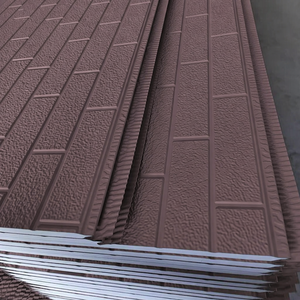
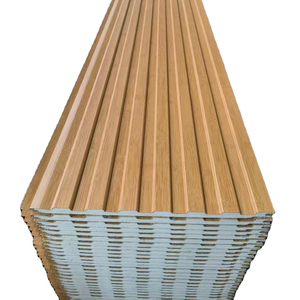
Architectural Cladding Aluminum Carved EPS Sandwich Panel with Water & Fire Resistance Eco-Friendly Exterior Wall Cladding

Aluminum Carved EPS Sandwich Panel Cladding & Roof Insulation

Embossed architectural metallic surface fused with fire-retardant EPS foam core, offering decorative weatherproofing, UV resistance, and acoustic dampening for modern facades.

Exterior Skin: Alu-Zinc Alloy
Surface Finish: Carved Relief / Wood
Core Thickness: 16–50 mm
Weather Life: 25+ Years Service
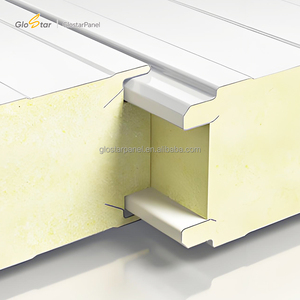
Hygienic Cleanroom Glostar Insulation Prefabricated Wall Panels Fireproof Eco-Friendly CE 50mm 75mm Sandwich Panel PU For Cleanroom Modular

Fireproof PU Sandwich Wall Panels For Cleanroom Modular

High-precision modular cleanroom envelope panels featuring micro-ribbed or completely flat flush facings, airtight joint seals, and antistatic antibacterial surface coatings.

Core: High Rigid PU / PIR
Thickness: 50 mm / 75 mm
Certification: CE / ISO 14644
Joint Detail: Double Cam-Lock Fit
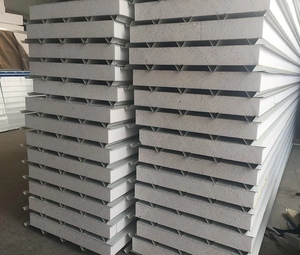
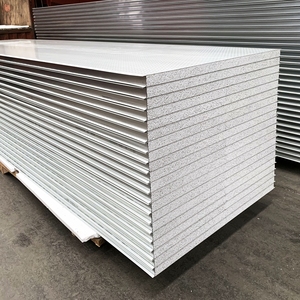
Cold Room & Bio-Lab Modern Cleanroom Panel Partition Wall EPS Sandwich Panels Fire Resistant Water Resistant Eco-Friendly for Cold Room Prefab House

Fire Resistant Cleanroom EPS Sandwich Wall Panels

Impermeable, chemical-wash resistant EPS sandwich wall assemblies engineered for pharmaceutical cleanrooms, medical laboratories, and controlled-temperature cold stores.

Core Density: 18–24 kg/m³
Surface: Food-Grade Film PVDF
Absorption: < 1.5% by Volume
Airtightness: Class 4 EN 12207
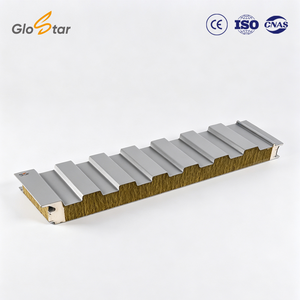
A1 Non-Combustible Corrugated Rock Wool Sandwich Panel Exposed Fasteners A1 Fireproof Four-Ribbed Roof Wall Panel For Steel Warehouse

Corrugated Rock Wool Sandwich Panel Four-Ribbed Roof & Wall

Non-combustible basalt mineral fiber core sandwich panel with four-rib exterior profile. Engineered for fire separation walls, large steel warehouses, and acoustic barriers.

Core Density: 100–140 kg/m³
Fire Rating: Class A1 Non-Comb.
Sound Barrier: Rw ≥ 31–35 dB
Fire Endurance: Up to 240 Mins
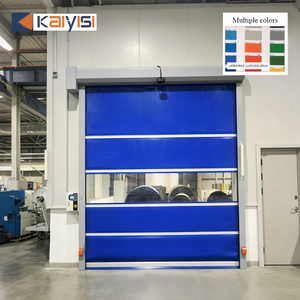
Industrial Access Factory Workshop Door PVC High Speed Roll Up Shutter Door

Factory Workshop Door PVC High Speed Roll Up Shutter Door

Fast-acting automated industrial shutter barrier integrated into panel walls. Maintains microclimate isolation, minimizes convective thermal loss, and resists wind shear loads.

Opening Speed: 0.8–1.5 m/s
Curtain Material: PVC 0.9–1.5 mm
Wind Resistance: Class 3 EN 12424
Cycles: >1,000,000 Cycles
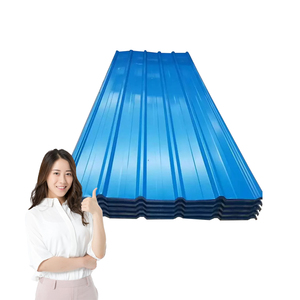
Heavy-Duty Roofing Wave-Patterned Color Sheets Cutting Bending EN Welding SASO BIS KS Prepainted PPGI Corrugated Galvanized Steel Roof Panels

Prepainted PPGI Corrugated Galvanized Steel Roof Panels

Roll-formed trapezoidal and wave-profiled galvanized steel sheeting engineered for heavy industrial roofs, single-skin sheds, canopies, and secondary composite floor applications.

Steel Grade: S280GD / S350GD
Zinc Mass: Z120–Z275 g/m²
Standards: SASO / BIS / EN / KS
Profile Yield: High Moment Inertia
Enterprise Manufacturing Foundation

Factory-Direct Engineering from Paneltech International LLC

Operating continuously since 2009 from Barka, Sultanate of Oman (P.O. Box 391, PC 320), Paneltech International LLC (PTI) operates state-of-the-art continuous roll-forming lines, automated polyol/isocyanate and EPS lamination presses, and CNC sheet metal braking facilities. We eliminate supply-chain fragmentation by producing complete, fully integrated building envelopes from raw coil to crated job-site dispatch.

Whether engineering cold stores operating at -35°C in extreme desert ambient temperatures (+50°C), fire compartment walls for petrochemical complexes, or structural girt-and-purlin frameworks for mega-warehouses, our production lines adhere to stringent European (EN 14509) and American (ASTM C578, ASTM E84) quality management protocols. Each batch undergoes rigorous testing for core density uniformity, flexural peel strength, and dimensional tolerances.

2009
Year Established & Continuous Regional Manufacturing
8+
Interconnected Envelope Product Lines (Panels, Decking, Purlins)
0.033
Lowest Thermal Conductivity (λ W/m·K) Available
100%
Documented Batch Traceability & Third-Party Testing
Material Science & Physics Benchmark

Comprehensive Insulation Core Comparative Analysis

Specifying building envelope panels requires evaluating multi-variable physical attributes: thermal transmission (U-value), structural shear modulus ($G_c$), reaction to fire, vapor permeability, and long-term acoustic attenuation.

Performance Criterion High-Density EPS (Expanded Polystyrene) PIR / PUR (Polyisocyanurate) Structural Rock Mineral Wool
Thermal Conductivity (λ) 0.033 – 0.038 W/m·K High Efficiency 0.020 – 0.024 W/m·K Ultra-Low U-Value 0.040 – 0.045 W/m·K Moderate Thermal
Core Density Range 14 – 28 kg/m³ (Super Lightweight) 38 – 45 kg/m³ (Rigid Closed-Cell) 100 – 140 kg/m³ (Heavy Dead-Load)
Reaction to Fire (EN 13501-1) Class B-s1, d0 / B1 Flame-Retardant Class B-s1, d0 to B-s2, d0 Class A1 / A2 Non-Combustible
Water Vapor Absorption ≤ 1.5% by volume (98% Closed-Cell) ≤ 2.0% by volume (Hydrophobic) Moisture sensitive; requires drainage
Compressive Strength (10% Def.) 100 – 160 kPa 120 – 180 kPa 60 – 100 kPa
Acoustic Attenuation ($R_w$) 24 – 27 dB (Vibration Dampening) 25 – 28 dB (Standard Acoustic) 32 – 38 dB Superior Sound Barrier
Embodied Carbon & Recyclability 100% Recyclable; Low Manufacturing Energy Thermoset polymer; complex downcycling High energy melt; mineral recycling
Commercial Cost Index Economical / Maximum Area Coverage Premium (Cold Chain & High-Tech) Moderate to High (Specialty Fire Walls)

Note: Physical values measured in accordance with EN 14509:2013 and ASTM C578-22 standards under laboratory conditions (23°C, 50% RH).

Next-Gen R&D

Breakthrough Technological Advancements in EPS Production

Modern composite panel engineering has progressed well beyond basic block-molding. Continuous precision lamination, graphite enhancement, and high-performance metallurgical coatings ensure lasting building envelope resilience.

01

Graphite-Infused EPS (Neopor)

Microscopic graphite particles embedded in the expandable bead absorb and reflect thermal infrared radiation, reducing thermal conductivity by up to 20% compared to standard white EPS.

02

Continuous Double-Belt Laminators

Automated polyurethane adhesive distribution under pressurized continuous heated belts guarantees uniform tensile bond strength, preventing delamination across wide thermal swings.

03

High-Durability Metallurgy

Applying Galvalume (55% Al-Zn) and architectural PVDF fluoropolymer paint systems provides multi-decade corrosion defense in aggressive marine (C4/C5-M) and industrial microclimates.

04

Airtight Labyrinth Joints

CNC-profiled interlocking tongue-and-groove joint geometries incorporating internal factory-injected elastomeric gaskets eliminate thermal bridging and prevent moisture condensation.

Comprehensive Procurement Integration

Complete Structural Building Envelope Solutions

Eliminate coordination oversights by sourcing your total roof, wall, secondary framing, and access solutions from a single precision manufacturer.

EPS/PIR/Rockwool Panels

Precision roof and wall composite insulated sandwich panels.

Corrugated Profile Sheets

Trapezoidal & sinusoidal roll-formed weather sheets.

Metal Decking Sheets

Galvanized high-profile permanent composite floor formwork.

Z & C Structural Purlins

High-tensile cold-formed secondary framing systems.

Roll-Up Doors & Trims

High-speed industrial doors, flashings, and precision closures.

Engineering Knowledge Base

Frequently Asked Questions for Specifiers & Buyers

In-depth technical answers addressing core density selection, load deflection parameters, environmental durability, and international shipping protocols.

How does core density affect the load span and flexural rigidity of EPS sandwich panels?

The structural performance of an EPS sandwich panel behaves as a composite I-beam: the steel skins carry tensile and compressive bending stresses, while the EPS core resists shear deformations ($G_c$) and prevents premature wrinkling or buckling of the thin metal facings.

Standard partition panels typically utilize densities between 12 and 16 kg/m³. For high-wind structural exterior walls and walkable ceilings, densities are elevated to 20–28 kg/m³. This yields a shear modulus exceeding 3.5 MPa and compressive strength ≥140 kPa, enabling purlin spans up to 4.5 meters under permissible deflection limits ($L/200$ to $L/250$).

What measures prevent core delamination under desert thermal cycling (+50°C ambient)?

In arid, high-temperature climates such as the Arabian Gulf, dark exterior steel facings can reach surface temperatures of +80°C, while the interior conditioned space remains at +22°C. This extreme thermal differential ($\Delta T \approx 60^\circ\text{C}$) induces significant thermal bowing and shear strain at the core-to-skin boundary.

Paneltech International LLC mitigates this using high-tack, two-component polyurethane reactive adhesives applied via continuous automated oscillating distributors. Coils are pre-treated with chemical passivation primers, ensuring tensile bond strength exceeds the cohesive tensile strength of the EPS core itself (≥0.12 MPa) under EN 14509 testing.

How does flame-retardant B1 EPS compare with PIR and Rockwool under fire safety codes?

EPS core panels specified for construction utilize flame-retardant modified polystyrene beads complying with DIN 4102 B1 and EN 13501-1 Class B-s1, d0. Upon exposure to high heat, the material contracts away from the heat source and self-extinguishes without flaming droplets.

For high-risk fire partitions or areas requiring 60 to 240 minutes of structural fire integrity (such as transformer rooms or public corridors), Rockwool sandwich panels with an A1 non-combustible rating are recommended. For high thermal resistance with advanced char-forming fire behavior, polyisocyanurate (PIR) cores offer an ideal middle ground.

Can EPS sandwich panels meet strict hygienic standards for ISO cleanrooms and food plants?

Yes. When manufactured with completely flush or micro-ribbed pre-painted steel facings, EPS panels provide smooth, non-shedding, and biologically inert surfaces. Facings coated with anti-microbial polyester or PVDF resist daily sanitization with sodium hypochlorite, isopropyl alcohol, and quaternary ammonium compounds.

Interlocking vertical tongue-and-groove joints sealed with neutral-cure anti-fungal silicone or factory gaskets prevent bacterial harborages, complying with GMP guidelines and ISO 14644 cleanroom protocol requirements.

What steel coatings and zinc masses are specified for severe coastal environments (C4/C5)?

Standard indoor applications typically utilize commercial Z120 hot-dip galvanized steel with a 25-micron regular modified polyester (RMP) topcoat. However, within 5 kilometers of coastlines or within chemical facilities, higher-grade coatings are required.

For severe coastal exposure, PTI specifies structural grade steel (S280GD/S350GD) with high zinc mass (Z275) or 55% Aluminum-Zinc alloy substrate (AZ150), topped with a 50-micron High-Durability Polyester (HDP) or Polyvinylidene Fluoride (PVDF) coating, verified by 1,000+ hours of continuous salt-spray testing under ASTM B117.

How are panels packaged, protected, and loaded for long-distance maritime export?

Export bundles are stacked on EPS cushioning blocks and wrapped with heavy-gauge UV-resistant polyethylene stretch film, complete with reinforced corrugated edge protectors along all four corners.

Bundles are engineered to match standard 40-foot High-Cube (40HQ) container dimensions (panel lengths up to 11.85 meters) or configured for break-bulk ocean freight using heavy-duty lifting strops. Every bundle includes desiccants to prevent container-sweat corrosion during ocean transit.

Collaborate with Experienced Envelope Engineers

Whether planning a refrigerated logistics park, a high-specification cleanroom complex, or a high-efficiency industrial warehouse, our engineering team in Barka, Oman delivers verified span calculations, thermal modeling, and consolidated building envelope proposals.

Direct Factory Pricing
EN 14509 & ASTM Certified
Complete Envelope Packages
Global Project Logistics
Send an Inquiry