
From heavy structural cold-formed girts and purlins to precision architectural corner flashings and high-efficiency thermal envelopes, explore our premium catalog manufactured under rigorous factory quality control.
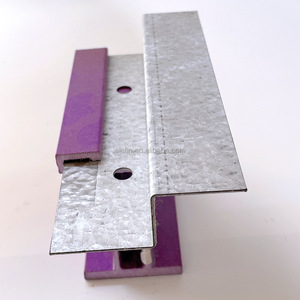
In modern structural building envelope engineering, corners represent the most vulnerable architectural junctions. These 90-degree outer and inner intersections face severe localized wind vortexes, microclimate humidity pooling, and differential building movement. A substandard edge trim or poorly specified corner flashing will invariably lead to thermal bridging, interstitial condensation, and catastrophic water ingress that degrades insulated cores such as Polyisocyanurate (PIR) and mineral Rockwool.
As an internationally acknowledged steel corner trim supplier and exporter, Paneltech International LLC leverages decades of metallurgy and cold-forming mastery to engineer envelope trims that bridge aesthetic refinement with unyielding structural resilience. Every corner trim profile we produce is crafted to resist intense thermal expansion and cyclic wind delamination, ensuring building façades maintain continuous hermetic barriers across decades of service life.
The longevity of an architectural corner flashing relies fundamentally on two engineering nuances: capillary grooving and hemmed return lips. Standard flat-bent sheet metal profiles frequently fall victim to surface water creeping via capillary action, pulling driven rainwater past the self-drilling fasteners into the underlying wall insulation.
Our specialized cold-formed corner profiles feature engineered 180° safety hemming with a 10mm to 15mm return fold. This geometric detail achieves three vital goals:
Fabricated using computerized multi-axis synchronized hydraulic press brakes and automated roll lines, holding precise angular tolerances within ±0.5° across lengths up to 8.2 meters.
Top-coat fluoropolymer chemistry utilizing 70% Polyvinylidene Fluoride resin over an epoxy primer, guaranteeing Delta E color drift < 5 units after 20 years of ultra-violet radiation exposure.
Parametrically configured for Revit and Tekla Structures. Pre-notched lap joints and slotted screw holes accommodate real-world building thermal expansion and contraction cycles.
Select the appropriate material grade based on environmental corrosivity categories (ISO 12944) and project envelope life expectancy.
| Substrate Material | Metallic Layer / Mass | Paint / Polymer Layer | ISO 12944 Category | Yield Strength (Rp0.2) | Expected Design Life |
|---|---|---|---|---|---|
| Galvanized Steel (GI) ASTM A653 / EN 10346 |
Z275 (275 g/m² Zinc) | Regular Polyester (25µm) | C2 - Low / C3 - Medium | 280 - 350 MPa | 15 - 20 Years |
| Galvalume / Aluzinc (GL) ASTM A792 / EN 10215 |
AZ150 (55% Al-Zn alloy) | Silicon Modified Polyester (SMP) | C3 - Medium / C4 - High | 350 - 550 MPa | 25 - 35 Years |
| Pre-Painted Galvalume (PPGL) ASTM A792 + Coated |
AZ180 (Triple Barrier) | Fluoropolymer PVDF (28µm) | C4 - High / C5-I Industrial | 350 MPa | 35 - 50 Years |
| Marine Architectural Aluminum AA 3003 / AA 5052 |
Self-Passivating Oxide | Anodized / PVDF Wet-Spray | C5-M Marine Coastal | 160 - 210 MPa | 50+ Years |
| Austenitic Stainless Steel AISI 316 / EN 1.4401 |
Passive Chrome-Nickel-Mo | Mill Finish 2B / Satin Brushed | CX - Extreme Chemical | 240 - 290 MPa | 60+ Years |
How global environmental regulations, automated prefabrication, and lifecycle decarbonization are redefining the procurement criteria for architectural corner profiles.
Global structural engineering firms and general contractors operating across North America, Europe, and the Middle East are facing stringent embodied carbon caps under LEED v4.1, BREEAM, and Estidama frameworks. Consequently, procurement managers are transitioning away from high-emission Blast Furnace-Basic Oxygen Furnace (BF-BOF) steel coils.
As an forward-thinking exporter, our supply chains are pivoting toward Electric Arc Furnace (EAF) steel coils processed with direct-reduced iron (DRI) powered by natural gas and transitional hydrogen blends. Procuring steel corner trims backed by verified third-party Environmental Product Declarations (EPDs) allows developers to eliminate Scope 3 carbon penalties while fulfilling net-zero building envelope certifications.
Site labor expenses and tight project handover schedules make traditional on-site angle cutting, snip-trimming, and manual folding obsolete. The future of corner trim procurement centers on DfMA principles:
Rapid global expansion in industrial pharmaceutical warehouses, food processing centers, and vertical cold-chain logistics hubs demands specialized functional coatings. Modern edge trims are increasingly specified with nano-silver anti-microbial coatings to inhibit bacterial and fungal proliferation along panel joint margins. Additionally, high Solar Reflectance Index (SRI > 78) coatings are mandated on parapet and ridge-to-corner flashing interfaces to minimize localized heat-island effects and reduce interior refrigeration cooling loads.
From our advanced manufacturing headquarters in Barka, Sultanate of Oman, we deliver fully integrated building envelope solutions built on precision, capacity, and dependable global export support.
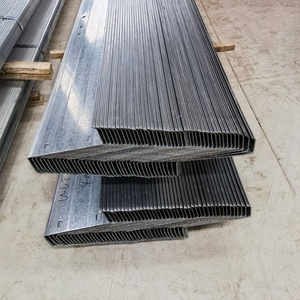
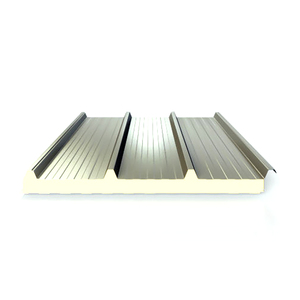
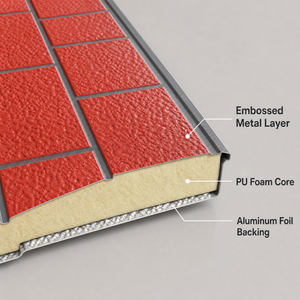
Unlike standard sheet metal job shops, we manufacture the entire building shell under one roof: insulated sandwich panels (PIR, PU, Rockwool), heavy cold-formed Z & C purlins, metal decking, and matching flashings. This ensures 100% color matching, uniform paint batch warranties, and zero dimensional disputes between panels and trims.
Headquartered in Barka, Oman, Paneltech International LLC has engineered and supplied landmark civic, industrial, and defense projects across the GCC, Africa, Europe, and Asia. Our infrastructure handles high-volume continuous production while maintaining bespoke architectural customization.
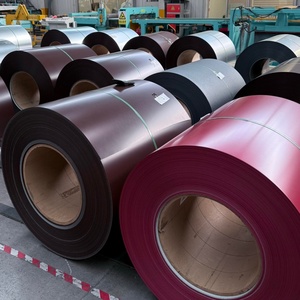
Every raw coil is inspected for yield strength, zinc adherence (ASTM A924 bend tests), coating dry film thickness (DFT), and chemical passivation. Finished profiles undergo 100% laser visual inspection for angular deflection and uniform hem closure before crating.
Damaged flashings cause costly site delays. We protect all profiles with heavy UV-stable peelable polyethylene films, edge-protecting wooden battens, and steel-strapped waterproof sea freight bundles to ensure zero transit scuffing or moisture staining.
Our engineering support team collaborates directly with consultants and facade contractors during tender and shop drawing phases, providing optimized unfold schedules, thermal expansion calculations, and localized wind-load resistance verification.
Located near premier deep-water maritime shipping routes in Oman, Paneltech provides expedited sea container dispatch to major hub ports worldwide, accompanied by complete mill test certificates (EN 10204 3.1) and Certificates of Origin.
Answers to common structural, metallurgical, and international export questions encountered during corner flashing specification.
Carbon steel has a coefficient of linear thermal expansion of approximately 12 × 10⁻⁶ m/(m·°C). For a building envelope subjected to an ambient swing from 0°C in winter to 45°C in summer (with a surface temperature reaching up to 75°C under direct solar radiation on dark coatings), a 6-meter flashing section will experience an expansion of ΔL = L × α × ΔT ≈ 5.4 mm. To mitigate oil canning and fastener shear, we recommend maximum single trim lengths of 3 to 4 meters, overlapping by 100mm to 150mm with slotted fixing holes and non-curing polyisobutylene (butyl) tape instead of rigid mechanical pinning.
Oil canning (perceived waviness in flat sheet metal areas) is governed by the width-to-thickness ratio (b/t ratio) and internal coil stresses. For corner flashing face widths up to 150mm, a minimum gauge of 0.50mm to 0.60mm is acceptable if intermediate longitudinal stiffening ribs (swages) or hemmed edges are incorporated. For large architectural corner faces exceeding 200mm, we specify heavy 0.70mm to 1.00mm high-yield galvanized or PPGL steel to ensure optical flatness across varying sun-angle exposures.
Galvanic corrosion occurs when dissimilar metals (such as carbon steel screws, copper flashings, or untreated aluminum frames) interact in the presence of an electrolyte. Our engineering design packages mandate color-matched austenitic stainless steel (grade 304 or 316) self-drilling fasteners with vulcanized EPDM bonded sealing washers. Furthermore, non-conductive synthetic isolation tapes or neoprene membranes are provided where steel corner flashings interface with dissimilar framing metals.
Yes. One of our primary manufacturing strengths is total building envelope compatibility. We produce custom exterior corner flashings, internal cove profiles, base drip sills, and parapet caps profiled from identical color-coated parent coils used for our insulated panel facings. This guarantees an identical finish, chemical resistance profile, and thermal behavior across all envelope intersections.
Every export consignment is shipped with an inspection dossier containing: Mill Test Certificates (MTC) conforming to EN 10204 Type 3.1 detailing chemical composition and mechanical tensile properties; ASTM B117 salt spray test verifications; dry film paint thickness (DFT) reports; and certified packing slips matching individual pallet tags.
Need structural profile take-offs, custom flashing fold diagrams, or high-volume wholesale export pricing for your next project? Our architectural envelope specialists in Barka are ready to assist.