
Manufactured under stringent quality regimes in Barka, Sultanate of Oman, combining precision structural steel, roll-formed girts, and insulated envelope panels.
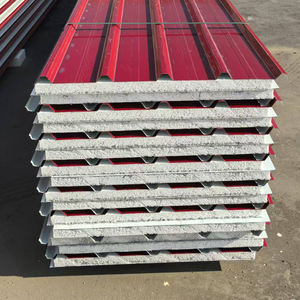
High thermal-performance composite panel with rigid polyurethane/EPS core engineered for exterior claddings and industrial warehouses.
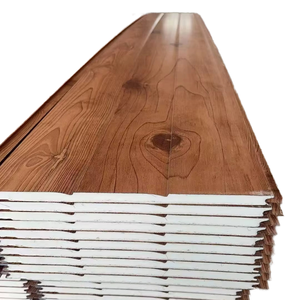
Sound-absorbing, eco-friendly PIR/PU modular panels with interlocking tongue-and-groove joints for controlled-atmosphere logistics hubs.
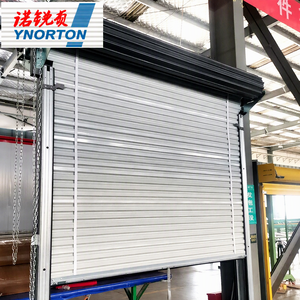
Industrial motorized rolling shutter built from interlocking cold-rolled galvanized steel concave laths for high-security commercial portals.
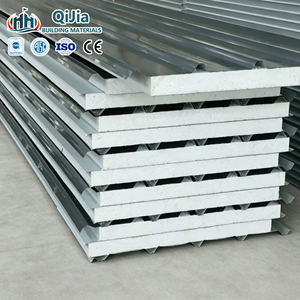
Corrosion-resistant Aluzinc/Galvalume skins bonded to high-density PU core, ideal for aggressive coastal environments and ceiling decking.
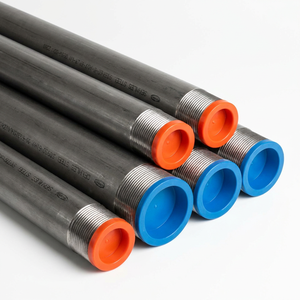
High-tensile seamless structural pipe and hollow section profiles meeting EN 10210/10219 for advanced spatial architectural frameworks.
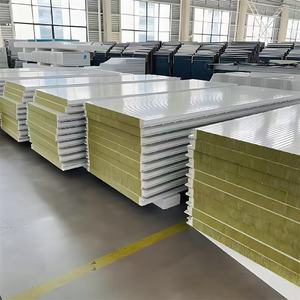
High-density basalt mineral wool core providing up to 240 minutes fire rating and exceptional acoustic attenuation for industrial plants.
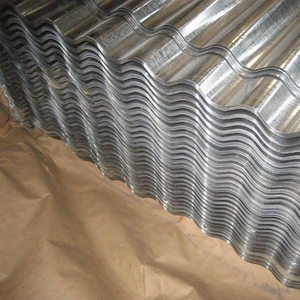
Roll-formed lightweight architectural profiles with PVDF / SMP fluoropolymer coating for chemical resilience and architectural roofing.
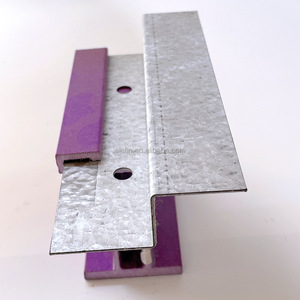
High-yield zinc-coated steel profiles precision roll-formed for secondary structural framing, solar racking, and building envelope support.
A comprehensive technical evaluation for EPC contractors, structural engineers, and international procurement managers seeking defect-free roll-formed profiles.
In contemporary civil engineering, prefabricated pre-engineered buildings (PEBs), solar photovoltaic mounting systems, and multi-tier mezzanine frameworks, structural steel U channels (including European Standard UPN/UPE channels, Parallel Flange Channels PFC, and customized cold-formed U-profiles) represent the critical secondary load-bearing skeleton. Their cross-sectional efficiency hinges on the precise distribution of mass relative to the major bending axis (X-X), providing high moment of inertia and radius of gyration while reducing overall deadweight.
When sourcing from premier steel channel factories and international exporters, project engineers encounter a dual fabrication paradigm: hot-rolled structural steel channels produced under standards such as ASTM A36, EN 10025-2 (S235JR, S275JR, S355JR), and JIS G3101 SS400; versus precision continuous cold-formed U-channels manufactured in accordance with EN 10162 and ASTM A1003/A653. Paneltech International LLC bridges the interface between heavy structural frameworks and weather-tight building envelopes by integrating cold-formed channels, Z & C purlins, and composite sandwich panels into fully unified, load-tested envelope packages directly from Barka, Sultanate of Oman.
Technical Distinction: Unlike generic commercial warehouse steel, high-durability cold-formed U-channels utilize high-tensile structural coil (yield strength ranging from 250 MPa to 450 MPa) paired with hot-dip galvanized protective coatings (Z120 through Z275 and beyond), delivering strict dimensional tolerances of ±0.5 mm for web width and flange squareness, which prevents field alignment drift in bolted modular frameworks.
Multi-stand automated cold-forming lines ensure linear straightness with camber and sweep limited to less than L/1000, eliminating on-site warping and residual bending stresses across long spans up to 14 meters.
Available with continuous hot-dip zinc coatings (Z180 to Z275) or aluminum-zinc alloy layers (AZ150), providing cathodic self-healing protection at punched slots and sheared ends under ISO 9223 C3 to C5 marine corrosive environments.
Sourcing cold-formed U-channels alongside matching Z/C purlins, metal floor decking, and PIR/PU/Rockwool insulated sandwich panels creates a single point of accountability for thermal envelope integrity.
Cross-sectional performance comparison between standard European/American channel profiles and continuous cold-formed U-sections.
| Profile Standard | Common Steel Grades | Web Depth (h, mm) | Flange Width (b, mm) | Yield Strength (fy, MPa) | Primary Industrial Applications |
|---|---|---|---|---|---|
| Cold-Formed U-Channel (EN 10162) | S250GD, S350GD, S450GD+Z | 40 – 300 mm | 25 – 100 mm | 250 – 450 MPa | PEB secondary framing, Solar PV tracker purlins, Partition track |
| European Standard (UPN / UNP) | S235JR, S275JR, S355JR | 50 – 400 mm | 38 – 110 mm | 235 – 355 MPa | Heavy industrial gantries, Equipment skids, Crane girders |
| Parallel Flange (PFC / UPE) | S355JR, ASTM A572 Gr. 50 | 80 – 400 mm | 45 – 100 mm | 345 – 355 MPa | Architectural edge lintels, Mezzanine floor beams, Facade support |
| American Standard (AISC C-Shape) | ASTM A36, A572 Gr. 50 | 76 – 381 mm | 36 – 89 mm | 250 – 345 MPa | North American pre-engineered frames, Bridge rail posts |
| Japanese Standard (JIS G3192 Channel) | SS400, SM490A | 75 – 380 mm | 40 – 100 mm | 245 – 325 MPa | Maritime shipping containers, Modular plant infrastructure |
How decarbonization, carbon border adjustments, automated roll forming, and modular prefabrication are reshaping steel trade dynamics.
The global steel channel procurement landscape is witnessing a structural transformation driven by sustainability regulations, digital detailing, and regionalized supply logistics. Engineering consultants and procurement directors must align their purchasing strategies with four dominant macro-trends:
With the European Union's Carbon Border Adjustment Mechanism (CBAM) entering definitive phases, mills operating Electric Arc Furnaces (EAF) powered by natural gas and renewable grids in the Middle East and GCC are gaining a direct price-carbon advantage over traditional coal blast furnace mills.
Procurement is moving rapidly away from raw stock lengths toward CNC pre-punched, cut-to-length channels designed directly from Tekla and Revit BIM models. In-line hydraulic punching removes 100% of field layout labor and prevents zinc coating damage from flame cutting.
Advancements in micro-alloyed high-strength low-alloy (HSLA) steel coils (such as S450GD and S550GD) allow engineers to specify cold-formed U-profiles that reduce section deadweight by 28% to 42% compared to hot-rolled UPN beams, cutting freight, craneage, and foundation loads.
Disruptions in primary global maritime choke points have made the Sultanate of Oman an export nexus. Positioned outside volatile maritime straits with direct access to the Indian Ocean and Arabian Sea, manufacturing centers like Barka provide safe, prompt transit to MENA, African, and European ports.
Institutional developers, sovereign wealth funds, and LEED/Estidama-certified projects now require Type III Environmental Product Declarations (EPDs). Traceable mill origin, 100% circular recyclability, and non-toxic zinc coating compositions are mandatory tender prerequisites.
Contractors are mitigating split-responsibility disputes by purchasing structural channels, secondary purlins, composite roof/wall panels, and matching flashings from a single manufacturer, preventing thermal bridging, electrolytic galvanic corrosion, and joint seal failures.
Operating continuously since 2009 in Barka, PTI stands as a certified benchmark for cold-formed steel engineering and architectural envelope production.
Founded on rigorous engineering protocols, Paneltech International LLC (PTI) operates modern production facilities located strategically in Barka, Sultanate of Oman (P.O. Box 391, PC 320). Serving key infrastructure, corporate headquarters, and commercial mega-projects across the Arabian Gulf and international markets, PTI eliminates the technical bottlenecks associated with fragmented multi-vendor procurement.
All core cold-formed purlins, profile decking, and insulated panels are produced on company-owned, continuous roll-forming lines. In-house manufacturing guarantees tight dimensional control, short lead times, and rigorous batch traceability.
Raw coil chemistry verification, mechanical tensile and yield testing, zinc coating mass adherence tests (ASTM A90), and finished profile checks follow written quality regimes verified through EN 10204 3.1 inspection certification.
We supply the entire building envelope: matching steel U & C purlins, high-span galvanized composite decking, polyurethane/PIR and non-combustible Rockwool panels, flashings, industrial roller shutter doors, and fasteners.
Essential technical and logistical answers for structural engineers, QA/QC inspectors, and international procurement managers.
Hot-rolled steel channels (such as standard European UPN or American C-shapes) are formed at temperatures above 1100°C, resulting in rounded internal corners, tapered flanges (in traditional profiles), thicker webs, and residual thermal mill scale. Cold-formed steel U-channels are roll-formed at ambient temperature from galvanized or bare high-strength steel coil. Cold-formed profiles offer uniform wall thickness, sharper bend radii, superior surface finish, tighter cross-sectional tolerances (±0.5 mm), and higher strength-to-weight ratios, making them significantly lighter and faster to install for secondary structural framing and solar mounting arrays.
Galvanic corrosion occurs when dissimilar metals with disparate electrochemical potentials (such as bare carbon steel and aluminum sheeting) are placed in direct contact in the presence of an electrolyte (atmospheric moisture). Prevention requires dielectric isolation: utilizing hot-dip galvanized or Zn-Al coated steel channels, incorporating EPDM or neoprene isolation barrier strips between the channel flange and cladding sheet, and deploying high-grade coated carbon steel fasteners with bonded EPDM sealing washers. Paneltech supplies profile-matched accessories and flashings designed to ensure complete galvanic isolation.
Under ISO 9223 atmospheric corrosivity classifications, indoor dry environments (C1-C2) require Z120 to Z180 (120–180 g/m² total both sides). For coastal, marine, or chemical processing plants classified as C3 to C5, continuous hot-dip galvanized coatings of Z275 (275 g/m² or ~20 µm per side) or batch hot-dip galvanizing per ISO 1461 / ASTM A123 (yielding 65–85 µm zinc thickness) is mandatory. Alternatively, 55% Aluminum-Zinc alloy coatings (AZ150) offer up to 4 times the corrosion resistance of standard galvanizing in exposed atmospheric applications.
Yes. Our automated continuous roll-forming lines feature integrated hydraulic punch units capable of stamping standard elongated slots, round holes, and custom hole patterns directly into the web and flanges prior to roll forming. Punch locations are programmed via CNC files derived from structural BIM models (Tekla/Revit), ensuring exact on-site fit-up, rapid bolt assembly, and eliminating thermal torching that compromises the protective zinc envelope.
Every commercial export consignment is accompanied by an EN 10204 Type 3.1 Mill Inspection Certificate documenting ladle chemical composition (C, Mn, Si, P, S), mechanical properties (Yield fy, Ultimate Tensile fu, Elongation percentage), coating thickness verification, and dimensional inspection reports. When required by project consultants or sovereign tenders, third-party inspection oversight (e.g., SGS, Bureau Veritas, TÜV) can be arranged prior to vessel departure from Omani ports.
Single-source envelope sourcing eliminates the finger-pointing that often arises between structural steel fabricators and cladding contractors. Paneltech engineers secondary steel purlins, Z & C sections, and cold-formed U-tracks to exact alignment with our polyurethane, PIR, and Rockwool sandwich panel dimensions, guaranteeing thermal continuity, tested acoustic attenuation, optimal screw pull-out values, and coordinated site logistics under one project schedule.
Submit your project drawings, profile specifications, or bill of quantities. Our Barka technical engineering team will review load criteria, span calculations, and coating schedules to deliver an optimized, factory-direct quotation.