
Factory-engineered composite wall panels, insulated ceiling assemblies, and heavy-duty structural steel profiles designed for industrial facilities, cold chain logistics, and modular construction across Greater Hamburg and Northern Europe.
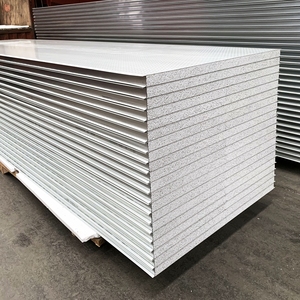
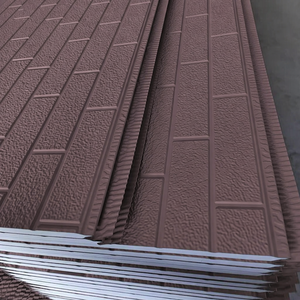
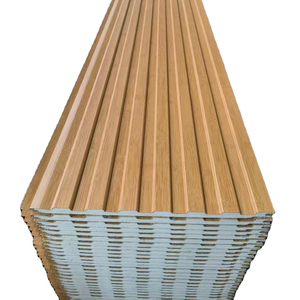
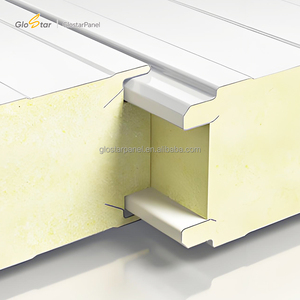
Comparative technical analysis for German general contractors evaluating thermal efficiency, dead-load impact, structural span capacity, and lifecycle economics.
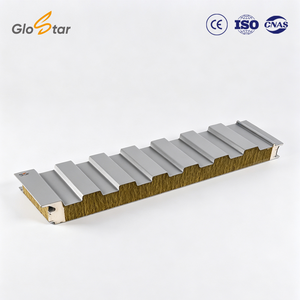
| Evaluation Parameter | High-Density Modified EPS | Polyisocyanurate (PIR) | Mineral Rock Wool (MW) | Hamburg Engineering Relevance |
|---|---|---|---|---|
| Thermal Conductivity (λ) | 0.033 – 0.038 W/(m·K) | 0.022 – 0.026 W/(m·K) | 0.040 – 0.044 W/(m·K) | Dictates panel thickness required to satisfy GEG 2024 U-value caps |
| Core Density Profile | 16 – 22 kg/m³ | 38 – 42 kg/m³ | 100 – 130 kg/m³ | Critical for soft soil foundation loads along the River Elbe basin |
| Reaction to Fire (EN 13501-1) | B-s1, d0 (Flame-Retarded) | B-s1, d0 / B-s2, d0 | A1 / A2-s1, d0 (Non-Combustible) | Determines compartment compliance per Hamburgische Bauordnung (HBauO) |
| Moisture Absorption (by vol.) | < 1.0% (Immersion test) | < 1.5% | > 9.0% (Fibrous retention) | Prevents thermal degradation from persistent North Sea maritime humidity |
| Span-to-Weight Efficiency | Exceptional (High stiffness-to-mass) | Very High | Moderate (High dead-weight burden) | Reduces primary steel tonnage, girt spacing, and crane erection hours |
| Global Warming Potential (GWP) | Low embodied carbon, 100% recyclable | Medium chemical footprint | High energy consumption during melt | Crucial for DGNB Gold / Platinum sustainability ratings in Germany |
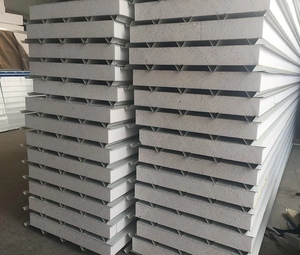
For standard logistics warehousing, light industrial manufacturing, and agricultural cold-storage where extreme boundary-wall non-combustibility (Class A1) is not mandated by fire authorities, EPS sandwich panels deliver up to 35% cost savings over stone wool systems per square meter of installed cladding.
With panel unit weights rarely exceeding 11–13 kg/m² for a 100mm thickness, assembly teams in Hamburg experience faster crane hoisting cycles and safer manual positioning, significantly reducing overall contractor man-hours and scaffolding rental durations.
Coated with food-safe polyester or PVDF coatings conforming to EN 10169, our panel surfaces resist mold growth, chemical washdowns, and industrial fumigation protocols, providing long-term reliability for Hamburg’s extensive food imports and fruit logistics terminals.
Tailored cladding solutions addressing the structural, environmental, and thermal dynamics of the Elbe-Weser region, Port of Hamburg logistics centers, and Northern European trade hubs.
In zones such as Altenwerder, Waltershof, and Billbrook, immense freight facilities demand rapid thermal enclosure. Our panels utilize high-yield 0.5mm to 0.7mm steel facings with heavy zinc plating (Z275) to endure aggressive coastal saline mist without envelope delamination.
Hamburg is Europe’s gateway for perishable trade. Our 100mm to 150mm EPS sandwich wall and ceiling assemblies deliver airtight barrier conditions, preventing heat seepage and frost penetration in distribution hubs handling pharmaceuticals, dairy, and fresh produce.
Accelerated urban expansion and infrastructural housing across Harburg and Bergedorf utilize modular steel-frame buildings with prefabricated EPS wall panels, achieving immediate occupancy, superior acoustic deadening, and compliant U-values without extensive plastering.
Subdividing vast manufacturing floors into clean workshops or cleanrooms requires interior partitions that resist moisture and particulate buildup. Our smooth or micro-ribbed EPS panels facilitate rapid retrofitting without interrupting active production schedules.
Essential regulatory benchmarks for building envelopes delivered to Germany under the Construction Products Regulation (CPR).
The German Building Energy Act (Gebäudeenergiegesetz) specifies maximum overall heat transfer coefficients for external envelope components. For commercial buildings with indoor design temperatures ≥ 19°C, wall assemblies generally require U-values ≤ 0.24 W/(m²·K). Our 150mm EPS sandwich panels comfortably achieve U = 0.22 W/(m²·K), satisfying baseline GEG compliance without supplementary external thermal insulation composite systems (ETICS).
Compliance with DIN EN 14509:2013 is legally binding for structural insulated panels imported into Germany. Every consignment supplied by our facilities includes an authentic Declaration of Performance (DoP) detailing shear modulus ($G_c$), compressive strength ($f_{cc}$), wrinkling stress in span and over intermediate supports, and verified flame-retardancy classifications according to EN 13501-1 testing protocols.
Hamburg's urban atmosphere, coupled with industrial emissions and marine salinity blowing inward from the North Sea across the River Elbe, demands surface durability beyond standard inland C2 classifications. We supply galvanized coil coatings conforming to Corrosion Category C4 (High) and C5-M (Marine Coastal) with 25μm–50μm high-durability polyester (HDP) or fluoropolymer (PVDF) paint coatings.
Calculated for multi-span continuous installations under characteristic wind suction and pressure regimes according to DIN EN 1991-1-4 (Hamburg Wind Zone 3/4). Deflection limit L/200.
| Panel Nominal Thickness | Core Density (ρ) | Overall U-Value | Max Span (1.0 kN/m² Load) | Max Span (1.5 kN/m² Load) | Fastener Recommended Center |
|---|---|---|---|---|---|
| 50 mm | 18 kg/m³ | 0.64 W/(m²·K) | 3.20 m | 2.45 m | 330 mm (Every valley rib) |
| 75 mm | 18 kg/m³ | 0.43 W/(m²·K) | 4.10 m | 3.25 m | 330 mm |
| 100 mm | 20 kg/m³ | 0.33 W/(m²·K) | 4.90 m | 3.95 m | 250 mm to 330 mm |
| 120 mm | 20 kg/m³ | 0.28 W/(m²·K) | 5.45 m | 4.40 m | 250 mm |
| 150 mm | 22 kg/m³ | 0.22 W/(m²·K) | 6.20 m | 5.10 m | 250 mm |
Building upon advanced continuous manufacturing lines established since 2009, we offer complete architectural envelope integration from secondary steel substructures to precision composite panels.
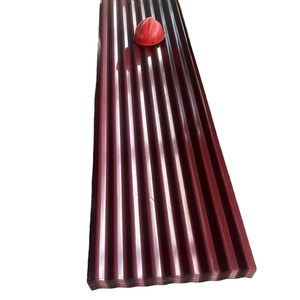
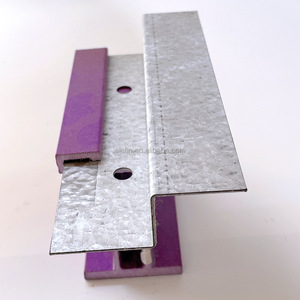
Beyond EPS sandwich panels, we supply fully compatible roll-formed corrugated sheets, cold-formed structural Z & C purlins, metal floor decking, matching flashings, and heavy industrial roller shutter doors, delivering unified envelope packages from one single source.
Raw material coils, polymers, and bonding adhesives undergo incoming laboratory validation. In-line continuous measuring systems inspect panel thickness, profile squareness, and skin adhesion across high-speed continuous foaming and double-belt pressing channels.
Strategic export packaging features UV-stabilized heavy polyethylene wrapping, polystyrene corner cushions, and high-density bottom skids. Shipments arrive via direct ocean freight through Hamburg container terminals (HHLA Burchardkai / Altenwerder) in pristine condition.
Our technical support team collaborates directly with German project managers and structural draftspersons, supplying AutoCAD installation details, fastener schedule recommendations, and certified test reports for rapid approvals.
Direct engineering and commercial answers addressing certification, import tariffs, building regulations, and installation mechanics in Northern Germany.
Speak directly with our technical engineering desk. Receive customized static span recommendations, GEG compliance data sheets, and comprehensive sample packages for your next industrial building project in Hamburg.