
Source compatible roof ridge accessories, insulated sandwich panels, cold-formed purlins, and industrial openings directly from a certified manufacturing facility. Sourced to seamlessly align with Australian standard profile geometry.
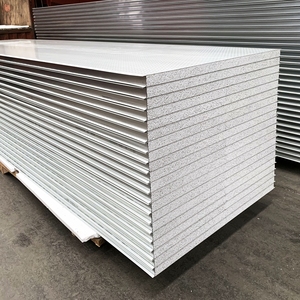
Economical thermal barrier panels with double-sided galvanized steel skins, optimal for modular buildings, livestock sheds, and interior cold segregation.
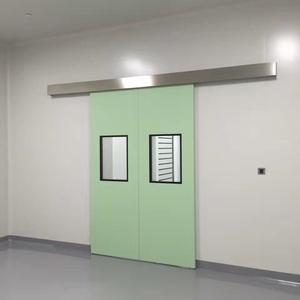
Sanitary-grade stainless steel framing engineered with impact-resistant acoustic glass, designed for hospitals, laboratories, and controlled-atmosphere processing units.
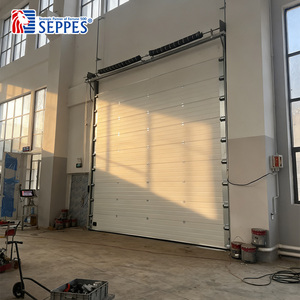
High-density PU core overhead door assemblies offering wind resistance, anti-drop safety brackets, and perimeter weather-stripping for large warehouse portals.
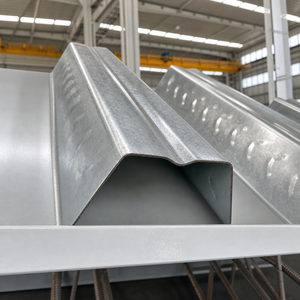
Galvanized structural steel decking profiles serving as permanent formwork and positive tensile reinforcement in commercial high-rise concrete slabs.
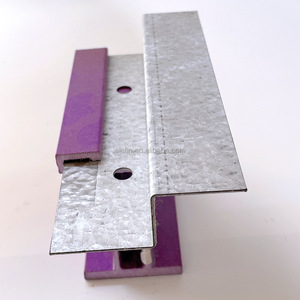
Cold-formed structural Z-purlins with continuous lap capacity, roll-formed from high-yield 450MPa steel for extensive spans in cyclonic and rural sheds.
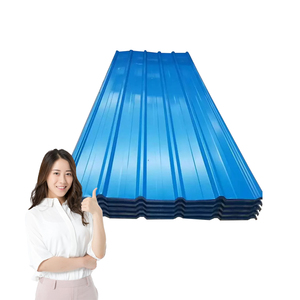
Continuous hot-dip coated corrugated sheeting with anti-chalking fluoropolymer paint systems, matching standard ridge roll caps and flashing profiles.
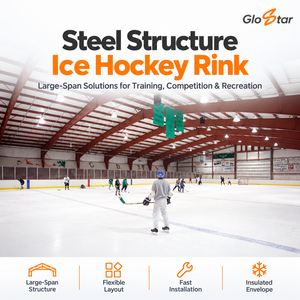
Non-combustible structural mineral wool panels offering 120-minute FRL, sound damping, and micro-perforated facing sheets for arenas, halls, and fire separation.
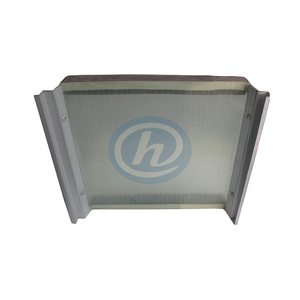
Gel-coated UV-stabilized translucent roofing panels custom profiled to match corrugated and trapezoidal steel roof profiles with superior light transmission.
Roof ridge capping represents the most critical nexus in the building envelope, enduring peak differential pressure, wind-driven torrential rains, and concentrated solar radiation. As an OEM manufacturer and direct-to-site exporter to Australia, our structural roll-formed ridge caps are engineered around the rigorous mandates of AS 1562.1:2018 (Design and installation of sheet roof and wall cladding) and AS 1397:2021 (Continuous hot-dip metallic coated steel sheet and strip). Importing building envelope components into Brisbane, Sydney, Melbourne, Adelaide, or Perth requires unwavering precision in Base Metal Thickness (BMT), zinc-aluminum alloy mass, and coating integrity.
Unlike standard domestic trim fabrications, our architectural and commercial ridge caps utilize cold-rolled G300 to G550 high-tensile structural steel substrates. Under high-velocity cyclic loading—tested in accordance with AS 4040.1 and AS 4040.3 for resistance to wind pressures—our three-break roll top, soft-edge flanged, and custom-notched ridge cappings maintain physical seam interlock without catastrophic fatigue failure. Our continuous multi-station roll-forming lines integrate computerized shear tooling to ensure uniform longitudinal straightness within 0.5mm across 8-meter spans, eliminating edge camber and on-site distortion during fastener torquing.
Formed from continuous hot-dip 55% Aluminum-Zinc alloy coated steel (AZ150 and AZ200 grades) delivering superior galvanic cut-edge sacrificial protection compared to commercial electro-galvanized sheeting.
Engineered to mitigate windward vortex separation and leeward suction forces defined under AS/NZS 1170.2:2021, preventing fastener pull-out and flange flapping across diverse terrain categories.
Coated with super-durable silicon-modified polyester (SMP) or polyvinylidene fluoride (PVDF) formulated to achieve delta-E < 0.5 against Australian standards (Surfmist®, Monument®, Woodland Grey®, Deep Ocean®).
Australia hosts some of the harshest microclimates globally. Our ridge capping profiles are customized to address regional cyclonic actions, severe coastal corrosion zones, and strict bushfire defense regulations.
Projects located north of the 25th parallel experience extreme tropical cyclonic uplift forces. We supply reinforced 0.55mm BMT and 0.75mm BMT heavy-flange ridge cappings pre-punched for heavy-duty neoprene cyclone washers and high-tensile Class 4 fasteners. The edge geometry incorporates stiffening breaks to resist tearing under localized gust factors (Cpe up to -2.0) without requiring external batten straps.
Within 1 km of breaking surf along coastal Newcastle, Wollongong, the Sunshine Coast, or Fremantle, wind-borne ocean salts cause accelerated degradation of standard trim. For these regions, we supply AZ200 metallic coating paired with a 200-micron high-build plastisol or multi-layer barrier PVDF coating system. The profile ends are pre-notched to eliminate cut-edge exposure, preventing unwashed crevice corrosion under AS 4312.
Under Australian bushfire design regulations, the apex of profiled steel roof sheets must prevent ember ingress. Our precision-scribed ridge caps and soft-edge lead-free aluminum apron flashings conform strictly to AS 3959:2018 clauses. When paired with non-combustible mineral wool inserts or stainless steel ember mesh (aperture ≤ 2mm), our capping creates a continuous seal against radiant heat flux exceeding 40 kW/m².
For modern e-commerce distribution warehouses in Western Sydney and outer Melbourne featuring spans exceeding 60 meters, roof expansion and thermal movement are substantial. We manufacture continuous two-piece articulated expansion ridge systems that accommodate thermal elongation of continuous roof runs up to 100 meters while preserving weather-tightness during violent hailstorms.
Poultry sheds and dairy complexes throughout regional Victoria and New South Wales produce high concentrations of atmospheric ammonia coupled with high humidity. Our ridge capping lines are available with dual-sided protective primer-wash coatings and integrated louvered ridge vents, maximizing natural convection ventilation and mitigating internal condensation droppage.
Modern residential and commercial offices specify clean lines without visible external screws. We produce narrow-profile standing seam ridge cappings and hidden-clip vented ridge caps in G300 high-formability steel, delivering an immaculate shadow-line finish compatible with custom tray and clip-lock roof profiles.
Review comprehensive dimensional, structural, and performance metrics across our primary export-grade ridge flashing solutions designed for Australian commercial roofing contractors.
| Profile Designation | Material Substrate | BMT Range (mm) | Wind Terrain Rating | Marine Suitability | Corrosion Protection | Australian Compliance |
|---|---|---|---|---|---|---|
| Standard 3-Break Roll Top | G550 Structural Steel | 0.42 / 0.48 / 0.55 | Region A & B (Terrain 2-3) | C1 to C3 Category | AZ150 + SMP Coating | AS 1562.1 / AS 1397 |
| Heavy Flanged Cyclonic Ridge | G550 Structural Steel | 0.55 / 0.75 | Region C & D (Cyclonic) | C3 to C4 Category | AZ200 + Multi-Coat PVDF | AS/NZS 1170.2 Tested |
| Soft-Edge Lead-Free Apron | G300 Formable Steel + Alu | 0.48 + 0.60 Apron | Region A, B, C | C2 to C4 Category | AZ150 + Polyurethane | AS 3959 BAL-Compliant |
| Continuously Vented Ridge System | G450 Micro-Perforated Steel | 0.55 | Region A & B | C2 to C3 Category | AZ150 / Z275 Galvanized | NCC 2022 Part F8 |
| Concealed-Clip Architectural Ridge | G300 Architectural Steel | 0.55 / 0.70 | Region A & B (Low-Pitch) | C3 to C5 (Optional) | AZ200 + Fluoropolymer | AS 1562.1 Class Compliant |
The Australian roofing and cladding market is undergoing structural shifts governed by the National Construction Code (NCC 2022), thermal bridging standards, and environmental transparency.
Recent overhauls to the National Construction Code mandate strict condensation control in commercial and residential roof spaces across Australian climate zones 4 through 8. Unventilated sealed ridges are being widely phased out in favor of active, baffled, roll-formed ridge vents that provide continuous air exhaustion at the ridge apex while preventing rain ingress under high wind pressures.
Australian structural building certifiers increasingly reject imported steel flashings that quote Total Coated Thickness (TCT) rather than Base Metal Thickness (BMT). We provide full traceability with verified BMT laser caliper verification and certified Mill Test Certificates (MTC) proving that a specified 0.48mm BMT is purely structural substrate, exclusive of metallic alloy and paint coat layers.
With Green Building Council of Australia (GBCA) requirements expanding across industrial developments, tier-one contractors demand Environmental Product Declarations (EPDs). Our automated roll-forming and coil-coating processes utilize closed-loop heat recovery systems and sustainably processed scrap, facilitating maximum Green Star material credits for major Australian builds.
Combining decades of dedicated envelope engineering with state-of-the-art production infrastructure. We bridge the gap between factory direct economics and Australian engineering rigour.
Our facility houses 14 automated roll-forming lines and CNC folding centers capable of forming 100,000 lineal meters of ridge capping, apron flashing, and barge profiles monthly. Computerized in-line punching allows custom fastener slots and profile scribing to match customer-specific roofing corrugated or trapezoidal geometries.
Every steel coil undergoes rigorous laboratory inspection prior to slitting: magnetic thickness validation, T-bend flexibility tests (0T-2T without micro-cracking), MEK solvent rub resistance (100+ double rubs), and cross-hatch adhesion verification. Our test facilities verify adherence to both ISO 9001 and Australian building codes.
To prevent "white rust" (wet storage stain) during humid ocean transit from Chinese ports to Australian harbors, every bundle is interleaved with micro-perforated anti-scratch film, encased in heavy-gauge VCI rust-inhibiting plastic wrap, and mounted on heavy-duty steel channel skids designed for rapid forklift unloading.
Our dedicated bilingual structural engineering department collaborates directly with Australian project estimators and detailers. We review architectural elevations, convert roof schedules to exact production piece lists, and supply comprehensive installation schematics to minimize site waste.
By eliminating domestic intermediary margins and multi-tier wholesale markups, Australian developers and roofing contractors achieve substantial procurement savings while receiving certified primary-grade steel manufactured to exact Australian metric standards.
We maintain long-term agreements with global shipping lines offering direct sailings from Ningbo, Shanghai, and Qingdao to Port of Melbourne, Port Botany (Sydney), Port of Brisbane, and Fremantle (Perth), with typical ocean transit times spanning 14 to 22 days.
Direct, transparent answers regarding certification verification, port customs, Colorbond compatibility, and testing procedures for Australian estimators, engineers, and builders.
Every production run includes certified Mill Test Certificates (MTC) stating the chemical composition, yield strength (e.g., G550 ≥ 550 MPa), Base Metal Thickness (BMT), and metallic coating class (e.g., AZ150 or AZ200). Furthermore, we routinely conduct third-party metallurgical and cross-hatch testing correlated with NATA-accredited laboratory procedures to verify performance under Australian statutory frameworks.
Yes. We utilize computerized spectrophotometers to match the full classic and contemporary Australian architectural palette—including Surfmist®, Monument®, Basalt®, Woodland Grey®, Paperbark®, and Deep Ocean®. Our super-durable SMP and PVDF fluoropolymer paint systems are calibrated to achieve a Delta E value of less than 0.5, ensuring seamless visual integration with domestic roofing sheets.
Australian standard AS 1562.1 specifies steel thickness strictly by BMT (the raw steel core before coating). For Australian exports, we always engineer and invoice according to structural BMT. For example, our 0.48mm BMT ridge cap possesses a final TCT of approximately 0.53mm to 0.55mm once the AZ150 alloy and multi-layer primer and paint finishes are applied, preventing compliance disputes on site.
Typical production turnaround for custom roll-formed ridge caps and integrated flashing components is 10 to 14 working days from approved shop drawings. Ocean transit from major Chinese loading ports to Port Botany (Sydney) or Port of Melbourne averages 14–18 days, with Brisbane taking approximately 12–16 days and Fremantle taking 16–20 days. Complete FOB or CIF delivery schedules are coordinated smoothly.
Ocean transit through tropical equatorial zones creates high container condensation risk. We mitigate this through continuous hydrophobic dry lubricants, protective plastic interleaving between profile faces, heavy-duty desiccant packages placed inside every wrapped bundle, and hermetically sealed VCI barrier plastic. Furthermore, timber packaging is fully ISPM-15 compliant and fumigated for Australian Biosecurity (DAFF).
Yes. We supply CNC-scribed soft-edge and roll-top ridge cappings tailored precisely to both Corrugated (Custom Orb style 76mm pitch) and Trapezoidal profiles (Trimdek style 250mm pitch). This factory pre-scribing accelerates installation time by up to 40% on site, avoiding messy manual hand-snip adjustments and maintaining clean aesthetic lines.
For standard export profiles utilizing our regular inventory of Australian-compatible steel coils (such as Surfmist and Monument), the MOQ is as accessible as 300 lineal meters. For bespoke non-standard color runs or specialized architectural widths, our MOQ is typically 1,000 lineal meters or one consolidated 20GP shipping container.
Absolutely. Many Australian contractors prefer full building envelope consolidation to minimize logistics overhead. We pack custom ridge cappings, Z & C structural purlins, insulated sandwich panels, translucent skylight sheets, and Class 4 roof fasteners within single 40HQ containers, optimized for simple sequence-of-construction site unloading.
Collaborate directly with our technical production team. We offer project takeoff calculations, customized BMT structural proposals, and express sample swatches delivered anywhere in Australia.