English | العربية

China Wholesale Metal Siding Panels Factories & Supplier for the Canada Market

Engineered for extreme sub-zero thermal envelopes, high snow load ratings, and Canadian National Building Code (NBC 2020) compliance across Ontario, Quebec, Alberta, and British Columbia.

Factory-Direct Architecture Catalog

Heavy-Duty Exterior Siding, Insulated Panels & Structural Assemblies

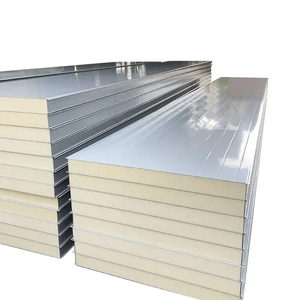
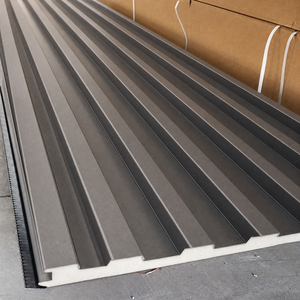
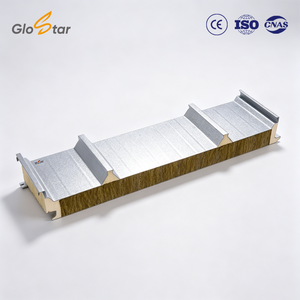
Precision-machined continuous polyurethane (PUR), polyisocyanurate (PIR), and high-density non-combustible rock wool core assemblies designed for harsh Canadian freeze-thaw cycles, industrial logistics facilities, high-rise composite construction, and commercial refrigeration.

R-42+
Continuous Insulation Envelope Rating
CAN/ULC
S101, S102 & S134 Fire Compliance Tested
-50°C to +40°C
Thermal Cyclic Fatigue Certified
100%
Direct Factory Ocean Breakbulk to Vancouver / Montreal
Climatic Engineering & NBC 2020 Compliance

Canadian Regional Climatic Demands on Metal Siding Systems

Designing metal exterior cladding for Canadian architecture requires managing harsh sub-zero thermal extremes, intense freeze-thaw degradation, wind-driven moisture penetration, and strict combustibility regulations mandated by the National Building Code of Canada (NBC 2020).

❄

Prairie & Northern Zones: Extreme Freeze-Thaw Resilience

In regions such as Alberta, Saskatchewan, and Manitoba, exterior wall systems regularly oscillate between -40°C in winter and +35°C in summer. Low-quality metal siding systems suffer from delamination when moisture penetrates microscopic skin fissures. Our continuous auto-injected PIR and PUR sandwich panels utilize structural polymeric adhesive films and high-density foam (40–42 kg/m³) that resist shear stress under heavy cyclic thermal expansion and contraction.

Zero structural bond failure under ASTM C273 cyclic shear tests.
☔

Coastal Pacific (BC) & Atlantic: Rainscreen Cavity & Salt Spray

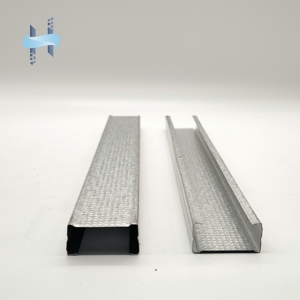
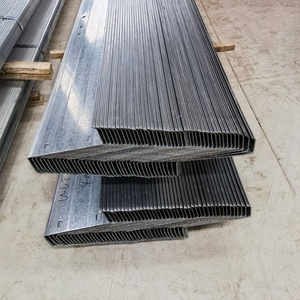
Vancouver and Atlantic maritime provinces require dual-barrier rainscreen assemblies with continuous pressure-equalized air cavities. By pairing our corrosion-resistant PVDF (fluorocarbon) pre-painted galvalume skins (AZ150) with cold-formed galvanized suspended ceiling battens and framing profiles, architects establish an uninterrupted capillary break that drains moisture while preventing salt-fog atmospheric corrosion.

1,500+ Hour Salt Spray Resistance conforming to ASTM B117 standards.
🏗

Commercial & High-Density Urban Centers: Fire Safety (CAN/ULC)

Ontario and Quebec multi-story commercial facilities demand strict compliance with CAN/ULC-S134 (Fire Test of Exterior Wall Assemblies) and CAN/ULC-S101. Our non-combustible structural Rockwool sandwich siding panels provide up to 120 minutes of fire integrity without the emission of toxic smoke or flaming droplets, making them an ideal specification for high-occupancy public transit hubs, data centers, and multi-family envelopes.

Class A1 Non-combustible mineral wool core with flame spread index ≤ 15.
Core Insulation Type Thermal Conductivity (λ) Canadian Effective R-Value (per inch) Fire Behaviour Rating Primary Canadian Structural Use Case
Continuous PIR (Polyisocyanurate) 0.020 - 0.022 W/m·K R-7.2 to R-8.0 CAN/ULC-S102 Flame ≤ 25, Smoke ≤ 250 Cold storage, logistics warehouses, thermal envelope retrofits
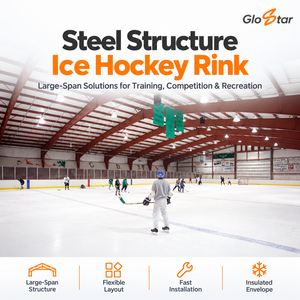
Structural Rock Wool (Mineral Fiber) 0.038 - 0.042 W/m·K R-4.0 to R-4.2 CAN/ULC-S114 / Non-combustible (2-Hr Fire Wall) Industrial processing, ice rinks, schools, high-density residential
High-Density PUR (Polyurethane) 0.022 - 0.024 W/m·K R-6.8 to R-7.2 DIN 4102 B1 / Self-extinguishing Agricultural sheds, modular housing, commercial facades
Galvalume Steel Skin (AZ150 / G90) N/A (Structural Protective Facing) Thermal bridge control via concealed fixings Zero surface flame propagation (Class 1) Extreme exterior exposure, heavy snow shed roofing & siding
Industry Strategic Evolution

Key Building Envelope Trends Across Canadian Provinces

The Canadian construction landscape is moving away from labor-intensive site-built stud-and-batt assemblies toward high-speed, modular, factory-insulated metal systems that support Net-Zero performance goals.

Enterprise Manufacturing Scale

State-of-the-Art Production & Engineering Control

Combining multi-stage coil profiling lines, continuous PIR/Rockwool sandwich laminators, and certified cold-formed steel manufacturing to meet tight project specifications worldwide.

⚙

Continuous High-Speed Automated Double-Belt Laminators

Our heavy-duty double-belt continuous laminators cure insulated cores under precise temperature and pressure profiles. This ensures consistent foam density across the entire panel run, tight thickness tolerances (±0.5mm), and stable panel flatness that prevents oil-canning on long architectural spans.

Production capacity exceeding 1,200,000 square meters annually.
🛡

Premium Coil Formulations: PVDF, SMP & HDP Coatings

We source structural galvanized (G90 / Z275) and Galvalume (AZ150) coils from top-tier primary mills. Applied with Kynar 500 / 70% PVDF finishes, these surfaces deliver high UV resistance that prevents chalking and fading across decades of harsh Canadian sun and snow reflection.

Backed by a 25-to-30-year marine and commercial exterior warranty.
📝

Integrated Secondary Steel & Building Envelope Bundling

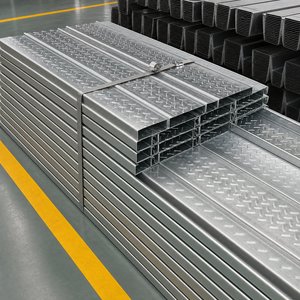
Rather than working with separate vendors for secondary structural steel and envelope panels, contractors can bundle complete systems: wall siding, PVR1000 standing seam roofs, high-strength Z-purlins, composite floor decking, and flashings, all packed in custom open-top sea containers.

Direct multi-product shipping cuts ocean freight costs by 15–22%.
Canadian Importer Knowledge Center

Frequently Asked Questions by Canadian General Contractors & Buyers

Answers to common technical, logistics, customs, and regulatory questions regarding importing building envelope materials into Canada.

How do your Chinese manufacturing specifications compare to Canadian CSA and ASTM standards? +

Our export lines comply directly with North American ASTM and Canadian standards. Structural cold-formed steel profiles (Z-purlins, battens, decking) match ASTM A653 / CSA S136 structural steel design standards with yields from Grade 50 (345 MPa) to Grade 80 (550 MPa). Thermal performance tests follow ASTM C518 (thermal transmission properties) and ASTM C273. Fire ratings are verified to ASTM E84 / CAN/ULC-S102 (flame spread index ≤ 25, smoke index ≤ 250) and CAN/ULC-S101 fire endurance protocols. Full Mill Test Certificates (MTC) and lab test reports are supplied prior to shipment.

What are the logistics routes, ocean freight timelines, and CBSA documentation for Canadian ports? +

We routinely ship to major Canadian ports including Port of Vancouver (Prince Rupert / Fraser Surrey Docks) for Western Canada distribution (BC, Alberta, Saskatchewan), and Port of Montreal or Port of Halifax for Ontario and Quebec destinations. Average transit time from our factory to West Coast ports is 16–22 days, and 30–38 days to East Coast ports. We provide complete Canada Border Services Agency (CBSA) customs documentation, including Canada Customs Invoices (CCI), certified Bills of Lading, HS Tariff Classification codes (e.g., Chapter 7308.90 for structural steel fabrications), and Certificate of Origin documents.

How are panels protected against moisture intrusion, rust, and surface marring during long-distance ocean shipping? +

Ocean freight crosses diverse marine humidity belts where interior condensation can damage panels. Every panel surface is covered with a UV-stable peelable PE protective film. Panels are stacked with reinforced protective corners, wrapped in heavy polyethylene moisture-barrier sheeting, and secured on fumigated hardwood or steel skids. Stacking is engineered to match ISO 40-foot HQ containers or flat-rack configurations, preventing edge denting and transit abrasions during port crane operations.

Can you support custom panel profiles, hidden fastener designs, and architectural color matching (RAL/Pantone)? +

Yes. We offer both OEM and ODM custom production. Our roll-forming lines feature adjustable cassettes capable of producing concealed-fastener tongue-and-groove profiles, micro-ribbed textures, corrugated architectural siding, and shadow-line joints. Our paint lines use computerized spectral analysis to match architectural RAL, Pantone, or customer-provided physical color samples in PVDF, SMP, or high-durability polyester finishes.

How do you support structural calculations, BIM modeling, and architectural shop drawings for local permits? +

Our in-house engineering team provides complete envelope support. We supply detailed product cut-sheets, panel span-versus-load engineering tables (wind uplift, live snow loads, dead loads), connection detail schematics (eaves, corners, parapets, door/window flashing integrations), and CAD/Revit BIM families. These can be stamped by your local Canadian P.Eng (Professional Engineer) for municipal building department approvals.

Request a Project Proposal & Technical Take-Off

Consult with our structural envelope specialists. We provide detailed load-span engineering calculations, thermal R-value cross-sections, and landed container freight quotes directly to Vancouver, Calgary, Toronto, or Montreal.

Send an Inquiry