
Direct factory-manufactured corrugated, standing seam, cold-formed sub-structural purlins, and continuous sandwich envelope solutions conforming to ASTM, BS EN, and Indian Standards (IS 277 / IS 15965 / IS 14246).
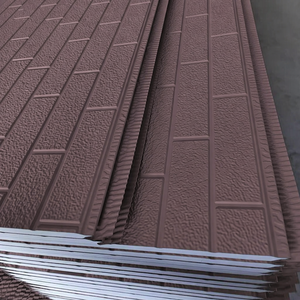
Closed-cell high-density expanded polystyrene insulated composite panels designed for fast-track clean rooms, modular site accommodation, and lightweight thermal facades.
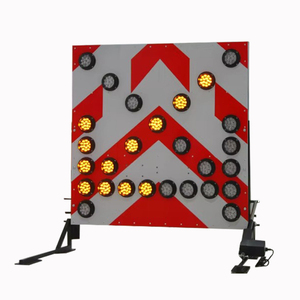
High-visibility truck-mounted and perimeter traffic safety management signaling display system engineered for major industrial PEB plant sites, mining, and highway corridors.
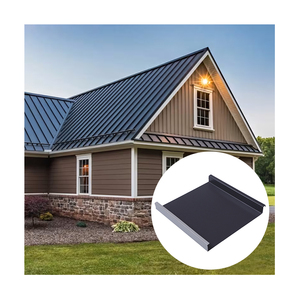
Continuous mechanically seamed non-penetrating profile panels manufactured from AA3004/3005 aluminum alloy for expansive airport terminals, rail depots, and coastal roofs.
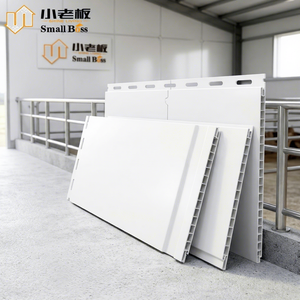
Heavy-gauge rigid polymer interlocking hygienic cladding engineered for food processing, agro-chemical chemical fertilizer sheds, marine cold logistics, and wash-down bays.
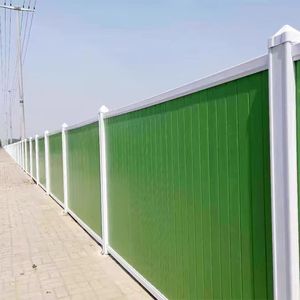
Heavy-duty color-coated composite sound-damping panels for urban metro line construction, highway transit perimeters, mining screening, and plant yard noise attenuation.
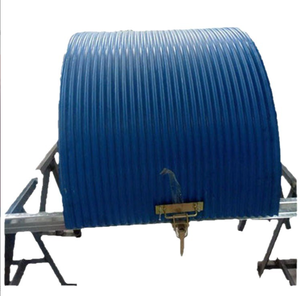
Precision crimp-curved and roll-profiled color-coated steel sheeting configured for arch canopy structures, cantilever spans, grain silos, and column-free bulk storage sheds.
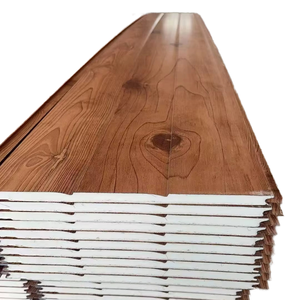
Rigid polyisocyanurate and polyurethane continuous core panels delivering unmatched cryogenic and chill insulation, airtight labyrinth cam-locks, and Euroclass B-s1,d0 fire behavior.
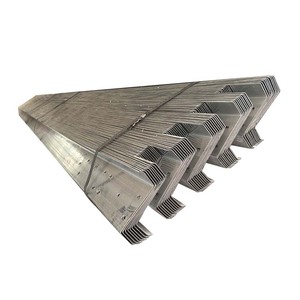
Precision CNC pre-punched secondary structural steel framing profiles roll-formed from AS/NZS 4600 and IS 277 galvanized coils to eliminate on-site welding and speed up erection.
Navigating structural metallurgy, international standard harmonizations, and total cost of ownership across Pre-Engineered Building (PEB) programs and multi-modal logistics networks.
In the contemporary Indian industrial infrastructure sector, the historic reliance on low-gauge, traditional galvanized iron (GI) sheeting with standard zinc coatings (Z80–Z120) has undergone a definitive technical obsolescence. Under the pressure of high cyclical monsoon deluges, intensive solar radiation, and pervasive humidity across the Indian peninsular coastline, asset owners, EPC contractors, and structural consultants now mandate 55% Aluminum-Zinc alloy coated steel (PPGL / Aluzinc conforming to IS 15965 / ASTM A792).
As global exporters servicing India's prime shipping lanes through major container terminals—including Nhava Sheva (JNPT), Mundra, Chennai, and Cochin—we provide engineered profile solutions that address the specific failure modes of tropical industrial envelopes: edge creep corrosion, thermal oil canning, and micro-cracking at rib bend radiuses. By utilizing continuous cold-rolling lines with precision automated roll-forming stations, our profiles preserve the microscopic barrier integrity of protective paint coats (PVDF, SDP, and SMP) across every roll-formed crest and capillary groove.
| Substrate Classification | Indian Standard | American Standard | European Equivalent | Yield Strength (MPa) | Coating Weight Mass | Atmospheric Class |
|---|---|---|---|---|---|---|
| Pre-Painted Galvalume (PPGL) | IS 15965 / IS 16965 | ASTM A792 / A755 | EN 10346 - DX51D+AZ | G300 / G550 | AZ70 to AZ150 g/m² | C3 - C5 Industrial / Marine |
| Pre-Painted Galvanized (PPGI) | IS 277 / IS 14246 | ASTM A653 / A755M | EN 10169 / S350GD+Z | G250 / G350 / G550 | Z120 to Z275 g/m² | C1 - C3 Inland / Low Saline |
| Al-Mg-Mn Alloy (Standing Seam) | IS 737 (Grade 31000) | ASTM B209 (AA3004) | EN 573-3 (EN AW-3004) | H14 / H18 (≥ 185 MPa) | Homogeneous Alloy | C5-M Severe Coastal & Marine |
| Continuous Insulated PIR Core | IS 12436 / IS 14164 | ASTM C1289 Type I | EN 14509:2013 | Composite Sandwich | 40 - 42 kg/m³ Core | Cleanroom / Cold Chain |
Engineered sheet profiles and envelope specifications tailored for the micro-climates of Indian industrial belts, from hyper-saline coasts to severe monsoon zones.
Operating environments like Gujarat's Kandla/Mundra ports, Mumbai's Nhava Sheva cluster, Chennai harbor, and Visakhapatnam experience severe salt spray, aerosol salinity, and 90%+ relative humidity. These areas require AZ150 Galvalume with Kynar 500 PVDF (70/30) coatings, offering 1,000+ hours of ASTM B117 salt-spray resistance to prevent catastrophic cut-edge galvanic blistering.
Regions along the Western Ghats (Maharashtra, Goa, Kerala), Assam, and cyclone-prone coastlines of Odisha face extreme rainfall intensities exceeding 150 mm/hour. Our deep trapezoidal profiles (32–38 mm crests) with integrated anti-siphoning capillary relief grooves prevent reverse water ingress under dynamic gale winds, while non-penetrating standing seam profiles eliminate roof puncture leaks.
Rapid development of mega-warehousing corridors around Bhiwandi, Chakan (Pune), NCR-Faridabad, and Oragadam (Tamil Nadu) demands superior thermal efficiency. Continuous PIR-cored composite panels (λ = 0.020 W/m·K) dramatically reduce chiller HVAC operating loads, eliminating internal ceiling condensation and structural thermal bridges in pharmaceutical and FMCG facilities.
Chemical processing centers in Dahej and Ankleshwar, dye houses in Tirupur, and foundry hubs in Durgapur generate airborne sulfurous, chlorine, and acidic vapors. These environments quickly degrade zinc-rich surfaces. We supply specialized PVDF fluorocarbon barriers and interlocking thermoplastic PVC panels that remain chemically inert against corrosive industrial exhaust fumes.
How national infrastructure initiatives, energy transition goals, and advanced metallurgical science are redefining metal envelope specifications.
Driven by the Ministry of New and Renewable Energy (MNRE) goals and industrial green tariffs, commercial roofing must now support 25-year rooftop solar arrays. This requirement is accelerating the adoption of high-seam standing seam profiles (65 mm crests). Structural clamps fasten directly onto vertical seams without puncturing the weather-skin, preserving water tightness and honoring 20-year structural warranty terms.
With summer temperatures across central and northern India routinely surpassing 45°C, architects are enforcing strict Solar Reflectance Index (SRI ≥ 78) values under the Energy Conservation Building Code (ECBC) and IGBC Green Building standards. Specialized infrared-reflective pigment coatings reduce internal roof ambient skin temperatures by 12°C to 18°C, generating substantial cooling energy savings.
EPC contractors are transitioning away from sourcing structural secondary framing and roof sheeting from disparate suppliers. Procuring CNC-punched, cold-formed C/Z purlins (S350GD/G450 high tensile) together with profiled roof and deck sheets ensures aligned thermal movement tolerances, coordinated delivery staging, and zero on-site hot-work or welding.
Our technical team provides customized wind uplift calculations, purlin span analyses (IS 875 Part 3), thermal modeling, and full material test certificates (MTC) for all exports across India and GCC territories.
Headquartered with automated continuous production lines in Barka, Paneltech International LLC provides factory-direct export reliability, rigorous QA verification, and end-to-end building envelope packages.
Continuous high-speed roll forming lines, continuous foaming polyisocyanurate (PIR) and mineral rockwool panel plants, and cold-formed C/Z purlin mills provide absolute control over gauge tolerances, mechanical yield, and export delivery schedules.
Every master coil undergoes incoming spectral coating mass checks, T-bend elasticity evaluation (0T–2T), cross-hatch paint adhesion (ASTM D3359), and MEK solvent rubbing tests. Full Mill Test Certificates (EN 10204 3.1) accompany every shipping container.
Direct packaging and containerization expertise using heavy-duty timber dunnage, protective peelable poly films, desiccant saturation controls, and waterproof barrier covers ensure zero transit scratching, edge bruising, or white rust formation.
We equip consultants and structural engineers with full calculations: purlin deflection limits (L/180 to L/240), thermal U-values, wind uplift assessments under IS 875 (Part 3), composite slab deck shears, and CAD detailing for architectural trims and flashings.
A small selection of landmark commercial, banking, civil infrastructure, and industrial developments executed with our high-durability roofing and wall envelope solutions.
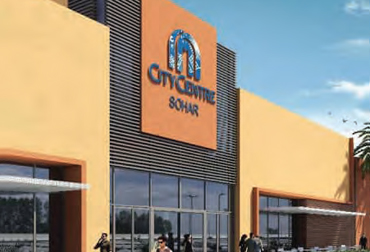
Extensive architectural roof sheeting, matched custom perimeter flashings, and structural composite metal decking installed to stringent commercial design tolerances.
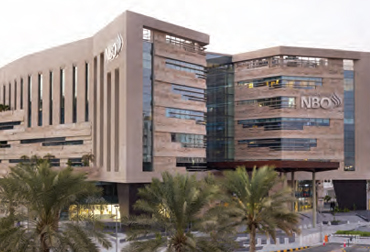
Precision structural roof deck profiles and acoustic insulation systems tailored for heavy acoustic-rated floor assemblies and rooftop HVAC equipment platforms.
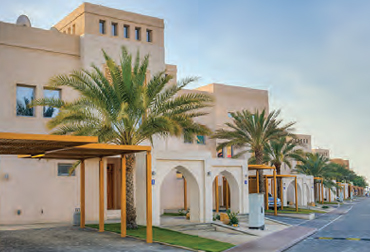
Pre-painted architectural roof panels featuring premium high-durability coatings designed to resist salt-laden maritime winds with minimal maintenance requirements.
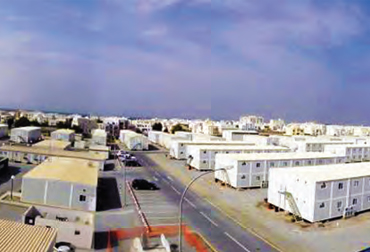
High-volume insulated sandwich wall and roofing panels installed on fast-track schedules to deliver comfortable indoor living environments under intense ambient heat.
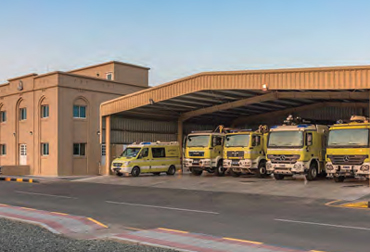
Heavy-gauge industrial corrugated profile sheeting, secondary structural Z purlins, and secure perimeter building envelope systems engineered to strict civil specifications.
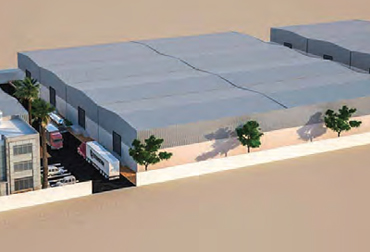
Turnkey supply of industrial warehouse roofing, matching translucent daylight polycarbonate panels, and heavy-duty structural floor decking for heavy machinery fabrication workshops.
Practical, definitive answers to help EPC contractors, design consultants, and procurement managers verify specifications and streamline cross-border orders.
IS 277 defines traditional galvanized iron (GI) sheeting protected by a pure zinc coating (e.g., Z120, Z275). While zinc provides sacrificial galvanic protection, it dissolves rapidly in hot, humid, and saline environments such as coastal Gujarat, Mumbai, and Chennai. IS 15965 specifies continuous 55% Aluminum-Zinc alloy coated steel (Galvalume / Aluzinc). The aluminum acts as an inert physical barrier against acid rain and oxidation, while the zinc prevents cut-edge rust. An AZ150 Galvalume coating typically delivers 3 to 4 times the service lifespan of a Z275 galvanized sheet under identical C3/C4 exposure conditions.
Under-gauging remains a major quality challenge in the metal sheeting trade. We operate in strict adherence to Total Coated Thickness (TCT) or Base Metal Thickness (BMT) specifications as defined in purchase contracts. Every export coil undergoes automated continuous electromagnetic thickness measurement along with micrometer edge testing. Dual-sided coating mass is verified using the gravimetric triple-spot weigh-strip-weigh test per ASTM A792 / IS 15965. Certified 3.1 Mill Test Certificates (MTC) detailing physical chemical analyses accompany every container shipment.
Importing corrugated metal coils or roll-formed sheets into India requires compliance with Bureau of Indian Standards (BIS) Quality Control Orders (QCO) for steel products. Shipments require commercial invoices containing standardized Harmonized System (HS) Codes (typically HS 7210 / 7225), detailed packing lists with coil/bundle serial IDs, Certificate of Origin (COO), and mill test reports confirming mechanical parameters (Yield, Tensile, Elongation) and coating masses under applicable standards (IS 15965 or IS 277). We coordinate directly with customer clearance forwarding agents at Nhava Sheva (JNPT), Mundra, Chennai, and other major ports.
Ocean transit across the Arabian Sea or Bay of Bengal exposes steel packs to temperature cycles that generate interior condensation, leading to white rust (zinc hydroxide) if unprotected. We apply dry-film or light anti-corrosion oils combined with hexavalent-chromium-free passivation. Sheets are packed on sturdy wooden dunnage with heavy kraft paper vapor barriers, plastic shrink wraps, high-absorption desiccant packs, and perimeter corner angle protectors strapped with high-tensile steel bands. These precautions ensure rust-free arrival even during seasonal monsoon crossings.
Under Indian Standard IS 875 (Part 3), basic design wind speeds in cyclonic regions (such as coastal Odisha, Andhra Pradesh, and parts of Gujarat) range from 44 m/s to 50 m/s, with localized cyclonic factors (k4) driving design wind uplift pressures beyond 2.0 to 2.5 kPa. For these high-load scenarios, we engineer trapezoidal profiles using G550 high-tensile base steel (550 MPa yield). Our engineering department supplies specific span-to-deflection limit tables (typically L/180 for roof loads and L/150 for purlin girts) to establish precise structural fixing and fastener layouts.
Yes. Sourcing a complete building envelope from an integrated single manufacturer is one of our primary operating strengths. We coordinate profile-matched corrugated metal sheets, PIR or Rockwool composite insulated panels, CNC pre-punched C & Z structural purlins, matching high-impact translucent polycarbonate daylighting panels, custom-folded trim flashings, and structural fasteners into unified container shipments. This consolidation prevents job-site profile mismatch issues, aligns paint dye-lots, and simplifies freight logistics.