
Precision roll-formed, pre-painted (PPGI/PPGL), and insulated curved metal roofing systems manufactured under rigorous ISO 9001:2015 controls, engineered for swift seaborne delivery to Brazilian terminal ports.
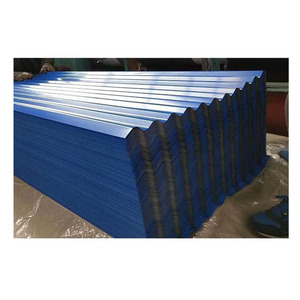
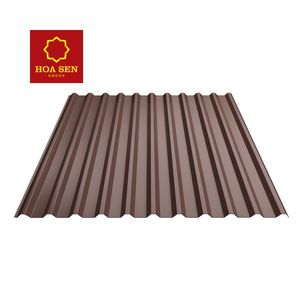
An exhaustive technical evaluation for Brazilian structural engineers (Engenheiros Calculistas), EPC contractors, and steel framing fabricators seeking factory-direct curved metal roofing with guaranteed mechanical performance.
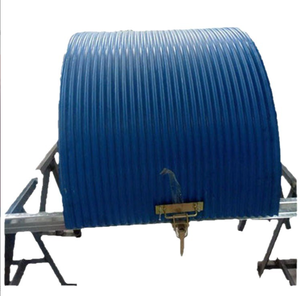
Across the Federative Republic of Brazil, the demand for clear-span, aesthetic, and aerodynamically stable structural envelopes has accelerated significantly. Driven by investments in the New Growth Acceleration Program (Novo PAC), the unprecedented logistical expansion of agribusiness grain corridors across Mato Grosso and Goiás, and the modernization of coastal export terminals from the Port of Santos to Suape and Paranaguá, structural designers are increasingly rejecting traditional multi-pitch gabled roofs in favor of curved metal roofing architectures (telhas metálicas calandradas e arqueadas).
Curved metal roofing offers distinct engineering advantages in tropical and sub-tropical environments: superior aerodynamic performance against turbulent frontal gusts under ABNT NBR 6123 (Forças devidas ao vento em edificações), rapid elimination of torrential stormwater runoff, reduction of structural dead weight, and the total omission of problematic ridge caps (cumeeiras) that frequently cause chronic water infiltration during high-volume convective cloudbursts. However, procuring curved profiles directly from overseas manufacturing factories requires rigorous verification of metallurgy, cold-forming tolerances, anti-corrosion barrier coatings, and shipping logistics.
Matching international production protocols with Brazil's strict regulatory framework for cold-formed steel and building envelope safety.
| Technical Parameter | Brazilian Regulatory Reference | Factory Production Specification | Engineering Benefit in Local Operating Environment |
|---|---|---|---|
| Base Metal & Tolerances | ABNT NBR 14514 (Corrugated) / NBR 14513 (Trapezoidal) | Cold-rolled structural steel, base thickness 0.40mm - 1.20mm (±0.02mm) | Guaranteed yield strength, preventing oil-canning and localized buckling under heavy foot traffic. |
| Corrosion Protection | ABNT NBR 15578 / ASTM A792 (Galvalume AZM150) | Hot-dip 55% Al, 43.4% Zn, 1.6% Si alloy coating, ≥150 g/m² both sides | Triple the atmospheric lifespan of traditional hot-dip galvanized steel in coastal C3/C4 maritime sectors. |
| Organic Coating System | ABNT NBR 7397 / ASTM D3359 cross-hatch adhesion | 25μm Super Polyester (SP) or 70/30 PVDF (Kynar 500) topcoat + 5μm epoxy primer | Exceptional resistance to intense UV degradation, Chalking Class 8+, and Delta E color shift under tropical sun. |
| Wind Pressure Aerodynamics | ABNT NBR 6123 (Isopleth Wind Velocity Zones 1 to 5) | Continuous radius design: Drag coefficient $C_a$ reduced by up to 28% vs gables | Resists cyclonic wind shear up to $V_0 = 45\text{--}50\text{ m/s}$ in coastal Santa Catarina and Rio Grande do Sul. |
| Thermal Acoustic Matrix | ABNT NBR 15220 (Thermal Performance of Buildings) | Composite sandwich integration with PIR ($k = 0.022\text{ W/m}\cdot\text{K}$) or Rockwool | Maintains low overall thermal transmittance ($U$-value), lowering HVAC electrical load by up to 35%. |
A primary failure mode observed in Brazilian industrial roofs along the Santos and Paranaguá port terminals is edge-creep corrosion resulting from insufficient zinc alloy mass or micro-cracking induced by improper bending radius ratios ($R/t$). When trapezoidal sheets (such as standard Brazilian profiles TP-40 or TP-25) are subjected to transverse crimping, tensile forces on the external face can rupture low-quality primer systems. Our manufacturing facilities employ specialized automated multi-stage hydraulic crimping dies with programmable stepped feed speeds, ensuring the zinc-aluminum matrix maintains 100% cohesion across radii as tight as 500 mm.
From the high chemical aggressiveness of Center-West agricultural complexes to the humid salt spray of coastal container ports.
In mega-agricultural hubs like Sorriso, Rondonópolis, and Rio Verde, curved barrel vault roofs provide expansive internal clearance for high-capacity grain conveyor gantries without requiring obstructive internal support columns. Utilizing Galvalume AZ150 coated with chemical-resistant barrier paint shields the roof envelope from volatile ammonia and fertilizer vapor corrosion.
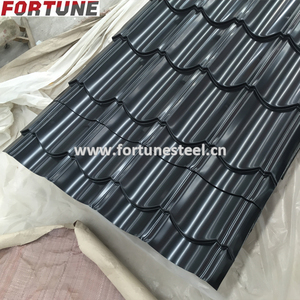
Brazil's major ocean freight terminals (Santos, Itajaí, Paranaguá, Pecém) demand building envelopes capable of enduring severe ISO 12944 C4 and C5 Marine atmospheres. Our heavy-gauge dark grey pre-painted galvalume curved sheets feature impermeable factory-applied 70% PVDF coatings that withstand constant sea salt mist, wind-driven moisture, and relentless tropical humidity.
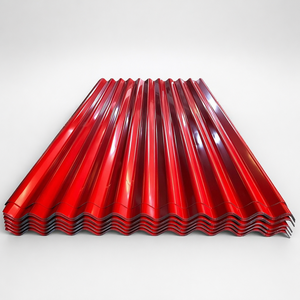
Architectural grandstands, metro passenger interchanges, and stadium canopies across São Paulo, Belo Horizonte, and Curitiba require dynamic visual curvature alongside acoustic comfort. We supply custom curved corrugated profiles in slate greys (RAL 7016) and architectural whites with high Solar Reflectance Index (SRI > 78) to mitigate urban heat island phenomena.
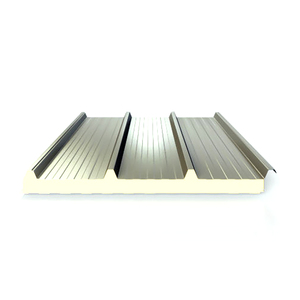
For pharmaceutical distribution centers and meat processing plants across Santa Catarina and Rio Grande do Sul, our curved insulated panels incorporate continuous high-density PIR (polyisocyanurate) foam cores, eliminating thermal bridging while complying with strict FM-approved fire safety protocols and national sanitary health requirements.
The fast-expanding Brazilian "atacarejo" (cash-and-carry wholesale) sector relies on expansive curved roofing architectures to maximize interior storage heights while minimizing structural steel consumption. Curved roll-formed metal decks enable long spans over lightweight tubular lattice trusses, substantially lowering construction expenditures per square meter.
Heavy-gauge DX51D and S320GD arched roofing panels deployed across executive airports and mining belts (Minas Gerais and Pará). The self-supporting nature of heavy curved trapezoidal systems minimizes structural framing requirements, accelerating building erection cycles by up to 40% in remote territories.
Emerging engineering shifts shaping structural metal envelope procurement across South America's largest construction market.
With Brazil surpassing 35 GW of installed solar power, curved roofs are engineered with specialized non-penetrating seam clamps to host flexible lightweight PV arrays without voiding water-tightness guarantees.
Rising demand for flanged self-supporting arch panels (telhas autoportantes) capable of spanning 20 to 32 meters without intermediate purlins, saving considerable structural tonnage in agricultural storage.
Transition from basic polyesters to High-Durability Polyesters (HDP) and PVDF containing infrared-reflective pigments, ensuring strict compliance with Brazilian Green Building Council and LEED certifications.
Adoption of custom-radius multi-layer stacking plans inside 40ft High Cube containers. High-density bundle nesting drastically curbs ocean freight costs per metric ton delivered to Santos or Vitória.
Established in 2009, our manufacturing plants integrate primary roll-forming lines, advanced crimping units, cold-formed purlins, and sandwich panel production under single-source accountability.
Equipped with specialized continuous roll-formers, automated hydraulic crimpers, and high-precision CNC slitting stations, ensuring exact dimensional tolerance and consistent rib geometry.
100% coil inspection for yield strength, zinc mass verification, paint adhesion cross-hatch testing, and digital optical radius measurements documented prior to export packaging.
Contractors can source the complete envelope from one partner: curved roof sheets, matching continuous Z & C purlins, galvanized composite metal floor decking, translucent day-lighting panels, and flashing accessories.
Reinforced timber crating, heavy-duty waterproof barrier paper, edge protectors, and specialized high-absorption desiccant bags eliminate transit condensation risks during trans-equatorial maritime shipping.
Explore demanding commercial, infrastructure, and institutional landmarks executed with our factory building envelope components.
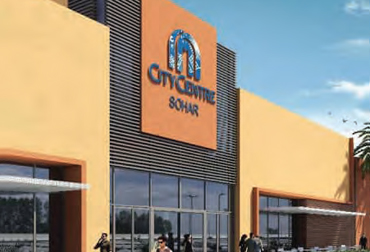
Architectural roof sheeting and insulated wall systems engineered for large-span retail and commercial developments.
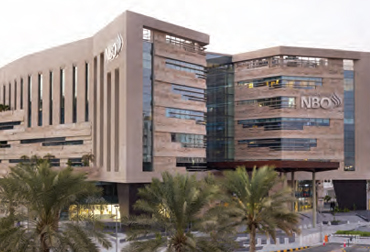
Precision profile flashing, insulated composite cladding, and premium PVDF coated metallic facade elements.
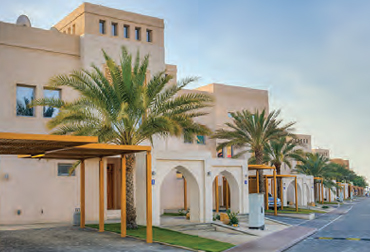
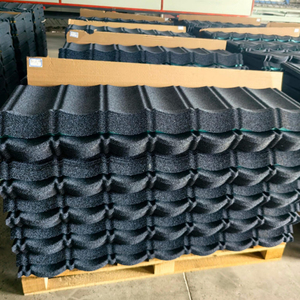
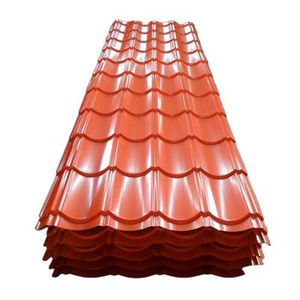
Galvalume stone-coated roofing tile applications delivering enhanced thermal performance and acoustic suppression.
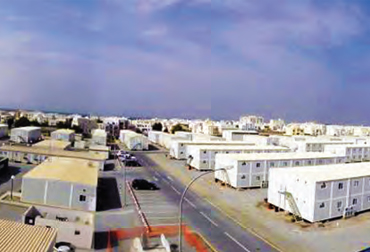
Fast-track cold-formed purlin systems paired with pre-painted galvanized roofing sheets for high-wind exposure zones.
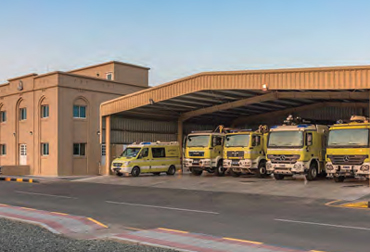
Non-combustible Rockwool core sandwich roofing panels engineered to meet rigorous defense and public security standards.
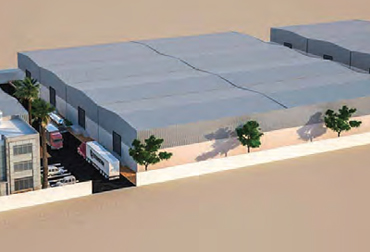
High-strength corrugated metal decking and structural purlin packages optimized for heavy gantry crane workshops.
Practical answers covering customs (Siscomex, NCM), ABNT technical compliance, shipping logistics, and structural installation in Brazil.
Our products are engineered to conform directly with ABNT NBR 14514 (corrugated sheets) and ABNT NBR 14513 (trapezoidal profiles). Base coil substrates fulfill ASTM A792 / NBR 15578 (Galvalume AZ150) or ASTM A653 / NBR 7008 (Hot-Dip Galvanized Z275). Mill Test Certificates (MTC / Certificado de Qualidade da Usina) containing full chemical ladle analysis and mechanical yield tests are provided with every bill of lading for rapid approval by Brazilian project structural auditors.
Curved metal roofing sheets and profile sections are generally classified under Mercosul Common Nomenclature (NCM) codes 7308.90.10 (estruturas e suas partes) or 7210.61.00 / 7210.70.00 depending on final processing and assembly state. Importers must have an active RADAR license on the Siscomex portal. We furnish complete commercial invoices, packing lists with net/gross weights, certificates of origin, and bill of lading (B/L) drafts compliant with Receita Federal customs requirements.
Ocean transit across the equator to Brazilian ports (Santos, Paranaguá, Vitória, Suape) exposes cargo to severe thermal cycling and moisture condensation inside shipping containers. To prevent wet-storage stain (white rust), our factory applies a dry passivation chromate/chromium-free coating followed by an electrostatic anti-scratch oil film. Bundles are wrapped in multi-layer VCI (Vapor Corrosion Inhibitor) plastic wrap with desiccants, packaged on solid timber pallets designed for forklift discharge.
For mechanical crimp curving (telhas calandradas com mossas transversais) on trapezoidal profiles like TP-40, the minimum achievable inner radius is typically $R = 500\text{ mm}$ using soft structural grades like DX51D. For smooth roll curving (calandragem contínua sem nervuras) applied to sinusoidal corrugated sheets, the typical radius starts at $R = 1,200\text{ mm}$. Our engineering team reviews roof arch coordinates ($X, Y$ chord and rise) to determine the ideal curving method and prevent sheet distortion.
Yes. In addition to primary curved and flat roof profiles, we supply custom-perforated cold-formed structural Z & C purlins (NBR 6355 compliant), galvanized composite floor decking, self-drilling carbon steel screws with EPDM vulcanized sealing washers (Class 3/4 corrosion-tested), profile-matching translucent polycarbonate daylighting panels, and customized eave gutters and flashing assemblies for a turnkey, single-source procurement process.
Continuous barrel vault arches accelerate hydraulic discharge rates compared to standard shallow-pitch gables, completely eliminating standing puddles. In humid tropical environments like Bahia, Amazonas, or coastal Rio de Janeiro, we recommend factory-bonded non-woven anti-condensation fleece on the underside of single-skin sheets, or our insulated sandwich panels (PIR core) that entirely eliminate the dew-point temperature gradient on the interior steel skin.