
Engineered for compliance with NOM-081-SEMARNAT-1994, ASTM E90, and international USMCA industrial building specifications.
A rigorous examination of sound transmission loss (TL), resonance suppression, and core material thermodynamics designed for EPC contractors and architectural specifiers.
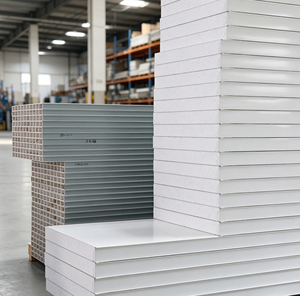
Modern industrial and commercial developments require envelopes that resolve two contradictory physical demands: high structural stiffness with minimal dead load, and superior low-to-mid-frequency acoustic dampening. Acoustic sandwich panels solve this mechanical paradox through layered composite action, utilizing continuous roll-formed outer metal facings separated by an energy-dissipating viscoelastic or fibrous core. When sound waves impact the panel surface, incident acoustic energy is transformed through three primary dissipation mechanisms: structural flexural wave reflection, viscous shear friction within the porous mineral matrix, and Helmholtz resonance across engineered micro-perforations.
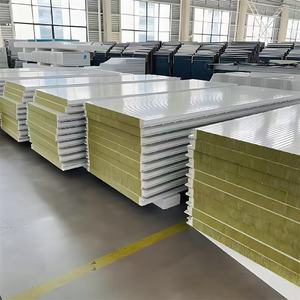
Acoustic Decoupling Law: Homogeneous single-leaf steel walls follow the mass-law curve, yielding a modest 6 dB reduction per doubling of areal mass. In contrast, our custom OEM engineered double-skin acoustic sandwich panels function as a decoupled Mass-Spring-Mass dynamic system. By decoupling the external skin from the internal facing using a high-density, multi-directional basalt fiber lattice (100–150 kg/m³), the panel suppresses resonant frequency dips across the critical 100 Hz to 3150 Hz industrial noise band, securing STC ratings up to 58 dB without excessive structural deadweight.
In standard composite panels, coincidence dip phenomena severely undermine transmission loss within the frequency range where human hearing is most sensitive (1,000 Hz to 4,000 Hz). This occurs when the bending wave velocity within the panel facings matches the airborne acoustic speed. In our OEM manufacturing protocol, this dip is systematically mitigated through three structural interventions:
1. Asymmetric Facing Thickness: By pairing an external structural steel skin (e.g., 0.6 mm Galvalume) with an internal micro-perforated or corrugated skin (e.g., 0.5 mm galvannealed steel), the coincident frequencies of the two metal leaves are mechanically staggered, eliminating harmonic resonance peaks.
2. Lamella Core Orientation: Basalt rock wool core blocks are cut into lamellas and rotated 90 degrees before bonding. This aligns the mineral fibers perpendicular to the face sheets, boosting shear modulus ($G \ge 4.5\text{ MPa}$) while preserving the tortuous acoustic pathways necessary for internal thermal-acoustic energy conversion.
3. Integrated Non-Woven Acoustic Fleece: For micro-perforated sound absorption panels, an imported SoundTex acoustic fleece (0.2 mm, air flow resistivity $R_s = 250\text{ to }350\text{ Pa}\cdot\text{s/m}$) is thermally bonded between the perforated metal facing and the mineral wool core, creating an acoustic impedance boundary that maximizes broadband absorption ($NRC \ge 0.90$).
| Performance Metric | High-Density Rock Wool | Fire-Retardant PIR Foam | Aluminum Honeycomb Core | Cleanroom PU Closed-Cell |
|---|---|---|---|---|
| Acoustic Isolation (STC / Rw) | STC 48 – 58 dB | STC 28 – 34 dB | STC 36 – 44 dB | STC 32 – 38 dB |
| Sound Absorption Coeff. (NRC) | 0.85 – 0.95 (Perforated) | 0.15 – 0.25 (Reflective) | 0.75 – 0.85 (Micro-pore) | 0.20 – 0.30 |
| Core Density | 100 – 150 kg/m³ | 40 – 45 kg/m³ | 50 – 75 kg/m³ | 38 – 42 kg/m³ |
| Fire Classification (ASTM / EN) | Class A / A1 Non-combustible | Class B1 / B-s1, d0 | Class A2 / Non-combustible | Class B2 / Self-extinguishing |
| Thermal Conductivity (λ) | 0.038 – 0.044 W/m·K | 0.020 – 0.023 W/m·K | 0.055 – 0.065 W/m·K | 0.022 – 0.025 W/m·K |
| Primary Mexican Application | Machinery Rooms, Heavy Plants | Cold Storage Logistics, Bajío | Querétaro Aerospace & Rail | Guadalajara Cleanrooms |
Tailored acoustic building envelopes serving Tier-1 automotive plants, aerospace facilities, and advanced logistics hubs.
Heavy mechanical press lines and end-of-line dyno testing chambers in Coahuila and Puebla produce severe low-frequency vibrations and airborne sound levels exceeding 105 dBA. Our custom OEM rock wool sandwich panels with interior perforated absorption skins lower reverberant build-up inside factory footprints while protecting surrounding office modules and meeting strict perimeter emissions regulations.
Precision microelectronics assembly in Jalisco requires strict acoustic control to prevent micro-vibrations from interfering with wire-bonding and optical lithography tools. Our flush-joint cleanroom sandwich panels provide an airtight, particle-free envelope (ISO 14644-1 Class 5 compliance) with acoustic absorption cores that damp noisy laminar flow fan-filter units (FFUs).
Multi-axis CNC mills and turbine assembly cells in Querétaro's aerospace clusters generate high-pitch tonal screeching. Acoustic aluminum honeycomb and lamella mineral wool wall systems absorb continuous high-frequency noise, creating compartmentalized acoustic containment cells that protect engineering personnel and preserve structural stability.
Ammonia refrigeration screw compressors and condenser units produce intense low-frequency thrumming. Our hybrid dual-core panels (PIR foam for thermal vapor seal combined with high-density rock wool for acoustic mass) provide both R-40 thermal insulation and structural acoustic barriers, preventing sound break-out into neighboring logistics centers.
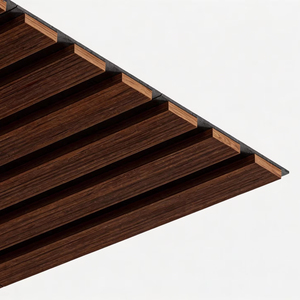
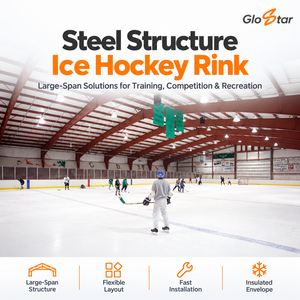
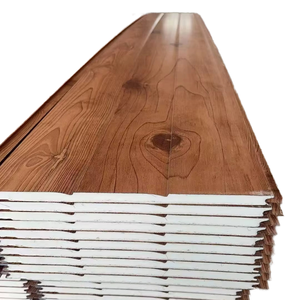
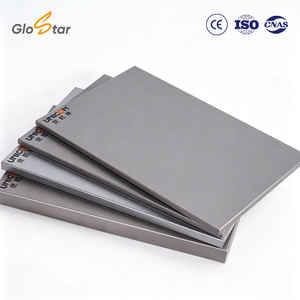
From indoor sports complexes to modern cultural auditoriums, uncontrolled reverberation times degrade speech intelligibility. Our decorative acoustic slat panels and GloStar perforated mineral panels control reverberation time ($RT_{60}$ down to < 0.8 seconds), eliminating flutter echo while integrating directly into architectural wall framing systems.
Industrial parks in Mexicali and Hermosillo face surface skin temperatures exceeding 65°C alongside violent thermal expansion cycles. Our concealed-fastener acoustic panels incorporate expansion relief joints and PVDF resin coatings that withstand intense UV degradation while preserving interior acoustic seals under severe thermal differentials.
Navigating nearshoring manufacturing surges, stringent STPS workplace noise laws, and environmental NOM certifications.
The relocation of global manufacturing supply chains to Northern Mexico (Monterrey, Saltillo, Juarez, Tijuana) and the Bajío Region (San Luis Potosí, Querétaro, Guanajuato) has redefined industrial building codes. North American conglomerates and international developers (FIBRA Macquarie, Prologis, Vesta) no longer accept single-skin uninsulated sheeting. To maintain operational continuity and comply with multinational corporate governance, developers mandate high-performance envelope systems tested to ASTM E90 (Sound Transmission Loss), ASTM C423 (Sound Absorption), and ASTM E84 (Surface Burning Characteristics). As an experienced custom OEM exporter, our automated production lines supply sandwich panels pre-certified to meet both USMCA specifications and Mexican building ordinances.
Industrial facility operators in Mexico face rigorous acoustic oversight from two primary regulatory bodies:
NOM-081-SEMARNAT-1994: Establishes maximum permissible noise emissions from stationary sources into the ambient environment. Facilities operating in Mexico cannot exceed 68 dBA (06:00 to 22:00) and 65 dBA (22:00 to 06:00) at the property boundary line. For factories operating adjacent to mixed-use or residential developments, envelope sound containment is legally binding. Failure to comply leads to fines and operating license suspensions by PROFEPA.
NOM-011-STPS-2001: Regulates occupational health and safety conditions in workplaces where noise is generated. The maximum permissible exposure limit is 85 dBA for an 8-hour Time-Weighted Average (TWA). Installing perforated acoustic sandwich panels on interior dividing walls and roof monitors lowers ambient factory noise by 8 to 14 dBA, significantly reducing employer liability while boosting worker productivity.
With major manufacturing parks targeting LEED Gold and Platinum certifications, building envelopes must deliver dual thermal-acoustic performance to minimize HVAC energy consumption while earning Indoor Environmental Quality (EQ) acoustic performance credits. High-density basalt mineral wool panels feature zero ozone depletion potential (ODP = 0) and low global warming potential (GWP), utilizing natural volcanic rock spun with low-VOC thermosetting binders. This allows developers across Mexico to maximize LEED points under Energy & Atmosphere (EA) and Materials & Resources (MR).
Drawing on an established manufacturing heritage since 2009, PTI delivers end-to-end building envelope solutions with verified global standards.
Our continuous automated roll-forming and high-pressure double-belt press lines produce panels with uniform core density, void-free bonding, and precise tolerances up to 16-meter continuous lengths, preventing delamination under intense thermal stress.
Equipped with computerized high-speed punching presses that apply micro-perforations (hole diameters Ø 2.5 mm to 4.0 mm, 22% to 35% open area) directly to the inner metal coil before profiling, paired with automated non-woven acoustic fleece lamination.
Every batch of prepainted steel, aluminium, or stainless coil is rigorously tested for yield strength, zinc coating mass (Z275 / AZ150), and paint adhesion. Core materials undergo continuous fire reaction and thermal conductivity verification before export.
Beyond acoustic panels, we engineer and fabricate complementary structural systems: structural cold-formed Z & C purlins, galvanized composite floor decking, matched corner flashings, ridge caps, and industrial roller shutter doors for single-source accountability.
Experienced in high-volume export packaging, humidity-proof ocean shrink wrapping, reinforced containerization skids, and complete Spanish technical documentation (fichas técnicas, planos de montaje, reportes de pruebas).
Our dedicated engineering group works directly with Mexican general contractors (ICA, GP Construcción, Lintel) to provide detailed joint detailing, shop drawing take-offs, fastener schedules, and seismic deflection calculations.
Essential guidance on HS Codes, IMMEX program exemptions, ocean ports of entry, and intermodal transport corridors.
Mexican purchasing managers and customs agents (Agentes Aduanales) must classify acoustic sandwich panels under appropriate Harmonized System (HS) classifications to determine applicable import duties (IGI - Impuesto General de Importación) and Value Added Tax (IVA - 16%). Standard classifications include:
IMMEX / PROSEC Advantage: Companies operating under Mexico’s IMMEX (Industria Manufacturera, Maquiladora y Servicio de Exportación) program importing structural panels for factory expansion or capital goods infrastructure can obtain significant tariff relief. Through PROSEC (Sectoral Promotion Programs) or Rule 8 (Regla 8a) authorizations, qualified entities can import specialized building materials duty-free or under reduced tariff rates when verified through the Ministry of Economy (Secretaría de Economía).
To optimize ocean freight costs and inland transit times across Mexico, shipments are scheduled through direct multimodal maritime routes:
Port of Altamira / Veracruz (Gulf of Mexico): The primary entry hub for ocean freight originating from international production lines serving the Monterrey Industrial Hub, Saltillo, San Luis Potosí, and Central Mexico (Puebla, CDMX). Transit from Altamira to Monterrey via authorized heavy-haul road or Ferromex / KCSM rail corridors takes approximately 24 to 48 hours following customs clearance.
Port of Manzanillo / Lázaro Cárdenas (Pacific Ocean): Strategic ports for fast delivery to the Western industrial belts, serving Guadalajara, El Salto, Guanajuato (Silao/Celaya), and Querétaro via direct highway (Autopista 15D/57D) and intermodal rail terminals.
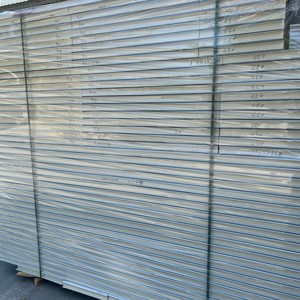
Cross-ocean shipment of sandwich panels requires robust packaging to eliminate salt-mist corrosion, moisture condensation (white rust), and panel edge deformation. Every OEM production bundle is wrapped in heavy-duty UV-inhibiting polyethylene shrink film, reinforced with high-density corrugated corner protectors, mounted on fumigated wooden or heavy-gauge steel skids (ISPM 15 compliant), and loaded into 40-foot High Cube (40' HC) or 40' Open Top containers using specialized roller slings for damage-free discharge at destination job sites.
Clear, technical answers addressing acoustic ratings, seismic joint tolerances, finishes, and order lead times.
STC evaluates sound transmission loss—how much airborne sound is prevented from passing through the wall from one room or building to another, measured across 16 standard frequencies (125 Hz to 4,000 Hz) per ASTM E90. NRC measures sound absorption—how much incident acoustic energy is absorbed by the surface rather than reflected as echo, rated from 0.00 (total reflection) to 1.00 (total absorption) per ASTM C423. For factory perimeter envelopes to meet NOM-081, prioritize a high STC rating (≥ 45 dB). For interior reverberation control within noisy workshops or sports arenas, specify perforated panels with a high NRC (≥ 0.85).
Facilities constructed in high seismic activity zones (e.g., Mexico City, Guerrero, Oaxaca, Michoacán, and parts of Jalisco) must comply with the Manual de Diseño de Obras Civiles de la CFE. Our panels utilize deep tongue-and-groove interlocking joints with engineered 3.0 mm elastomeric EPDM gaskets and slotted perimeter fixing clips. This mechanical fastening detail permits micro-deflections and cyclic lateral drift (≤ 1.5% inter-story drift angle) without rupturing panel joint seals, preserving both structural integrity and acoustic continuity during seismic events.
No. When installed in humid Gulf coastal zones (Veracruz/Tamaulipas) or conditioned interior spaces, our panels prevent condensation and fiber loss through two specialized layers: First, the internal rock wool core is treated with hydrophobic organosilicon compounds (water absorption ≤ 0.5 kg/m² per EN 1609). Second, an acoustic micro-porous membrane (SoundTex) is thermally laminated between the perforated metal skin and mineral fiber, preventing mineral dust shedding while acting as an air flow resistance barrier.
For industrial parks across Sonora, Chihuahua, Coahuila, and Nuevo León where UV indexes frequently reach 11+, we specify PVDF (Polyvinylidene Fluoride 70/30 Kynar 500) or Super Durable Polyester (HDP/SDP) coatings with a minimum dry film thickness of 25 microns over a 5-micron corrosion-inhibiting primer. These architectural coatings provide superior color retention (ΔE ≤ 5 over 20 years), chalk resistance, and salt spray resistance up to 1,000 hours per ASTM B117 standards.
Standard OEM manufacturing lead time ranges from 15 to 25 days depending on total project square meterage and coil customization requirements (custom RAL colors or custom perforation patterns). Maritime transit to Altamira or Manzanillo takes approximately 28 to 35 days. Mexican contractors generally allocate a total lead cycle of 7 to 9 weeks from shop drawing sign-off to port arrival, with expedited partial container shipments available for fast-track projects.
For standard white/off-white finishes (RAL 9002, RAL 9010) and standard steel gauges (0.5 mm / 0.6 mm), our MOQ is 500 square meters. For custom architectural colors (custom RAL matching, metallic finishes) or non-standard sheet thicknesses (0.7 mm to 1.0 mm), the MOQ corresponds to one full production master steel coil, roughly 1,200 to 1,500 square meters. Panels can be custom-cut to exact erection drawings up to 16.0 meters to minimize jobsite waste.
A standard 40' High Cube (HC) container has a maximum payload limit of approximately 26,500 to 28,000 kg and an internal volume of 76 cubic meters. Depending on panel core thickness (50 mm to 150 mm) and density (rock wool vs lightweight PIR), our logistics software calculates exact packing stacking schemes. Typically, one 40' HC container accommodates 800 to 1,200 m² of 50 mm PIR panels, or 450 to 650 m² of 100 mm heavy rock wool panels, ensuring optimal freight economy per square meter.
Yes. We supply fully integrated envelope systems. When you order acoustic or thermal panels, our Barka automated lines manufacture custom folded flashings (ridge caps, corner closures, base drip channels, window reveals) formed from the exact same pre-painted steel coil master batch, ensuring 100% color and gloss harmony. We also supply bi-metal self-drilling fasteners, neoprene sealing washers, expanding acoustic foam tapes, and butyl sealants for turn-key weather-tight and sound-tight envelope completion.
Consult with our building envelope specialists. Provide your project location, target STC/NRC acoustic criteria, core preferences, and structural spans for a complete factory-direct quotation, acoustic test reports, and freight calculation to Altamira, Veracruz, or Manzanillo.