
Precision-milled galvanized steel profiles, composite cold-formed deckings, insulated foam panels, and heavy-duty structural purlins manufactured under ISO 9001 certified roll-forming lines.
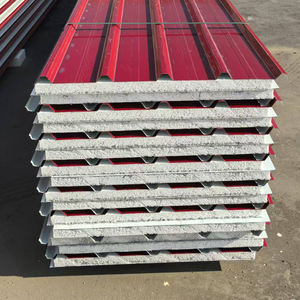
For North American architectural, engineering, and construction (AEC) procurement teams, specifying corrugated profile metal sheets is an exact science governed by mechanical performance criteria, rigorous cyclical load testing, and stringent coating chemistry. Procuring custom OEM corrugated sheets from an established international manufacturer requires verified adherence to American Society for Testing and Materials (ASTM) standards, the International Building Code (IBC 2024), and wind uplift design protocols dictated by ASCE 7-22.
Modern building envelope durability begins at the microscopic junction between the low-carbon steel core and the hot-dipped sacrificial metallic coating. For United States municipal, agricultural, industrial, and coastal environments, our manufacturing lines process two foundational metal types:
1. Hot-Dipped Galvanized Steel (ASTM A653 / A653M): Utilizing electrolytic bath control, zinc is metallurgical-bonded across both surfaces with coating weights spanning from G60 (180 g/m²) for controlled climate interiors to G90 (275 g/m²) and heavy-industrial Z350 (G115 equivalent) for unconditioned warehouses, agricultural buildings, and municipal waterworks. The zinc sacrificial layer acts as a galvanic anode, ensuring that field drilled screw penetrations and sheared perimeter edges receive galvanic cathodic healing when exposed to atmospheric humidity.
2. 55% Aluminum-Zinc Alloy Coated Steel (ASTM A792 / A792M Galvalume®): Consisting of 55% aluminum, 43.4% zinc, and 1.6% silicon nominal weight ratios, AZ50 and AZ55 Galvalume sheets provide up to four times the service life of standard galvanized metal under acidic, oceanic, and industrial rain exposures. The aluminum component crystallizes into a microscopic dendritic barrier mesh that stops oxidation creep, while zinc inter-dendritic pathways provide targeted galvanic protection at cuts and lap joints.
| Performance Parameter | Commercial Grade (CS Type B) | Structural Grade 33 (SS33) | Structural Grade 50 (SS50) | High-Yield Grade 80 (SS80) |
|---|---|---|---|---|
| Yield Strength, Min (psi / MPa) | 30,000 psi (205 MPa) | 33,000 psi (230 MPa) | 50,000 psi (345 MPa) | 80,000 psi (550 MPa) |
| Tensile Strength, Min (psi / MPa) | 42,000 psi (290 MPa) | 45,000 psi (310 MPa) | 65,000 psi (450 MPa) | 82,000 psi (565 MPa) |
| Elongation in 2 inches (Min %) | 20% | 18% | 12% | ≥ 3% (Full Hard) |
| Standard Base Thicknesses (US Gauges) | 29 Ga (0.014") - 26 Ga (0.018") | 26 Ga (0.018") - 24 Ga (0.024") | 24 Ga (0.024") - 22 Ga (0.030") | 29 Ga (0.014") - 26 Ga (0.018") |
| Primary US Building Envelope Applications | Interior Liners, Ceilings, Flashing | Standard PEMB Roofs & Walls | Long-Span Decking, Coastal Cladding | Heavy Hail Resistance, Agricultural |
Structural engineers evaluating building envelope safety in North America must size roof sheeting to withstand severe localized suction pressures. ASCE 7-22 distinguishes between three critical roof zones: Zone 1 (Field of Roof), Zone 2 (Perimeter Eaves and Rakes), and Zone 3 (Corners). Suction vortex forces generated at windward roof corners can generate negative uplift pressures exceeding -65 to -110 PSF (pounds per square foot) during extreme weather events.
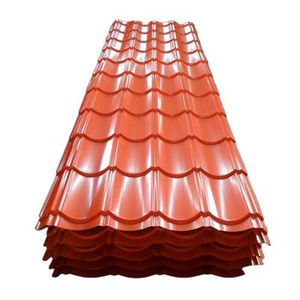
Our corrugated profile roll formers produce deeply articulated trapezoidal ribs (such as 32/1000 and 38/200 geometries) and continuous sinusoidal waves that optimize the moment of inertia (Ix) and section modulus (Sx) across the weak bending axis. This structural profiling enables contractors to expand purlin spacing from standard 4-foot centers to 5-foot or 6-foot intervals without exceeding deflection limits (typically L/180 for total load or L/240 for live load). Diaphragm shear test values conform to SDI (Steel Deck Institute) guidelines, allowing the roof membrane to safely transfer in-plane seismic and lateral wind loads back into the primary moment-resisting steel portal frames.
From hurricane-force salt water coasts to high-altitude subzero snow loads, custom OEM corrugated profile sheets are tailored to the distinct environmental demands of North American territories.
In coastal Florida, Texas, and the Carolinas, metal cladding must pass continuous ASTM E1592 uniform static air pressure tests, Miami-Dade County TAS protocols, and UL 580 Class 90 uplift conditions. We supply 24-gauge (0.60mm) and 22-gauge (0.75mm) high-tensile corrugated panels paired with heavy 70% Polyvinylidene Fluoride (PVDF / Kynar 500®) coil coatings that resist chalking and blister damage across 3,000+ hours of ASTM B117 salt fog testing.
In Minnesota, Michigan, Colorado, and Idaho, roofs face cumulative snow, drifting ice dams, and severe freeze-thaw cycles requiring design ground snow loads (Sg) from 50 to 110 PSF. Our deep-rib trapezoidal profile sheets feature anti-siphon capillary grooves integrated into the overlap seam. This prevents standing thaw meltwater from wicking horizontally into purlin spans under deep snow blankets.
Across Arizona, Nevada, New Mexico, and Southern California, rooftop surface temperatures often exceed 170°F (77°C). We fabricate profile sheets using Cool Roof Rating Council (CRRC) certified reflective pigments. These deliver a Total Solar Reflectance (TSR) > 0.70 and Solar Reflectance Index (SRI) > 82, mitigating thermal expansion oil-canning and slashing cooling HVAC electric loads by up to 28%.
The industrial architectural sector across the United States is undergoing a seismic pivot driven by sustainable municipal mandates, decarbonization goals, rooftop solar expansion, and rapid industrial re-shoring. OEM custom manufacturers must evolve beyond basic sheet pressing to deliver fully integrated, future-proof building components.
American commercial architects are increasingly bound by embodied carbon caps. Conventional blast furnace basic oxygen furnace (BF-BOF) steel production yields approximately 1.8 to 2.2 tons of Scope 1 CO₂ per ton of liquid metal. In contrast, modern OEM supply chains partner with Electric Arc Furnace (EAF) mills utilizing up to 85% recycled scrap metal powered by renewable electrical grids. This reduces embodied carbon down to 0.4–0.6 metric tons of CO₂ per ton of finished profiled sheet. We assist developers with Environmental Product Declarations (Type III EPDs) and Health Product Declarations (HPDs) that contribute directly toward LEED v4.1 Materials and Resources (MR) credits.
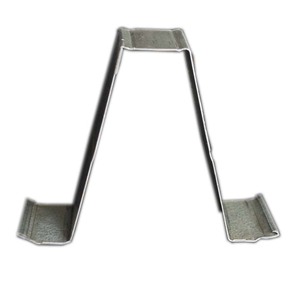
With corporate net-zero targets and federal incentives driving commercial solar adoption across big-box distribution centers (such as Amazon, Walmart, and FedEx hubs), building owners cannot tolerate roof leaks caused by thousands of through-fastener penetrations. Contemporary OEM corrugated profiles are designed with flat-crest crown geometries compatible with UL 2703 certified non-penetrating standing seam and trapezoidal clamps (e.g., S-5! style clamp blocks). The profile ribs serve as structural rails, distributing dead loads (2.5 to 3.8 PSF) evenly across purlin networks without puncturing the weather-tight steel membrane.
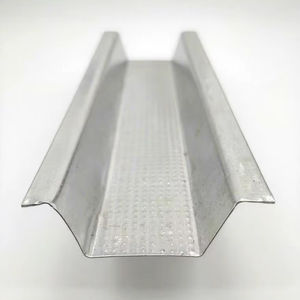
Tens of thousands of light-industrial facilities erected across the US Rust Belt and Sunbelt during the 1970s through 1990s have reached the end of their operational roof lifecycles. Rather than tearing down operating distribution hubs, structural engineers specify over-roofing retrofit systems. By installing our lightweight galvanized metal furring battens (22mm hat channels) directly over deteriorating existing sheeting, contractors install a new standing seam or corrugated weather skin over a 2-inch layer of uncompressed polyisocyanurate (PIR) insulation. This thermal spacer and over-skin system cuts building downtime to zero while boosting the envelope's insulation value from R-6 to R-28+.
Eliminate project delays, split warranties, and dimensional mismatches by consolidating panels, structural framing, secondary cold-formed purlins, and matching flashing trims under one roof.
Continuous automated roll forming stations equipped with computerized optical sensors guarantee rib height tolerances within ±0.5mm and diagonal squaring accuracy across 45-foot continuous sheets.
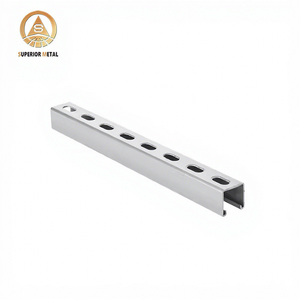
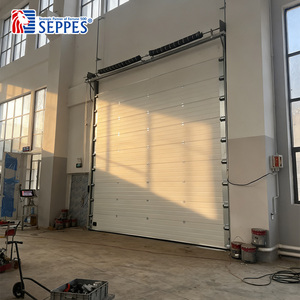
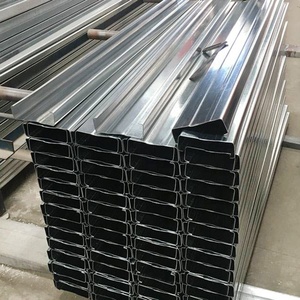
We manufacture not only the exterior corrugated profile sheets, but also cold-formed C/Z purlins, roof trusses, ceiling battens, and sectional overhead doors, guaranteeing zero field interface conflicts.
Raw coil heat chemistry, zinc coating mass checks (ASTM A90 triple-spot tests), T-bend adhesion testing (ASTM D4145), and impact resistance tests are logged for every production run and provided in certified MTCs.
Every bundle is wrapped in heavy-duty poly vapor barrier film, lined with moisture-wicking desiccant pouches, capped with edge metal corner protectors, and banded onto ISPM-15 heat-treated wood skids.
Direct technical answers addressing standards compliance, international logistics, tariff classifications, material certifications, and installation physics.
Connect with our technical building envelope engineering division to discuss custom coil gauges, load-span criteria, structural purlin engineering, and full container pricing schedules for your upcoming United States project.