A roof valley represents the single most hydraulically critical junction within any pitched structural roof assembly. Where two opposing sloping roof planes converge, the volume of concentrated stormwater accelerates exponentially toward the eaves. In metropolitan Melbourne and the broader Victorian climate zone, roof drainage design must contend with unpredictable "four-seasons-in-one-day" microclimatic volatility—ranging from sudden Southern Ocean frontal squalls to high-intensity summer convective cloudbursts. Under AS/NZS 3500.3 (Plumbing and Drainage - Stormwater Drainage), valley gutters are strictly classified as internal catchment channels whose overflow or failure immediately compromises the internal ceiling cavity, insulation layers, and structural framing.
Standard roll-formed residential profiles rarely exceed 0.42mm Base Metal Thickness (BMT) with restricted girth allowances (typically 300mm to 400mm). Under Melbourne’s mandated 1-in-20-year or 1-in-100-year Average Recurrence Interval (ARI) rainfall intensities—which reach up to 130mm/hr to 180mm/hr across Port Phillip Bay, Dandenong, and the Yarra Ranges—standard light-gauge gutters suffer from rapid hydraulic surcharge. Water cascades over the valley gutter upstands, backing up beneath the roof sheet under-laps and triggering pervasive internal structural decay.
As a specialized custom OEM manufacturer, our production methodology re-engineers the valley gutter from a simple sheet metal fold into an engineered hydraulic culvert. Utilizing high-tensile G300 to G550 structural steel substrates with base thicknesses ranging from 0.55mm up to 1.20mm BMT, our CNC-braked and roll-formed valley gutter sheets incorporate expanded girth profiles up to 1220mm. By engineering deep trough geometries with calculated hydraulic gradients, reinforced anti-capillary side breaks, and integrated continuous stiffening returns, we deliver roof drainage components that remain completely watertight, structurally rigid, and free from thermal deformation across multi-decade design lives.
Metallurgical Substrate & Coating Specification Matrix for Victorian Environments
The chemical composition of gutter steel determines its longevity against atmospheric corrosion, coastal salt aerosols, and stagnant water residue. Below is the technical specification criteria employed in our OEM custom manufacturing line:
| Substrate Grade & Alloy |
Standard Coating Class |
Yield Strength (MPa) |
ASTM B117 Salt Fog Rating |
Recommended Melbourne Zone Application |
| PPGL Galvalume / Zincalume® (55% Al, 43.4% Zn, 1.6% Si) |
AZ150 to AZ200 (150–200 g/m²) |
G300 – G550 |
2,000+ Hours to Red Rust |
Inland industrial corridors, Western suburbs distribution hubs (Truganina, Laverton, Derrimut). Superior barrier protection against long-term moisture. |
| PPGI Hot-Dip Galvanized (100% Zinc sacrificial coating) |
Z275 to Z450 (275–450 g/m²) |
G300 – G350 |
1,200+ Hours to Red Rust |
General suburban commercial construction, institutional roofing, and timber/steel hybrid truss framing where sacrificial cut-edge protection is prioritized. |
| Fluorocarbon PVDF Architectural Finish (Dual-coat 70/30 Kynar 500) |
Topcoat 25μm + Primer 5μm over AZ150 |
G300 |
3,000+ Hours (UV Class RUV4) |
Melbourne CBD high-rises, civic architecture, exposed exterior parapet gutters where intense solar radiation and color retention are paramount. |
| Marine-Grade Marine Steel / Stainless 316 (Cold-rolled molybdenum alloy) |
Mill / Passivated 2B Finish |
G250 – G310 |
5,000+ Hours (Extreme C5-M) |
Direct shoreline zones along Port Phillip Bay (Brighton, St Kilda, Frankston, Queenscliff) within 200m of breaking surf and severe salt aerosol. |
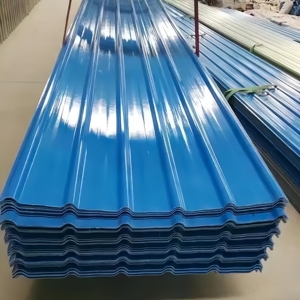
Furthermore, differential thermal expansion between large commercial metal roof sheets (such as continuous 30-meter trapezoidal decking) and valley gutter troughs can exert massive shear stresses on traditional screw fasteners. Our custom OEM profiles offer engineered expansion-clip slots, pre-notched laps, and vulcanized EPDM seal interfaces that absorb axial expansion without tearing fixing holes or buckling the central flow channel.