
Precision-manufactured building systems engineered for quick structural mounting, high thermal resistance, and long-term durability in maritime and Mediterranean inland microclimates.
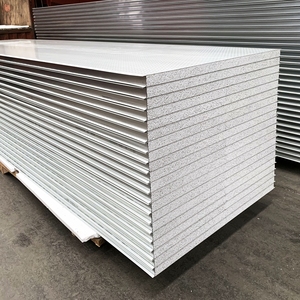
Lightweight interlocking core system designed for non-loadbearing internal compartmentalization, temporary site offices, and rapid warehouse wall dividing across Barcelona logistics hubs.
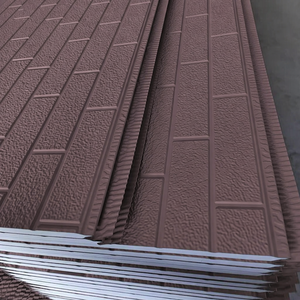
High-density expanded polystyrene insulated with galvanized prepainted steel skins, offering superior acoustic damping and thermal insulation for modern modular buildings.
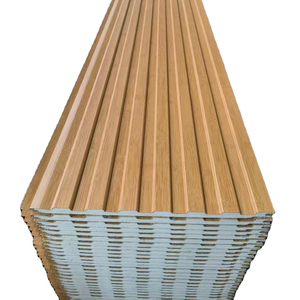
Embossed decorative aluminum-zinc alloy face with flame-retardant EPS core, ideal for residential renovation projects and high-end exterior architectural retrofits.
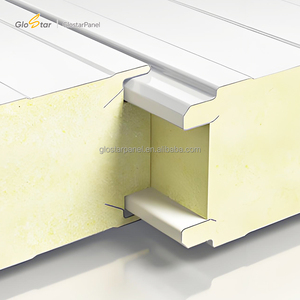
Ultra-smooth flush surface PU insulated sandwich panels designed for pharmaceutical cleanrooms and medical laboratories across the Vallès Oriental science corridor.
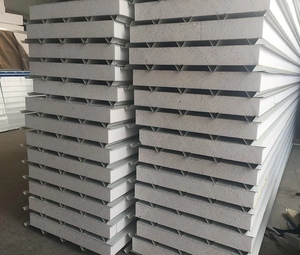
Precision-jointed tongue-and-groove EPS panels ensuring strict airtightness, moisture resistance, and hygienic cleanability for food preparation facilities and cold storage.
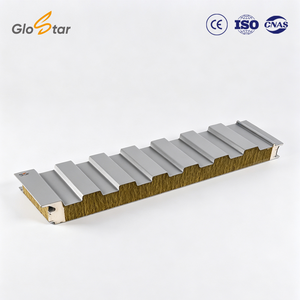
Four-ribbed high-strength structural roof and wall panel delivering complete non-combustibility and maximum acoustic insulation for heavy industrial warehouses.
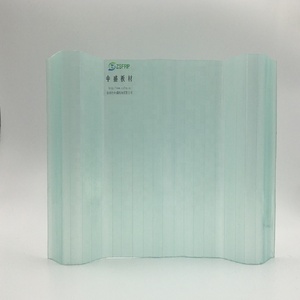
High-clarity, UV-stabilized fiberglass reinforced polymer panels matching metal panel corrugation profiles to harvest daylight and drastically slash warehouse lighting expenses.
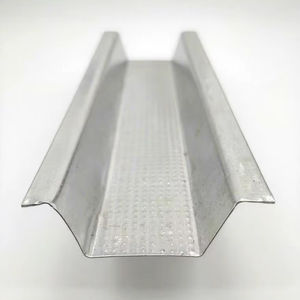
Cold-formed galvanized steel framework accessories engineered to secure flush ceiling suspensions and wall-lining attachments in modular building systems.
The Metropolitan Area of Barcelona and the broader Catalonia coastal corridor fall predominantly under Spanish Building Technical Code (Código Técnico de la Edificación - CTE) Climate Zone C2, whereas inland industrial basins such as Vallès Occidental, Bages, and Central Catalonia correspond to Zone D. Envelope engineering in this dual climate profile demands stringent thermal transmittance (U-value) minimization alongside balanced vapor diffusion management to prevent interstitial condensation during high-humidity Mediterranean summers.
Expanded Polystyrene (EPS) sandwich panels produced in our manufacturing lines utilize modified high-density core formulations (ranging from 16 kg/m³ to 28 kg/m³) infused with polymeric flame retardants. By stabilizing thermal conductivity at λ = 0.033 – 0.038 W/(m·K), our systems allow engineering consultants and structural contractors to satisfy the limiting thermal transmittance values required by CTE DB-HE 1 (2019/2023 revision) without inflating wall mass or overburdening lightweight steel portal frames.
| Panel Core Type | Density (kg/m³) | Conductivity (W/m·K) | Core Thickness | Calculated U-Value (W/m²·K) | CTE DB-SI Fire Rating |
|---|---|---|---|---|---|
| Standard Density EPS | 16 - 18 | 0.038 | 50 mm | 0.68 | B-s2,d0 / C-s2,d0 |
| High-Density Structural EPS | 22 - 25 | 0.035 | 80 mm | 0.41 | B-s1,d0 |
| Graphite-Enhanced EPS (Neopor Core) | 20 - 24 | 0.031 | 100 mm | 0.29 | B-s1,d0 |
| High-Efficiency PIR (Polyisocyanurate) | 40 - 42 | 0.022 | 80 mm | 0.26 | B-s1,d0 |
| Structural Rock Wool (Mineral Core) | 100 - 120 | 0.040 | 100 mm | 0.38 | A1 / A2-s1,d0 |
Thermal bridge elimination is achieved through our proprietary labyrinth tongue-and-groove joint profile, manufactured on high-precision continuous cold roll-forming mandrels. When sealed with butyl expanding gaskets, joint thermal leakage drops to less than 0.02 W/(m·K), ensuring compliance with the stringent airtightness standards (n50 pressurized test limits) demanded by modern energy-certified industrial architecture in the EU.
The industrial landscape of the province of Barcelona is characterized by intense maritime logistics, extensive food production corridors, biomedical clusters, and massive brownfield industrial regeneration programs. Our panel configurations are tailored specifically for these unique spatial and regulatory contexts:
Within the Zona d'Activitats Logístiques (ZAL) at Port de Barcelona and adjacent El Prat distribution nodes, severe marine salt mist (Atmospheric Corrosivity Category C4/C5-M per ISO 12944) demands superior envelope defense. We supply EPS panels coated with 50-micron high-build Polyurethane (PUR) or PVDF over hot-dip galvanized steel (Z275), preventing premature oxidation while insulating mega-span distribution terminals.
Mercabarna in Zona Franca stands as Southern Europe's primary food market. Cold-storage rooms, ripening facilities, and seafood distribution centers require vapor-tight food-grade wall and ceiling envelopes. Our cleanroom EPS and PU systems feature anti-microbial coatings, non-toxic plastisol films, and high-impact tongue-and-groove jointing that withstand aggressive washdowns with industrial sanitizers.
Aging manufacturing plants in Polígon Industrial Zona Franca, Sant Boi, and Cornellà require thermal and aesthetic modernization without altering underlying steel framing structures. Lightweight EPS panels (11–14 kg/m² total composite weight) impose minimal dead load on structural trusses, enabling rapid over-cladding or replacement of degraded single-skin asbestos roofs.
The pharmaceutical corridor spanning Sant Cugat, Cerdanyola, and Granollers requires strict ISO Class 5 to 8 cleanroom enclosures. Our flush-joint cleanroom sandwich panels feature factory-routed internal conduits, silicone-sealed flush intersections, and non-outgassing cores compatible with vaporized hydrogen peroxide (VHP) decontamination procedures.
Innovation districts like 22@ and urban industrial lofts increasingly adopt offsite modular prefabrication to beat rising city-center construction labor costs. Aluminum carved EPS cladding panels provide modern architectural finishes mimicking stone, slate, or woodgrain while delivering integrated thermal insulation in single-step dry installation.
Procuring sandwich panels for the Spanish market has undergone a significant paradigm shift driven by stringent decarbonization targets, updated safety codes, and NextGenerationEU energy efficiency funding schemes:
1. Strict Fire Compartmentation Under CTE DB-SI: Spanish fire regulations (Documento Básico SI) classify interior dividing walls and facades based on risk sectorization. Our production engineering ensures that panels destined for Spanish projects strictly achieve Euroclass B-s1,d0 or better. In industrial facilities requiring 60 to 120 minutes of structural fire resistance (EI60 / EI120), our hybrid project supply blends EPS for outer boundary cladding with interleaved A1-rated Rockwool sandwich panels for compartmental firewalls, lowering overall structural envelope cost by up to 28% compared to pure mineral wool projects.
2. Decarbonization & Circular Economy Directives: The Generalitat de Catalunya and Spanish Ministry for Ecological Transition have introduced rigorous Life Cycle Assessments (LCA) and Environmental Product Declarations (EPD) in public and industrial tenders. EPS cores boast an exceptionally low carbon footprint during conversion compared to mineral fibers, consuming up to 40% less process energy. Furthermore, 100% of our post-industrial cut-off EPS is recycled back into the bead foaming cycle, contributing directly to BREEAM and LEED v4 credits on commercial projects.
3. Advanced Marine Protective Coating Systems: Given Barcelona’s high average relative humidity (72-76%) coupled with airborne coastal chlorides and industrial SO2 pollutants from maritime traffic, standard polyester coatings (25 microns) frequently fail within 5 to 7 years. Local developers now mandate 50-micron polyurethanic or High-Durable Polyester (HDP) coatings featuring RC5 corrosion resistance and RUV4 UV resistance ratings to secure 20- to 30-year warranties.
Operating as an advanced manufacturing facility with continuous double-belt laminating production systems and specialized cold-roll forming infrastructure, we bridge international manufacturing economies directly to Spanish building projects without intermediary markup.
State-of-the-art high-speed continuous foaming and laminating lines ensure uniform adhesive distribution, eliminated core voids, and millimetric dimensional precision up to 16-meter panel lengths.
All core composite systems undergo independent mechanical, shear modulus, compressive strength, and thermal conductivity verification compliant with EN 14509 standards.
We supply a fully integrated building package: EPS/PIR panels, structural Z & C purlins, metal decking sheets, matching profile daylighting panels, and customized folded flashings.
Direct maritime container shipping to Port de Barcelona with optimized flat-pack crating, moisture-barrier shrink wrap, and sea-freight edge protection ensures zero transit damage.
Key technical and logistics inquiries answered for Spanish project managers, structural engineers, and commercial estimators:
Yes. All sandwich panels supplied to European Union member states are certified under harmonized standard UNE-EN 14509:2014 (Self-supporting double skin metal faced insulating panels). We provide complete Declarations of Performance (DoP), factory production control (FPC) audit documentation, and certified laboratory test reports for tension, compression, and shear properties required for technical approval by Spanish municipal building inspectors (colegios de arquitectos e ingenieros).
Spanish building fire safety regulation (CTE DB-SI 2) dictates that external facade finishes must attain at least Euroclass C-s3,d0 in low-height buildings and B-s3,d0 in buildings exceeding 18 meters or adjacent to property lines. Our high-density fire-retardant EPS panels achieve Euroclass B-s1,d0. For boundary walls adjoining neighboring industrial units (muros medianeros) requiring EI90 or EI120 fire sectorization, we engineer composite deliveries pairing our B-s1,d0 EPS panels for the envelope with A1 non-combustible Rockwool panels for the separation partitions.
For installations within 5 kilometers of the Mediterranean coastline (e.g., Zona Franca, ZAL Port, El Prat de Llobregat, Badalona), standard 25µm polyester coatings are prone to edge delamination and blistering. We recommend our Hot-Dip Galvanized Z275 substrate treated with 50µm Polyurethane (PUR) or Polyvinylidene Fluoride (PVDF), classified as RC5 / RUV4 under EN 10169. This ensures superior resistance against airborne chlorides, sea mist, and thermal oxidation.
Factory production lead times typically range from 10 to 18 working days depending on order volume and custom profiling. Ocean transit to Port de Barcelona takes approximately 18 to 24 days. Panels are packed into heavy-duty seaworthy bundles, interleaving protective polyolefin films, reinforced edge guards, and vapor-sealed PE wrapping to prevent marine transit moisture ingress. We support both FOB origin factory terms and CIF / DDU delivery directly to your job site anywhere in Catalonia.
Yes. Sourcing a complete building envelope package from one accountable manufacturer eliminates dimensional mismatched joints and color variances on site. We pack custom cold-formed galvanized Z & C purlins, matching profile FRP corrugated daylighting panels, silicone seals, self-drilling screws, and RAL-matched ridge and corner flashings inside the same container delivery.
In Barcelona’s coastal zone (Climate Zone C2), the CTE DB-HE establishes maximum thermal transmittance limits for facades around U = 0.41 W/(m²·K) and for roofs around U = 0.35 W/(m²·K). An 80 mm high-density EPS wall panel delivers a U-value of 0.41 W/(m²·K), perfectly meeting the wall requirement. For roofs, a 100 mm EPS core delivers a U-value of 0.33 W/(m²·K), comfortably beating the code baseline while maintaining optimal structural span capacities between purlins.
Speak directly with our technical sales engineers for structural load-span calculations, CTE compliance packages, BIM details, and competitive factory-direct quotations delivered to your project in Catalonia.