
Continuous-line lamination with high-density flame-retardant EPS, PIR, and Rockwool cores faced in marine-grade Zincalume® and pre-painted galvanised steel coils, cut-to-length for accelerated delivery across Sydney and overseas container export.
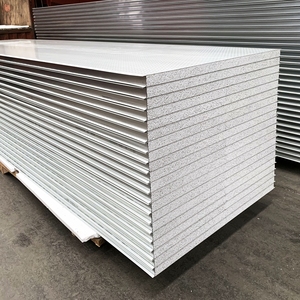 Internal Wall
Lightweight tongue-and-groove partition panels for rapid modular deployment, dry clean interior enclosures, and demountable office fit-outs.
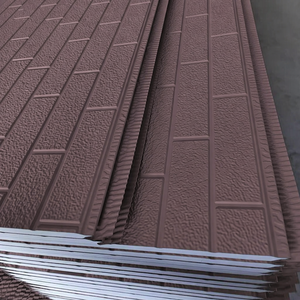 Thermal Envelope
High-density EPS core clad in architectural profile steel sheets, engineered to eliminate thermal bridging in residential and modular structures.
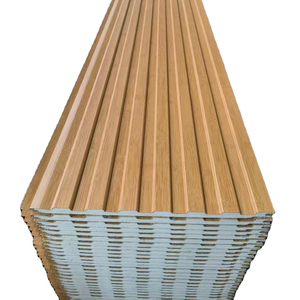 Architectural
Decorative embossed aluminum skin integrated with a hydrophobic EPS core for high-end facade modernization and weather barrier protection.
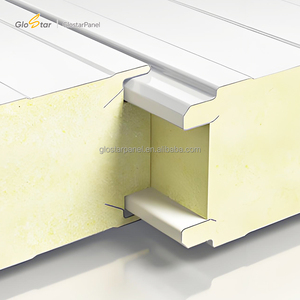 Sterile Cleanroom
Ultra-smooth anti-static coated panels engineered for pharmaceutical cleanrooms, medical labs, and precision processing facilities in Sydney.
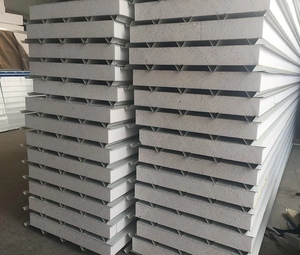 Cold Chain Hub
Vapour-tight interlocking tongue-and-groove joint profile preventing thermal bypass in refrigerated logistics centres and blast freezers.
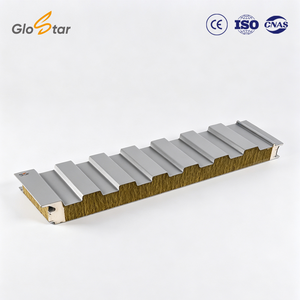 Non-Combustible
Heavy-duty structural mineral wool core panel engineered for acoustic absorption and AS 1530.1 non-combustibility boundary walls.
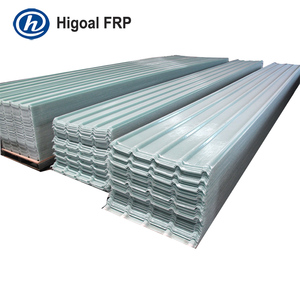 Natural Light
High-transmission, UV-stabilised polycarbonate and fiberglass skylights roll-formed to integrate seamlessly with insulated sandwich roof profiles.
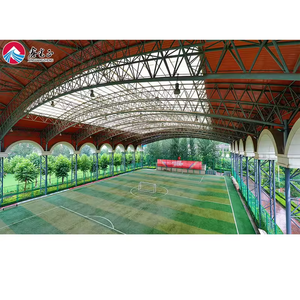 Structural Steel
Complete building envelope structural frame integrated with cold-formed C/Z purlins, roof decks, and exterior composite wall cladding.
In accordance with the National Construction Code (NCC 2022 Building Code of Australia) and AS/NZS 4859.1, composite EPS sandwich panels represent the optimal ratio of structural deadweight to continuous thermal resistance for commercial building envelopes in Climate Zone 5 (Sydney Basin).
Expanded Polystyrene (EPS) sandwich panels consist of a rigid, closed-cell thermoplastic foam core vacuum-bonded or continuously laminated between two high-tensile structural metal facings. Unlike field-assembled stud-and-batt insulation systems that suffer from thermal bridging through steel framing, continuous EPS composite wall panels provide an uncompromised thermal envelope. Our panels are formulated using modified EPS beads containing hexabromocyclododecane-free (HBCD-free) polymeric flame retardant additives, conforming strictly to Australian Standards for fire-retardant grade expanded polystyrene (Class SL and Class M under AS 1366.3).
Design Insight for Structural Engineers: The composite action between the high-yield steel facing skins (0.42mm - 0.60mm BMT G300/G550) and the shear-resistant EPS core provides high flexural rigidity. This allows structural purlin and girt spacings up to 4.5 metres under typical AS/NZS 1170.2 ultimate limit state (ULS) wind load pressures in suburban Sydney terrain category 2.5 and 3.0.
The following performance data reflects standard calculations for total R-values ($m^2\cdot K/W$) factoring mean summer temperatures ($35^\circ C$ ambient exterior, $24^\circ C$ conditioned interior) and winter boundary air films across Greater Sydney.
| Nominal Thickness | Core Density | Declared Thermal Conductivity (λ) | Thermal Resistance (R-Value) | Panel Weight (0.5/0.5 Steel) | Acoustic Rating (Rw) | Recommended Application |
|---|---|---|---|---|---|---|
| 50 mm | 16 - 18 kg/m³ (Class SL) | 0.038 W/m·K | R 1.35 m²·K/W | 10.2 kg/m² | 24 dB | Internal Partitions, Modular Pods |
| 75 mm | 16 - 18 kg/m³ (Class SL) | 0.038 W/m·K | R 2.05 m²·K/W | 10.6 kg/m² | 25 dB | NCC Section J Compliant Wall Façades |
| 100 mm | 18 - 20 kg/m³ (Class M) | 0.037 W/m·K | R 2.75 m²·K/W | 11.1 kg/m² | 26 dB | Chiller Rooms (+2°C to +8°C), Warehouses |
| 150 mm | 20 - 24 kg/m³ (Class S) | 0.036 W/m·K | R 4.15 m²·K/W | 12.2 kg/m² | 27 dB | Medium Freezers (-18°C), Agritech |
| 200 mm | 20 - 24 kg/m³ (Class S) | 0.036 W/m·K | R 5.55 m²·K/W | 13.3 kg/m² | 28 dB | Deep-Freeze Distribution (-28°C) |
| 250 mm | 24 - 28 kg/m³ (Class HD) | 0.035 W/m·K | R 6.95 m²·K/W | 14.5 kg/m² | 29 dB | Ultra-Low Cold Storage & Pharma Hubs |
While EPS remains the global standard for cost efficiency and lightweight structural performance, choosing between Expanded Polystyrene (EPS), Polyisocyanurate (PIR), and Rockwool (Mineral Wool) depends on building class, boundary setback requirements, and insurer underwriting directives:
| Performance Metric | Flame-Retardant EPS | PIR Core (Polyisocyanurate) | Rockwool Core (Mineral Wool) |
|---|---|---|---|
| Combustibility (AS 1530.1) | Combustible (Self-extinguishing) | Combustible (Char-forming) | Non-Combustible (A1/AS1530.1) |
| Thermal Conductivity (λ) | 0.037 - 0.039 W/m·K | 0.020 - 0.023 W/m·K | 0.040 - 0.044 W/m·K |
| Moisture Absorption | < 1.5% by volume | < 2.0% by volume | High (Requires continuous vapour seals) |
| Structural Shear Modulus | Moderate (3.5 - 4.2 MPa) | High (4.5 - 6.0 MPa) | Moderate (3.0 - 4.5 MPa) |
| Installed Cost Factor | Baseline (Most Economical) | 1.4x - 1.7x Baseline | 1.8x - 2.3x Baseline |
From Western Sydney's booming logistics corridors to demanding maritime coastal installations along Botany Bay, our composite panel solutions address the precise thermal, environmental, and statutory requirements of New South Wales developments.
Major distribution centres in Kemps Creek, Eastern Creek, Moorebank Intermodal, and the Badgerys Creek Aerotropolis require vast, continuous building envelopes that achieve strict Section J thermal targets without excessive deadweight. Our long-span EPS panels slash secondary steelwork costs, while offering rapid installation to keep hyper-scale commercial build schedules on track.
Supplying meat, dairy, seafood, and fresh produce wholesalers near Sydney Markets (Flemington) and cold storage hubs in Marsden Park. The closed-cell impermeable structure of high-density EPS core blocks water vapor migration, preventing the ice build-up, delamination, and sub-zero thermal bridging that degrade inferior cold-room panel systems.
NSW School Infrastructure and regional emergency housing demand rapid-assembly building envelopes. With tongue-and-groove slip joints and pre-finished exterior and interior facings, our EPS wall systems construct turnkey classrooms, site sheds, and health clinics in days, without requiring wet trades, internal drywalling, or field painting.
Structures erected within coastal salt-spray corridors (Atmospheric Corrosivity Category C3/C4 according to AS/NZS 2728 and ISO 9223) receive premium surface protection. We roll-form facings using heavy zinc-mass Galvalume® (AZ150 to AZ200) and ultra-durable PVDF or high-build plastisol coatings, providing outstanding salt-spray, chalking, and blistering resistance.
The Australian building landscape is experiencing dramatic regulatory evolution. Procurement teams and project consultants across Sydney face tightened energy and fire scrutiny.
Recent revisions mandate stricter envelope thermal performance metrics to achieve net-zero operations. Section J5 now heavily penalizes thermal bridging across metal wall studs. Factory-laminated EPS continuous panels provide an unbroken layer of insulation that eliminates thermal gaps, easily meeting the stringent nominal R-value requirements without needing double-stud framing.
For industrial fringe assets adjacent to the Blue Mountains, Hawkesbury, or Wollondilly Shire, external fire spread is an essential design parameter. While EPS panels with tested metal skins satisfy standard wall envelope approvals, boundary walls and high BAL zones (BAL-40 and BAL-FZ) can integrate our fully interchangeable Rockwool-cored panels to guarantee non-combustible ratings.
Modern developers targeting 5-Star and 6-Star Green Star certifications value the low embodied energy of expanded polystyrene compared to high-density dense mineral wool or polyurethane foams. Furthermore, our 100% recyclable EPS core scrap is compressed in-house and re-pelletized into high-impact polystyrene products, ensuring zero landfill waste.
Building on deep industrial manufacturing foundations established in 2009, our operations provide engineering integrity, certified QA controls, and single-source envelope accountability from manufacturing floor to site installation.
Our continuous automated laminator utilizes microprocessor-controlled multi-point polyurethane adhesive distribution and heated conveyor presses. This guarantees full face-to-core bonding strength exceeding 0.12 MPa, preventing panel blistering under direct Sydney summer solar loads.
We eliminate supply friction by manufacturing not only insulated sandwich panels, but the entire secondary steel and closure envelope: cold-formed Z & C structural purlins, composite metal floor decking, profile matching translucent daylighting sheets, custom CNC flashings, and industrial roller shutter doors.
Serving major developers in Australia and the Pacific Islands (PNG, Fiji, New Zealand, Solomon Islands). Panels are individually surface-protected with peelable UV poly films, bundled in timber crating with reinforced corner guards, and packed into 40ft High Cube containers for secure maritime transport out of Port Botany.
Every coil undergoes strict incoming metallurgical inspection: coating mass verifications, pencil hardness tests, and T-bend checks. Core density is verified before and after lamination, backed by mill test certificates (MTC), engineering load-span tables, and project-specific Australian warranties.
Authoritative technical guidance addressing structural, fire safety, environmental, and logistical queries from tier-1 and tier-2 Australian building contractors.
Yes, when specified and installed in compliance with NCC Building Code of Australia Volume 1 specifications. Our EPS panels utilize flame-retardant (FR) grade polystyrene containing self-extinguishing additives. Tested under AS 1530.3, they achieve early fire hazard indices that satisfy the Spread of Flame and Smoke Developed limits required for non-sprinklered Class 7 and Class 8 commercial buildings. For boundary walls or fire compartment separation requiring an established Fire Resistance Level (FRL like -/60/60 or -/120/120), our non-combustible Rockwool panel system provides the required non-combustibility certification.
Sydney experiences high relative humidity throughout summer, generating strong vapor pressure differentials across conditioned cold store envelopes. Our panels feature high-precision male-to-female tongue-and-groove joint geometry equipped with internal factory-applied non-skinning butyl sealants or specialized continuous PVC thermal gaskets. This creates an unbroken vapour barrier that prevents air infiltration, condensation formation within the joint, and subsequent structural corrosion.
Span capacity depends directly on panel thickness, steel facing gauge (e.g. 0.50mm top / 0.40mm bottom), and local design wind pressures calculated per AS/NZS 1170.2. In typical internal partition walls, our 100mm panel can span up to 6.0 metres unsupported. For exterior roof applications under Sydney coastal wind pressures, a 150mm thick four-rib corrugated sandwich panel can comfortably achieve purlin spacings of 3.2m to 4.2m under standard permissible deflection criteria (L/200).
Absolutely. Panels are roll-formed and cut to the millimeter directly on our continuous production line, with standard manufacture lengths from 2.0 metres up to 14.5 metres (the maximum length practical for road transport on standard Australian extendable trailers or flat-bed trucks). Custom factory-cut lengths eliminate on-site saw cutting, preserve panel end anti-corrosion sealants, and drastically reduce site disposal costs.
For general urban and suburban construction (e.g., Blacktown, Parramatta, Penrith), standard Zincalume® AZ150 or pre-painted galvanised coatings (25-micron polyester finish) deliver superior 25+ year durability. For marine and coastal environments located within 1 km of breaking surf or heavy industrial exposure around Port Botany, we specify ultra-heavy metallic zinc-aluminium-magnesium alloys and PVDF (polyvinylidene fluoride) fluoropolymer coatings tested against extreme salt spray.
Production turnarounds for standard project quantities (1,000 to 10,000 square metres) average 7 to 14 working days from approved shop drawings. Maritime container shipping to Port Botany or regional South Pacific ports (Auckland, Suva, Port Moresby) is coordinated seamlessly through dedicated export packing arrangements that include desiccant packs, high-density edge guards, and heat-treated ISPM-15 export pallets.
Consult with our technical sales engineers to review wind load span calculations, NCC 2022 thermal compliance specifications, and receive a competitive factory-direct proposal for your project.