
Manufactured on high-speed continuous roll-forming lines using premium galvanized and color-coated steel coils. Fully compliant with international composite slab design codes and ASTM/JIS/GB structural benchmarks.
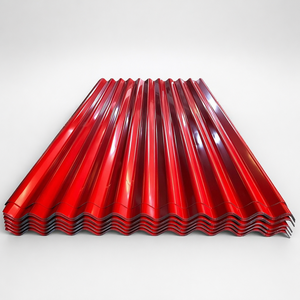
Architectural crimp-curved profile sheets engineered for expansive sports complexes and civic canopies, delivering superior anti-glare finish and high aerodynamic lift resistance.
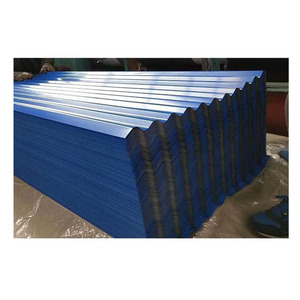
High-durability color-coated corrugated steel sheets offering versatile weather resistance and anti-corrosion protection in high-moisture tropical industrial facilities.
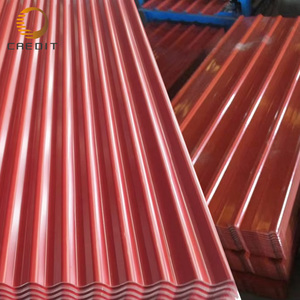
Continuous hot-dip galvanized and Aluzinc (PPGL) trapezoidal profiles offering optimal thermal deflection and high tensile span limits for commercial logistics hubs.
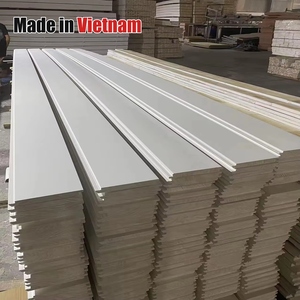
Precision-milled interior composite tongue-and-groove boards tailored for high-end hospitality fit-outs and modern commercial architectural lining applications.
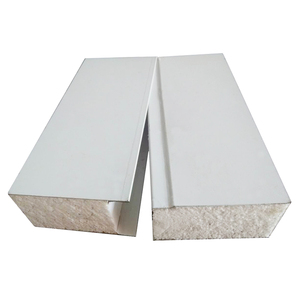
High thermal-barrier FRP and PU foam core sandwich panels engineered for controlled cold storage chains, cleanrooms, and food processing facilities across Indonesia.
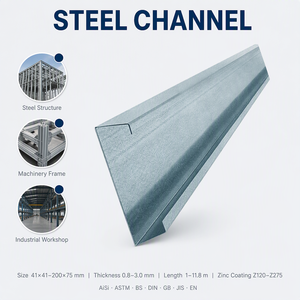
Heavy-duty structural C-channel beams and secondary purlin systems roll-formed from certified high-strength steel grades for primary frame load redistribution.
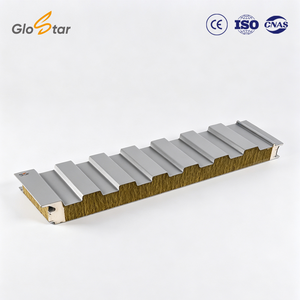
Euroclass A1 non-combustible high-density basalt mineral wool core panels ensuring over 2 hours of fire resistance integrity for high-risk industrial facilities.
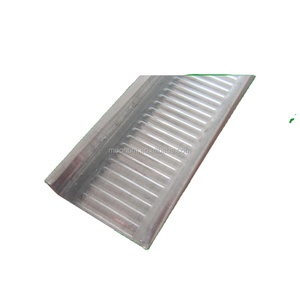
Precision-engineered lightweight galvanized ceiling battens and drywall studs offering high rigidity, corrosion resistance, and fast mechanical fixation in multi-story projects.
Across modern Southeast Asian construction, the transition from conventional timber or plywood formwork toward profiled steel composite floor decking represents the most significant efficiency breakthrough in reinforced concrete slab engineering. In Indonesia's fast-moving urban epicenters—from Greater Jakarta (Jabodetabek) and Surabaya to the newly developing greenfield structures of Nusantara (IKN)—permanent formwork steel decking has transitioned from an optional speed enhancement to an indispensable structural necessity.
Composite floor decking functions under a dual-state mechanical design principle. During the construction phase, the profiled steel sheet serves as a safe, high-capacity permanent working platform and formwork capable of supporting the combined gravity loads of wet concrete, reinforcing meshes, construction personnel, and dynamic placement equipment without requiring dense temporary shoring (un-propped span optimization). Once the structural concrete cures and achieves its design compressive strength (typically 25 MPa to 35 MPa for multi-story floor plates), mechanical shear interlock between the concrete matrix and the cold-formed steel deck takes effect, transforming the cold-formed profile into the tensile positive-moment reinforcement of the composite slab.
The hyper-humid, tropical marine environment of Indonesia poses acute corrosion challenges for exposed building elements. The atmospheric corrosion rate along the northern coast of Java, the Sunda Strait, and the industrial mining corridors of Sulawesi exceeds standard ISO 9223 C3 classification, frequently bordering on severe C4 and C5 marine-industrial categories. Specifying permanent formwork steel decking for Indonesian projects demands strict scrutiny of steel metallurgy and protective metallic zinc coatings.
We supply decking rolled strictly from structural steel coils conforming to ASTM A653 / A653M (Grades 33, 40, 50, and 80) or EN 10346 (S350GD, S450GD, S550GD). High-tensile structural grades with a minimum yield strength (fy) of 550 MPa allow engineers to specify thinner baseline gauges (0.75 mm to 1.00 mm) while sustaining high deflection resistance limits (L/240 for dead + wet concrete weight, L/360 for superimposed service live loads). Corrosion protection is guaranteed by hot-dip zinc coatings ranging from standard Z180 (180 g/m²) for controlled indoor air-conditioned buildings to heavy-duty Z275 (275 g/m²) and Z350 for marine-adjacent distribution facilities, industrial petrochemical plants, and exposed parkades.
| Profile Designation | Depth (mm) | Effective Width (mm) | Base Metal Thickness (mm) | Yield Strength (MPa) | Standard Zinc Mass | Fire Rating (FRR) |
|---|---|---|---|---|---|---|
| Deck 51 (Trapezoidal Re-Entrant) | 51 mm | 914 mm / 1000 mm | 0.75 – 1.20 mm | fy ≥ 350 – 550 | Z275 (275 g/m²) | Up to 2 Hours |
| Deck 75 (Deep Span Trapezoidal) | 75 mm | 600 mm / 750 mm | 0.80 – 1.50 mm | fy ≥ 550 MPa | Z275 – Z350 | Up to 3 Hours |
| Deck 54 (Dovetail Profile) | 54 mm | 600 mm / 688 mm | 0.80 – 1.20 mm | fy ≥ 450 – 550 | Z275 (275 g/m²) | Up to 2 Hours |
| Secondary C-Purlin (SM400) | 80 – 200 mm | Standard Lip | 1.50 – 3.20 mm | fy ≥ 235 – 345 | Hot-Dip Galv / Primed | Integrity Standard |
| Fireproof Rockwool Wall Panel | 50 – 150 mm | 950 mm / 1150 mm | 0.40 – 0.70 mm | Density 100-120 kg/m³ | PVDF / SMP Coated | A1 Non-Combustible (4 Hr) |
Indonesia is situated squarely along the Pacific "Ring of Fire," subjected to severe tectonic movements from the convergence of the Indo-Australian, Eurasian, and Pacific plates. As a result, structural engineers operating in Indonesia must design floor systems to act as rigid or semi-rigid horizontal diaphragms in accordance with SNI 1726:2019 (the Indonesian national standard for earthquake-resistant design of buildings and other structures).
A composite floor deck slab reinforced with welded wire mesh (such as BRC M7 or M8) and anchored to primary steel beams via welded shear studs (drawn-arc headed shear studs conforming to AWS D1.1) provides unmatched in-plane shear stiffness. The deck transfers cyclic lateral seismic accelerations from exterior curtain wall envelopes and floor masses directly into the primary lateral-force-resisting systems (braced steel frames, reinforced concrete core shear walls, or dual framing systems). By optimizing the gauge of the formwork steel deck and ensuring precise sidelap mechanical fastening (via structural self-drilling fasteners or button punching every 300 mm to 500 mm), engineers prevent localized diaphragm tearing and out-of-plane buckling during high-magnitude seismic events.
Our permanent formwork and structural building envelopes are engineered specifically to overcome the physical, logistical, and environmental constraints of Indonesian job sites.
Multi-story commercial, residential, and transit-oriented development (TOD) towers surrounding MRT and LRT hubs require un-propped deck construction to eliminate congestion, speed up floor cycling to 4–5 days per slab, and minimize floor mass for seismic attenuation.
The construction of government complexes, ministries, and commercial quarters in East Kalimantan demands prefabricated, zero-waste construction solutions. Precision cut-to-length steel decking ensures rapid erection with minimal site fabrication and clean logistics.
Processing plants across Morowali, Weda Bay, and Halmahera demand robust structural steel decking paired with heavy galvanized coatings (Z275/Z350) and C-channel purlins to withstand harsh chemical, sulfurous, and maritime atmospheric exposure.
Expansive e-commerce fulfillment centers and automotive factories in West Java benefit from composite slabs engineered for heavy dynamic forklift traffic, high concentrated racking loads, and seamless integration with fireproof rockwool wall envelopes.
Drawing on decades of structural roll-forming expertise, we provide an accountable, end-to-end building envelope and structural decking package backed by verified QA/QC processes.
Continuous automated roll-forming lines guarantee millimeter-accurate rib profiling, precise transverse embossments, and clean end-shearing, eliminating dimensional inaccuracies and on-site fitting delays.
Every export shipment to Indonesian ports is accompanied by comprehensive Mill Test Certificates (MTC 3.1), verifying tensile strength, yield point, elongation, and exact zinc coating mass per ASTM / EN standards.
Consolidate your procurement by sourcing composite steel decking, structural Z & C purlins, A1 fireproof rockwool panels, and ceiling batten systems from one manufacturer—reducing freight overhead and logistical coordination.
Decking profiles are packaged with interlocking protective banding, desiccants, and water-resistant seaworthy wrap to prevent white rust formation during transit through the Indian Ocean and Malacca Strait to Indonesian ports.
Practical answers addressing regulatory standards, customs clearance, seismic diaphragm engineering, and on-site installation practices in Indonesia.
Our formwork steel decks comply with international equivalents (ASTM A653, EN 10346, AS 1397) officially recognized by Indonesian structural engineering consulting bodies under SNI 2052 and SNI 1726. For private sector high-rises, industrial factories, and EPC projects, foreign mill test certificates (MTCs) and third-party lab tests (SGS/TÜV) are universally accepted for structural submittals. Where TKDN (local content) thresholds apply to state-budgeted (APBN) contracts, our engineering team assists local general contractors by supplying optimized master coils and raw profiles that qualify for local processing pathways.
For buildings situated within 5 km of the coast—such as North Jakarta (PIK, Tanjung Priok), Surabaya port areas, or coastal Balikpapan near IKN—we strongly mandate a minimum hot-dip galvanizing mass of Z275 (275 g/m² combined both sides) or upgrade to Aluzinc (AZ150). Standard interior decking with Z180 is susceptible to premature underside surface corrosion when exposed to high ambient humidity (often exceeding 85%) during the wet monsoon season prior to building envelope closure.
Yes. Utilizing high-yield steel coils (fy = 550 MPa) in combination with our deep trapezoidal profile (Deck 75 mm depth) at a nominal thickness of 1.00 mm or 1.20 mm allows un-propped clear spans of 3.2 m to 4.2 m under normal-weight wet concrete slabs (120 mm to 150 mm total slab thickness). This completely eliminates the need for ground-level scaffolding or intermediate propping props, saving significant labor and crane mobilization costs on tight Indonesian urban sites.
We routinely export directly to Indonesia's primary container and breakbulk hubs, including Tanjung Priok (Jakarta), Tanjung Perak (Surabaya), Belawan (Medan), and Kariangau / Semayang (Balikpapan). Average sea freight transit times range between 12 to 20 days depending on transshipment hubs. Our dedicated logistics team prepares complete import clearance bundles, including original Bills of Lading, Form E / Certificate of Origin, MTCs, and detailed packing manifests to ensure smooth Bea Cukai (Customs) clearance.
Fire resistance ratings (FRR) for composite steel deck slabs are governed by structural slab depth, concrete cover over the profile ribs, and positive reinforcement continuity. In accordance with BS 5950 Part 8 and Eurocode 4 (EN 1994-1-2), a 2-hour fire integrity and insulation rating is readily achieved by placing negative rebars over support beams and adding bottom-trough secondary fire rebars directly inside each flute before casting concrete, completely bypassing costly, messy spray-applied fireproofing (SFRM) on the underside of the deck.
Absolutely. Because our decking lines operate continuously, we produce customized panel lengths from 1,800 mm up to 11,800 mm (specifically sized for maximum payload utilization within standard 40ft High Cube sea shipping containers). Precision cut-to-length delivery eliminates costly on-site manual cutting, avoids torch damage to the galvanized coating, and significantly reduces construction scrap waste across job sites.
Partner directly with an established international manufacturer. Send us your project floor plans, load requirements, or tender schedules, and our engineering team will provide composite slab design verification, span-deflection tables, and delivered CIF Indonesia price quotations within 24 hours.