
A technical treatise on structural efficiency, atmospheric corrosion resistance, lifecycle thermodynamics, and supply chain logistics connecting tier-one manufacturing to Romanian construction hubs.
Romania’s rapidly accelerating industrial real estate, pan-European logistics hubs (A1/A3 corridors), modern agricultural consolidation, and EU-funded infrastructure initiatives have fundamentally shifted procurement specifications from traditional Hot-Dip Galvanized (GI) steel toward 55% Aluminum-Zinc Alloy Coated Steel (Galvalume / Aluzinc / GL). Under severe continental microclimates—ranging from heavy snowdrifts and sub-zero freeze-thaw cycles in Transylvania and the Carpathian arc to salt-laden marine air along the Black Sea coast (Constanța, Năvodari, Mangalia)—building envelopes demand superior galvanic passivity and cut-edge self-healing protection.
As an established building envelope manufacturer operating since 2009, we engineer and export high-performance Galvalume roofing sheets, structural insulated panels, and cold-formed secondary framing engineered to strictly satisfy Romanian national annexes of the Eurocodes (SR EN 1991-1-3 for snow loads, SR EN 1991-1-4 for wind velocity, and SR EN 1998-1 / P100-1 for seismic safety). By utilizing substrate grades from DX51D+AZ to structural S350GD+AZ and S550GD+AZ, with coating weights certified up to AZ150 (150 g/m² combined both sides), our systems provide 3 to 6 times longer service life than conventional Z275 galvanized sheets, mitigating maintenance capital expenditures for industrial developers, EPC contractors, and Romanian regional stockists.
Source complete, harmonized building solutions engineered to EN standards—from primary Galvalume trapezoidal skins and fire-safe composite cores to secondary purlins and industrial access systems.
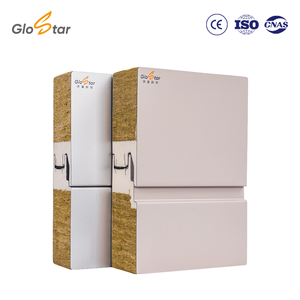
Engineered for high-specification hotel, institutional, and commercial facades in Romania requiring strict Euroclass A1 non-combustibility combined with polyurethane edge sealing against driving wind-rain penetration.
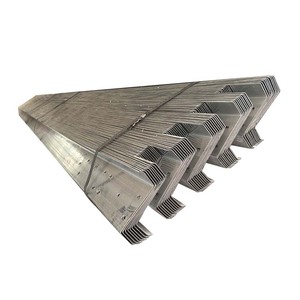
Cold-formed high-tensile secondary framing elements engineered to optimize roof loads, prevent purlin sag across expansive clear spans, and provide immediate bolt-hole pre-punching for Romanian residential and warehouse projects.
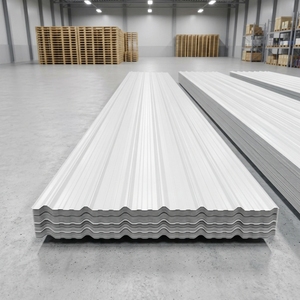
Ultra-durable, chemically inert co-extruded multi-layer roofing engineered for aggressive chemical workshops, Romanian agricultural livestock sheds, and coastal marine storage where salt-fog and ammonia are prevalent.
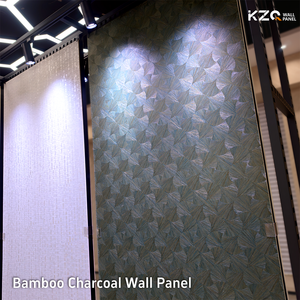
Modern interior architectural paneling combining lightweight acoustic damping, zero-formaldehyde emissions, and fire retardancy for rapid commercial office and retail renovations across Bucharest and Cluj.
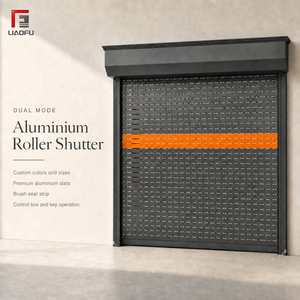
Heavy-duty automated rolling shutter curtain constructed from extruded aluminum slats or galvanized laths, delivering certified wind resistance, high cycling durability, and secure perimeter protection for logistics docks.
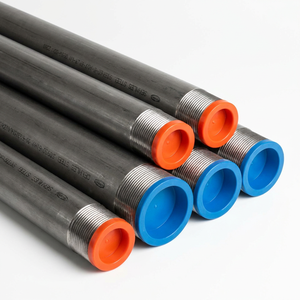
EN 10210/10219 compliant structural steel tubular sections designed for primary column grids, heavy truss fabrication, and seismic-resistant portal frames across Romanian heavy manufacturing projects.
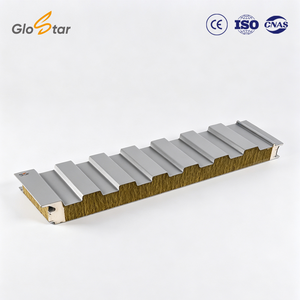
Four-ribbed high-strength trapezoidal profile with external Galvalume facing and dense basalt fiber insulation core, delivering superior diaphragm action and non-combustible thermal barrier protection for mega-warehouses.
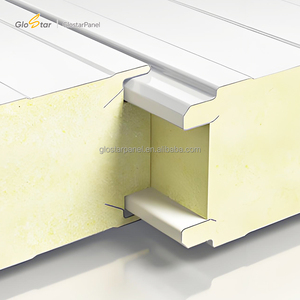
Rigid polyurethane (PUR/PIR) high-efficiency insulated panels featuring micro-ribbed or flat steel skins, engineered to achieve maximum thermal retention in Romanian food processing and pharmaceutical cold storage facilities.
A granular metallurgical evaluation comparing 55% Aluminum-Zinc (EN 10346 DX51D+AZ) against traditional Zinc-only coatings (Z275) under Romanian atmospheric corrosivity categories C1 through C4.
Galvalume (also designated as Aluzinc or 55% Al-Zn) is a cold-rolled carbon steel substrate continuously hot-dipped in an alloy composition consisting of approximately 55% Aluminum, 43.4% Zinc, and 1.6% Silicon by nominal weight. The unique microstructure that forms during solid-state crystallization exhibits an aluminum-rich dendritic network intertwined with zinc-rich inter-dendritic regions.
In typical Romanian continental climate conditions—where hot, dry summers alternate with snow-laden, humid winters accompanied by aggressive road salts in industrial logistics parks—traditional galvanized steel coatings (pure zinc) undergo continuous uniform depletion. Once the zinc layer oxidizes, red rust swiftly attacks the steel substrate. In contrast, Galvalume initiates a multi-stage defense: the zinc phase corrodes sacrifice-first to seal scratches and exposed cut edges, while the inert aluminum oxide matrix remains intact as an impenetrable ceramic-like barrier, permanently retarding further atmospheric oxidation.
| Performance Metric | Galvalume (55% Al-Zn AZ150) | Standard Galvanized (Z275 HDG) | Romanian Regulatory Context |
|---|---|---|---|
| Alloy Composition | 55.0% Al, 43.4% Zn, 1.6% Si | > 99% Pure Zinc | EN 10346 / SR EN 10346 |
| Atmospheric Life (C3 Continental) | 35 to 50+ Years | 12 to 18 Years | ISO 9223 / ISO 12944 Durability Class |
| Cut-Edge Galvanic Protection | Passivated Zinc-Al Migration (Auto-healing) | Rapid Zinc Sacrificial Depletion | Tested per EN ISO 9227 Salt Spray |
| Solar Reflectance Index (SRI) | SRI ≥ 72 (Reduces heat transfer) | SRI 45 – 55 (Degrades rapidly) | Romania nZEB Law 372/2005 Compliance |
| High-Temperature Resistance | Continuous up to 315°C (No discolouration) | Begins peeling > 200°C | Industrial Roof Vent & Boiler Vicinity |
| Coastal Saline Tolerance (C4 Marine) | Excellent (Alumina Passivation) | Moderate to Poor (Rapid pitting) | Dobrogea / Constanța Port Vicinity |
Furthermore, Galvalume sheets provide exceptional thermal reflectivity. Bare Galvalume reflects up to 75% of solar radiation back into the atmosphere, substantially dampening roof skin temperatures during southern Romania's extreme summer heatwaves (where ambient temperatures frequently cross +38°C in Bucharest, Craiova, and Giurgiu). This thermal reflectivity directly translates to a 15–22% decrease in building HVAC refrigeration loads, allowing developers to attain stringent BREEAM and LEED green building certifications.
How our Galvalume and building envelope packages address the distinct climatic, seismic, and chemical demands across Romania's macro-regions.
Locations: Constanța, Năvodari, Agigea, Mangalia (C4-M Marine Exposure).
Marine coastal air contains high concentrations of airborne chlorides that aggressively corrode steel edges. Our AZ150 Galvalume trapezoidal sheets combined with anti-fingerprint (AFP) resin passivate chloride ions, ensuring port warehouses, shipyard facilities, and coastal grain terminals remain free from red rust.
Locations: Bucharest-Ilfov, Ploiești, Pitești (A1/A3 Transportation Arteries).
High-bay Class-A distribution warehouses demand ultra-long panel lengths (up to 14 meters continuous roll-formed profiles) to eliminate end-laps. High thermal reflectivity lowers cooling energy consumption under high summer solar irradiance while seamlessly interfacing with automated PV-clamp bracket systems.
Locations: Brașov, Sibiu, Cluj-Napoca, Maramureș.
High-altitude alpine zones impose intense structural snow loads (SR EN 1991-1-3 up to 2.5–3.5 kN/m²) and constant freeze-thaw expansion. We supply high-tensile S350GD and S550GD structural profiles paired with heavy-gauge C/Z purlins that prevent deflection under packed mountain ice accumulation.
Locations: Ialomița, Călărași, Brăila, Iași.
Intensive farming, grain silos, and animal husbandry (poultry and swine breeding) subject roofing systems to high indoor ammonia vapors and condensation cycles. Our multi-layer coated Galvalume sheets and hybrid UPVC/composite profiles prevent internal acid etching and bacterial degradation.
Locations: Vrancea, Buzău, Focșani, Bucharest (High Ground Acceleration Zone).
Romania features some of Europe's most rigorous seismic mandates under Code P100-1/2013 (Eurocode 8). Utilizing lightweight Galvalume profiles and composite panels drastically reduces roof self-weight, lowering building inertia and structural seismic base shear during tectonic events.
Locations: Timișoara, Arad, Oradea, Craiova Industrial Estates.
Replacing antiquated communist-era corrugated asbestos cement and corroded bituminous sheeting across Romania’s automotive and heavy machinery parks. Our retrofitting Galvalume profile systems provide fast dry-installation without interrupting operational manufacturing lines below.
Key regulatory dynamics, environmental benchmarks, and economic catalysts shaping procurement requirements over the 2025–2030 horizon.
1. Stringent Transposition of the EU Green Deal & nZEB Standards: Romanian construction mandates, enforced via Law 372/2005 (republished with subsequent thermal performance amendments), now dictate that all new public and private commercial buildings achieve Nearly Zero-Energy Building (nZEB) thresholds. Building envelopes must demonstrate minimal thermal transmittance (low U-values) alongside high passive solar rejection. Galvalume’s high emissivity and thermal reflectance coefficient make it the preferred roofing substrate to mitigate heat-island effects in sprawling logistics parks, reducing rooftop thermal load before it enters the insulation stratum.
2. Explosive Rooftop Photovoltaic (PV) Integration: Supported by Romania’s National Recovery and Resilience Plan (PNRR) and EU Modernization Funds, industrial asset managers are retrofitting millions of square meters of rooftop space with commercial solar arrays. Because photovoltaic panels carry warranties of 25 to 30 years, EPC contractors cannot install them on conventional galvanized roofs that risk red rust perforation within 15 years. Galvalume sheets with AZ150 coating match the operational lifetime of solar systems, eliminating the catastrophic financial cost of demounting solar arrays to execute roof substrate repairs.
3. Transition from Built-Up Wet Systems to Prefabricated Dry Envelope Systems: Soaring onsite labor costs in Romania have spurred general contractors to abandon labor-intensive multi-layer built-up roofs in favor of factory-engineered composite sandwich panels (Rockwool A1 non-combustible and PIR high-efficiency cores) paired with structural cold-formed C/Z purlins. Our fully integrated single-source factory packages slash jobsite erection schedules by up to 45%.
We manage complete containerized shipping (20GP/40HQ) and breakbulk logistics directly into the Port of Constanța (Agigea Terminal), offering seamless customs documentation, EUR.1 / Certificate of Origin, and bonded trucking to Bucharest, Cluj, and Timișoara.
Full manufacturing ownership, ISO-certified quality control protocols, and comprehensive structural envelope engineering since 2009.
Founded in 2009, our industrial production hub operates advanced continuous roll-forming lines, automated rockwool and PIR laminators, and high-precision CNC slitting stations, ensuring strict dimensional tolerances.
Every batch of Galvalume steel and insulated panels is issued with a Declaration of Performance (DoP) under EN 10346, EN 14782, and EN 14509, ensuring swift technical review approvals by Romanian project structural auditors.
Eliminate coordination headaches between separate vendors. We supply matching Galvalume roofing sheets, fireproof sandwich panels, galvanized C/Z purlins, flashings, gutters, and bimetallic fastening systems in a unified shipment.
Clear, direct answers regarding CE certification, Constanța shipping logistics, coating specifications, and technical installation requirements.
A: For typical continental industrial zones (Bucharest, Ploiești, Timișoara), we recommend a minimum coating of AZ150 (150 g/m² combined both sides) per EN 10346. For maritime environments within 10 km of the Black Sea (Constanța, Mangalia), an AZ185 or AZ200 specification with anti-corrosion barrier lacquer ensures long-term defense against airborne salt chlorides.
A: Yes. All profile roofing sheets, composite sandwich panels, and cold-formed structural sections conform to relevant European harmonized standards, including EN 14782 (self-supporting metal sheets), EN 14509 (insulated sandwich panels), and EN 1090-1 / EN 10346. Complete mill test certificates (MTC 3.1) and DoPs are supplied with every order.
A: Cargo is packed in containerized sea freight (20-foot heavy-duty containers for heavy coils or 40-foot HQ containers for cut-to-length profile sheets and panels up to 11.8m). Ocean transit to the Port of Constanța averages 18 to 26 days. From Constanța, domestic rail or road flatbed transport reaches Bucharest within 24 hours and Transylvania/Banat within 48 hours.
A: Galvalume provides electrolytic sacrificial protection. When rain or humidity creates an electrolyte at exposed hole penetrations or shears, zinc ions migrate to bridge the exposed steel edge, forming an insoluble zinc carbonate film while the stable aluminum oxide layer prevents spreading. We recommend using bimetallic stainless steel (A2/A4) screws with vulcanized EPDM washers to avoid galvanic cell reactions.
A: Absolutely. Our heavy trapezoidal roof profiles (e.g., profiles with 35mm to 45mm rib heights and sheet thicknesses of 0.50mm to 0.75mm in high-yield steel S350GD) are engineered specifically for clamp-on PV mounting. Standing seam or trapezoidal rib clamps lock directly onto the profile crowns without penetrating the waterproofing membrane.
A: To eliminate "white rust" (storage wet stain) during marine transit across equatorial and Mediterranean waters, all Galvalume sheets receive chemical passivation and an anti-fingerprint (AFP) resin seal. Finished bundles are hermetically wrapped in VCI (Vapor Corrosion Inhibitor) waterproof paper, encased in heavy-duty galvanized protective corner angles, banded with high-tensile steel straps, and placed on moisture-treated timber skids with silica gel desiccants.
Partner directly with our engineering department for comprehensive project takeoffs, custom profile development, and competitive CIF Constanța or DDP jobsite pricing.
Whether you are engineering a multi-hectare logistics park in Ilfov, expanding agro-processing silos in Dobrogea, or stocking structural steel coils in Transylvania, our technical engineering desk will review your architectural drawings and bills of quantities (BOQ) within 24 hours.