
Precision-engineered sliding assemblies, thermally broken cold storage portals, and certified cleanroom closures fabricated to withstand high-frequency operating cycles, regional seismic tremors, and strict hygiene protocols.
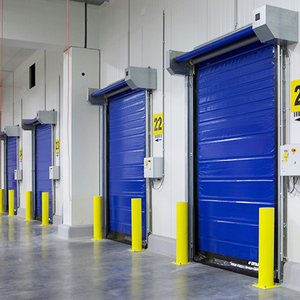
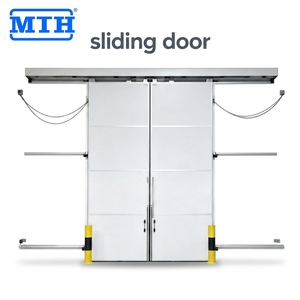
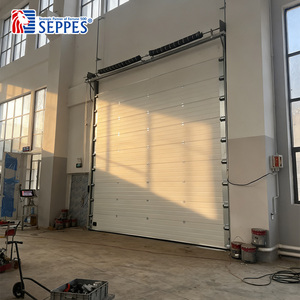
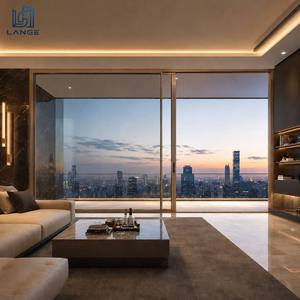
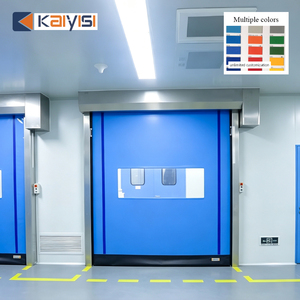
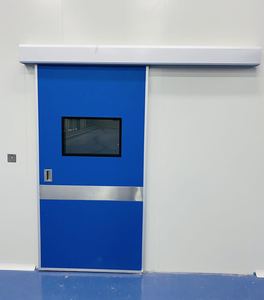
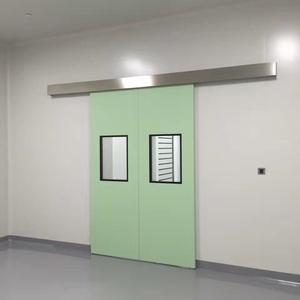
Procuring industrial sliding doors for installations in Japan demands rigorous compliance with the Japanese Building Standard Law (Kenchiku Kijun-hō), regional seismic mitigation codes, and stringent energy conservation mandates under the Net Zero Energy Building (ZEB) framework. As Japanese industrial logistics parks, high-throughput refrigerated distribution hubs, and semiconductor fabrication cleanrooms scale rapidly, facility developers require specialized sliding door assemblies capable of operating seamlessly under intense duty cycles without sacrificing structural rigidity, thermal separation, or cleanroom integrity.
Paneltech International LLC brings world-class manufacturing expertise to this demanding sector. Founded in 2009, our high-precision manufacturing complex produces continuous polyisocyanurate (PIR), polyurethane (PU), and non-combustible Rockwool composite cores bonded to precision roll-formed steel and structural aluminum extrusions. Our industrial sliding systems combine advanced structural calculations, robust European and Japanese hardware componentry, and custom-engineered automation systems built to withstand the unique operational, environmental, and regulatory realities of the Japanese archipelago.
Continuous automated high-pressure PIR/PUR injection achieves an ultra-low thermal conductivity of 0.020 W/m·K, eliminating thermal bridging in zero-degree refrigerated facilities.
Anti-derailment bottom guides and interlocking roller carriages absorb lateral horizontal accelerations up to 1.0G, preventing structural panel ejection during seismic events.
Equipped with intelligent variable frequency drives (VFD) supporting three-phase 200V circuits across both the East Japan (50Hz) and West Japan (60Hz) power grids.
Reinforced extruded frames engineered to meet JIS A 4702 Grade S-6 wind pressure thresholds (exceeding 2,800 Pa), providing certified protection against Pacific typhoons.
With statutory caps on truck driver overtime hours enforced under Japan's revised Labor Standards Act, warehouse logistics velocity has become a mission-critical financial metric. Conventional, sluggish manual sliding doors cause severe bottlenecks at loading bays and cross-docking portals. Our automated industrial sliding doors integrate high-speed servo-controlled motors, radar motion sensors, and bidirectional optical interlocks compatible with automated guided vehicles (AGVs) and autonomous mobile robots (AMRs). Opening speeds up to 1.5 m/s allow automated material flows with minimal environmental exposure, lowering air exchange rates and preventing dock refrigeration loss.
From sub-zero seafood storage in Hokkaido to cleanroom corridors in Kyushu's booming "Silicon Island", our industrial sliding doors are engineered to satisfy region-specific climate and operational requirements.
Mega-distribution centers operating 24/7 along Tokyo Bay demand durable automatic sectional and high-speed sliding doors. Our insulated door systems interlock directly with dock levelers and warehouse management software (WMS) to prevent cold air displacement during rapid trailer loading.
Processing facilities in Tomakomai and Kushiro require high-performance thermal barriers to maintain consistent -25°C to -40°C holding environments. Our heavy-duty cold room sliders feature heated frame gaskets, anti-freeze floor tracks, and airtight eccentric roller drop-down seals.
Japan's resurgent semiconductor ecosystem requires pristine contamination control under ISO Class 4 to Class 7 cleanroom conditions. Our hermetic cleanroom automatic sliding doors feature non-shedding electrostatic powder-coated skins, flush vision panels, and pressure-equalizing seals.
Automotive fabrication plants in Nagoya and Toyota City require extra-wide automated sliding closures capable of containing acoustic vibrations and weld fumes while withstanding continuous forklift traffic. Our heavy-gauge steel framework provides long operational cycles.
Biomedical facilities operating under Good Manufacturing Practice (GMP) regulations need seamless sliding doors that withstand aggressive sodium hypochlorite and hydrogen peroxide sterilization without surface degradation or microscopic cracking.
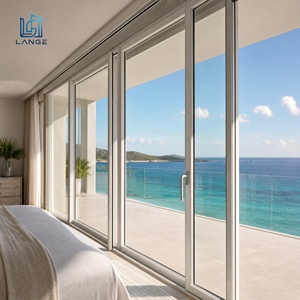
Facilities positioned directly along Japan's typhoon alley face recurrent tropical cyclones with sustained gust velocities exceeding 50 m/s and driving salt spray. Our reinforced aluminum sliding systems feature structural multi-point latching pins.
A rigorous comparative overview detailing core insulation matrices, air leakage control, wind ratings, and electrical frequency synchronization options.
| Door Model / Architecture | Insulation Core / Density | Thermal Transmittance (U) | JIS Wind Resistance | Cleanroom / Airtight Class | Japanese Grid Compatibility |
|---|---|---|---|---|---|
| High-Speed Insulated Zipper Door | Multi-Layer Thermal Composite | 1.15 W/m²·K | JIS Grade S-4 (1,600 Pa) | JIS A 4702 Air Tightness A-3 | Dual 50/60Hz 200V |
| Motorized Heavy PU Cold Slider | Continuous Injected PUR (42 kg/m³) | 0.28 W/m²·K (100mm) | JIS Grade S-5 (2,000 Pa) | Hermetic Drop-and-Slide Gasket | Dual 50/60Hz 200V |
| Sectional Insulated Overhead Slider | PIR Sandwich Panel (40 kg/m³) | 0.38 W/m²·K (80mm) | JIS Grade S-6 (2,800 Pa) | Double-Lip EPDM Perimeter | Dual 50/60Hz 200V |
| Hermetic Cleanroom Hospital Slider | High-Density Rigid PU / Aluminum Core | 1.30 W/m²·K | Interior Zone Controlled | ISO Class 4 / JIS B 9920 | 100V / 200V Dual Grid |
| Heavy-Duty Hurricane Impact Slider | Reinforced Extruded Aluminum / Dual Glass | 1.60 W/m²·K | JIS Grade S-6+ (>3,200 Pa) | Air Tightness A-4 / Water Tight W-5 | Manual or Motorized |
Drawing on an established manufacturing legacy dating back to 2009, Paneltech International produces continuous PIR, PU, and Rockwool sandwich panels, cold-formed purlins, and heavy-duty structural industrial closures. By controlling every phase of raw material formulation, metal roll forming, core injection, and CNC assembly in-house, we deliver certified quality, competitive direct-factory pricing, and complete customization for general contractors across Japan.
High-strength galvanized and pre-painted steel coils are shaped through continuous roll-formers to create dimensionally stable skins that resist deflection under wind load.
Automated cyclopentane-blown PIR continuous injection lines guarantee homogeneous core density, optimal closed-cell microstructures, and exceptional fire performance.
Automated milling cutters shape track channels and seal recesses to micrometer precision, integrating continuous EPDM or silicone gaskets for airtight closures.
Every door assembly undergoes motor run-in testing, photocell verification, and export crating engineered to prevent maritime transit vibration damage to Japanese ports.
Comprehensive answers addressing voltage compatibility, building code certification, seismic anchorage, and direct shipping logistics to major ports in Japan.
Japan operates on two distinct electrical frequencies: 50Hz in Eastern Japan (Tokyo, Yokohama, Tohoku, Hokkaido) and 60Hz in Western Japan (Osaka, Nagoya, Kyoto, Kyushu). All our automated sliding door control panels feature wide-band multi-frequency programmable variable frequency drives (VFD) and inverter motors compatible with 200V-220V 3-phase circuits across both 50Hz and 60Hz grids. Each control unit is factory-programmed and bench-tested for the exact prefectural grid destination prior to shipment, preventing motor overheating, timing jitter, or sensor misreadings.
Yes. We supply comprehensive technical documentation required by Japanese architectural general contractors and municipal building inspectors (Kakunin Kensa Kikan). This includes mill test certificates (MTR) for all structural steel and aluminum alloys, detailed structural wind pressure calculations compliant with JIS A 4702, thermal transmittance (U-value) testing reports, and combustible core reaction-to-fire documentation. For projects requiring fire compartmentalization (Bōka Kukaku), we manufacture mineral Rockwool-core sliding doors meeting non-combustible material (Funen Zairyō) performance standards.
Seismic safety is an absolute requirement in Japan. Our heavy-duty industrial sliding doors integrate captive overhead suspension tracks with secondary safety pins and dual anti-jump rollers. The bottom floor guides feature reinforced deep-engagement steel shoes that allow controlled horizontal frame deflection without popping out of the guide channel during seismic tremors. In the event of building racking, the flexible perimeter sealing profiles maintain door operability, preventing emergency exit blockages or catastrophic panel ejection.
Standard production lead times range between 3 to 4 weeks depending on opening dimensions and custom hardware configurations. Maritime container shipments reach major Japanese ports (Yokohama, Tokyo, Kobe, Osaka, Nagoya, and Hakata) within 18 to 28 days. Every door package is protected with peelable UV-resistant protective films, reinforced corner edge guards, moisture-absorbing desiccants, and heavy ISPM-15 heat-treated plywood crates engineered for smooth container destuffing at Japanese industrial job sites.
Yes. Our programmable PLC and micro-controller modules come standard with dry contact relays, RS-485 Modbus, and optional industrial Ethernet interfaces. They easily interface with automated guided vehicles (AGVs), automated storage and retrieval systems (AS/RS), cleanroom interlock cascading airlocks, and Japanese building fire alarm systems (Jidō Kasai Hōchiki Setsubi). Upon receiving a fire alarm trigger or emergency power failure, our doors support fail-safe automatic opening or gravity-counterweighted closure depending on your life-safety egress plan.
Consult with our engineering department to configure industrial sliding doors tailored to your facility's exact clear opening dimensions, thermal insulation thresholds, and Japanese building standard compliance requirements. Receive full CAD/BIM drawings, structural calculation sheets, and shipping schedules within 24 hours.