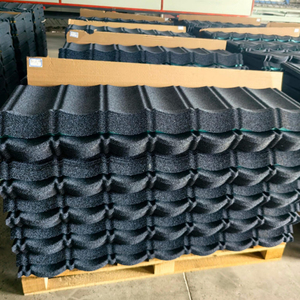
From thermal-break insulated sandwich panels to galvanized structural sub-framing, our certified production lines provide seamless, high-yield solutions designed for demanding cold storage facilities across the Berlin-Brandenburg metropolitan corridor.
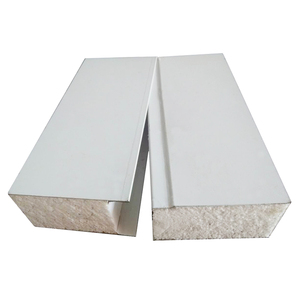
The Berlin-Brandenburg metropolitan region has rapidly developed into one of Central and Eastern Europe's most critical multi-modal supply hubs. Centered around crucial distribution nodes such as GVZ Berlin Süd (Großbeeren), GVZ Berlin Ost (Freienbrink), and the industrial complexes adjacent to the BER Airport corridor, commercial demand for temperature-controlled real estate is reaching record highs. However, developers and general contractors navigating the German building sector face stringent regulatory frameworks under the updated Building Energy Act (Gebäudeenergiegesetz - GEG) and rigorous municipal climate commitments aimed at full decarbonization.
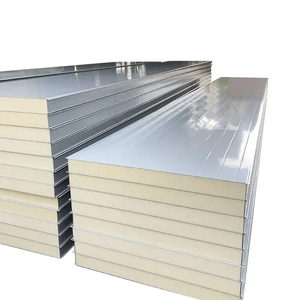
For cold storage operators, cold logistics developers, and pharmaceutical distribution hubs, achieving operational sustainability depends primarily on thermal envelope tightness. The cost of electrical energy required to sustain sub-zero conditions (down to -35°C for blast freezing or specialized biological storage) means that thermal bridging, joint micro-permeability, and insulation degradation directly threaten operational viability. Sourcing from a reliable OEM/ODM manufacturer capable of continuous-line polyisocyanurate (PIR), polyurethane (PUR), and non-combustible high-density mineral Rockwool core lamination is essential to meet strict German structural and thermal criteria.
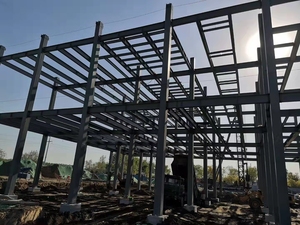
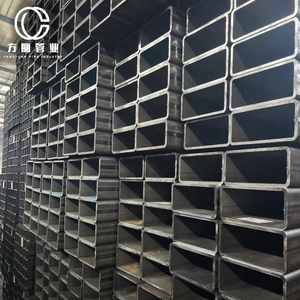
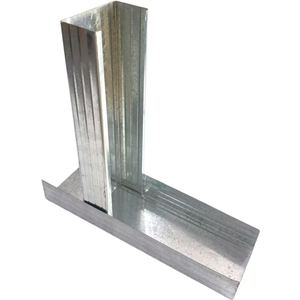
Our manufacturing lines provide certified insulated panel assemblies featuring advanced labyrinth-style tongue-and-groove joinery with integrated factory-applied vapor gaskets, eliminating convective thermal leakage. Combined with our secondary cold-formed structural steel purlins (C/Z profiles) and heavy-gauge structural hollow sections (HSS), we provide an end-to-end building envelope system engineered to withstand thermal deflection loads and wind suction forces in the open plains of Eastern Germany.
Selecting the correct insulated core for cold chain engineering projects in Berlin requires an analysis of thermal efficiency, fire rating classifications under DIN EN 13501-1, compressive strength, and moisture-vapor permeability. The following matrix outlines the physical properties of our OEM/ODM panels:
| Insulation Core Type | Thermal Conductivity ($\lambda$) | Euroclass Fire Rating (EN 13501-1) | Core Density Range | Compressive Strength (10% def.) | Vapor Diffusion Resistance ($\mu$) | Target Berlin Applications |
|---|---|---|---|---|---|---|
| Rigid PIR (Polyisocyanurate) | 0.020 - 0.022 W/m·K | B-s1, d0 | 40 - 45 kg/m³ | ≥ 150 kPa | 60 - 80 | Deep freeze (-25°C to -35°C), Automated High-Bay GVZ Warehouses |
| Rigid PUR (Polyurethane) | 0.022 - 0.024 W/m·K | B-s2, d0 / C-s2, d0 | 38 - 42 kg/m³ | ≥ 140 kPa | 50 - 70 | Chilled storage (0°C to +8°C), Urban food preparation rooms, Butcheries |
| Structural Rockwool (Mineral) | 0.038 - 0.042 W/m·K | A2-s1, d0 / A1 (Non-combustible) | 100 - 140 kg/m³ | ≥ 100 kPa | 1.0 (requires vapor-tight steel facings) | Fire-compartment walls, Chemical storage, Battery test chambers |
| FRP / EPS Hybrid Panels | 0.033 - 0.036 W/m·K | E / D-s3, d0 | 18 - 25 kg/m³ | ≥ 80 kPa | 30 - 40 | Modular walk-in coolers, Washdown cleanrooms, Agricultural depots |
Note: U-values conform to DIN EN ISO 6946. Panels utilize pentane-blown or hydrofluoroolefin (HFO) continuous foaming with zero ODP (Ozone Depletion Potential) and ultra-low GWP (< 1), fully aligning with the European F-Gas Phase-Down Regulation.
Our OEM/ODM cold room panels and supporting steel structures are tailored to meet the operational demands of Berlin’s diverse industrial, scientific, and urban food sectors.
Berlin’s biotech and healthcare clusters (Berlin-Buch, Potsdam Science Park) require strict adherence to EU Good Distribution Practice (GDP). We supply airtight PIR sandwich systems (120mm to 160mm) combined with food-grade antimicrobial plastisol coatings (FoodSafe 150µm) to ensure stable +2°C to +8°C cold rooms and -20°C active pharmaceutical ingredient (API) storage without biological contamination risks.
Supporting the dynamic restaurant, retail, and e-grocery sectors across the Berlin-Spandau and Beusselstraße markets requires durable, modular walk-in cold rooms and refrigerated staging docks. Our panels feature heavy-duty cam-lock interlocking mechanisms, reinforced PVC floor buffers, and scratch-resistant finishes that endure constant forklift traffic and rigorous washdowns.
The expansion of electromobility and battery cell engineering along the Brandenburg corridor requires specialized low-dewpoint dry rooms and non-combustible cleanroom partitions. We manufacture Class A1/A2 Rockwool sandwich panels with silicone-free edge seals, providing up to 120 minutes of certified fire resistance (EI120) to protect mission-critical testing enclosures.
Strategic purchasing in Berlin requires forward-looking specification that anticipates rising energy levies, tightening EU environmental laws, and evolving automated warehouse designs.
The revised German Building Energy Act mandates reduced overall transmission heat loss ($H_T'$). Procurement teams are moving from 100mm to 140mm-160mm PIR roof and wall panels to achieve U-values under $0.14\text{ W/m}^2\text{K}$.
The rapid adoption of trans-critical $CO_2$ (R744) and Ammonia ($NH_3$) in German cold rooms generates higher localized pipe vibrations and thermal swings, requiring panel joints that maintain hermetic sealing under pressure differentials.
High industrial land prices in Berlin-Brandenburg are driving the growth of clad-rack structures up to 35m in height. Our continuous 18-meter panel production runs eliminate horizontal joints, avoiding thermal leaks in automated high-bay facilities.
Certification schemes by the German Sustainable Building Council (DGNB) incentivize cold room panels designed for easy deconstruction and recycling, utilizing non-ozone depleting blowing agents and recyclable steel substrates.
Operating continuous multi-line manufacturing facilities since 2009, our industrial manufacturing group provides European engineering contractors with a comprehensive building envelope ecosystem. Unlike brokers or single-product converters, we manage everything from the decoiling of structural steel to precision high-pressure polyisocyanurate injection and computerized roll-forming.
Equipped with computerized multi-component dosing systems and 40-meter caterpillar continuous presses, our panels achieve consistent density distribution (42 kg/m³ ± 2) with zero internal voids, ensuring consistent lambda values across entire panel runs.
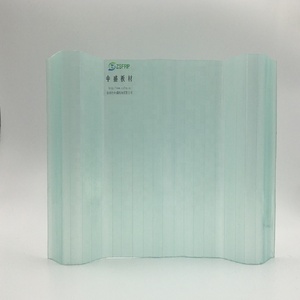
Contractors can source the complete cold room envelope package: insulated PIR/Rockwool panels, matched cold-formed Z & C purlins for roof hanging, ASTM A500 HSS structural tubing for rack posts, translucent daylighting sheets, and precision flashings.
We produce customized skin profiles (micro-ribbed, box-profiled, flat, or corrugated), specialized coatings (FoodSafe PVC, PVDF 70/30, anti-static, antimicrobial), custom panel thicknesses up to 200mm, and integrated cam-lock systems for modular walk-in cold rooms.
Our quality management infrastructure operates in strict compliance with ISO 9001, ISO 14001, and EN ISO 14509 testing protocols. Every production run undergoes automated in-line adhesive tensile verification, shear strength testing, and thermal conductivity sampling, ensuring seamless project acceptance by German structural inspectors (Prüfingenieure).
Clear, technical answers to common questions regarding German code compliance, logistics to Brandenburg, structural design, and custom manufacturing runs.
Consult with our senior technical engineering team for structural load calculations, thermal transmittance (U-value) simulations, and factory-direct OEM/ODM quotation packages tailored to German building regulations.
Contact Us