?
Which alloy is best suited for coastal Houston: AA3003, AA3004, or AA5052?
For inland commercial structures (Katy, Spring, Woodlands), AA3003-H14 or AA3004 offers excellent tensile strength, formability, and baseline atmospheric corrosion resistance at an economical cost. However, for industrial facilities within 15 miles of the coast or situated along the Houston Ship Channel, Pasadena, or Galveston Bay, marine-grade AA5052-H32 is recommended. Its 2.5% magnesium content provides superior passivating protection against chloride salts and acidic industrial emissions without pitting.
?
How do you prevent bimetallic galvanic corrosion when fastening aluminium sheets to steel purlins?
Direct physical contact between profiled aluminium and bare carbon steel or red-oxide primer purlins in humid coastal climates creates a galvanic couple that rapidly degrades the aluminium. Our installation standards require: (1) hot-dip galvanized (Z275/G90 minimum) purlin surfaces, (2) dielectric isolation barrier tapes or heavy self-adhesive EPDM pads at all purlin flanges, and (3) austenitic 304 or 316 stainless steel fasteners equipped with vulcanized, non-conductive EPDM sealing washers. Never use zinc-plated carbon steel screws.
?
What rib profiles deliver the highest uplift performance under TDI hurricane requirements?
Trapezoidal box rib profiles (such as 1.5" and 1.75" deep industrial box ribs) and 7.2 Rib profiles provide high section modulus (Zx) values, distributing severe negative suction loads evenly into the sub-framing. For low-slope roofs (< 2:12), mechanical standing seam aluminium profiles with concealed sliding clips achieve uplift resistance ratings above 120 PSF, preventing wind-driven rain ingress during tropical storms and hurricanes.
?
Can your profiled aluminium systems integrate with FRP skylights and insulated panels?
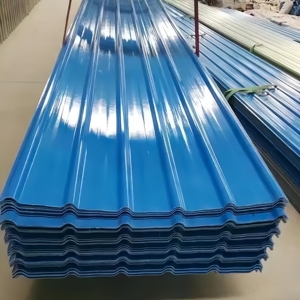
Yes. We engineer our roll-forming profiles with standard pitch and rib dimensions matching our continuous PIR/Rockwool sandwich panels and translucent corrugated FRP daylighting sheets. This profile coordination ensures clean lap joints, smooth transitions, and reliable weather-tight seals, preventing the leaks and thermal breaks common when mixing profiles from multiple suppliers.
?
What coating system resists extreme Gulf Coast UV radiation and chemical attack?
We recommend a factory-applied 70% Kynar 500 / Hylar 5000 PVDF (Polyvinylidene Fluoride) or advanced FEVE (Fluoroethylene Vinyl Ether) resin coating conforming to AAMA 2605 specifications. Applied over a chromate or zirconium pre-treatment with an epoxy primer, this 2-coat or 3-coat system resists color fading (ΔE < 5 over 20 years), chalking, and environmental micro-fissuring caused by intense Gulf solar radiation.
?
What are standard lead times and export packing standards for delivery to Port Houston?
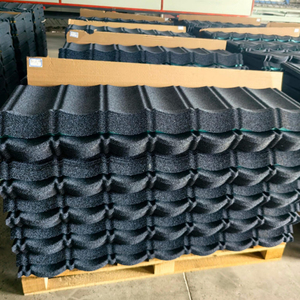
Standard production cycles range from 2 to 3 weeks following approved submittals. All ocean shipments destined for Port Houston terminals are packed for transoceanic transit: bundles are wrapped in waterproof plastic film, interleaved with moisture-inhibiting paper, fitted with heavy edge protectors, and secured on rigid wooden skids for container offloading or flatbed distribution throughout Texas.
?
What documentation is provided for engineering and permitting submittals?
We supply complete technical submittal packages including Mill Test Reports (MTRs), tensile test verifications (ASTM B209), salt fog chamber certifications (ASTM B117), section property calculations (moment of inertia and section modulus per profile), factory QA logs, and technical installation guides outlining purlin spans, fastener patterns, and thermal expansion joint spacing.
?
How do profiled aluminium sheets lower ongoing building lifecycle costs compared to steel?
While initial raw material costs for aluminium are higher than standard carbon steel, the life-cycle payback in coastal Texas is compelling. With zero maintenance repainting, no sacrificial rust abatement, reduced building dead weight (allowing lighter structural steel frames and downsized foundations), and high cool-roof thermal reflectance that cuts AC energy consumption, profiled aluminium delivers a lower Total Cost of Ownership (TCO) across a 30-to-50 year building life.