
Standardized, factory-tested structural components, cold-chain doors, and pre-insulated panels tailored for rapid industrial assembly in the Central Federal District.
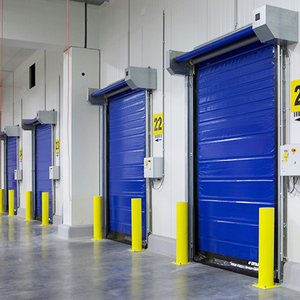
Engineered for cold storage vestibules down to -30°C. Eliminates frost bridging, minimizes thermal convection losses, and features self-resetting track tracks.
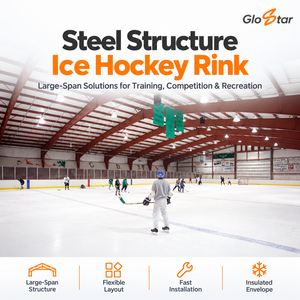
Non-combustible NG/A1 rated core delivering acoustic reverberation dampening and fire partition ratings up to EI 150 for public sports facilities and ice arenas.
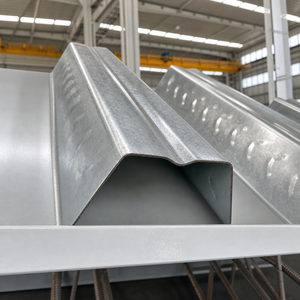
Galvanized structural steel decking with embossed ribs for reinforced composite concrete slabs, supporting high dead-and-live loads in multi-tier logistics hubs.
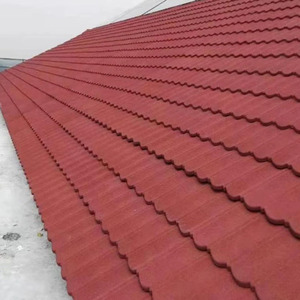
Multi-layer corrosion-inhibited stone-coated sheeting designed to withstand severe freeze-thaw cycles, heavy snow drift accumulation, and hail impacts.
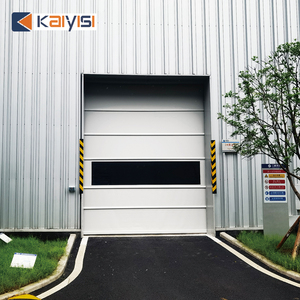
Heavy-duty roll-up perimeter barrier with integrated steel wind bars rated for Class 4 wind resistance, preventing warm air escape during harsh winter dock loading.
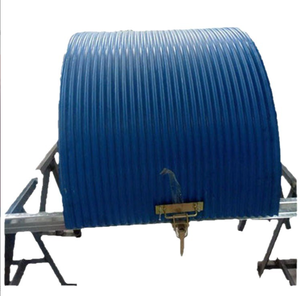
Continuously roll-formed curved profiles ideal for barrel vaults, hangars, and agricultural storage roofs requiring high span capacity without central ridge joints.
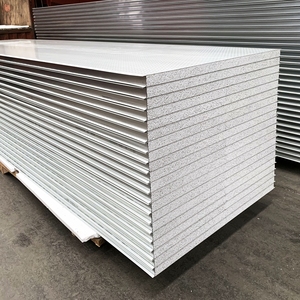
Economical prefabricated internal wall and ceiling partition system featuring low deadweight, moisture resistance, and rapid tongue-and-groove dry alignment.
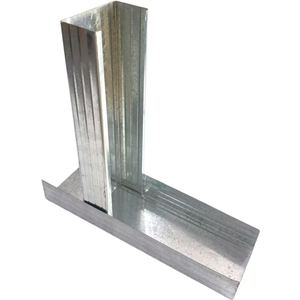
Cold-formed galvanized framing channels and hat battens providing rigid, non-corroding sub-framing for industrial cleanrooms, offices, and suspended ceilings.
The Moscow urban region and the surrounding Moscow Oblast (Podmoskovye) fall within the temperate continental climatic zone (Köppen Dfb), defined by intense seasonal temperature swings ranging from humid summer highs of +35°C to prolonged sub-zero winter lows dipping below -30°C. In this demanding environment, industrial envelope design cannot rely on conventional single-skin construction or substandard low-density foam infills.
Under Russian Federal Building Code SP 50.13330.2012 (Thermal Performance of Buildings), building envelopes in Moscow require a minimum thermal resistance (R₀) calculated against roughly 4,500 to 5,000 degree-days of the heating period (GSOP). For heated logistics warehouses (interior setpoint +18°C), the baseline regulatory wall envelope must achieve an R₀ of no less than 3.15 m²·°C/W, while insulated roofing structures require an R₀ exceeding 4.20 m²·°C/W.
Rigid Polyurethane (PUR) and Polyisocyanurate (PIR) cores offer the highest thermal resistance per millimeter of any mass-produced construction material. A 100mm PU panel achieves equivalent thermal resistance to a 160mm mineral wool panel or over 1,400mm of standard clay brickwork, drastically reducing foundational deadweight, maximizing internal warehouse volumetric cubic capacity, and slashing seasonal heating operational expenditures.
| Insulation Core Type | λ Thermal Value | Moscow Winter R₀ (100mm) | Fire Behavior (GOST 30244) |
|---|---|---|---|
| Rigid PU (Polyurethane) | 0.022 W/(m·K) | ~4.55 m²·°C/W | G2 - G3 (Normal Flammability) |
| PIR (Polyisocyanurate) | 0.020 - 0.022 W/(m·K) | ~4.75 m²·°C/W | G1 (Flame-Retardant, Self-Ext.) |
| Structural Rockwool | 0.040 - 0.044 W/(m·K) | ~2.35 m²·°C/W | NG (Non-Combustible, A1) |
| Expanded Polystyrene (EPS) | 0.038 - 0.041 W/(m·K) | ~2.50 m²·°C/W | G3 - G4 (Requires Fire Breaks) |
From Class-A distribution parks along the Central Ring Road (TsKAD) to pharmaceutical cleanrooms in Zelenograd, our PU/PIR panel systems solve specific operational challenges.
E-commerce distribution terminals (e.g., Wildberries, Ozon, and retail supply chains) situated along the MKAD ring and TsKAD highway require massive, continuous wall envelopes spanning 12-14 meters in single vertical sections. PIR/PU panels provide optimal rigidity, airtight hidden-fix joint profiles, and rapid dry assembly that drastically compresses project timelines.
Food logistics parks in Stupino, Dmitrov, and Domodedovo operate deep-freeze rooms requiring 150mm to 200mm continuous PU core paneling. Our cam-lock and double-labyrinth tongue-and-groove joint systems completely isolate internal moisture, prevent permafrost frost heave beneath floor decking, and eliminate thermal bridging at dock thresholds.
Electronics, biotechnology, and pharmaceutical manufacturing facilities in Special Economic Zones like Technopolis Moscow demand completely flush wall surfaces, airtight interlocks, and chemical-resistant antimicrobial coatings. Our smooth-finish PU partition panels resist rigorous daily CIP (clean-in-place) disinfection washdowns.
Modern vegetable storage facilities and dairy processing operations in rural Moscow Oblast require envelopes that resist biological fungal degradation, organic ammonia vapors, and sustained 90%+ relative humidity. Our PU panels with PVDF or food-safe plastisol coatings guarantee over 25 years of structural integrity without corrosion.
How technological innovation, stringent fire regulations, and supply chain realignments are transforming structural panel procurement across Russia's central industrial territory.
Traditional Polyurethane (PUR) is rapidly evolving into PIR formulations featuring high isocyanate index ratios (>250). In Moscow municipal projects, fire safety authorities under SP 2.13130 enforce G1 combustibility and RE 15 to RE 45 fire ratings for exterior envelopes. PIR panels carbonize into a stable protective crust when exposed to direct flames, bridging the gap between polymer thermal efficiency and mineral wool fire safety.
Contractors across Podmoskovye are bypassing traditional retail intermediaries and regional trading houses to source directly from large-scale continuous manufacturing lines. Direct factory procurement secures exact cut-to-length custom panel runs (up to 16m), documented coil origin certification, traceable zinc mass verification, and synchronized deliveries mapped to on-site crane availability.
With Moscow's construction season historically constrained by sub-zero temperatures from November through March, developers rely heavily on prefabricated dry-joint envelope systems. Modern PU panels featuring pre-applied silicone vapor seals and elastomeric gaskets permit installation down to -20°C, eliminating wet-mortar delays and expediting project commercialization.
Rising energy tariffs in the Central Federal District have shifted engineering specifications from upfront capital expenditure (CapEx) to total lifecycle operational expenditure (OpEx). Commercial facility owners are modeling long-term HVAC electricity and central heating gas savings, opting for 120mm-150mm PU envelopes over standard 80mm panels to yield positive ROI within 3-4 operational heating seasons.
Backed by decades of heavy industrial manufacturing expertise since our founding in 2009, every building envelope element adheres to audited global engineering protocols.
Panels are formed on continuous automated lines featuring precise multi-component high-pressure metering units. This guarantees uniform foam cell distribution without internal air pockets, micro-voids, or structural density variations across panels up to 16 meters long.
We source prime pre-painted galvanized steel (PPGI) and zinc-aluminum coils with documented zinc coating weights of 180 to 275 g/m². Surface finishes undergo strict Erichsen cupping tests, cross-cut adhesion tests, and salt spray resistance testing exceeding 1,000 hours.
Every shipment is accompanied by comprehensive quality passports, load-bearing span tables under uniform snow loads (up to 3.2 kPa for Moscow Snow Zone III), peel bond strength data (>0.12 MPa), and core density certificates compliant with GOST/EN specifications.
Beyond wall and roof sandwich panels, our facilities produce structural open-rib metal decking, secondary cold-formed Z & C purlins, matching perimeter flashings, and high-speed cold storage doors, delivering unified aesthetic coherence and guaranteed structural compatibility.
Critical structural, thermal, logistical, and regulatory answers for chief structural engineers, commercial directors, and industrial general contractors.
For standard heated industrial spaces maintaining an indoor temperature of +18°C, a 100mm rigid Polyurethane/PIR panel with a thermal conductivity of λ = 0.022 W/(m·K) provides a thermal resistance (R₀) of approximately 4.55 m²·°C/W, easily exceeding Moscow's mandatory baseline of 3.15 m²·°C/W. For refrigerated spaces (+2°C to +6°C), 100mm to 120mm is standard, while deep-freeze logistics environments (-25°C to -30°C) require 150mm to 200mm panels to prevent condensation and minimize refrigeration compressor cycle loads.
Our panels feature precision-milled double-labyrinth tongue-and-groove interlocks with factory-applied butyl sealant grooves. This interlocking geometry ensures that internal metallic facings do not contact exterior cold steel sheets, completely neutralizing thermal bridging. Additionally, continuous compressed elastomeric gaskets block warm indoor moisture from entering the joint cavity, eliminating interstitial condensation, icing, and mold accumulation during sub-zero freeze cycles.
Yes. Because sandwich panel construction is completely dry, structural installation can proceed at ambient temperatures down to -20°C, provided standard cold-weather protocols are observed. These include utilizing low-temperature self-drilling fasteners with EPDM washers that retain elastic flexibility in freezing conditions, warming butyl sealing tapes prior to joint closure, and keeping panel surfaces clear of snow accumulation before lifting and fastening.
Mineral rockwool is classified as NG (completely non-combustible) and is mandated for designated high-risk fire-break partitions and exterior fire barrier walls requiring fire ratings from EI 60 up to EI 150. High-index PIR panels achieve a G1 (flame-retardant) classification with fire resistance ratings up to EI 30 or EI 45. While PIR is approved for most industrial external wall and roofing applications, critical compartmentalization walls between manufacturing lines should utilize certified structural rockwool panels.
Standard external facades in non-aggressive industrial environments typically utilize 25µm Polyester (SP) over zinc coating. However, for logistics hubs exposed to highway de-icing salts along the MKAD, heavy industrial emissions, or agricultural chemical washdowns, we strongly recommend specifying Polyvinylidene Fluoride (PVDF 35µm) or high-build Polyurethane (PurAl / PUR 50µm). For internal cold food storage and dairy processing, 120µm Food-Safe PVC Plastisol ensures zero bacterial adherence and superior resistance to acidic cleaning agents.
Panels are factory-stacked on high-density EPS dunnage blocks, wrapped in heavy-gauge UV-stabilized stretch film, and fitted with rigid edge protection to withstand road transport without corner crimping. For projects located within Moscow's restricted inner transport rings (Third Transport Ring / TTK and MKAD), delivery schedules are coordinated with low-bed flatbed trailers possessing municipal daytime commercial transit permits, enabling synchronized, damage-free offloading directly to crane staging pads.
Receive comprehensive structural span load calculations, verified thermal resistance R₀ simulations matching SP 50.13330 guidelines, and a factory-direct commercial proposal tailored for your project timeline.