
Procure certified industrial-grade building envelope systems manufactured to withstand extreme desert thermal cycling (+50°C) and rigorous GCC infrastructure standards.
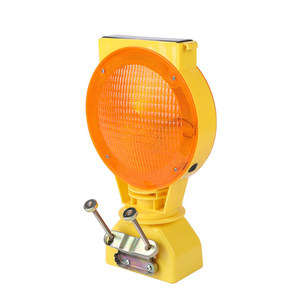
Heavy-duty industrial barricade warning beacon for nighttime transport safety and perimeter security during high-scale structural panel installations.
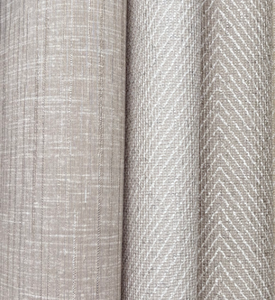
Class A flame-spread commercial vinyl wall covering optimized for hospitality, healthcare, and cleanroom wall panels requiring antimicrobial washdown resistance.
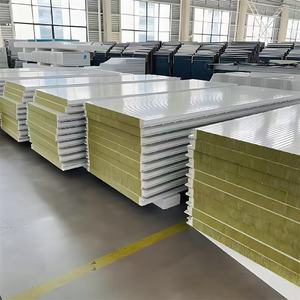
High-density 120kg/m³ basalt mineral wool core offering up to 240 minutes fire resistance, exceptional acoustic damping, and weather-tight interlocking tongue-and-groove joints.
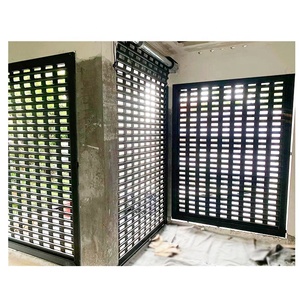
Cold-rolled galvanized concave security laths providing natural perimeter ventilation while maintaining heavy-duty security for warehouses and industrial distribution bays.
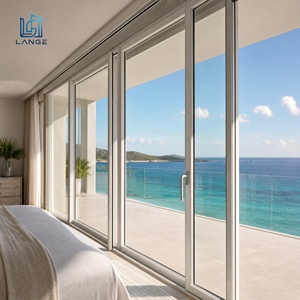
Structural 2.0mm reinforced profile engineered for maritime zones in Duqm and Salalah subjected to high wind shear, salt-mist corrosion, and airborne sand abrasion.
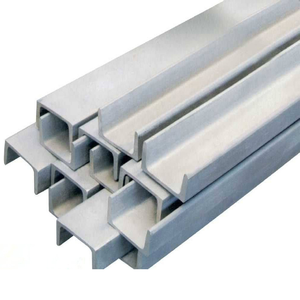
Precision cold-formed galvanized Z275/AZ150 purlins designed to support insulated rockwool roof decks and cladding facades across long building spans without deflection.
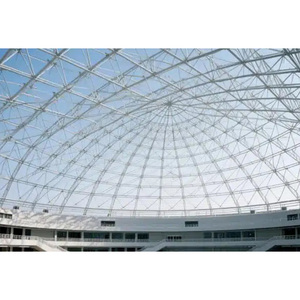
Engineered hot-dip galvanized steel truss networks tailored for industrial warehouses, enabling rapid envelope assembly with zero on-site hot work or welding requirements.
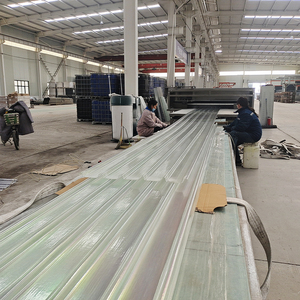
UV-stabilized resin fiberglass panels engineered to match sandwich panel corrugation profiles, transmitting up to 85% natural daylight while rejecting damaging solar infrared heat.
An authoritative analysis of basalt wool fiber orientation, structural adhesion, and thermal barrier mechanics in the Arabian Peninsula.
In the architectural and structural engineering landscape of the Sultanate of Oman, building envelope specifications are governed by an unforgiving convergence of environmental parameters: surface metal temperatures consistently reaching +75°C under direct solar radiation, ambient atmospheric heat exceeding +50°C, high diurnal temperature deltas triggering intense thermal fatigue, and heavy coastal humidity carrying airborne marine chlorides. Conventional organic insulation cores like Expanded Polystyrene (EPS) and Polyurethane (PU) can face severe mechanical degradation, outgassing risks, and combustibility vulnerabilities when exposed to industrial fire scenarios.
Our Rockwool (Mineral Wool) Sandwich Panels are engineered to eliminate these architectural vulnerabilities. Manufactured utilizing volcanic basalt stone molten at temperatures exceeding 1,450°C and spun into non-directional interwoven mineral fibers bound by thermosetting hydrophobic resins, our panels deliver unmatched structural integrity and non-combustibility.
Unlike manual batch lamination which introduces micro-voids, our Barka automated continuous production line slices high-density mineral wool slabs into vertical lamellae, rotating them 90 degrees so the stone fibers stand perpendicular to the steel facings. This fiber orientation amplifies compressive strength to ≥100 kPa and increases transverse tensile bond strength to ≥0.12 MPa, preventing core delamination during extreme desert wind shear and building expansion.
Specifying engineers must weigh thermal conductivity, mechanical rigidity, and fire behaviour when calculating lifecycle return on investment for Omani infrastructure:
| Performance Parameter | Structural Rockwool (Mineral Wool) | PIR (Polyisocyanurate) | PU (Polyurethane) | EPS (Expanded Polystyrene) |
|---|---|---|---|---|
| Reaction to Fire (EN 13501-1) | Class A1 (Non-Combustible) | Class B-s1, d0 (Fire Retardant) | Class B-s2, d0 (Combustible) | Class E / F (Highly Flammable) |
| Maximum Core Temperature Limit | +1,000°C (Maintains Physical Matrix) | +140°C (Pyrolysis Onset) | +110°C (Decomposition) | +75°C (Rapid Softening) |
| Thermal Conductivity (λ at 25°C) | 0.038 – 0.042 W/m·K | 0.020 – 0.022 W/m·K | 0.022 – 0.024 W/m·K | 0.036 – 0.040 W/m·K |
| Standard Core Density Range | 100 – 140 kg/m³ | 38 – 42 kg/m³ | 38 – 40 kg/m³ | 15 – 20 kg/m³ |
| Acoustic Attenuation (Rw Index) | 31 – 35 dB (High Noise Dampening) | 22 – 24 dB (Acoustically Transparent) | 21 – 23 dB | 18 – 20 dB |
| Smoke Toxicity / Droplets | Zero Smoke, Zero Toxic Gas, Zero Flaming Droplets | Dense Smoke, Toxic Gases | Extremely Toxic Cyanide / CO Gas | Flaming Droplets, Rapid Fire Spread |
| Resistance to Marine Chlorides | Inert Basalt Fiber (Zero Corrosion Acceleration) | Susceptible to Solvent Attack | Vulnerable to Chemical Vapor | High Shrinkage Risk |
Industrial processing zones, oil & gas distribution centers, and power generation turbines generate continuous low-to-mid frequency airborne vibrations. While polymeric foam cores offer low sound transmission loss due to their lightweight closed-cell structures, rockwool's dense fibrous matrix functions as a high-efficiency dissipative sound absorber. Unbonded air cavities between the interwoven basalt filaments trap sound waves, converting mechanical acoustic energy into low-grade heat, routinely delivering an airborne sound reduction index of Rw 31 to 36 dB. When specified with internally micro-perforated steel facings, our rockwool acoustic panels function as high-efficiency industrial baffles that achieve a Noise Reduction Coefficient (NRC) exceeding 0.85.
From the harsh maritime coastline of Duqm to the petrochemical hubs of Sohar and the industrial logistics parks of Khazaen, our panels satisfy specialized environmental stresses.
Duqm represents one of the world's most aggressive atmospheric corrosion zones, combining direct Indian Ocean salt-fog with harsh desert sandstorms. In this territory, we supply Rockwool sandwich panels manufactured with PVDF (Polyvinylidene Fluoride) 70/30 or Plastisol PVC coatings over a high-zinc substrate (Z275 or AZ150 galvalume), delivering C5-M marine corrosion resistance that protects refineries, ship-repair yards, and logistics dry docks.
Home to petrochemical cracking facilities, metallurgy processors, and hazardous substance storage, Sohar mandates structural passive fire separation. Paneltech Rockwool panels function as certified Class A1 internal firewall partitions and external perimeter firewalls, delivering certified fire barrier protection for up to 4 hours, mitigating catastrophic cascading heat transfer in hazardous industrial environments.
As Oman's premier dry port and food consolidation zone, Khazaen requires heavy thermal insulation to counteract peak desert ambient temperatures (+50°C). Our 100mm to 150mm thick Rockwool roof and wall configurations slash building cooling requirements, maintaining structural thermal equilibrium, reducing HVAC chiller operational expenditure by 35%, and preventing condensation under extreme humidity.
For corporate headquarters, airport logistics hangars, and government facilities across Muscat, acoustic comfort and aesthetic excellence are non-negotiable. Our panels are roll-formed in bespoke architectural profiles with hidden-fix joint detailing (Secret-Fix), offering clean facade lines combined with noise mitigation against urban vehicular and aviation noise.
Operating inside remote desert upstream extraction stations requires rugged pre-fabricated worker accommodations, generator sound enclosures, and control rooms. Rockwool insulated envelopes satisfy strict Petroleum Development Oman (PDO) occupational health, blast-overpressure containment, and fire suppression protocols.
Subject to the unique Khareef monsoonal microclimate, Salalah experiences saturated ambient relative humidity and continuous damp cycles. Standard organic foams risk internal mold colonization and moisture entrapment. Our hydrophobic treated rockwool cores repel water absorption, ensuring stable U-values year-round.
How statutory civil safety mandates, municipal thermal insulation standards, and green building targets are shaping procurement decisions across the Sultanate.
Following high-profile structural fires across the GCC region, the Royal Oman Police (ROP) Directorate General of Civil Defence and Ambulance (CDAA) has significantly elevated passive fire safety inspections. Exterior wall facades and industrial roofs are rigorously audited for flame-propagation risks. Polymeric cores without international third-party certification face rejection during site inspections, accelerating widespread market migration toward Class A1 non-combustible rockwool systems.
Oman’s Authority for Public Services Regulation (APSR) and Ministry of Commerce, Industry and Investment Promotion (MOCIIP) continue tightening envelope thermal transfer maximums (U-values). Uninsulated single-skin metal sheeting is being phased out for all industrial and storage facilities. Specifying 100mm+ Rockwool panels reduces envelope thermal bridging, lowering industrial HVAC electricity demand by up to 40% and supporting Oman's National Net-Zero 2050 pledge.
Oman’s heavy logistics sector is transitioning from traditional concrete block masonry to Pre-Engineered Steel Buildings (PEB). Contractors face compressed construction delivery windows in ports and freezones. Rockwool sandwich panels offer exceptional structural spanning capability over secondary steel Z and C purlins, accelerating building dry-in times by 60% while slashing on-site scaffolding and labor footprint.
Contractors operating under government, PDO, and major infrastructure tenders face stringent In-Country Value (ICV) performance requirements. Procuring factory-direct building envelope systems from domestic manufacturing hubs like Barka eliminates reliance on erratic international maritime shipping, volatile customs wait times, and foreign exchange exposure, while maximizing the project's auditable ICV rating.
Headquartered in Barka, Sultanate of Oman (P.O. Box 391, PC 320), Paneltech International LLC (PTI) operates industrial continuous production lines engineered to manufacture high-tolerance PIR, PU, and Rockwool sandwich panels, profiled roofing sheets, composite metal decking, and cold-formed Z & C structural purlins.
By engineering and manufacturing both the insulated panel envelope and the supporting secondary steel profiles within our own domestic facilities, PTI guarantees structural, dimensional, and metallurgical compatibility across every project component.
Our engineered sandwich panels and structural systems are specified and proven across critical Omani commercial, governmental, and industrial landmarks, including:
Clear, technical, and regulatory answers for project managers, structural consultants, and MEP contractors operating within the Sultanate.
Yes. Our Rockwool insulated sandwich panels are certified as Class A1 non-combustible building materials pursuant to BS EN 13501-1 and ASTM E84 / ASTM E119 test protocols. Under fire exposure, our panels release zero flaming droplets, emit no hazardous halogenated toxic vapors, and do not contribute to flashover flame spread. Technical documentation, independent laboratory fire test certificates, and factory quality audits are readily supplied to consultants and contractors for smooth submission and sign-off by the Royal Oman Police Directorate General of Civil Defence and Ambulance.
For high-salinity maritime and aggressive coastal environments within 5 km of the ocean (e.g., Duqm, Salalah, Sohar Port), we recommend a minimum external steel facing of 0.50mm to 0.70mm nominal thickness over hot-dip galvanized steel (Z275 coating mass) or Galvalume (AZ150 zinc-aluminum alloy). For finish coatings, standard polyester (PE) is upgraded to PVDF (Polyvinylidene Fluoride) 70/30 with a minimum 25-micron dry film thickness or Plastisol PVC (200 microns). These multi-layer barrier systems provide exceptional UV-blocking resistance (RUV4 classification) and salt-spray resistance (RC5 atmospheric corrosivity category under ISO 12944).
Under Omani municipal energy conservation guidelines and APSR energy efficiency standards, the target thermal transmittance (U-value) for conditioned industrial and commercial roofs typically falls between 0.30 and 0.40 W/m²·K, while exterior walls require between 0.35 and 0.45 W/m²·K. To achieve these benchmarks using Rockwool (λ = 0.040 W/m·K), we recommend a minimum core thickness of 100mm for exterior roof envelopes and 80mm to 100mm for external wall cladding. For blast walls, cold logistics dry-stores, or severe acoustic barriers, thicknesses of 120mm to 150mm are custom-manufactured at our Barka plant.
While basalt rock is inherently non-hygroscopic, our high-density mineral wool insulation is treated with specialized organosilicon hydrophobic emulsions during the spinning stage. This imparts active water-repellency throughout the core volume, ensuring that ambient humidity and short-term moisture exposure cannot penetrate the fiber structure (water absorption ≤ 1.0 kg/m² per EN 1609). Furthermore, our panels feature precision roll-formed male-female interlocking joints equipped with factory-applied closed-cell elastomeric butyl sealing tapes that form a continuous hermetic vapor barrier against humidity ingress and condensation.
Yes. Sourcing piecemeal components from multiple vendors introduces dimensional discrepancies, mismatched paint dye lots, incompatible thermal expansion coefficients, and bi-metallic galvanic corrosion. Paneltech International LLC provides a comprehensive structural envelope solution: Rockwool sandwich panels, roll-formed high-tensile Z and C purlins, precision folded perimeter metal flashings, profile-matched FRP translucent skylights, composite galvanized floor decking, and industrial roller shutter doors, delivering a coordinated installation package directly from Barka.
Standard flatbed trailer logistics across the Sultanate accommodates panel bundles up to 12.0 meters without escort requirements. For large-span industrial roofs in locations like Sohar, Duqm, or Muscat, our automated continuous line can cut panels up to 14.5 meters in length. Panel bundles are wrapped in UV-resistant protective polyethylene film, palletized with high-density EPS dunnage blocks, and secured with corner guards to prevent transit abrasions across long-distance desert road routes.
Connect directly with Paneltech’s Barka engineering and technical estimation department. Receive comprehensive structural load span calculations, U-value optimization reports, Civil Defence compliance dossiers, and factory-direct project pricing within 24 hours.