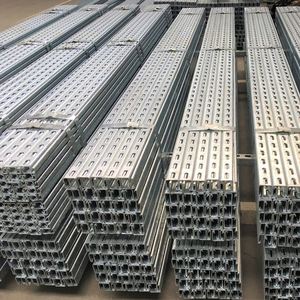
Customized Structural Steel Section Hot Dip Galvanized Unistrut C Channel Section Steel Roof Trusses Strut Channel
Standard: ASTM A123
Coating: HDG Z275-Z600

Engineered to satisfy demanding ASTM, ANSI/DASMA, and NYC Building Code mandates. Explore our heavy-duty roll-formed steel channels, high-R polyurethane sections, and precision industrial hardware.
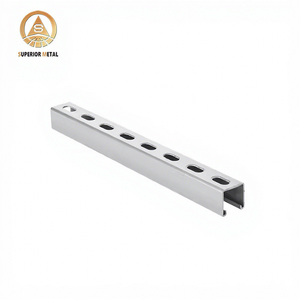
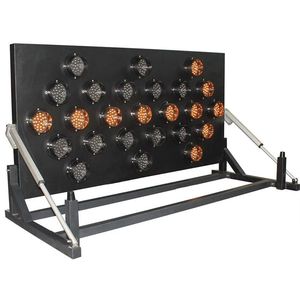
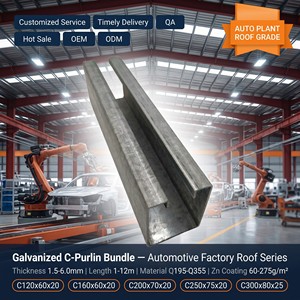
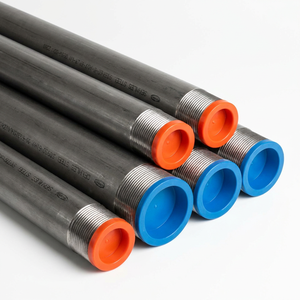
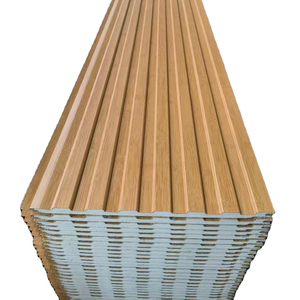
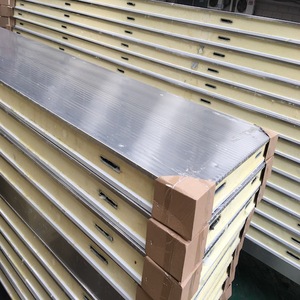
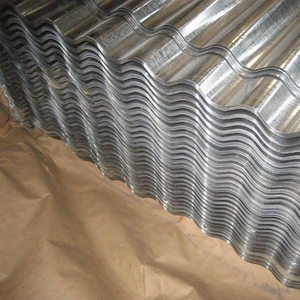
Industrial, commercial, and high-density municipal real estate across New York requires building envelope closures with exceptional mechanical tolerance and energy efficiency. From the high-velocity hurricane zones (HVHZ) flanking Long Island Sound to dense multi-level logistics facilities in Queens, Brooklyn, and the Meadowlands hub, commercial sectional overhead doors must perform beyond baseline residential garage fixtures.
As premier international suppliers and strategic exporters to New York engineering firms, mechanical contractors, and industrial developers, we supply high-performance sectional door assemblies engineered around advanced continuous polyurethane (PU) and polyisocyanurate (PIR) cores, integrated architectural sub-frames, and heavy hot-dip galvanized C-channel mounting geometry.
Our overhead door engineering incorporates precision micro-rib and stucco-embossed panel skins roll-formed from Grade 50 structural steel, complete with continuous structural hinge reinforcement strips and dual-durometer perimeter thermal seals. Coupled with structural seamless hollow steel torsion shafts (S355JR) and calibrated helical torsion counterbalance springs, our systems achieve seamless daily operation in demanding high-frequency loading environments.
| Performance Characteristic | Commercial PIR/PU Sandwich | Heavy Industrial High-Wind Series | Full-View Glazed Aluminum Commercial |
|---|---|---|---|
| Section Core Thickness | 40mm - 80mm High-Density PU/PIR | 50mm - 100mm Structural Reinforced | Triple Glazed / Polycarbonate Inserts |
| Thermal Performance (U-Factor) | 0.038 - 0.024 BTU/hr·ft²·°F | 0.028 - 0.020 BTU/hr·ft²·°F | 0.28 - 0.42 BTU/hr·ft²·°F |
| NYC Wind Load Compliance | ANSI/DASMA 108 up to 130 mph | ASTM E330 / TAS 202 up to 160 mph | Engineered Custom Deflection Post |
| Acoustic Attenuation (STC) | STC 26 - 28 dB Reduction | STC 30 - 34 dB Reduction | STC 24 - 27 dB Reduction |
| Hardware Track Coating | ASTM A653 G90 Commercial Zinc | Hot-Dip Galvanized ASTM A123 | Powder Coated or Marine Anodized |
Specific spatial, environmental, and thermal requirements govern sectional overhead door installation across New York State’s commercial and industrial sectors.
Multi-story cross-docking facilities in Queens, Bronx, and Brooklyn require ultra-low headroom track designs, high-speed lift motors (up to 1.5 m/s), and sound-dampening nylon tandem rollers to operate cleanly within tight municipal boundaries.
Hunts Point Food Distribution Center and Hudson Valley distribution facilities depend on our 80mm-thick PIR insulated panels with thermal breaks, heated perimeter tracks, and inflatable dock perimeter seals that eliminate vapor transmission.
Port Newark, Red Hook Marine Terminal, and JFK air freight corridors require doors built with 11-gauge C-channel purlin wind-load struts, heavy-duty commercial end stiles, and saltwater-resistant hot-dip galvanizing per ASTM A123.
FDNY facilities and upstate transit municipal garages require high-cycle 100,000-cycle spring assemblies, fail-safe pneumatic sensing edges, integrated backup battery operators, and high-visibility aluminum vision sections.
From Manhattan automotive dealerships to converted industrial lofts, our anodized extruded aluminum full-view sectional doors feature thermally broken frames, low-E argon-filled tempered glass, and custom RAL architectural finishes.
Long Island biotech clusters mandate smooth, flush interior skin panels resistant to chemical washdowns, zero-gap inter-section joint gaskets, and interlocked cleanroom airlock controls engineered for precise pressure balancing.
The commercial access market across New York is undergoing a structural shift driven by climate resilience policies, aggressive carbon reduction goals, and automated warehousing systems. Facility directors and general contractors must account for several major engineering developments:
With Local Law 97 imposing fines on commercial building emissions, industrial doors are scrutinized for lifecycle thermal performance. Closed-cell high-density cyclopentane-blown PU foams deliver industry-leading insulation values without hazardous hydrofluorocarbons (HFCs).
Following post-tropical storm events, coastal NYC engineering specifications require sectional doors to resist dynamic cyclic pressure up to +45/-55 psf, backed by heavy gauge C-channel and structural purlin reinforcement struts to prevent blowout failures.
Modern distribution complexes in New York integrate computerized overhead doors into SCADA and warehouse management systems (WMS). Real-time telemetry tracks cycle counts, cable tension balance, and motor winding heat to prevent costly unscheduled downtime.
Our manufacturing engineering aligns directly with these evolving parameters, combining structural cold-formed purlin backings, ASTM-certified steel sections, and thermally optimized core matrices that future-proof real estate investments against rising regulatory demands.
Combining primary steel fabrication, automated roll-forming, and high-precision insulated panel engineering under a unified quality assurance program.
Operating dedicated roll-forming and continuous foam-sandwich lines, we control product quality, tolerances, and export lead times directly from our Barka facility.
Raw coil metal chemistry checks, continuous density monitoring, and tensile bond testing align with international ASTM, EN, and ANSI benchmarks for consistent high-wind integrity.
Beyond sectional doors, we supply matching structural C/Z purlins, roof decks, metal flashing, and insulated panels, streamlining commercial building envelopes through single-source procurement.
Heavy seaworthy export packing, customized container loading, and barcoded sub-assemblies ensure damage-free transit and expedited customs clearance at Port Newark and NY marine container terminals.
Key technical, structural, and logistical questions addressed for NYC general contractors, property managers, and procurement officers.
Our sandwich door panels use high-density, closed-cell polyurethane foam injected at 42-45 kg/m³ with built-in thermal break gaskets. Verified laboratory testing proves air infiltration rates below 0.35 cfm/ft² at 25 mph, satisfying NYC Energy Conservation Code requirements and mitigating energy loss penalties.
Yes. We engineer overhead systems to ASTM E330 and ANSI/DASMA 108 standards, designed for design wind pressures exceeding 45 psf. Assemblies include roll-formed structural C-channel back purlins, 11-gauge commercial steel tracks, and heavy-duty commercial end hinges for hurricane-zone resilience.
Shipments depart via scheduled maritime routes directly to the Port of New York and New Jersey (PNCT/Maher Terminals). Panel assemblies are bundled with protective shrink-film, edge guards, and crated in steel-banded seaworthy timber frames with desiccants to prevent transit corrosion or mechanical shifting.
Yes. Our hardware, tracks, roller brackets, and lift drums are fabricated to standard North American ANSI/DASMA dimensions. This ensures that high-cycle replacement springs (25,000 to 100,000 cycles) and commercial rollers can be serviced easily by local New York overhead door technicians.
Consult with our structural door engineers to review architectural project requirements, track clearance configurations, and factory-direct pricing for your commercial project in New York.
Get Catalog